Can You Heat Press on 50 Cotton 50 Polyester
Yes, you can heat press on a 50/50 cotton-poly blend, which is a popular fabric choice for many garments due to its comfort and durability. When working with this cotton polyester mix, it’s important to use moderate heat to protect the polyester fibers from melting or damage. Proper heat pressing ensures you get a vibrant and lasting design without compromising the fabric’s integrity.
Set your press between 320°F and 350°F and apply medium to firm pressure for 10 to 15 seconds. Always pre-press your garment to remove wrinkles and use a protective sheet to avoid scorching.
Following these steps guarantees a durable, vibrant finish without damaging the fabric.
Keep going, and you’ll discover how to perfect each stage of the process.
Key Takeaways
- Yes, 50/50 cotton-poly blends can be heat pressed successfully with proper temperature and care.
- Use moderate heat between 320°F and 350°F to avoid melting polyester fibers.
- Always apply medium to firm pressure for 10 to 15 seconds for optimal transfer adhesion.
- Pre-press garments to remove wrinkles and use protective sheets to prevent scorching.
- Test on fabric scraps first and avoid temperatures above 320°F to prevent damage.
Can You Heat Press on 50/50 Cotton-Poly Blends?
Although 50/50 cotton-poly blends can be tricky, you can definitely heat press on them successfully. These fabrics combine the softness of cotton with the durability of polyester, but the blend’s synthetic fibers require some care. You’ll want to avoid using excessive heat that can melt or damage the polyester content.
Instead, focus on moderate heat settings and use a protective sheet between your heat press and the fabric to prevent scorching. Also, consider the type of transfer material you’re using; some adhere better to blends than others.
Best Temperature and Time for Heat Pressing 50/50 Cotton-Poly

To get the best results when heat pressing 50/50 cotton-poly blends, you need to find the right balance of temperature and pressing time. Too hot or too long can damage the fabric or cause the design to peel. Aim for a temperature that activates the adhesive without harming the fibers.
Finding the perfect heat and time balance ensures a durable design without damaging cotton-poly blends.
Here’s what you should keep in mind:
- Set your heat press between 320°F and 350°F (160°C-177°C)
- Press for about 10 to 15 seconds
- Use medium to firm pressure to ensure proper adhesion
- Allow a quick cool-down to prevent sticking or wrinkling
Preparing 50/50 Cotton-Poly Garments for Heat Pressing
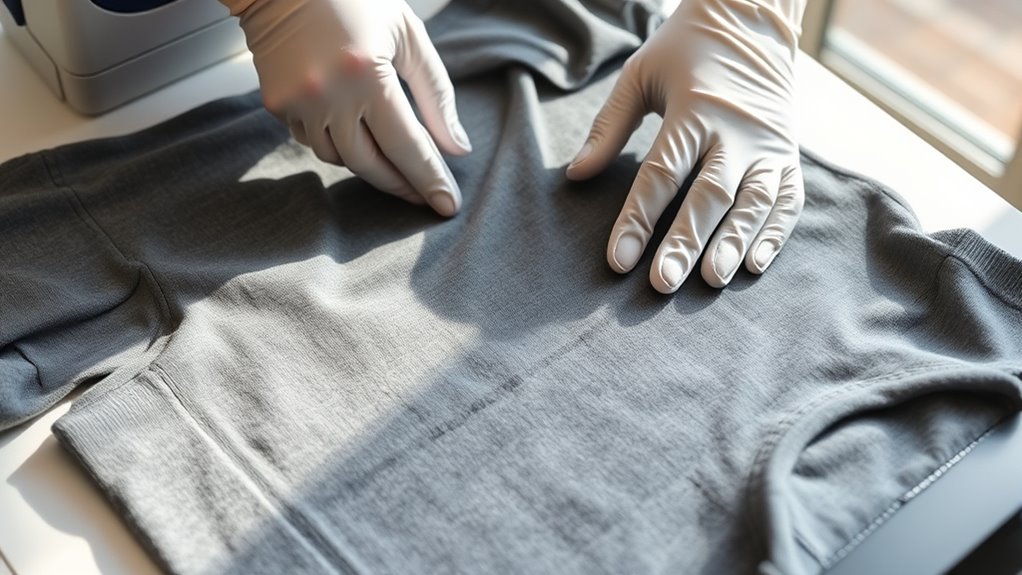
Before you start heat pressing your 50/50 cotton-poly garments, make sure they’re clean and wrinkle-free to achieve the best results. Wash the fabric without fabric softener, as it can leave residues that interfere with the heat transfer. Dry the garment thoroughly, since moisture can cause poor adhesion or bubbling during pressing.
Use an iron or a pre-press cycle on your heat press to remove any wrinkles, ensuring a smooth surface for the transfer. Position the garment on a clean, flat heat press platen to avoid uneven pressure. Double-check that seams and zippers are out of the way, so they don’t create creases or damage the transfer.
Taking these steps helps you get a crisp, long-lasting print on your cotton-poly blend.
Picking the Best Transfer Paper and Ink for 50/50 Cotton-Poly
When choosing transfer paper and ink for your 50/50 cotton-poly garments, you need materials designed to bond well with both fibers. Not all papers and inks work equally on blended fabrics, so selecting the right combination ensures vibrant, lasting designs.
Look for transfer papers labeled specifically for cotton-poly blends or “all fabric” use. Also, opt for inks that offer strong adhesion without cracking or fading after washing.
Consider these key points to help you pick the best:
- Use transfer paper that resists peeling and cracking on mixed fibers
- Choose ink formulated for durability on both cotton and polyester
- Prioritize products with proven wash-fastness to keep colors bright
- Avoid papers or inks meant solely for 100% cotton or polyester
This approach guarantees your prints stay bold and smooth on 50/50 blends.
Step-by-Step Guide to Heat Pressing 50/50 Cotton-Poly
Although 50/50 cotton-poly blends require careful handling, you can achieve professional-quality heat press results by following a precise process. First, preheat your heat press to around 320°F (160°C). Next, place your garment on the platen and smooth out any wrinkles.
Position the transfer paper design-side down on the fabric. Use a medium pressure setting to avoid damaging the blend. Press for 15 seconds, then carefully lift the press.
For a firm bond, peel the transfer paper while it’s warm, but not hot. Let the garment cool completely before handling or washing. Following these steps guarantees your design adheres properly without scorching or fading, giving your cotton-poly blend a sharp, durable finish every time.
How to Test and Adjust Your Heat Press for Cotton-Poly Items
To get the best results, you’ll need to test how your heat press handles the specific temperature that works for 50/50 cotton-poly blends. Pay close attention to adjusting the pressure and timing to avoid scorching or weak adhesion.
Material Temperature Compatibility
Since cotton-poly blends combine natural and synthetic fibers, you’ll need to carefully test and modify your heat press temperature to avoid damaging the fabric. Start by setting your press to a moderate temperature, around 300°F (150°C), then test on a small fabric scrap. Watch closely for any signs of scorching or melting.
Adjust accordingly until the fabric feels smooth and the design adheres well.
Keep these tips in mind:
- Avoid temperatures above 320°F to prevent polyester melting
- Use a protective sheet to shield the fabric
- Test each new batch of fabric to account for variations
- Be patient—the right temperature ensures quality and longevity
Pressure And Time Settings
When you adjust pressure and time settings on your heat press, you’ll find the perfect balance that guarantees your design sticks without damaging the cotton-poly fabric. Start by setting your press to medium pressure—too much can crush fibers, too little won’t transfer properly.
Begin with a time of about 10-15 seconds at 350°F (177°C), then test on a scrap piece. If the design peels or doesn’t adhere fully, increase time by 2-second increments or slightly raise pressure. Always monitor the fabric for signs of scorching or distortion.
Keep notes of what works best for your specific heat press and materials. This trial-and-error method guarantees you get a clean, durable transfer every time on 50/50 cotton-poly blends.
Common Heat Pressing Mistakes With Cotton-Poly
Although cotton-poly blends are versatile, many people make avoidable errors during heat pressing that can ruin their projects. You might think you’re doing everything right, but small mistakes can lead to disappointing results.
Avoid these common pitfalls to protect your work:
- Pressing at too high a temperature, which can scorch or melt the polyester.
- Applying excessive pressure, causing fabric distortion or uneven transfers.
- Not pre-pressing the garment to remove moisture and wrinkles.
- Using the wrong type of transfer paper or vinyl not suited for blends.
Caring for Heat Pressed 50/50 Cotton-Poly Garments
Proper care for your heat pressed 50/50 cotton-poly garments guarantees the design stays vibrant and intact over time. Always turn your garment inside out before washing to protect the printed design. Use cold or warm water on a gentle cycle to prevent fabric damage and fading.
Avoid bleach or harsh detergents, as they can break down the fibers and affect the print’s quality. When drying, opt for air drying or tumble dry on low heat to minimize shrinkage and preserve the design’s adhesion. Iron the garment inside out on a low setting, avoiding direct contact with the print.
Following these steps will help your heat pressed cotton-poly garments look fresh and last longer, keeping your designs crisp and colorful.
Frequently Asked Questions
Can I Use a Regular Iron Instead of a Heat Press for 50/50 Blends?
You can use a regular iron for 50/50 blends, but it’s less effective than a heat press. Make sure to apply firm pressure, use a pressing cloth, and set the iron to the correct temperature to avoid damage.
Does Heat Pressing Affect the Moisture-Wicking Properties of Polyester?
You might be surprised, but yes—heat pressing can damage polyester’s moisture-wicking abilities if done too hot or long. To protect those properties, you’ll want to use lower temperatures and shorter press times carefully.
Are There Specific Brands Recommended for Heat Press Machines?
You’ll want to check out brands like Cricut, Fancierstudio, and PowerPress for reliable heat press machines. They’re user-friendly, durable, and offer great temperature control, making your heat pressing projects much easier and consistent.
How Long Does a Heat-Pressed Design Typically Last on 50/50 Fabric?
Your heat-pressed design on 50/50 fabric typically lasts several years with proper care.
You’ll want to wash inside out, use cold water, and avoid high heat drying to keep the print vibrant and durable over time.
Can I Heat Press on Colored 50/50 Cotton-Poly Blends Without Fading?
Yes, you can heat press on colored 50/50 cotton-poly blends without fading if you use the right temperature, pressure, and time settings.
Always test a small area first to avoid damaging the fabric or design.
Conclusion
You can definitely heat press on 50/50 cotton-poly blends, but you need to get the temperature and timing just right to avoid damaging the fabric. Did you know that 60% of heat press failures come from improper temperature settings?
By prepping your garment properly and choosing the right transfer paper, you’ll get vibrant, lasting designs. Remember to test your press and avoid common mistakes to keep your cotton-poly creations looking great wash after wash.
In conclusion, mastering the correct heat press settings for 50 cotton 50 polyester blends is key to achieving durable and high-quality results. Proper temperature control, timing, and material preparation ensure your heat press on 50 cotton 50 polyester is successful every time.