Can I Use a Heat Press to Laminate
Yes, you can use a heat press to laminate your materials effectively. A heat press provides precise heat and pressure, which activates the adhesive on your laminate film.
This process seals your materials smoothly and offers better control than traditional laminators.
To achieve the best results, make sure to set the right temperature, pressure, and timing for your specific film type.
Protect your work by using suitable craft or transfer paper during the process.
Using a heat press for laminating is a reliable method if done correctly.
If you want to avoid common mistakes and get professional-quality finishes, there’s plenty more helpful info ahead.
Key Takeaways
- Yes, a heat press can effectively laminate by applying consistent heat and pressure to bond protective films smoothly.
- Proper temperature, pressure, and timing settings are crucial for successful heat press lamination without bubbles or damage.
- Using heat-resistant transfer or butcher paper protects materials and ensures even heat distribution during lamination.
- Heat press lamination offers precise control and produces durable, professional-quality finishes suitable for various materials.
- Avoid common mistakes like excessive heat, insufficient pressure, or skipping pre-press to achieve optimal lamination results.
How Does a Heat Press Work for Lamination?
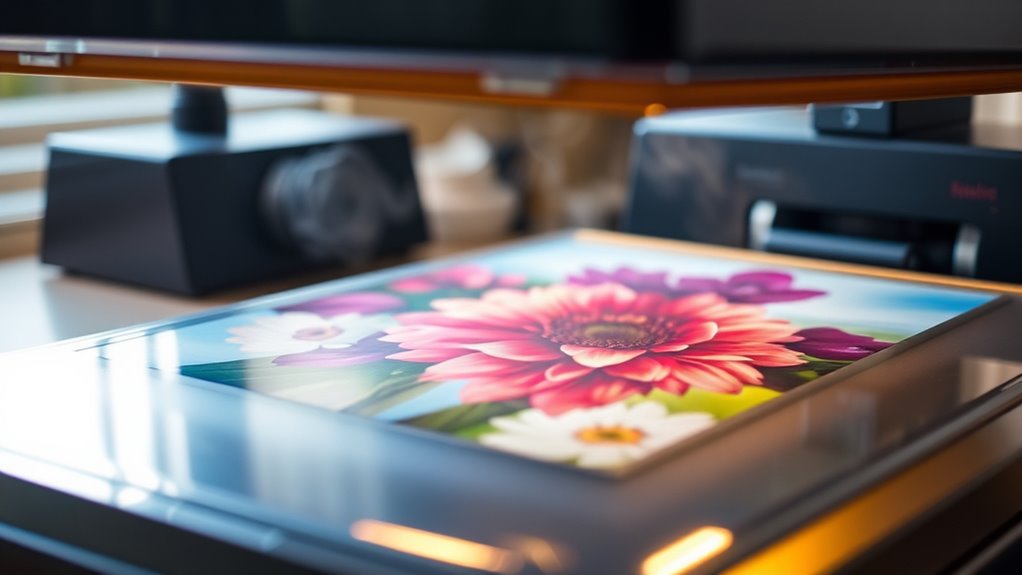
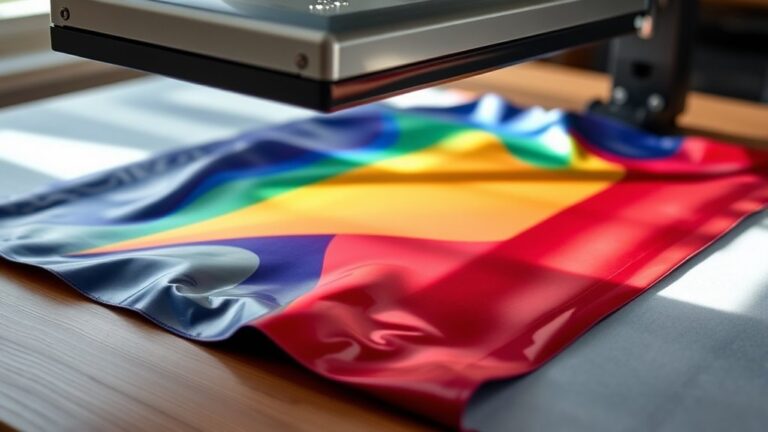
Although heat presses are commonly associated with fabric printing, they work just as effectively for lamination by applying consistent heat and pressure to seal protective layers onto your materials. When you use a heat press, you set the temperature and time according to the type of laminate and the item you’re sealing.
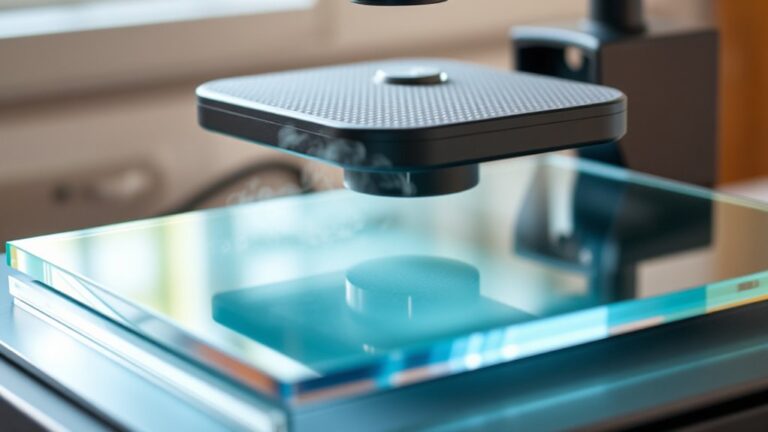
The press then evenly distributes heat and pressure across the surface, ensuring a smooth, bubble-free finish. This process activates the adhesive on the laminate film, bonding it firmly to your material. You’ll find that this method offers better control and durability compared to other lamination techniques.
Can You Use a Heat Press to Laminate?
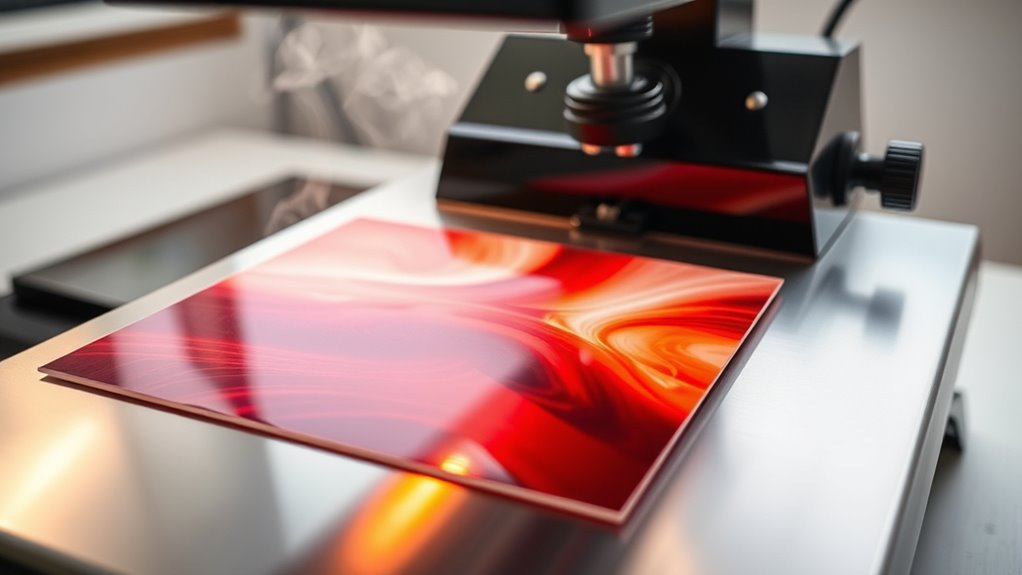
How effective is a heat press for laminating your projects? You can definitely use a heat press to laminate various materials, but its effectiveness depends on the type of project and the lamination method. Heat presses provide consistent temperature and pressure, which helps seal laminating films smoothly.
When using a heat press for lamination, consider these key points:
- Choose the right temperature according to your laminating film.
- Guarantee even pressure to avoid bubbles and wrinkles.
- Use protective sheets to prevent sticking or damage.
- Allow proper cooling time before handling the laminated item.
- Test on scrap material first to perfect settings.
Pros and Cons of Heat Press Lamination
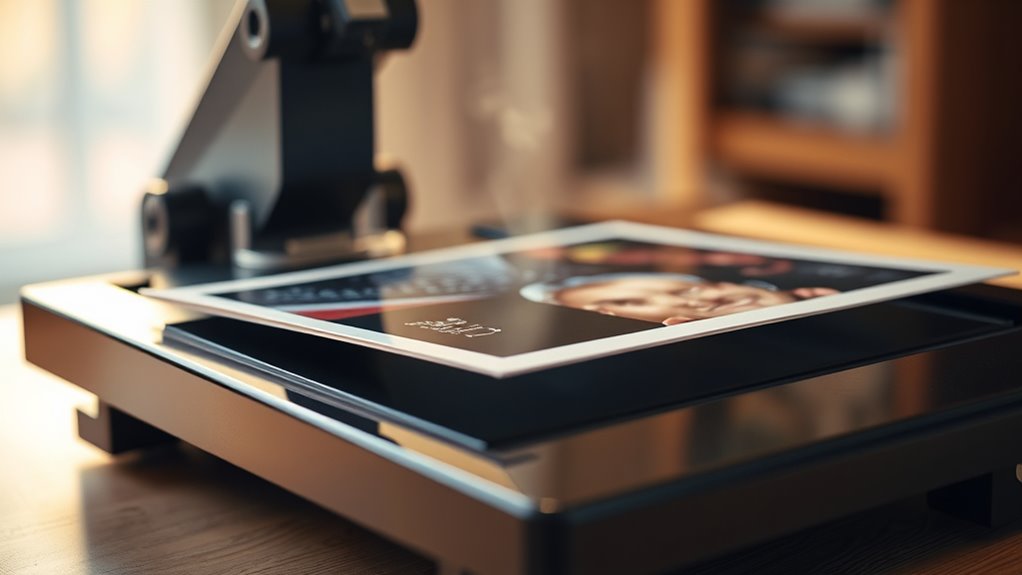
Using a heat press for lamination can save you time and give you a smooth, professional finish. However, you’ll need to watch out for temperature settings and material compatibility to avoid damage.
Let’s look at the key benefits and limitations before you decide.
Benefits of Heat Press
When you choose a heat press for lamination, you gain precise control over temperature and pressure, ensuring consistent, high-quality results every time. This control helps you avoid bubbles and wrinkles, giving your laminated items a professional finish.
Plus, heat presses speed up the process, saving you valuable time on each project. You’ll also appreciate the versatility, as heat presses work well with various materials and thicknesses. Additionally, they provide even heat distribution, so your lamination is flawless across the entire surface.
Here are some key benefits to contemplate:
- Precise temperature and pressure control
- Faster lamination process
- Professional, bubble-free finish
- Compatibility with multiple materials
- Even heat distribution for consistent results
Using a heat press truly elevates your lamination quality and efficiency.
Limitations to Consider
Although heat presses offer many advantages for lamination, they come with a few limitations you should keep in mind. You might find that certain materials don’t respond well to heat, risking damage or warping. Also, heat presses usually require precise temperature and timing control, so mistakes can ruin your project.
Plus, they tend to be less portable compared to handheld laminators.
| Pros | Cons |
|---|---|
| Fast and efficient | Requires precise temperature |
| Even heat distribution | Not suitable for all materials |
| Durable finish | Risk of overheating |
| Professional quality | Larger and less portable |
| Versatile applications | Initial learning curve |
Keep these factors in mind before deciding if a heat press fits your lamination needs.
Heat Press vs. Traditional Laminators
While both heat presses and traditional laminators serve to protect and preserve your documents, they operate quite differently and offer distinct advantages. A heat press uses high pressure and heat applied evenly through plates, whereas traditional laminators feed your item through heated rollers that bond laminate films.
Here’s what you should know:
- Heat presses provide consistent, flat pressure, reducing air bubbles.
- Traditional laminators are generally faster for multiple sheets.
- Heat presses give you more control over temperature settings.
- Laminators are simpler and often more compact for quick tasks.
- Heat presses can handle thicker materials beyond paper and photos.
Understanding these differences helps you decide which tool suits your lamination needs best without mixing up their unique features.
When to Choose a Heat Press Instead of a Laminator
Choosing between a heat press and a laminator depends largely on your specific project needs and material types. You’ll want to pick a heat press when you need precise temperature control, especially for heat-sensitive materials. Heat presses excel at applying pressure evenly, making them ideal for projects requiring durability and a professional finish.
Also, if you’re working with thicker or textured items, a heat press can handle them better than a traditional laminator.
| Criteria | Heat Press Advantage |
|---|---|
| Temperature Control | Precise and adjustable |
| Pressure Application | Even and strong |
| Material Thickness | Handles thick items easily |
| Project Durability | Produces long-lasting results |
| Finish Quality | Smooth, professional finish |
Use a heat press when durability and control matter most.
Best Materials for Heat Press Lamination
When using a heat press for lamination, you’ll want to pick the right laminating films that can handle the heat without melting or warping. Certain fabrics work better with heat press lamination, especially those that resist high temperatures.
You’ll also need to choose heat-resistant paper options to guarantee your project comes out crisp and damage-free.
Suitable Laminating Films
What types of laminating films work best with a heat press? You want films that respond well to heat and pressure, ensuring a smooth, durable finish.
Here are five suitable laminating films you can use:
- Thermal laminating pouches: Activate with heat, creating a strong bond without adhesive.
- Hot melt laminating films: Melt under heat to seal and protect your design.
- Polyurethane (PU) films: Offer flexibility and heat resistance.
- Polyethylene terephthalate (PET) films: Provide clarity and durability.
- Matte or gloss finish films: Choose based on your desired look and protection level.
Using these films guarantees effective lamination with your heat press, preventing bubbling or peeling. Always check the film’s temperature compatibility with your heat press to avoid damage.
Compatible Fabric Types
Knowing which laminating films work best with your heat press sets you up for success, but selecting the right fabric is just as important. Natural fibers like cotton and linen respond well to heat press lamination because they handle heat evenly and absorb the adhesive properly.
Polyester and other synthetic fabrics also work, but be cautious with high temperatures to avoid melting or warping. Avoid delicate fabrics such as silk or nylon, as they can easily get damaged under heat. Canvas and denim are excellent choices for durable, laminated projects since they withstand pressure and temperature without losing texture.
Always test a small fabric swatch before committing to your final piece to ensure compatibility and avoid ruining your materials.
Heat-Resistant Paper Options
Which types of paper can handle the intense heat from a heat press without compromising your laminated project? You need heat-resistant paper that won’t warp, scorch, or lose its quality under high temperatures.
Here are some of the best options:
- Parchment paper: Non-stick and heat-resistant, ideal for protecting your design.
- Silicone-coated paper: Offers excellent heat resistance and prevents sticking.
- Thermal transfer paper: Designed specifically for heat press applications.
- Butcher paper: Thick and durable, it withstands heat well.
- Heat-resistant craft paper: Made for high-temperature projects and laminations.
Using these papers helps you protect your work and ensures a clean, smooth lamination when using a heat press. Choose the right one based on your project’s needs.
Step-by-Step Heat Press Lamination Guide
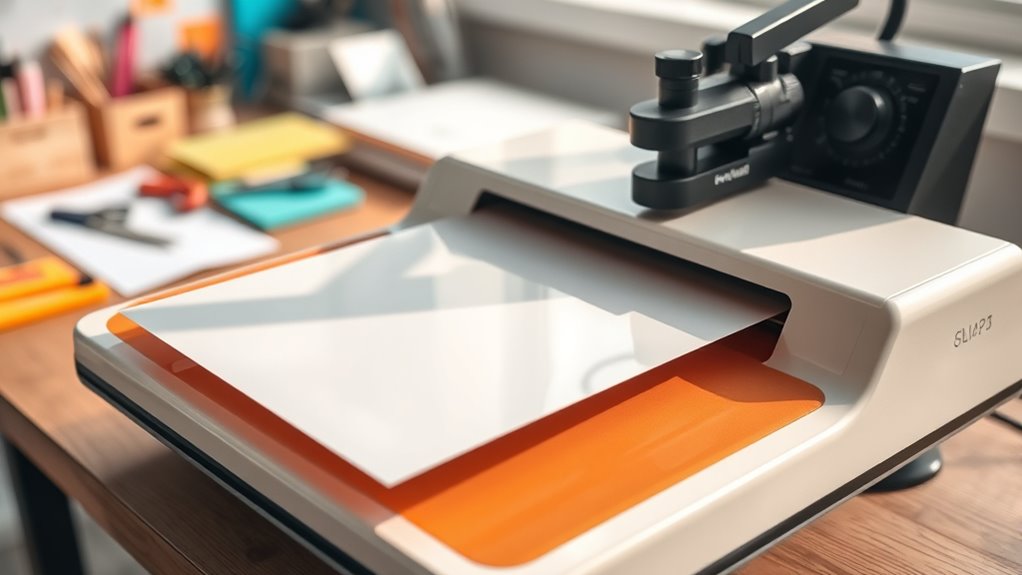
Before you start, make sure your heat press is set to the right temperature and pressure for your lamination film. Begin by placing your document between two sheets of lamination film, ensuring it’s centered and smooth.
Next, position the film-covered document on the heat press platen. Lower the press gently and apply even pressure. Set the timer according to your film’s instructions, usually around 10-15 seconds.
Place the document on the heat press, lower gently, apply pressure, and set the timer as instructed.
Once the timer goes off, lift the press carefully and remove the laminated item. Place it on a flat surface to cool and set properly. If your heat press has a roller, use it to smooth out any bubbles immediately after pressing.
Following these steps will give you a clean, durable lamination using your heat press.
Common Heat Press Lamination Mistakes to Avoid
Although heat press lamination is straightforward, you can easily make mistakes that ruin your project. To get the best results, you need to avoid common pitfalls. Here are five key mistakes to watch out for:
- Applying too much heat, which can warp or damage your materials
- Using insufficient pressure, leading to poor adhesion or bubbles
- Rushing the timing, causing incomplete lamination or peeling edges
- Skipping the pre-press step, which can trap moisture or wrinkles
- Neglecting to clean your heat press, resulting in residue marks on your work
Frequently Asked Questions
Can I Use a Heat Press for Laminating Photos?
Yes, you can use a heat press to laminate photos, but you’ll need special laminating pouches designed for heat pressing. Make sure to adjust temperature and time settings carefully to avoid damaging your pictures.
Is Heat Press Lamination Safe for Kids’ Crafts?
You won’t believe how safe heat press lamination is for kids’ crafts when you use it right! Just keep the temperature and time low, supervise closely, and your little ones’ projects will stay protected without any worries.
How Long Does a Heat Press Lamination Last?
Your heat press lamination can last several years if you use quality materials and proper settings. Keep it away from extreme heat or moisture to prevent peeling, and your laminated items will stay protected and vibrant longer.
Can Heat Press Lamination Be Removed Without Damage?
Peeling heat press lamination is like unwrapping a stubborn gift—you might damage your item. You can try gentle heat and slow peeling, but there’s no guarantee it’ll come off cleanly without leaving marks or residue behind.
Does Heat Press Lamination Affect Ink Color or Quality?
Yes, heat press lamination can slightly affect ink color or quality, especially with heat-sensitive inks. You’ll want to test first because excessive heat or pressure might cause fading, smudging, or color changes on your printed design.
Conclusion
You can definitely use a heat press to laminate, and it’s surprisingly effective for many projects. Did you know that heat press lamination can save up to 50% more time than traditional laminators? This makes it a smart choice when you need quick, durable results.
Just remember to pick the right materials and follow the steps carefully to avoid common mistakes. With the right technique, your laminated items will look professional and last longer. Using a heat press to laminate is a convenient and efficient method that delivers quality results.