Can You Heat Press Glass
Yes, you can heat press glass safely by choosing the right glass types like borosilicate or tempered glass and avoiding standard soda-lime glass.
Heat pressing glass requires careful attention to temperature and pressure to prevent damage. By following proper techniques, you can create beautiful, durable designs that last.
Make sure to preheat gradually, control the temperature between 300°F and 350°F, and apply consistent pressure to prevent cracking.
Always cool the glass slowly after pressing to protect the design.
With proper preparation, handling, and equipment, you’ll get great results and long-lasting designs.
There’s more to discover for ensuring perfect heat-pressed glass every time, including choosing the right materials and mastering the cooling process.
Key Takeaways
- Yes, glass can be heat pressed using controlled temperatures between 300°F to 350°F to avoid thermal shock and cracking.
- Borosilicate, tempered, and fused glass are suitable types for heat pressing due to their heat resistance and durability.
- Gradual heating and slow cooling are essential to prevent breakage and maintain the integrity of the glass design.
- Protective sheets like Teflon or silicone pads should be used between glass and press to shield surfaces and ensure even heat transfer.
- Proper cleaning, gentle handling, and medium pressure during pressing help achieve consistent, high-quality design results on glass.
How to Heat Press Glass Without Breaking It
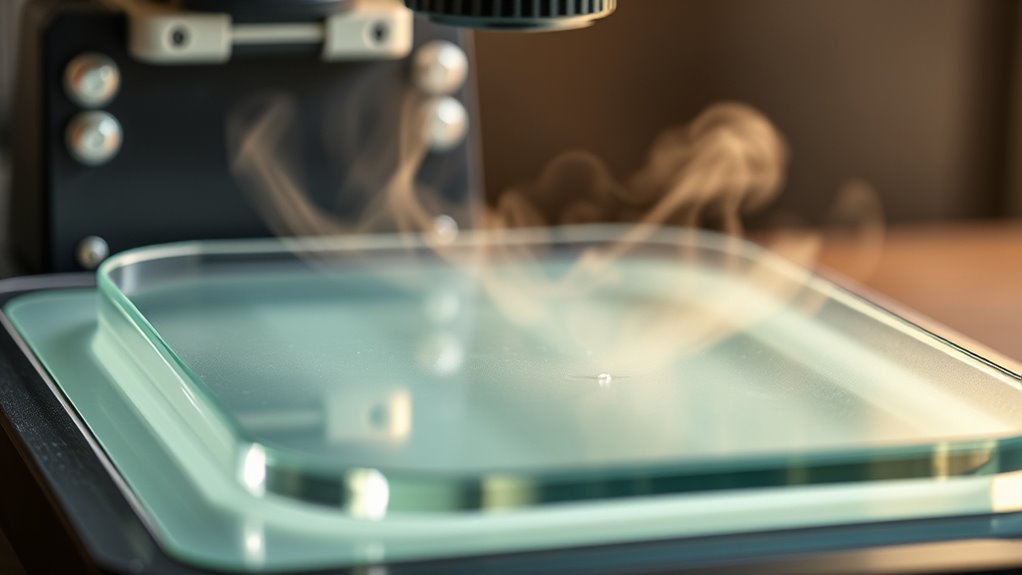
Though heating glass with a press might seem risky, you can avoid breaking it by controlling the temperature and applying pressure gradually. Start by preheating the glass slowly to reduce thermal shock. Avoid sudden temperature changes; instead, increase heat in small increments.
Use a heat press with adjustable temperature settings to maintain precise control. When applying pressure, do it gently and evenly to prevent stress points that cause cracks. Make sure the glass sits flat on the press surface to distribute pressure uniformly.
Also, use protective layers like heat-resistant silicone pads to cushion the glass. Finally, allow the glass to cool down inside the press or in a controlled environment to avoid rapid cooling, which can lead to breakage. Following these steps will help you heat press glass safely and effectively.
Best Types of Glass for Heat Pressing
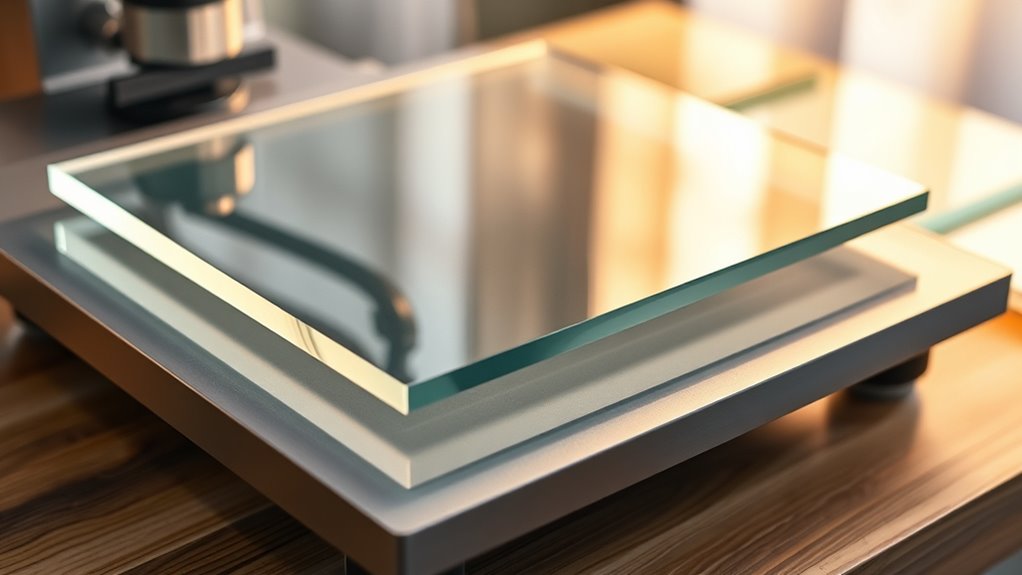
When selecting glass for heat pressing, you’ll want to choose types that can withstand high temperatures and thermal stress without cracking. Borosilicate glass is an excellent choice because it tolerates rapid temperature changes, making it less likely to shatter during the heat press process. Tempered glass is another good option due to its strength and resistance to thermal shock.
Avoid using standard soda-lime glass, as it’s more prone to breakage under heat. Additionally, fused glass works well for artistic projects because it can be shaped and decorated under heat. Always verify the glass is free of defects or chips before heat pressing, as imperfections increase the risk of cracking.
Best Heat Press Machines for Glass Heat Press
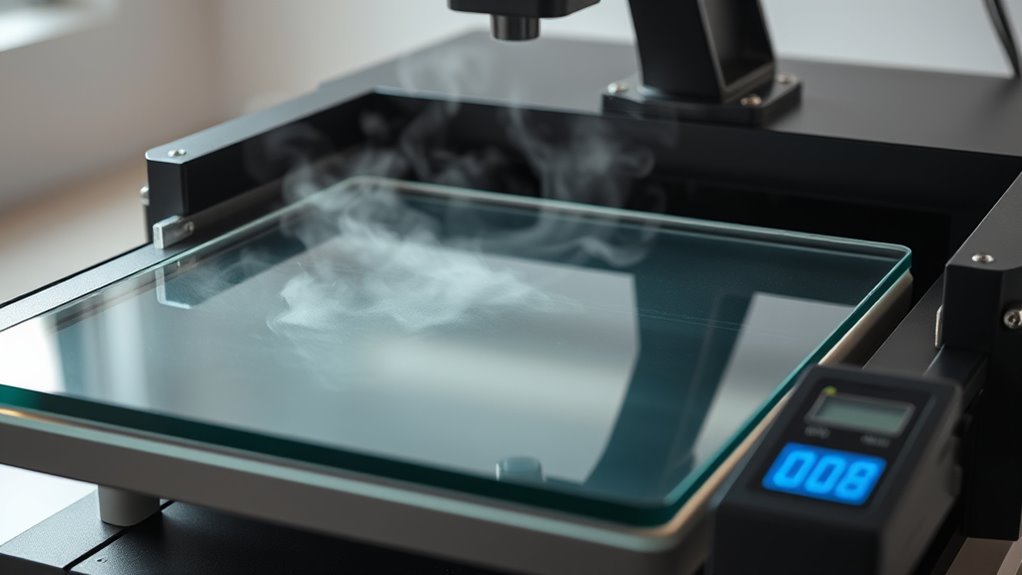
When choosing a heat press machine for glass, you’ll want one with precise temperature and pressure controls to guarantee even heating. Look for models that offer durability and solid build quality to handle repeated use.
These features will help you get consistent, professional results every time.
Top Heat Press Features
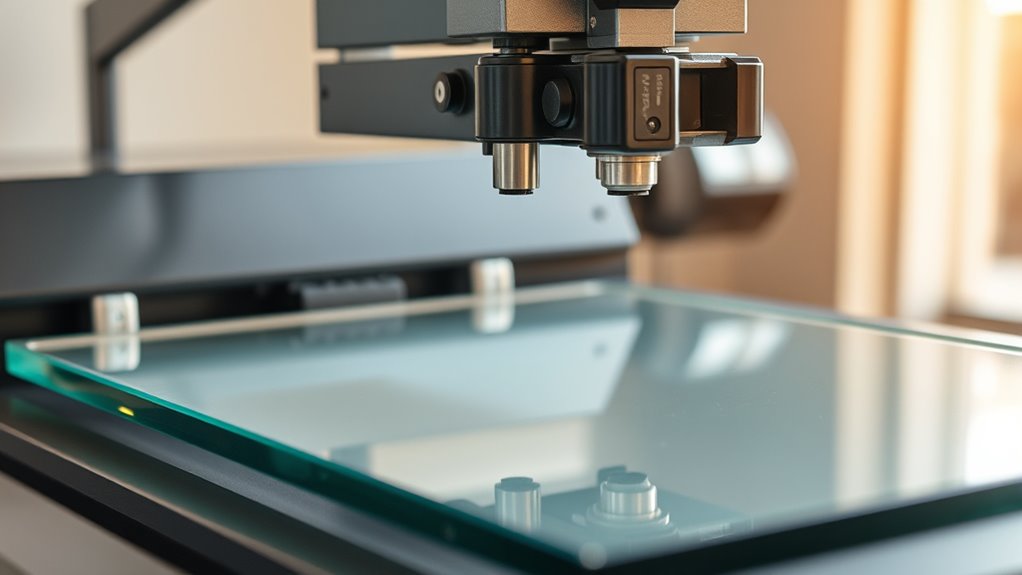
Since glass requires precise and even heat distribution, the best heat press machines for glass heat press come equipped with advanced temperature controls and sturdy platens. You’ll want a machine with a reliable digital display that lets you monitor and adjust heat accurately. A flat, smooth platen ensures consistent pressure and prevents uneven heating or damage to your glass pieces.
Look for models with adjustable timers so you can control your pressing duration without guesswork. Additionally, a well-built frame provides stability, reducing movement during pressing for better results. Some machines also feature interchangeable platens or silicone pads, giving you versatility for different glass sizes and shapes.
Choosing these key features helps you get professional-quality glass heat pressing every time.
Temperature And Pressure Settings
Although glass demands careful handling, you’ll find that setting the right temperature and pressure on your heat press is essential for flawless results. Too much heat or pressure can crack the glass, while too little won’t properly transfer your design. Here’s what you should keep in mind:
- Set the temperature between 300°F and 350°F for most glass projects
- Use medium pressure to avoid damage while ensuring good adhesion
- Preheat the glass to reduce thermal shock
- Limit pressing time to about 20-30 seconds to prevent overheating
- Always use a silicone pad or Teflon sheet to protect the glass surface
Durability And Build Quality
Choosing a heat press with sturdy construction and reliable components is essential for achieving consistent results when working with glass. When you invest in a durable machine, you reduce the risk of uneven pressure or temperature fluctuations, which can cause imperfections.
Look for solid frames, quality hinges, and reliable heating elements. These features guarantee the press holds up under repetitive use and maintains accuracy.
Here’s a quick comparison to help you evaluate durability and build quality:
| Feature | What to Look For |
|---|---|
| Frame Material | Steel or heavy-duty aluminum |
| Heating Element | Even heat distribution |
| Pressure System | Adjustable and robust |
Choosing a well-built heat press gives you confidence and consistent, professional glass transfers every time.
Preparing Glassware for Heat Pressing
Before you start heat pressing, make sure to thoroughly clean and degrease your glassware to guarantee proper adhesion.
Next, apply heat-resistant tape to protect areas you don’t want exposed to heat.
These steps are vital for a successful and safe heat pressing process.
Cleaning And Degreasing
How do you guarantee your glassware is ready to withstand the heat press without compromising quality? Cleaning and degreasing are essential steps. Any residue or oils can cause uneven heating or damage to your design.
Start by thoroughly washing your glass with warm, soapy water to remove dust and dirt. Then, degrease the surface using isopropyl alcohol or a specialized glass cleaner to eliminate oils and fingerprints. Make sure you dry the glass completely with a lint-free cloth.
Here’s a quick checklist for cleaning and degreasing:
- Wash with warm, soapy water
- Rinse thoroughly
- Wipe with isopropyl alcohol
- Dry with a lint-free cloth
- Avoid touching cleaned areas before pressing
Following these steps ensures a flawless finish during heat pressing.
Applying Heat-Resistant Tape
Why is applying heat-resistant tape essential when preparing your glassware for heat pressing? It protects both your glass and the design materials during the process. You’ll want to carefully secure your transfer or decal with this specialized tape to prevent shifting under high heat and pressure.
Make sure the tape can withstand the temperatures you’ll use—ordinary tapes might melt or leave residue. When applying, press the tape firmly along the edges of your design, ensuring it’s smooth and wrinkle-free. This helps maintain crisp, clean lines and prevents any damage or smudging.
Best Heat Press Settings for Glass Materials
When working with glass materials, you’ll want to carefully adjust your heat press settings to avoid cracking or damaging the surface. Glass is sensitive to rapid temperature changes, so controlling heat and pressure is essential. Here are the best settings to keep in mind:
- Temperature: Set between 300°F and 350°F (149°C to 177°C) to prevent thermal shock.
- Time: Limit pressing time to 60-90 seconds to avoid overheating.
- Pressure: Use light to medium pressure to ensure even contact without stressing the glass.
- Preheat: Warm the glass slightly before pressing to reduce temperature shock.
- Cooling: Allow glass to cool gradually after pressing by removing it carefully and placing it on a heat-resistant surface.
Following these guidelines will help you achieve quality results safely.
Choosing Transfer Materials for Glass
Which transfer materials work best for glass surfaces depends on your project’s needs and the type of design you want to achieve. For vibrant, durable results, you’ll often choose sublimation paper if your glass is coated for sublimation. It delivers sharp, lasting images but requires specific coated glass.
Alternatively, heat transfer vinyl (HTV) is great for simple, bold designs and works well on uncoated glass when paired with a strong adhesive. You might also consider waterslide decals, which offer detailed, colorful images for decorative projects but need sealing afterward.
Preventing Cracks When Heat Pressing Glass
Since glass is sensitive to rapid temperature changes, you need to handle heat pressing carefully to prevent cracks. Sudden heating or cooling can cause stress, leading to breakage. To keep your glass intact, follow these tips:
- Preheat the glass gradually to avoid thermal shock.
- Use a heat press with adjustable temperature and pressure controls.
- Place a protective sheet, like a Teflon or silicone pad, between the glass and the press.
- Avoid excessive pressure that can cause internal stress.
- Allow the glass to cool down slowly and evenly after pressing.
Caring for Heat-Pressed Glass Designs
Although heat pressing creates beautiful designs on glass, caring for them properly guarantees they stay vibrant and intact over time. You’ll want to avoid abrasive cleaners and harsh scrubbing that can damage the design. Always hand wash your glass items gently with mild soap and lukewarm water.
Avoid sudden temperature changes to prevent cracks. Store your heat-pressed glass in a safe place away from impacts.
| Care Tip | What to Do | What to Avoid |
|---|---|---|
| Cleaning | Use mild soap, hand wash only | No abrasive sponges or dishwashers |
| Temperature Handling | Keep away from sudden heat/cold | Don’t microwave or freeze |
| Storage | Store in padded, secure spots | Avoid stacking or dropping |
| Handling | Hold firmly but gently | Don’t twist or bend |
Follow these steps to keep your designs looking sharp and long-lasting.
Frequently Asked Questions
Can You Heat Press Glass at Home Safely?
Yes, you can heat press glass at home safely if you use a proper heat press machine with temperature control, wear heat-resistant gloves, and work in a well-ventilated area.
It is important to follow all manufacturer safety guidelines carefully to prevent accidents.
Taking these precautions will help ensure a safe and successful heat pressing experience.
What Types of Designs Work Best on Glass?
Designs with bold lines and simple shapes work best on glass, like a lighthouse cutting through fog. You’ll get clearer, more vibrant results, especially with high-contrast colors that stand out against the glass’s smooth surface.
How Long Do Heat-Pressed Designs on Glass Last?
Your heat-pressed designs on glass can last for years if you use quality materials and seal them properly. Avoid harsh scrubbing and extreme temperatures to keep the design vibrant and intact over time.
Proper care is essential to maintain the appearance and durability of your design. Handle the glass gently and avoid using abrasive cleaners.
Storing glass items away from direct sunlight can also help preserve the colors. With the right precautions, your heat-pressed designs will stay beautiful for a long time.
Can Heat Pressing Glass Be Done Commercially?
Absolutely, you can heat press glass commercially, turning plain panes into artful treasures. With the right equipment and technique, you’ll produce durable, vibrant designs that catch eyes and boost your business’s creative edge every single time.
Are There Health Risks When Heat Pressing Glass?
Yes, you can face health risks when heat pressing glass if you don’t wear protective gear. Fumes, broken glass, and high temperatures can cause burns or respiratory issues, so always use gloves, goggles, and proper ventilation.
Always ensure your workspace is well-ventilated to minimize inhalation of harmful fumes. Protective gloves and goggles will help prevent injuries from broken glass and heat exposure. Taking these precautions seriously can help keep you safe while working with glass.
Conclusion
Now that you know how to heat press glass without breaking it, you’re ready to create stunning, personalized pieces that’ll wow anyone who sees them. With the right glass, heat press, and transfer materials, you’ll avoid cracks like a pro. Just follow the settings and prep tips carefully, and you’ll have designs that last longer than a lifetime.
Get ready to turn plain glass into dazzling art that’s simply out of this world! By mastering the heat press glass technique, you can ensure vibrant, durable results every time. Embrace the process and enjoy crafting unique glass creations that stand the test of time.