Can You Heat Press Rayon
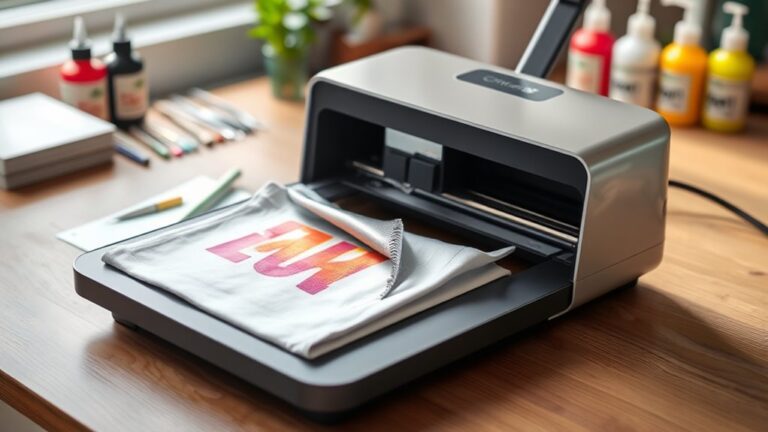
You can heat press rayon, but it requires extra caution to prevent damage. Rayon is a delicate fabric that can easily scorch or shrink if exposed to high heat for too long. Therefore, using a temperature below 300°F is essential when heat pressing rayon.
Keep the pressing time short—about 10 to 15 seconds—and apply light to moderate pressure. Always protect the fabric with parchment or Teflon sheets to avoid direct contact with the heat press.
Pre-washing your rayon garment helps reduce the risk of shrinking during the heat pressing process.
Testing on fabric scraps first is a great way to find the safest settings for your specific rayon material. If you want to master heat pressing rayon without ruining it, there’s more important advice ahead.
Key Takeaways
- Yes, you can heat press rayon, but it requires careful temperature and time control to avoid damage.
- Keep the heat press temperature below 300°F and limit pressing time to 10-15 seconds for rayon.
- Use protective sheets like parchment paper or Teflon to shield rayon fibers during heat pressing.
- Apply light to moderate pressure and avoid prolonged heat exposure to prevent scorching or shrinking.
- Always test on fabric scraps first to find optimal settings and prevent fabric distortion or marks.
How Is Rayon Different for Heat Pressing?
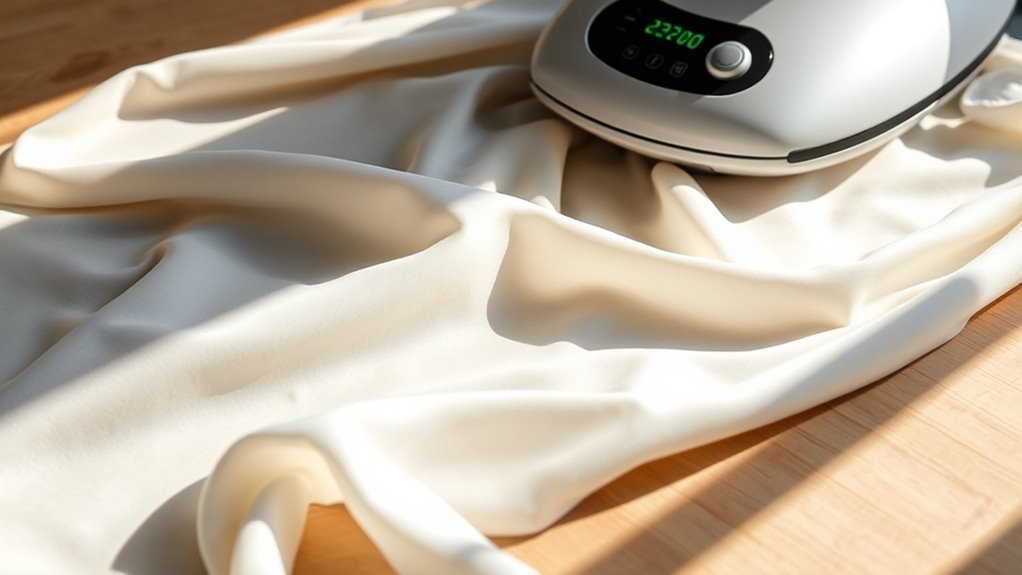
Although rayon looks and feels like natural fibers, it behaves differently under heat pressing. You’ll notice that rayon is more sensitive to heat and moisture compared to cotton or linen. When you apply high temperatures, rayon can easily scorch or shrink, which means you have to be cautious with your heat press settings.
Unlike durable fabrics, rayon’s fibers weaken when exposed to direct heat for too long. You also need to be careful with pressure since excessive force might distort the fabric’s texture or cause unwanted marks. Because rayon absorbs moisture quickly, any humidity during pressing can affect the final outcome.
Understanding these differences helps you avoid ruining your fabric and guarantees your heat pressing projects come out looking great every time.
Can You Heat Press Rayon Without Damage?
If you want to heat press rayon without damage, you need to carefully control the temperature, time, and pressure settings on your heat press. Rayon is delicate and can easily scorch, shrink, or distort if handled improperly. To protect your fabric, follow these guidelines:
- Use a protective sheet like parchment paper or Teflon between the press and rayon
- Avoid high heat; rayon is sensitive to prolonged exposure
- Limit pressing time to prevent fabric weakening
- Apply gentle pressure to avoid imprinting or crushing fibers
- Test on a small, inconspicuous area before full pressing
Best Heat Press Temperature and Time for Rayon
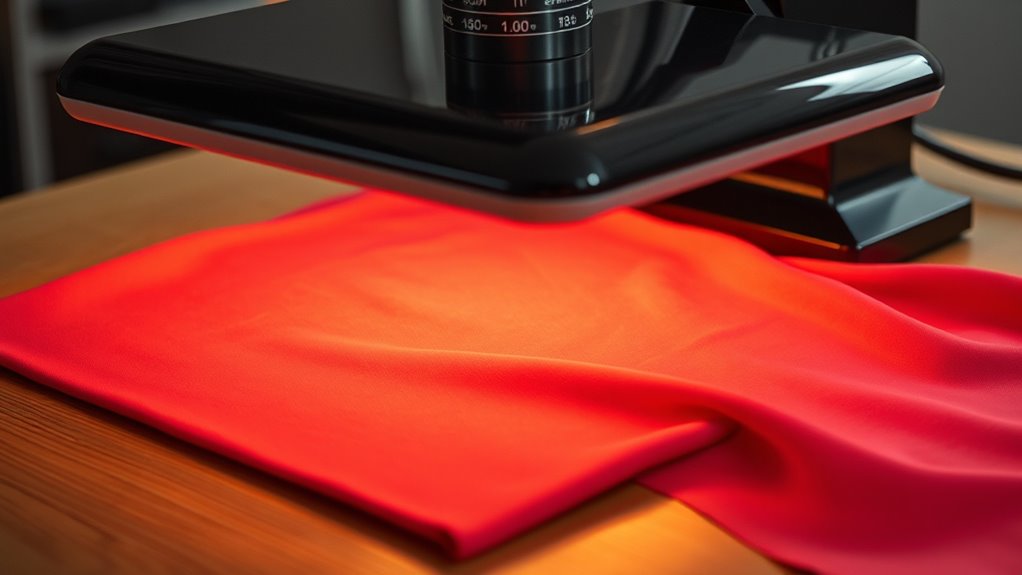
To heat press rayon successfully, you’ll need to set the right temperature and timing to prevent damage. Aim for a moderate temperature range and keep the pressing time short. This balance helps protect the fabric while ensuring your design adheres properly.
Ideal Temperature Range
When you heat press rayon, maintaining the right temperature is crucial to prevent damage and achieve vibrant results. Rayon is delicate and can easily scorch or shrink if the temperature is too high. To protect your fabric and get the best finish, aim for a temperature range between 280°F and 300°F (138°C to 149°C).
This range balances heat penetration without compromising rayon’s texture or color.
Here’s what to keep in mind for the ideal temperature range:
- Use a consistent heat setting within 280°F to 300°F
- Avoid exceeding 300°F to prevent scorching
- Pre-test on a scrap piece to ensure safety
- Adjust temperature slightly based on fabric thickness
- Monitor heat press calibration regularly for accuracy
Sticking to this range helps you press rayon safely and effectively.
Optimal Pressing Duration
Although maintaining the right temperature is essential, pressing rayon for the correct duration is equally important to prevent damage and guarantee a crisp, lasting print. Generally, you should set your heat press to about 10-15 seconds when working with rayon. This brief pressing time helps avoid fabric scorching or unwanted shrinkage.
Pressing too long can weaken the fibers or cause the print to blur, so sticking to this timeframe is vital. Always monitor your first few attempts closely to adjust if needed, depending on your specific heat press model and fabric blend. By keeping your pressing duration short and precise, you’ll preserve rayon’s delicate nature while achieving vibrant, durable results.
Avoiding Fabric Damage
Since rayon is a delicate fabric, you need to carefully control both temperature and pressing time to avoid damage. Heat pressing rayon at too high a temperature or for too long can cause scorching, shrinking, or distortion. To keep your fabric safe, follow these key guidelines:
- Set the heat press between 270°F to 300°F (132°C to 149°C).
- Limit pressing time to 10-15 seconds to prevent overheating.
- Use a protective Teflon sheet or parchment paper between the press and fabric.
- Avoid applying heavy pressure; medium pressure is sufficient.
- Always test on a scrap piece first to ensure no damage occurs.
Preparing Rayon Fabric for Heat Pressing
Before heat pressing your rayon fabric, you’ll want to pre-wash it to prevent shrinking and remove any chemicals. Make sure to adjust your heat press to the right temperature and pressure settings to avoid damaging the fibers.
Taking these steps will help you get the best results without ruining your fabric.
Pre-Washing Techniques
When you’re preparing rayon fabric for heat pressing, pre-washing plays a crucial role in preventing shrinkage and color bleeding. You want to handle this step carefully to maintain the fabric’s quality and vibrant colors.
Here’s how you can effectively pre-wash your rayon:
- Use cold water to avoid shrinking or warping the fibers.
- Choose a gentle detergent designed for delicate fabrics.
- Hand wash or use the delicate cycle on your washing machine.
- Avoid wringing or twisting the fabric; gently squeeze out excess water.
- Lay flat or hang to dry, keeping it away from direct sunlight to prevent fading.
Temperature and Pressure Settings
Although rayon is a delicate fabric, you can still achieve great results with heat pressing by carefully controlling the temperature and pressure settings. Set your heat press to a low temperature, ideally between 270°F and 300°F (130°C to 150°C), to prevent scorching or melting. Use light to medium pressure—too much pressure can crush the fabric’s fibers and cause distortion.
Always test on a scrap piece of rayon first to fine-tune your settings. Limit your pressing time to about 10-15 seconds to avoid overheating. Remember, rayon reacts quickly to heat, so shorter pressing times with lower pressure are safer.
Safe Heat Transfer Materials for Rayon
Since rayon is sensitive to high heat, you’ll want to choose heat transfer materials that apply at lower temperatures to prevent damage. Selecting the right materials guarantees your designs stay vibrant and your fabric remains intact.
Here are some safe options to consider:
- Low-temperature heat transfer vinyl (HTV) specifically designed for delicate fabrics
- Sublimation transfers that cure at lower heat settings
- Water-based heat transfer inks that require less heat
- Silicone-based heat transfer adhesives, which activate quickly
- Heat transfer sheets labeled safe for synthetic or delicate fibers
Using these materials helps you avoid scorching, shrinking, or weakening rayon fibers, making your heat pressing projects more successful without compromising fabric quality.
How to Protect Rayon Fibers During Heat Pressing
To keep rayon fibers safe during heat pressing, you need to carefully control the temperature, pressure, and pressing time. Set your heat press to a lower temperature, ideally below 300°F, to prevent scorching or melting. Use light to moderate pressure to avoid crushing the delicate fibers.
Limit the pressing time to 10-15 seconds; longer exposure can weaken or distort the fabric. Always place a protective sheet, like a Teflon or silicone sheet, between the heat source and the rayon to shield it from direct heat and reduce the risk of shine or damage. Finally, test on a scrap piece first to ensure your settings won’t harm the fabric.
Following these steps will help you preserve rayon’s texture and appearance during heat pressing.
Heat Pressing Rayon Blend Fabrics: What You Need to Know
When heat pressing rayon blends, you’ll need to adjust your temperature settings carefully to avoid damaging the fabric. Knowing the right heat level and pressing time helps protect the fibers and maintain the garment’s look.
Let’s go over some key fabric care tips to keep your rayon blends safe during the process.
Temperature Settings Guide
How hot should you set your heat press for rayon blends? Getting the temperature right is essential to avoid scorching or damaging the fabric. Typically, rayon blends require a moderate heat setting.
Here’s a quick guide to help you:
- Set your heat press between 270°F and 300°F (132°C to 149°C).
- Use a lower temperature if the blend contains more delicate fibers.
- Apply light to medium pressure to prevent fabric distortion.
- Limit pressing time to 10-15 seconds to avoid overheating.
- Always test on a small fabric scrap to confirm settings before pressing the final piece.
Fabric Care Tips
Getting your heat press settings right is just one part of caring for rayon blends. You should also handle the fabric gently to avoid stretching or snagging. Always pre-test a small, hidden area before applying full heat to prevent unwanted damage.
Use a pressing cloth between the heat press and fabric to protect the fibers from direct contact. After pressing, let the fabric cool completely on a flat surface to maintain its shape. When washing, opt for cold water and a gentle cycle, and avoid wringing out the fabric.
Hang drying is best to prevent shrinkage and distortion. Finally, avoid harsh chemicals or bleach, as they can weaken rayon fibers. Following these tips will help you keep your rayon blends looking fresh and durable.
How to Test Your Heat Press Settings on Rayon
Although rayon can be tricky to heat press due to its delicate fibers, you can achieve great results by carefully testing your settings beforehand. Start with small fabric scraps to avoid ruining your entire garment.
Follow these steps to find the right balance of heat, pressure, and time:
- Set your heat press to a low temperature, around 270°F (132°C).
- Use light to medium pressure to prevent fabric distortion.
- Press for a short duration, about 5-7 seconds initially.
- Check the fabric for any signs of scorching or shrinking.
- Adjust temperature or time incrementally based on your test results.
Common Heat Pressing Mistakes That Damage Rayon
When you rush the heat pressing process or use incorrect settings, you risk damaging rayon’s delicate fibers. One common mistake is applying too much heat or pressure, which can cause scorching, shrinking, or distortion. Avoid setting the temperature too high; rayon typically requires a lower heat setting than cotton or polyester.
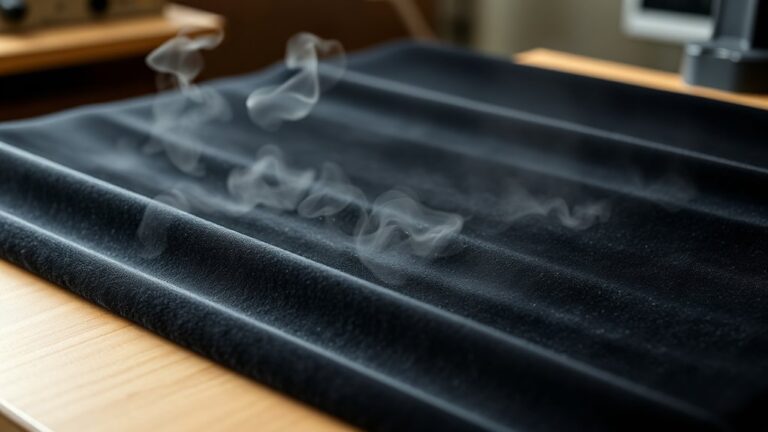
Another error is pressing for too long, which weakens the fabric and leaves permanent marks. Using a heat press without a protective sheet can also lead to shiny spots or burns. Additionally, neglecting to pre-test a small fabric area can result in unexpected damage.
Always adjust your time, temperature, and pressure carefully. By steering clear of these mistakes, you’ll preserve rayon’s softness and maintain its appearance during heat pressing.
Fixing Heat Press Problems on Rayon Fabrics
If you notice scorching, shrinking, or shiny spots on your rayon fabric after heat pressing, you can often fix these issues with careful techniques. Start by lowering the heat and pressing time to prevent further damage. Use a protective sheet like parchment paper between the heat press and fabric to avoid shiny spots.
Scorching, shrinking, or shiny spots on rayon can often be fixed by lowering heat and using a protective sheet.
If shrinking occurs, gently stretch the fabric back to shape while it’s still warm. For minor scorching, lightly dampen the fabric and iron on a low setting with a pressing cloth. Here are quick tips to fix heat press problems on rayon:
- Reduce temperature and pressing time
- Always use a protective barrier
- Stretch fabric gently if it shrinks
- Apply moisture before low-heat ironing
- Test on a scrap piece first to avoid damage
Caring for Heat-Pressed Rayon Garments
Caring for heat-pressed rayon garments usually requires extra attention to maintain their appearance and durability. You should always wash them inside out on a gentle cycle with cold water to prevent the heat-pressed design from fading or peeling. Avoid using harsh detergents or bleach, which can weaken the fabric and damage the print.
When drying, air-dry your rayon garments flat to keep their shape and avoid heat exposure from dryers that might cause shrinkage or distortion. If you need to iron, use a low heat setting and place a cloth between the iron and the fabric to protect both the rayon and the design.
Frequently Asked Questions
Can Rayon Be Heat Pressed With Sublimation Ink?
You can heat press rayon with sublimation ink, but you need to be careful. Rayon is delicate, so use lower heat settings and a protective sheet to avoid damage.
Test a small area first to guarantee good results.
Does Heat Pressing Affect Rayon’s Colorfastness?
Yes, heat pressing can affect rayon’s colorfastness if you use high temperatures or press too long. You should lower the heat setting and limit pressing time to keep colors vibrant and prevent damage.
What Types of Heat Press Machines Work Best for Rayon?
You’ll want a heat press with precise temperature control and even pressure distribution, like a digital clamshell or swing-away press. These machines help you avoid scorching rayon while achieving smooth, professional transfers every time.
Can You Heat Press Rayon Without a Protective Sheet?
You shouldn’t heat press rayon without a protective sheet because 70% of fabric damage occurs from direct heat. Using a Teflon sheet or parchment paper prevents scorching and keeps your rayon looking fresh and vibrant.
How Does Humidity Affect Heat Pressing Rayon Fabrics?
Humidity makes rayon more sensitive during heat pressing, causing it to wrinkle or shrink easily. You’ll want to adjust temperature and pressure carefully, and use a protective sheet to keep your fabric smooth and intact.
Conclusion
When heat pressing rayon, remember that patience pays off—”haste makes waste.” You can safely press rayon by using lower temperatures and shorter times, prepping the fabric carefully, and testing settings beforehand. Avoid common mistakes like overheating or skipping protective layers to keep your garment looking great.
With the right techniques, you’ll enjoy beautiful, lasting designs on rayon without damage. So, take your time and press smart for the best results. Proper heat pressing rayon ensures your fabric stays smooth and vibrant, making your creations truly stand out.