Can You Heat Press Polyurethane Foam
You can heat press polyurethane foam safely by selecting the right type of foam, such as high-density or closed-cell foam. Proper heat pressing of polyurethane foam requires careful control of temperature, pressure, and time to avoid damage.
Maintaining heat between 250°F and 280°F with medium pressure helps prevent melting or warping.
Use protective covers to shield the foam from direct heat during the pressing process. Always test small samples first to ensure the settings are correct.
With the right approach, you can avoid damage while achieving good results.
There’s more to learn about perfecting this process and preventing common pitfalls when heat pressing polyurethane foam.
Key Takeaways
- Polyurethane foam can be heat pressed but requires controlled temperatures between 250°F and 280°F to avoid damage.
- High-density and closed-cell polyurethane foams are best suited for heat pressing due to their heat resistance.
- Excessive heat or pressure can soften, discolor, or deform polyurethane foam during heat pressing.
- Using heat-resistant covers protects foam from direct heat, preventing scorching and uneven pressing.
- Always test small foam samples to determine optimal heat press settings before full application.
What Is Polyurethane Foam?
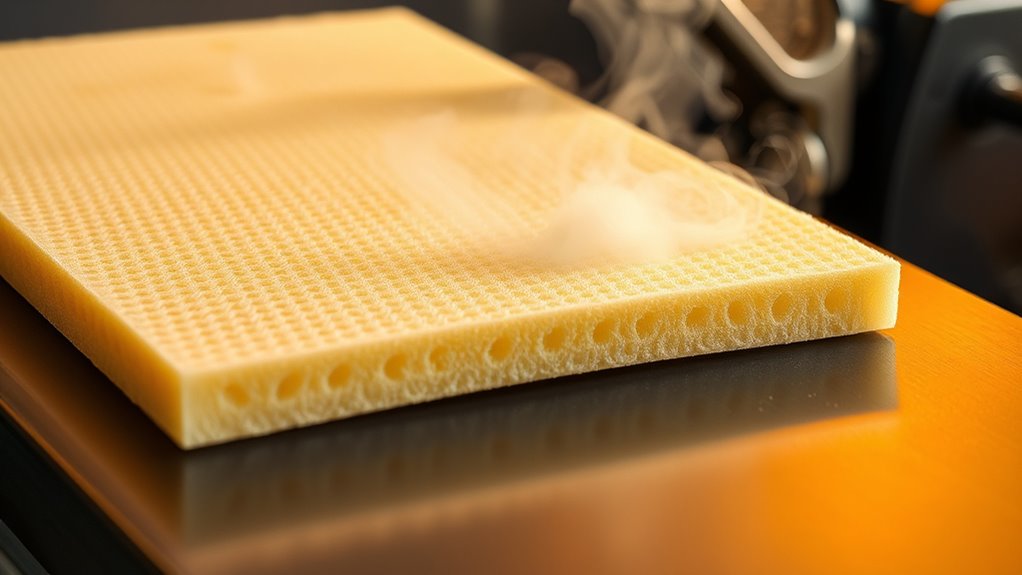
Although you might not notice it, polyurethane foam plays a crucial role in many everyday products. You’ll find it in furniture cushions, mattresses, car seats, and even insulation. This versatile material is a lightweight, flexible polymer made by mixing polyols and diisocyanates, which react to create a foam structure with countless tiny air pockets.
These air pockets give the foam its cushioning and insulating properties. When you touch polyurethane foam, you experience its softness and resilience, making it perfect for comfort and support. Its ability to absorb impact also makes it a popular choice in packaging and protective gear.
Understanding what polyurethane foam is helps you appreciate why it’s so widely used and why it behaves the way it does under different conditions.
How Does Heat Affect Polyurethane Foam?
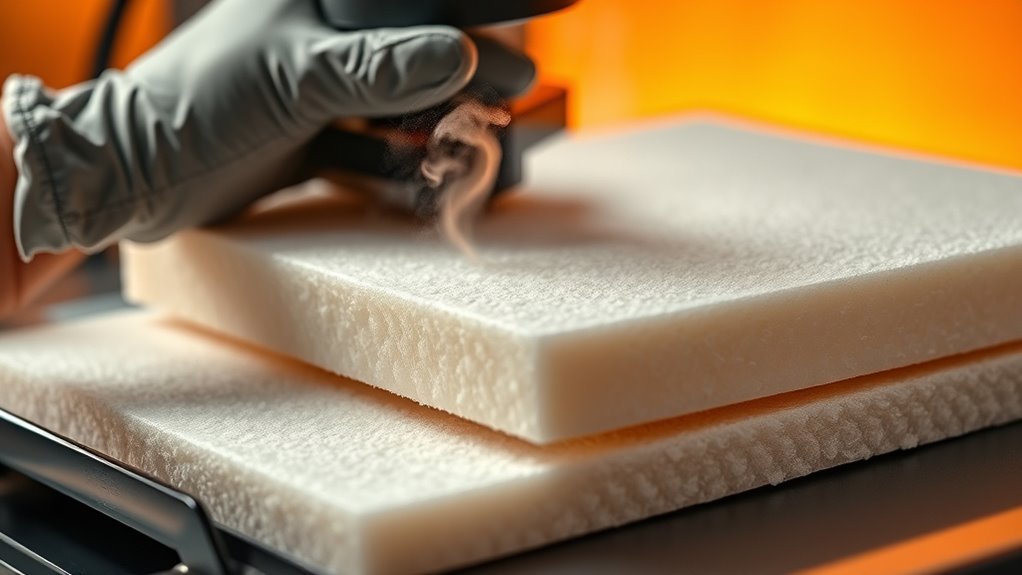
When you apply heat to polyurethane foam, its temperature directly influences its flexibility and density. You’ll notice structural changes as the foam softens and compresses under heat. Understanding these effects helps you control the foam’s shape and durability during pressing.
Temperature Impact On Foam
Because polyurethane foam reacts sensitively to heat, understanding its temperature limits is essential for effective heat pressing. If you exceed these limits, you risk damaging the foam, ruining your project, or even creating safety hazards. To help you avoid these issues, keep these points in mind:
- Temperatures above 180°F (82°C) can soften the foam, causing it to lose shape.
- Excessive heat may release unpleasant odors or harmful fumes.
- Prolonged exposure to heat weakens the foam’s resilience, shortening its lifespan.
- Lower temperatures might not activate adhesives or finishes properly, resulting in poor bonding.
Structural Changes From Heat
Exceeding the right temperature doesn’t just affect the surface of polyurethane foam—it alters its internal structure. When you apply too much heat, the foam’s open-cell network can collapse, causing permanent deformation. This breakdown reduces its cushioning ability and flexibility.
Heat can also trigger chemical changes, breaking down the polymer chains and making the foam brittle or sticky. As a result, you might notice shrinking, discoloration, or a hardened texture. Even moderate heat exposure can weaken the foam’s integrity over time, so controlling temperature is essential.
If you want your foam to maintain its properties, avoid prolonged heat or temperatures beyond its tolerance. Understanding these structural changes helps you protect the foam’s performance during heat pressing.
Can You Safely Heat Press Polyurethane Foam?
You can safely heat press polyurethane foam, but you need to keep the temperature within specific limits to avoid damage. Pressing at too high a heat can melt or deform the foam, so it’s essential to know the right settings.
Always follow safety precautions to protect yourself and your materials during the process.
Heat Press Temperature Limits
Although polyurethane foam offers great versatility, it demands careful temperature control during heat pressing to avoid damage. Exceeding its temperature limits can cause melting, warping, or toxic fumes.
To protect your project and health, keep these heat press temperature limits in mind:
1. Never exceed 320°F (160°C) to prevent foam breakdown. 2. Ideal pressing temperature ranges between 250°F and 300°F for best results. 3. Short pressing times reduce the risk of overheating and deformation.
4. Always monitor the foam’s reaction closely—it can change quickly under heat.
Safety Precautions Needed
Keeping heat press temperatures within safe limits helps prevent damage to polyurethane foam, but it’s only part of the equation. You also need proper ventilation since heating polyurethane can release fumes that irritate your eyes, skin, and respiratory system. Always work in a well-ventilated area or use a fume extractor to stay safe.
Additionally, wear heat-resistant gloves to protect your hands from burns, and avoid direct skin contact with the foam when heated. Never leave the heat press unattended while in use, and keep a fire extinguisher nearby just in case.
Finally, test a small foam sample before committing to a larger piece to guarantee the settings won’t cause melting or toxic reactions. Staying cautious helps you heat press safely and effectively.
Which Types of Polyurethane Foam Work Best for Heat Pressing?
When selecting polyurethane foam for heat pressing, it’s important to take into account the foam’s density and cell structure, as these factors directly affect how well it responds to heat and pressure. You’ll want foams that can withstand the process without melting or deforming.
Consider these types:
- High-density foam – Offers excellent resilience and holds shape under heat.
- Closed-cell foam – Resists moisture and heat, reducing risk of damage.
- Medium-density foam – Balances softness and heat tolerance, ideal for versatile projects.
- Specialty heat-resistant foam – Designed to endure higher temperatures without breaking down.
Choosing the right foam guarantees your project looks professional and lasts long. Avoid low-density or open-cell foams, as they often can’t handle the heat press effectively.
How to Prepare Polyurethane Foam for Heat Pressing
Before you start heat pressing, make sure the polyurethane foam is clean and the surface is properly prepared. You’ll also need to set the right temperature and pressure for the foam type you’re using.
Finally, apply a protective layer to prevent damage during pressing.
Cleaning and Surface Preparation
How do you guarantee polyurethane foam is ready for heat pressing? Proper cleaning and surface preparation are key. Any dust, oils, or debris can affect adhesion and the final result.
Here’s how you can get your foam perfectly prepped:
- Remove dust and dirt with a soft brush or compressed air to avoid surface scratches.
- Wipe the foam gently using a lint-free cloth dampened with isopropyl alcohol to eliminate oils and residues.
- Allow it to dry completely in a well-ventilated space; moisture can cause issues during pressing.
- Conduct a small patch test to ensure the foam reacts well to cleaning and is ready for heat pressing.
Temperature and Pressure Settings
Although polyurethane foam can be delicate, you’ll need to apply the right temperature and pressure settings to achieve a strong, even bond during heat pressing. Set your heat press to a moderate temperature, typically between 250°F and 300°F (121°C to 149°C). Higher temperatures can damage the foam, so avoid exceeding this range.
For pressure, apply light to medium force—too much pressure can compress or distort the foam’s structure. Aim for a firm but gentle press that evenly distributes pressure across the surface. Adjust settings based on the foam’s density and thickness; denser foam may tolerate slightly higher pressure but still requires careful handling.
Always monitor closely during your first attempts to find the ideal balance that keeps the foam intact while ensuring proper adhesion.
Protective Layer Application
When preparing polyurethane foam for heat pressing, you’ll want to apply a protective layer that shields the foam from direct heat and prevents damage. This step is vital to keep your foam intact and looking great after pressing.
Here’s how you can do it effectively:
- Use a Teflon sheet or heat-resistant silicone mat to cover the foam’s surface.
- Place a thin cotton cloth over the foam for an extra buffer without trapping heat.
- Avoid plastic wraps, as they can melt or stick during pressing.
- Make sure the protective layer is smooth and wrinkle-free to prevent uneven pressure spots.
What Are the Right Heat Press Settings for Polyurethane Foam?
Since polyurethane foam reacts differently to heat compared to other materials, you’ll need to adjust your heat press settings carefully to avoid damage. Use lower temperatures and shorter press times to prevent melting or warping. Pressure should be moderate—too much can compress the foam, too little won’t seal properly.
Here’s a quick guide to the ideal settings:
| Setting | Recommended Range |
|---|---|
| Temperature | 250°F to 280°F (121°C to 138°C) |
| Time | 10 to 20 seconds |
| Pressure | Medium (30-40 psi) |
| Pre-heat | No |
| Cooling Time | 1-2 minutes |
Adjust based on foam thickness and heat press model to get the best results without risking damage.
How to Protect Polyurethane Foam With Heat-Resistant Covers
Why should you use heat-resistant covers when working with polyurethane foam? These covers shield the foam from direct heat, preventing scorching, melting, or discoloration. They act as a barrier that preserves the foam’s integrity while ensuring your heat press process goes smoothly.
When protecting your polyurethane foam, consider these key points:
- Prevent Damage: Covers stop heat from causing irreversible burns or deformation.
- Ensure Even Heat Distribution: They help spread heat uniformly, avoiding hot spots.
- Maintain Cleanliness: Covers keep your foam free from residue or scorch marks.
- Extend Foam Life: By protecting it, you keep your foam usable longer, saving money and effort.
Using heat-resistant covers isn’t just smart—it’s essential for professional, quality results.
How to Test Heat Press Effects on Small Polyurethane Foam Samples
Although heat pressing polyurethane foam can enhance its properties, you’ll want to test small samples first to see how the foam reacts. Cut a few small pieces, then apply heat and pressure at varying levels. Observe changes in texture, flexibility, and color carefully.
This prevents ruining larger pieces and helps you find the best settings.
Here’s a simple way to track your results:
| Heat & Pressure Setting | Foam Reaction |
|---|---|
| Low Temp / Low Pressure | Soft, no damage |
| Medium Temp / Medium Pressure | Slight firmness, slight discoloration |
| High Temp / High Pressure | Hard, brittle, discolored |
Testing like this ensures you avoid costly mistakes and feel confident moving forward.
Step-by-Step Guide to Heat Pressing Polyurethane Foam
Before you start heat pressing polyurethane foam, prepare your workspace and gather all necessary tools to guarantee a smooth process. Having everything ready helps you stay focused and avoid mistakes.
Follow these steps for successful heat pressing:
- Set the temperature: Adjust your heat press to around 250°F to prevent foam damage.
- Position the foam: Place the foam flat on the press, ensuring even contact.
- Apply pressure and time: Close the press and hold firm pressure for 15-30 seconds, depending on foam thickness.
- Cool gradually: Open the press and let the foam cool slowly to keep its shape intact.
Common Mistakes to Avoid When Heat Pressing Polyurethane Foam
When heat pressing polyurethane foam, you’ll want to avoid common mistakes that can ruin your project or damage the material. First, don’t apply excessive heat or pressure; polyurethane foam is sensitive and can melt or deform quickly. Always use a lower temperature setting and moderate pressure.
Avoid pressing for too long—overexposure to heat can cause discoloration or warping. Make sure the foam is clean and dry before pressing; moisture or debris can create uneven results. Never skip testing on a small scrap piece to gauge the right temperature and timing.
Ultimately, avoid using a heat press with a rough or uneven surface, as this can leave unwanted impressions. Following these tips will help you protect your foam and achieve the best outcome.
Fixing Common Heat Press Problems With Polyurethane Foam
Even with careful preparation, you might still face issues like warping, discoloration, or uneven impressions while heat pressing polyurethane foam. Don’t worry—these problems are fixable with the right approach.
- Warping: Lower the temperature slightly and reduce pressing time. Foam is sensitive to heat, so gentle adjustments help.
- Discoloration: Use a protective Teflon sheet to shield the foam from direct heat, preventing burns and color changes.
- Uneven impressions: Ensure your heat press platen is clean and evenly heated. Uneven surfaces cause inconsistent results.
- Sticky residue: Place a silicone sheet between the foam and the press to avoid melted foam sticking to your equipment.
With these tweaks, you’ll regain control and get smooth, professional results every time.
Alternatives to Heat Pressing for Decorating Polyurethane Foam
Although heat pressing offers great results, you might find alternative decorating methods better suited for polyurethane foam, especially if you want to avoid heat-related issues. Techniques like screen printing, airbrushing, and adhesive vinyl application can provide vibrant designs without risking foam damage.
Here’s a quick comparison to help you decide:
| Method | Benefits |
|---|---|
| Screen Printing | Durable, vibrant colors |
| Airbrushing | Smooth gradients, customizable |
| Adhesive Vinyl | Easy application, no heat needed |
Each method suits different project types and skill levels. Consider your design complexity and durability needs before choosing. This way, you’ll get great results while preserving your foam’s integrity.
Frequently Asked Questions
Can Heat Pressing Polyurethane Foam Affect Its Durability Over Time?
Yes, heat pressing polyurethane foam can affect its durability over time. You’ll likely see changes like softening or deformation, so you should control temperature and pressure carefully to maintain the foam’s original strength and lifespan.
Are There Any Health Risks When Heat Pressing Polyurethane Foam?
You risk fumes, you risk irritation, and you risk breathing problems when heat pressing polyurethane foam.
How Does Humidity Impact Heat Pressing Results on Polyurethane Foam?
Humidity affects heat pressing polyurethane foam by causing moisture buildup, which can lead to uneven pressing and bubbles. You’ll want to control humidity levels to guarantee consistent results and prevent damage during the heat press process.
Can Additives in Polyurethane Foam Influence Heat Press Outcomes?
Yes, additives in polyurethane foam can impact your heat press results by altering melting points, flexibility, or surface texture.
You’ll need to adjust temperature and pressure settings to accommodate these changes for ideal outcomes.
Is Heat Pressing Polyurethane Foam Environmentally Friendly?
Heat pressing polyurethane foam isn’t very environmentally friendly because it can release harmful fumes and consume energy. You should use proper ventilation and consider eco-friendly alternatives to minimize your environmental impact when heat pressing this material.
Conclusion
You might be surprised to learn that over 60% of polyurethane foam projects fail due to improper heat pressing. Now that you know how heat affects the foam and which types work best, you can avoid those pitfalls.
By preparing your foam correctly and following the steps carefully, you’ll get great results every time. Remember, if heat pressing isn’t ideal, there are plenty of alternatives to explore.
Keep experimenting and stay creative! Whether you are heat pressing polyurethane foam or using other methods, understanding the material is key to success.