Can You Heat Press Fleece Blankets
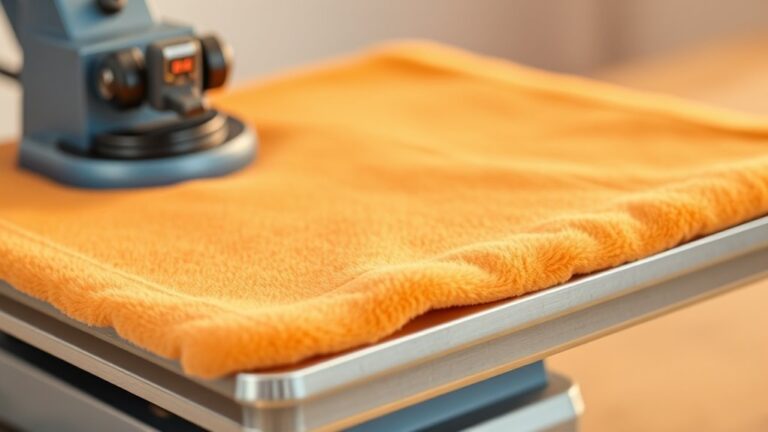
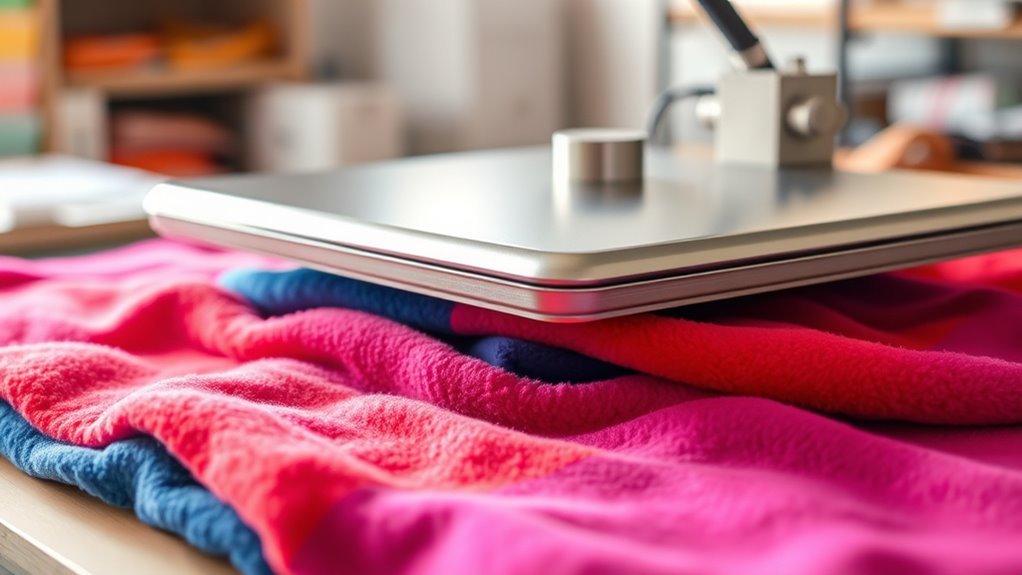
You can definitely heat press fleece blankets, but it’s important to use the right techniques to avoid damaging the fabric. Heat pressing fleece requires lower temperatures, around 300°F, and medium pressure to protect the soft, plush fibers.
Using protective layers like Teflon sheets or parchment paper helps prevent scorching during the process.
Preheating the fleece briefly before pressing can improve adhesion and reduce moisture buildup.
For best results, opt for heat transfer vinyl or sublimation on polyester fleece.
Press each section for about 15 seconds to ensure a smooth, lasting transfer.
Want to learn how to prepare your fleece blankets properly and troubleshoot common heat pressing issues? There’s plenty more to explore to get perfect results every time.
Key Takeaways
- Fleece blankets can be heat pressed using lower temperatures around 300°F to avoid fiber damage and maintain softness.
- Use medium pressure and short press times (10-20 seconds) to ensure proper adhesion without crushing fleece fibers.
- Always place a protective barrier like Teflon or parchment paper between the heat press and fleece to prevent scorching.
- Preheat fleece briefly to remove moisture and wrinkles for even heat transfer results.
- Test on small fabric scraps first to optimize settings and avoid ruining the full fleece blanket.
Can You Safely Heat Press Fleece Blankets?
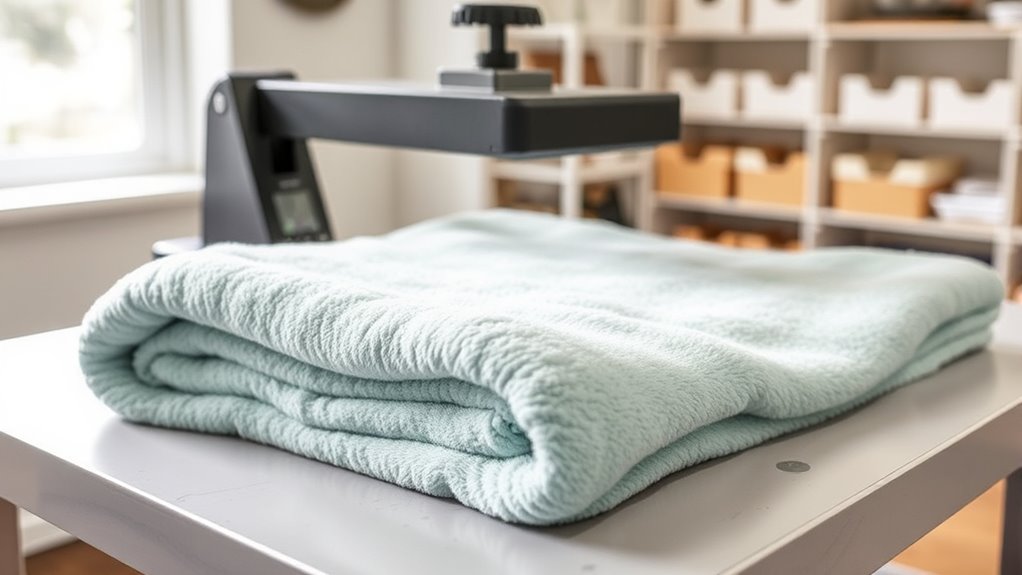
How can you safely heat press fleece blankets without damaging them? First, always use a protective barrier like a Teflon sheet or parchment paper between the heat press and the blanket to prevent scorching or melting.
Set the heat press temperature to a moderate level, around 300°F, since fleece is sensitive to high heat. Avoid pressing for more than 15 seconds to reduce the risk of fabric damage. You’ll also want to adjust pressure to medium; too much pressure can flatten the fleece’s texture.
Before pressing your final design, test on a small fleece scrap to guarantee the temperature and time settings work well. By following these steps, you’ll safeguard your fleece blankets and achieve crisp, lasting heat press results every time.
What Makes Fleece Blankets Unique for Heat Pressing?
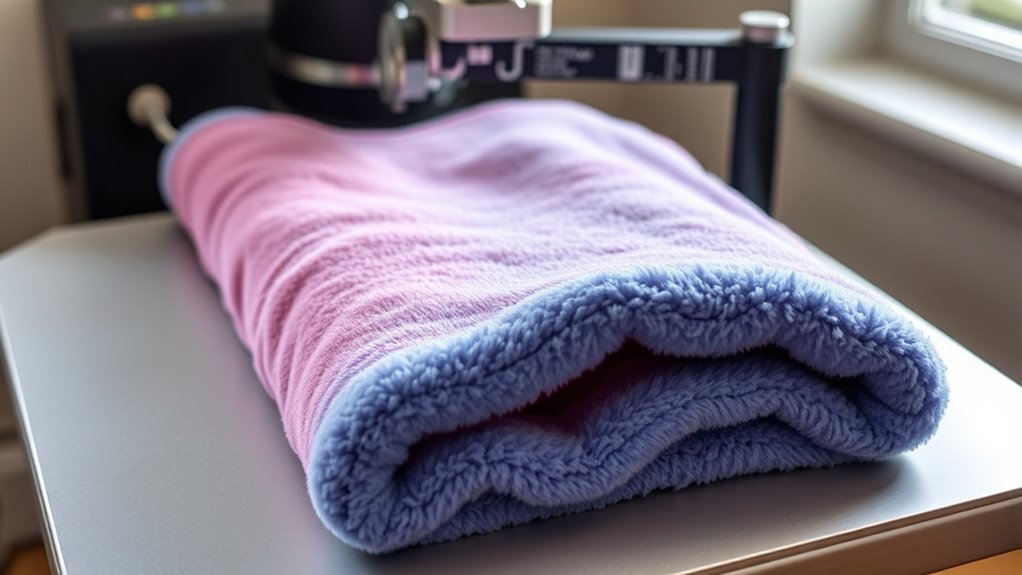
When you heat press fleece blankets, you’re working with a fabric that behaves differently from cotton or polyester. Fleece has a soft, plush texture and a thicker pile, which can affect heat transfer results. It’s sensitive to high temperatures and pressure, so you need to be careful not to damage the fibers or cause melting.
Here’s what makes fleece unique:
| Feature | How It Affects Heat Pressing |
|---|---|
| Soft Texture | Requires gentle pressure to avoid crushing fibers |
| Thick Pile | Can create uneven heat distribution |
| Heat Sensitivity | Needs lower temperature settings |
Understanding these traits helps you get the best results without ruining your cozy fleece blanket.
Which Heat Transfer Materials Work Best on Fleece Blankets?
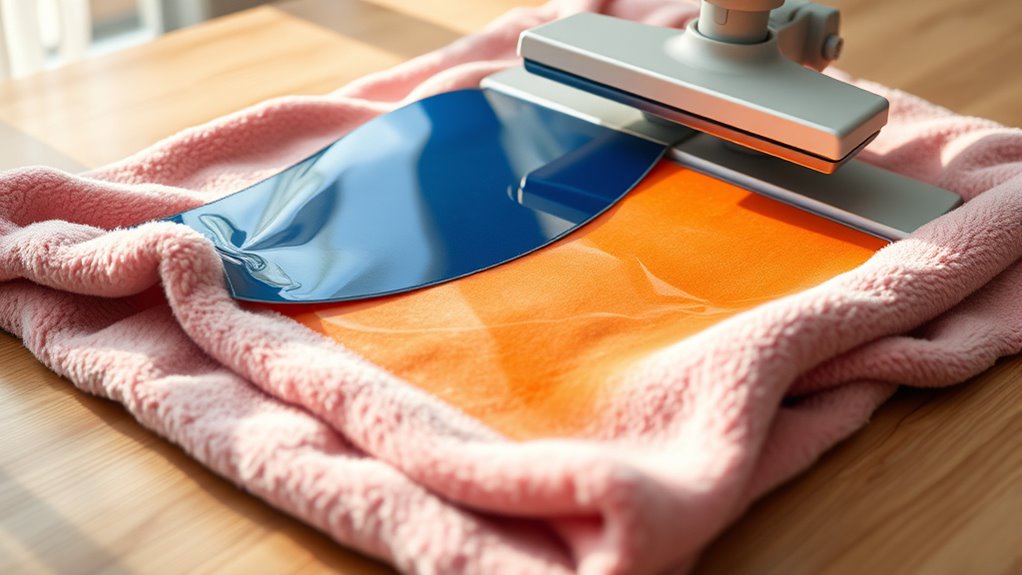
When choosing heat transfer materials for fleece blankets, you’ll want to take into account which vinyl types work best with the fabric’s texture. Sublimation can be tricky on fleece, but certain methods make it possible.
Plus, following a few heat transfer vinyl tips will help you get smooth, lasting results every time.
Vinyl Types Compatibility
Three popular types of vinyl—HTV (heat transfer vinyl), adhesive vinyl, and specialty vinyl—work best on fleece blankets. HTV is your go-to choice because it bonds well with fleece fibers when applied correctly using a heat press. Be sure to use a lower temperature and shorter pressing time to avoid damaging the fabric.
Adhesive vinyl isn’t typically recommended for fleece since it lacks the heat-activated adhesive needed for a durable bond, but it can work for temporary applications. Specialty vinyl, like glitter or flocked vinyl, adds texture and flair, and it adheres well to fleece if you adjust your heat press settings carefully. Always test a small area first to ensure compatibility and prevent damage before committing to a full design.
Sublimation On Fleece
While heat transfer vinyl offers reliable results on fleece blankets, you might wonder how sublimation holds up on this fabric. Sublimation works best on polyester or high-polyester blend fleece since it bonds with synthetic fibers. However, 100% cotton fleece won’t absorb sublimation ink well, leading to dull or faded designs.
When using sublimation on fleece, consider these points:
- Use bright, vibrant polyester fleece for crisp images
- Confirm your design has a white or light background
- Avoid thick or plush fleece that resists ink penetration
- Use a heat press with firm pressure and correct temperature (around 375°F)
- Expect a soft, breathable finish that won’t peel or crack
Sublimation can create stunning, durable designs, but fabric choice is key for success.
Heat Transfer Vinyl Tips
Since fleece blankets have a soft, textured surface, choosing the right heat transfer vinyl (HTV) is vital for a smooth, lasting application. You’ll want to use stretch or specialty HTV designed for fabrics with nap, such as flocked or stretch vinyl. These types flex with the fleece and reduce cracking or peeling.
Avoid standard glossy HTV, as it may not adhere well or feel stiff on fleece. When pressing, use a lower temperature (around 300°F), medium pressure, and a shorter time to protect the fabric’s softness. Always place a Teflon sheet or parchment paper between the HTV and heat press to prevent melting or scorching.
Testing your HTV on a small fleece area first can save you frustration and ensure the best results.
How Should You Prepare Fleece Blankets for Heat Pressing?
Before you start heat pressing fleece blankets, you need to make certain the fabric is clean and free of wrinkles, as any debris or creases can affect the final design. Begin by washing the blanket with mild detergent to remove dirt and oils. Dry it thoroughly to avoid moisture interfering with the heat press.
Lay the blanket flat on a hard, heat-resistant surface to ensure even pressing. Use a lint roller to pick up any fibers or dust. Finally, pre-press the blanket for a few seconds to smooth out any lingering wrinkles and to eliminate moisture.
- Wash with gentle detergent
- Fully dry before pressing
- Lay flat on a sturdy surface
- Use a lint roller to clean fibers
- Pre-press briefly to smooth fabric
How Do You Protect Fleece From Heat Damage?
To protect your fleece from heat damage, you’ll need to set your heat press to the right temperature—too high can melt or scorch the fabric. Always use protective layers like Teflon sheets or parchment paper between the press and the fleece to shield it.
These steps help keep your blanket safe while getting a crisp, lasting design.
Proper Temperature Settings
When heat pressing fleece blankets, you need to carefully control the temperature to avoid damaging the fabric. Fleece is sensitive to high heat, which can cause melting, discoloration, or permanent texture changes. To protect your blanket, keep the temperature moderate and consistent.
Aim for a setting between 270°F and 300°F, depending on your heat press model and fleece type. Avoid going above 320°F.
Visualize this to help you:
- A digital heat press showing 290°F
- A smooth fleece surface with no melting
- A clock indicating a press time of 10-15 seconds
- A thermometer hovering near the fabric
- A clean, crisp transfer design without wrinkles
Use Protective Layers
Controlling the temperature is just one part of protecting your fleece blanket during heat pressing. You also need to use protective layers to shield the fabric from direct heat and prevent scorching or melting. Place a Teflon sheet or a piece of parchment paper between the heat press and the fleece.
This barrier distributes heat evenly and stops the press from sticking to the fibers. You can also use a thin cotton cloth as an additional layer for extra protection. Avoid pressing too long or applying excessive pressure, even with protective layers, since fleece is sensitive.
How Do You Heat Press Fleece Blankets Step-by-Step?
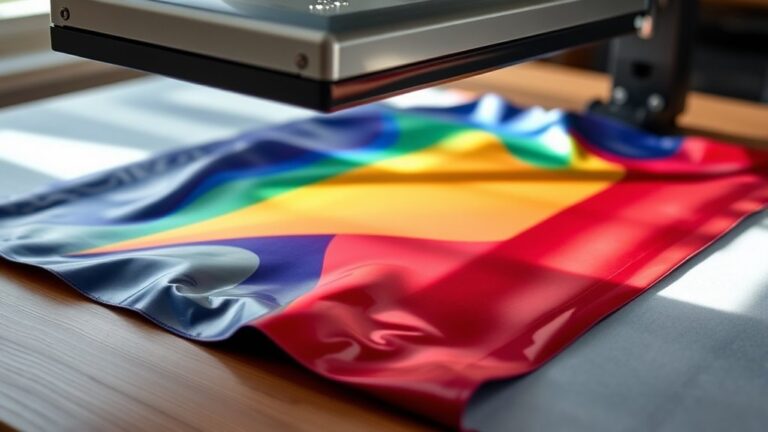
Although heat pressing fleece blankets requires careful attention, you can achieve vibrant, lasting designs by following a clear process. First, lay your fleece blanket flat on the heat press, smoothing out any wrinkles. Next, position your transfer design exactly where you want it.
Heat pressing fleece blankets demands precision, but with proper steps, you’ll create vibrant, lasting designs every time.
Then, place a protective Teflon sheet or parchment paper over the design to safeguard the fabric. Carefully close the heat press, applying even pressure for the required time. Finally, open the press and peel the transfer sheet according to the instructions, either hot or cold.
- Smooth, wrinkle-free fleece on press
- Precisely aligned transfer design
- Protective layer covering design
- Even pressure applied by heat press
- Proper peeling of transfer sheet
Following these steps ensures your fleece blanket looks professional and durable.
What Are the Best Heat Press Settings for Fleece Blankets?
To get the best results on fleece blankets, you’ll need to dial in the right heat press settings for temperature, pressure, and time. Set your heat press to about 300°F (149°C) to avoid damaging the soft fibers. Use medium pressure—too much can crush the fleece, while too little won’t transfer the design properly.
Aim for a pressing time of 15 to 20 seconds; this range ensures the adhesive activates without overheating the blanket. Always preheat the fleece for a few seconds before applying the transfer to remove moisture and wrinkles. These settings work well for most standard fleece blankets, but you should always test a small area first to confirm the best results.
Adjust accordingly based on your specific material and design.
How Do You Troubleshoot Heat Press Issues on Fleece Blankets?
When you encounter issues with heat pressing fleece blankets, pinpointing the problem quickly helps you fix it without wasting materials. Start by checking these common trouble spots:
- Uneven pressure causing patchy designs
- Incorrect temperature making the transfer peel off or scorch
- Insufficient pressing time leading to incomplete adhesion
- Excess moisture in the fleece affecting transfer quality
- Misaligned designs resulting in off-center prints
Adjust your heat press settings based on these observations. For example, increase pressure slightly if the design isn’t adhering well, or lower temperature if you see scorch marks.
Always pre-press the fleece to remove moisture and wrinkles before applying the design. Troubleshooting with these focused steps ensures your heat-pressed fleece blankets come out flawless every time.
How Can You Make Heat-Pressed Designs Last Longer on Fleece?
To make your heat-pressed designs last longer on fleece, you need to use the right heat press settings from the start. Paying attention to temperature, pressure, and time helps guarantee a strong bond.
After pressing, following proper care tips will keep your design looking fresh and durable.
Proper Heat Press Settings
Although fleece is a delicate fabric, you can make heat-pressed designs last longer by carefully adjusting your heat press settings. Getting the temperature, pressure, and time just right safeguards both the fleece and the design.
Here’s how to optimize your heat press:
- Set the temperature between 300°F and 320°F (149°C–160°C) to avoid melting fibers.
- Use medium pressure to ensure the transfer adheres without crushing the fabric.
- Limit pressing time to 10-15 seconds to prevent scorching.
- Always place a Teflon sheet or parchment paper between the heat plate and fleece for protection.
- Preheat the fleece for a few seconds to remove moisture and ensure smooth transfer.
Following these settings helps your design bond well and keeps your fleece blanket looking great longer.
Post-Press Care Tips
Since heat-pressed designs on fleece can be sensitive to wear, you’ll want to handle and care for your blanket with specific steps to keep the artwork vibrant and intact. Always wash your fleece blanket inside out in cold water using a gentle cycle to reduce friction on the design. Avoid using bleach or harsh detergents, as they can damage the print.
Skip the dryer’s high heat—air drying or using a low-heat setting helps preserve the design’s adhesion. When ironing, never apply direct heat on the print; instead, place a protective cloth over it if needed. Finally, store your fleece blanket folded or rolled, not crumpled, to prevent unnecessary stress on the design.
Following these tips ensures your heat-pressed fleece stays looking fresh longer.
What Are Good Alternatives to Heat Pressing Fleece Blankets?
When you want to customize fleece blankets but worry about heat pressing, you can explore several effective alternatives. These methods let you personalize without risking damage from heat. Consider these options:
If heat pressing concerns you, explore creative ways to customize fleece blankets without risking heat damage.
- Sewing or embroidery: Add designs or names with thread for a textured, durable look.
- Fabric paint or markers: Draw or stencil directly onto fleece for vibrant, flexible art.
- Iron-on transfers: Use lower heat settings with protective layers to avoid melting.
- Adhesive vinyl: Cut shapes or letters to stick on without heat, ideal for simple designs.
- Appliqué: Sew fabric cutouts onto the blanket for colorful, layered effects.
Each alternative offers creative ways to make your fleece blankets unique and cozy without relying on traditional heat pressing. Choose what fits your style and tools best.
How Can You Sell or Gift Heat-Pressed Fleece Blankets?
If you want to sell or gift heat-pressed fleece blankets, focusing on quality and presentation will make your creations stand out. Start by choosing soft, durable fleece and use high-quality heat transfer materials to guarantee vibrant, lasting designs. Pay attention to clean, precise pressing to avoid wrinkles or uneven prints.
When gifting, wrap the blanket nicely—consider using tissue paper, ribbons, or a personalized tag for a thoughtful touch. If selling, photograph your blankets in well-lit settings to showcase colors and details clearly. Offer customization options like names or special dates to attract buyers.
Finally, package your products securely to prevent damage during shipping. These steps will help you create memorable, professional fleece blankets that people will love to keep or give.
Frequently Asked Questions
Can Fleece Blankets Be Washed Without Damaging Heat-Pressed Designs?
Yes, you can wash fleece blankets with heat-pressed designs, but you should use cold water, gentle cycle, and avoid bleach.
Don’t tumble dry on high; instead, air dry or use low heat to keep the design intact.
What Are the Environmental Impacts of Heat Pressing Fleece Blankets?
You’ll generate some waste and energy use when heat pressing fleece blankets, but choosing eco-friendly inks and minimizing heat time helps.
Properly caring for your blanket extends its life, reducing environmental impact over time.
Are There Any Safety Precautions When Storing Heat-Pressed Fleece Blankets?
Like stacking books carefully on a shelf, you should store heat-pressed fleece blankets in a cool, dry place. Avoid folding them tightly to prevent creases, and keep them away from direct sunlight to maintain their vibrant design.
Make sure the storage area is well-ventilated to prevent moisture buildup. Using breathable storage bags can help protect the blankets from dust and pests.
Avoid placing heavy items on top of the blankets to maintain their shape and the integrity of the heat-pressed design.
How Do Different Fleece Colors Affect Heat Press Results?
Darker fleece colors absorb more heat, so you’ll need slightly lower temperatures to avoid scorching. Lighter colors reflect heat, letting you use standard settings.
Always test a small area to guarantee vibrant, even results.
Can Heat Pressing Fleece Blankets Cause Allergies or Skin Irritation?
By Jove, heat pressing fleece blankets usually won’t cause allergies or skin irritation unless you’re sensitive to heat or chemicals in the ink.
You should always test a small patch and wear protective gloves just in case.
Conclusion
Think of heat pressing fleece blankets like tending a delicate garden—you need the right tools, gentle care, and patience for your design to truly bloom. With proper preparation and protection, your heat-pressed creation will flourish, warming hearts like a cozy bloom in winter.
If challenges arise, adjust your approach like a gardener would with changing seasons. In the end, your fleece masterpiece can be a lasting gift, spreading comfort and creativity one press at a time.
Remember, when you heat press fleece blankets, using the right technique ensures your design adheres beautifully without damaging the fabric. This careful process makes heat pressing fleece blankets a rewarding craft that brings warmth and style together.