Can Polyester Be Heat Pressed
Yes, you can heat press polyester successfully, but it requires careful attention to temperature and timing. Polyester is a popular fabric for heat pressing due to its durability and smooth surface, which works well with heat transfer vinyl.
To avoid damage, use moderate temperatures—ideally between 300°F and 320°F—with short pressing times around 10-15 seconds and medium pressure.
Be careful not to exceed 350°F to avoid melting, warping, or shiny spots. Using a Teflon sheet protects your fabric and heat press.
Heat transfer vinyl adheres well to polyester when applied within these safe settings.
Keep these basics in mind, and you’ll get vibrant, lasting results while avoiding common pitfalls. Proper technique ensures your polyester projects look professional and maintain their quality over time.
Key Takeaways
- Polyester can be heat pressed safely at temperatures below 350°F, ideally between 300°F and 320°F, to avoid melting or warping.
- Pressing time should be short, around 10-15 seconds, with medium pressure to prevent fiber distortion and shiny patches.
- Using a Teflon sheet during pressing protects polyester fabric from scorching and prevents adhesive residue on the heat press.
- HTV designed for synthetic fibers adheres well to polyester when pressed between 270°F and 300°F for 10-15 seconds.
- Pre-testing on scrap fabric is essential to confirm safe temperature, pressure, and timing settings for heat pressing polyester.
How Does Polyester React to Heat Pressing?
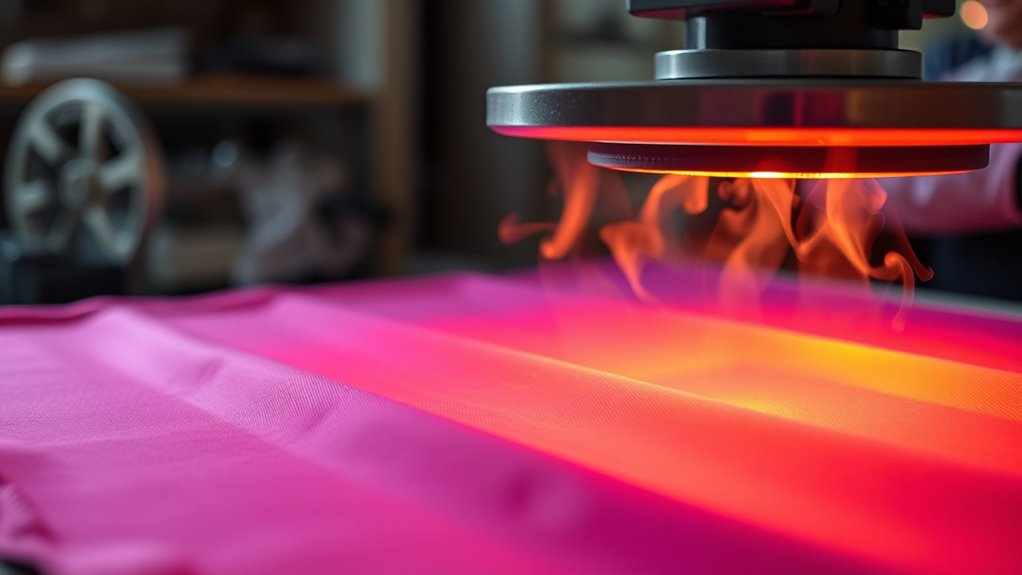
How does polyester react when you apply heat pressing? When you use heat pressing on polyester, the fabric responds by softening as the heat activates its synthetic fibers. Because polyester is thermoplastic, it becomes pliable under heat, which helps the design adhere well.
However, if you press too hard or too long, you risk melting or warping the material, causing shiny patches or distortion. You’ll notice that polyester doesn’t handle sudden temperature changes well, so you need to be careful with the heat intensity.
When done right, heat pressing creates vibrant, durable prints on polyester without damaging the fabric’s integrity. Understanding this reaction helps you control the process and avoid costly mistakes while working with polyester garments.
What Temperature and Time Settings Are Safe for Polyester?
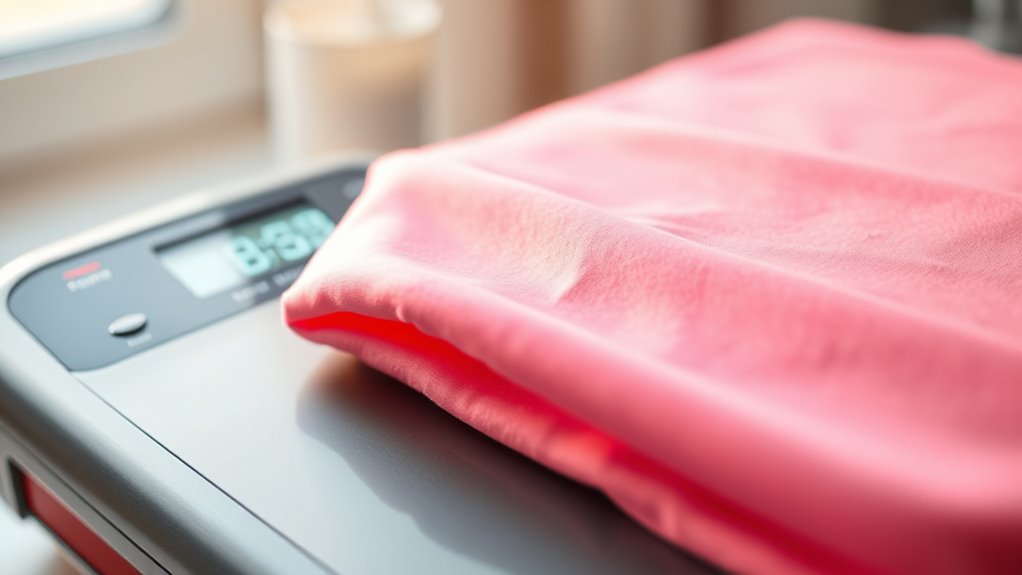
When working with polyester, controlling the temperature and pressing time is key to preventing damage while achieving quality results. You want to keep the heat below 350°F (175°C) to avoid melting or warping the fabric. Pressing time should be brief—usually between 10 to 15 seconds—to prevent scorching.
Applying medium pressure ensures the heat transfers properly without crushing the fibers.
Here’s a quick guide to safe settings:
| Temperature (°F) | Time (seconds) | Pressure Level |
|---|---|---|
| 320 | 10 | Medium |
| 330 | 12 | Medium |
| 340 | 15 | Medium |
| 350 | 10 | Light to Medium |
| 360* | <5 | Light |
*Use caution above 350°F to avoid damage.
How Do You Choose the Right Heat, Time, and Pressure Settings?
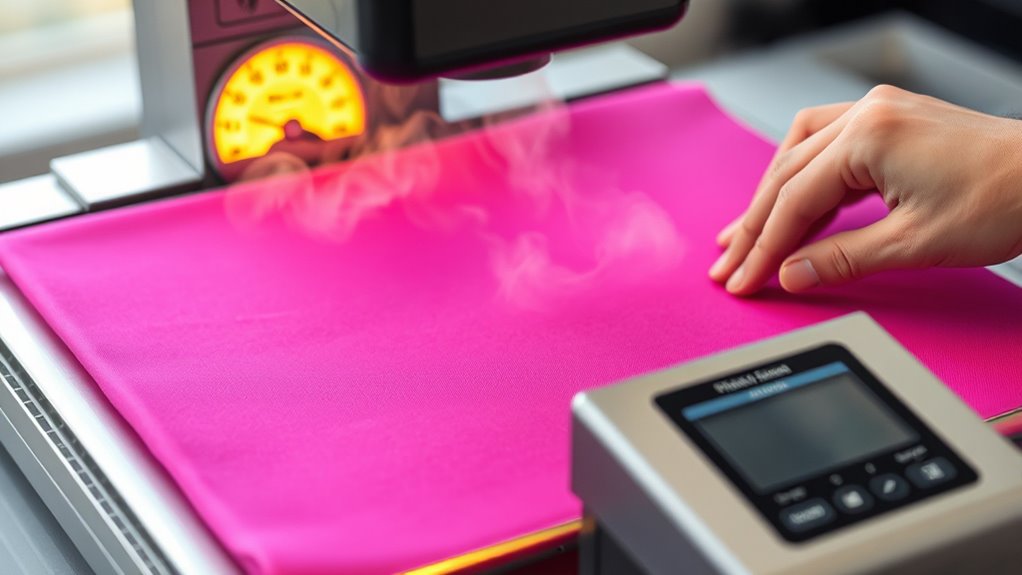
You’ll want to set the heat just right to avoid damaging the polyester while ensuring a strong bond. Timing matters too—too little or too much can affect the quality of your press.
And don’t forget pressure; the right amount helps transfer your design evenly without crushing the fabric.
Optimal Heat Settings
Because polyester reacts differently to heat compared to other fabrics, selecting the right combination of heat, time, and pressure is essential to achieving a perfect transfer without damaging the material. For ideal heat settings, aim for a temperature between 300°F and 320°F (149°C to 160°C). This range is hot enough to activate the adhesive on your heat transfer vinyl or sublimation ink but low enough to prevent melting or scorching the polyester fibers.
Avoid exceeding 320°F, as higher temperatures can cause the fabric to warp or develop shiny spots. Always pre-test your settings on a scrap piece to confirm the ideal temperature. Remember, precise heat control ensures vibrant, lasting results without compromising your polyester garment’s quality.
Ideal Time And Pressure
Although heat plays a crucial role in transferring designs onto polyester, choosing the right time and pressure settings is just as important to guarantee a flawless result. Using too much pressure or pressing for too long can damage the fabric, while too little won’t properly bond the design.
To choose the right settings, follow these guidelines:
- Set the heat press to 305°F (150°C) for polyester.
- Apply medium pressure to avoid fabric distortion.
- Press for 10-15 seconds to ensure proper adhesion.
- Always perform a test press on a similar fabric before the final transfer.
Can You Use Heat Transfer Vinyl on Polyester Fabrics?
You can definitely use heat transfer vinyl (HTV) on polyester fabrics, but you’ll need to adjust your heat settings carefully to avoid damage. Using the right temperature and pressure guarantees the vinyl adheres well and stays durable through washes.
Let’s explore the best practices for applying HTV on polyester to get lasting results.
Heat Transfer Vinyl Compatibility
When working with polyester fabrics, you might wonder if heat transfer vinyl (HTV) will adhere properly without damaging the material. The good news is that polyester is generally compatible with HTV, but you need to take into account a few key factors to ensure a successful application.
- Choose HTV specifically designed for synthetic fabrics to improve adhesion.
- Use a heat press rather than an iron for even temperature distribution.
- Avoid excessive heat to prevent melting or warping the polyester fibers.
- Always perform a test press on a small fabric area to check compatibility.
Best Heat Settings
How hot should your heat press be to guarantee the best results on polyester fabrics? Generally, set your heat press between 270°F and 300°F (132°C to 149°C). This range helps the heat transfer vinyl (HTV) properly adhere without melting or damaging the polyester fibers.
Press for about 10 to 15 seconds using medium pressure. Avoid higher temperatures because polyester can melt or warp easily under excessive heat. Always check the HTV manufacturer’s instructions too, as some require slightly different settings.
Before pressing your final piece, test on a scrap polyester fabric to ensure the temperature and time work well. By controlling heat and pressure precisely, you’ll get crisp, lasting designs without harming your polyester garments.
Durability On Polyester
Getting the heat settings right is just part of the process to guarantee your design lasts. When working with polyester and heat transfer vinyl (HTV), durability depends on how well you apply the transfer and care for the fabric afterward.
Polyester’s synthetic nature means it can hold up well, but improper heat or pressure can cause peeling or cracking.
To *assure* your design stays vibrant and intact:
- Use moderate heat (around 300°F) to avoid melting fibers.
- Apply firm pressure for the recommended time.
- Let the transfer cool before removing the carrier sheet.
- Wash inside out in cold water and avoid harsh detergents.
Following these steps will help your HTV designs on polyester remain durable and long-lasting.
Which Polyester Blends Work Best for Heat Pressing?
Although polyester is known for its durability and resistance to heat, not all blends perform equally well during heat pressing. When you’re choosing polyester blends, look for those with a higher polyester content—usually above 65%—as they handle heat pressing more effectively.
Blends like polyester-cotton with around 65-80% polyester offer a good balance: they’re durable while allowing the heat transfer to adhere properly. Pure polyester fabrics can sometimes be tricky due to their tendency to melt under excessive heat, so blends help reduce that risk.
Avoid blends with a high percentage of delicate fibers like rayon or nylon, as they may not withstand heat pressing well. By selecting the right polyester blend, you guarantee crisp, long-lasting designs without damaging your fabric.
Why Use a Teflon Sheet When Heat Pressing Polyester?
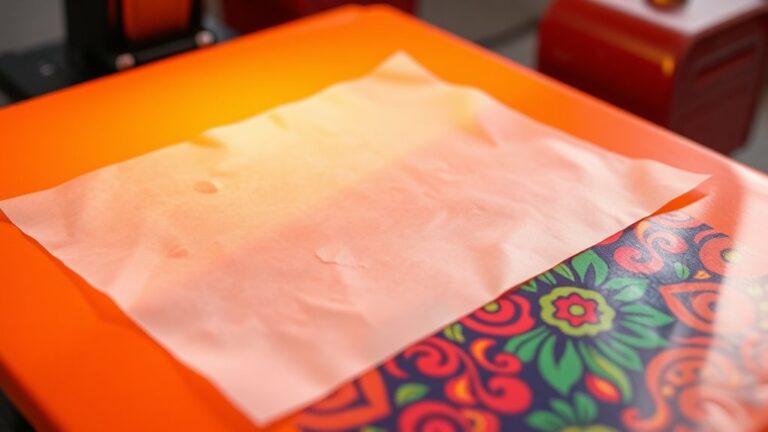
When you heat press polyester, using a Teflon sheet helps protect the fabric from damage caused by direct heat. It also guarantees the heat spreads evenly across the surface, preventing hot spots.
Plus, the sheet stops adhesives from sticking to your press, keeping everything clean and smooth.
Preventing Fabric Damage
Because polyester is sensitive to direct heat, using a Teflon sheet during heat pressing protects the fabric from scorching and melting. This simple barrier shields your polyester from the intense heat of the press, ensuring your design looks crisp without damaging the material.
To prevent fabric damage, keep these tips in mind:
- Always place a Teflon sheet between the heat press and polyester.
- Avoid pressing for too long, even with a Teflon sheet.
- Use the recommended temperature settings for polyester.
- Check for any residue or dirt on the Teflon sheet before pressing to prevent unwanted marks.
Ensuring Even Heat Distribution
To achieve a flawless finish on polyester, you need even heat distribution during pressing, and a Teflon sheet plays an essential role in this process. When you place a Teflon sheet over your fabric, it evenly disperses the heat from the press, preventing hot spots that can scorch or unevenly press the polyester. This consistent heat ensures your design adheres smoothly and maintains vibrant colors.
Without the Teflon sheet, direct contact between the heat press and polyester can cause irregular heating, leading to wrinkles or damage. Using a Teflon sheet also protects the fabric from potential residue or marks from the press itself.
Avoiding Adhesive Sticking
Although polyester responds well to heat pressing, the adhesive on your transfer can easily stick to the press platen without proper protection. Using a Teflon sheet prevents adhesive buildup, safeguarding both your garment and the heat press. It creates a non-stick barrier that ensures smooth, clean transfers every time.
Here’s why you should always use a Teflon sheet:
- Protects the heat press platen from adhesive residue
- Prevents transfers from sticking and ruining your design
- Helps distribute heat evenly, avoiding scorch marks
- Extends the life of your heat press equipment
How to Prevent Melting and Warping When Heat Pressing Polyester
When you heat press polyester, you need to control the temperature and timing carefully to prevent melting and warping. Set your heat press to a lower temperature, typically between 270°F and 300°F, and avoid exceeding this range. Use a heat-resistant cover sheet, like Teflon or parchment paper, to shield the fabric from direct heat.
Keep the pressing time short—usually 10 to 15 seconds—to avoid damaging the fibers. Always pre-press the polyester to remove moisture and wrinkles, ensuring even heat distribution. Avoid applying too much pressure, as this can distort the fabric’s shape.
Tips for Vibrant, Long-Lasting Heat Press Designs on Polyester
Ensuring your heat press designs on polyester stay vibrant and last long requires attention to both the materials and the process. To get the best results, follow these tips carefully.
Maintaining vibrant, durable heat press designs on polyester demands careful material choice and precise technique.
- Use High-Quality Inks: Choose inks specifically made for polyester to ensure bright colors and strong adhesion.
- Set Correct Temperature: Keep the heat press at 300°F to 320°F to avoid damaging the fabric or design.
- Apply Consistent Pressure: Use medium pressure to ensure the design transfers evenly without causing fabric distortion.
- Allow Proper Cooling: Let the fabric cool completely before handling to lock in the design and prevent smudging.
Common Mistakes to Avoid When Heat Pressing Polyester
If you want your heat press designs on polyester to look professional and last, you need to steer clear of common mistakes that can ruin your work. First, avoid using too high a temperature; polyester melts easily, so stick to around 300°F to prevent scorching or warping. Don’t press for too long—30 seconds is usually enough.
Also, never skip using a Teflon sheet or parchment paper between the heat press and your fabric to protect the polyester and design. Avoid applying too much pressure, which can distort the fabric or cause ink bleeding. Ultimately, never heat press over zippers, buttons, or seams, as these can damage your press and create uneven transfers.
Keeping these in mind ensures clean, vibrant results every time.
How to Clean and Care for Heat Pressed Polyester Items
Protecting your heat-pressed polyester designs doesn’t end once the pressing is done. To keep your items looking fresh and vibrant, you need to clean and care for them properly. Follow these simple steps to extend the life of your heat-pressed polyester:
Proper care after pressing is key to keeping your heat-pressed polyester designs vibrant and long-lasting.
- Turn inside out before washing – This shields the design from friction.
- Use cold water and gentle cycle – Hot water can damage the print and fabric.
- Avoid bleach and fabric softeners – They degrade the adhesive and fabric quality.
- Air dry or tumble dry low – High heat can cause the design to crack or peel.
Frequently Asked Questions
Can Polyester Be Heat Pressed With Sublimation Ink?
Yes, you can heat press polyester with sublimation ink, but you’ll need a polyester-coated surface or a special polymer coating. Without that, the ink won’t bond properly, and your design won’t transfer well or last long.
Is Heat Pressing Polyester Safe for Children’s Clothing?
Yes, heat pressing polyester is safe for children’s clothing if you use the right temperature and time settings. You’ll want to avoid overheating to prevent damage or discomfort, ensuring the fabric stays soft and wearable.
How Does Moisture in Polyester Affect Heat Pressing Results?
Moisture in polyester can cause uneven heat distribution and may lead to bubbling or warping during heat pressing. You should guarantee the fabric is completely dry to get smooth, professional-looking results without damaging the material.
Can You Heat Press Polyester Outdoor Fabrics?
Can you heat press polyester outdoor fabrics? Yes, you can, but you’ll need lower temperatures and quick presses to avoid damage.
Make sure to test a small area first, so you don’t ruin your entire fabric.
Does Heat Pressing Polyester Affect Its Breathability?
Yes, heat pressing polyester can affect its breathability slightly. When you apply heat, the fabric fibers may melt or fuse, reducing airflow.
To keep breathability, use lower temperatures and shorter press times carefully.
Conclusion
You’ve got this! Heat pressing polyester isn’t rocket science, but it does need careful temperature and timing to avoid melting or warping.
Stick to moderate heat, quick presses, and the right pressure for vibrant, lasting designs. Avoid common mistakes, and your polyester pieces will look amazing wash after wash.
Treat your heat press like a magic wand—one wrong move, and it’s like turning your fabric into a melted disaster. Handle with care for perfect results every time!
In conclusion, polyester can be heat pressed successfully by controlling temperature, time, and pressure. Following these guidelines ensures your heat pressing on polyester garments results in beautiful, durable prints without damage.