Can I Use Shrink Wrap in a Heat Press
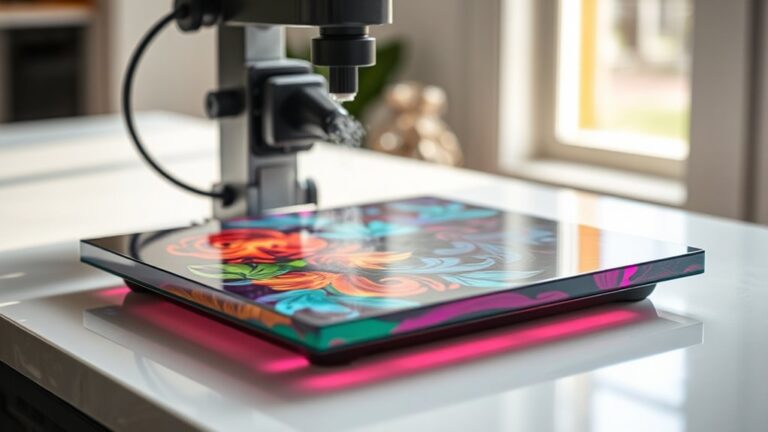
You can use shrink wrap in a heat press, but it requires careful temperature control to achieve the best results. Ideally, set the heat press between 250°F and 300°F to avoid melting or warping the shrink wrap material. Proper temperature management is key to maintaining the integrity of the wrap during the pressing process.
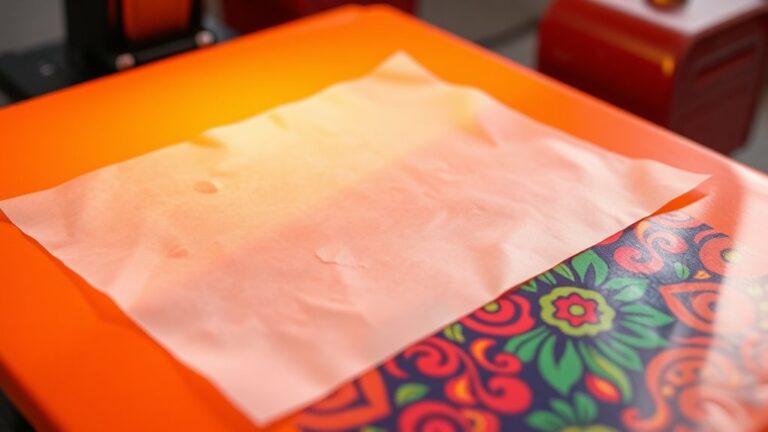
Make sure to apply even pressure throughout the pressing to ensure a smooth, professional finish. Using protective sheets between the heat press and the shrink wrap helps prevent sticking or damage.
Always wear gloves and work in a well-ventilated area to ensure safety while handling heat and fumes.
Following these steps carefully will help you create clean, polished shrink wrap applications using your heat press. Keep reading to uncover additional tips and creative ideas for the best shrink wrap results.
Key Takeaways
- Shrink wrap can be used in a heat press but requires careful temperature control between 250°F and 300°F to avoid melting or warping.
- Pre-cut shrink wrap larger than the object and smooth wrinkles before pressing for even shrinking and a professional finish.
- Always use protective sheets and heat-resistant gloves to prevent sticking and ensure safe handling during the heat press process.
- Overheating or excessive pressure can damage shrink wrap and items, so test small pieces and adjust settings incrementally.
- Allow shrink-wrapped items to cool completely after pressing to set the wrap securely and avoid distortion.
Can Shrink Wrap Take the Heat From a Heat Press?
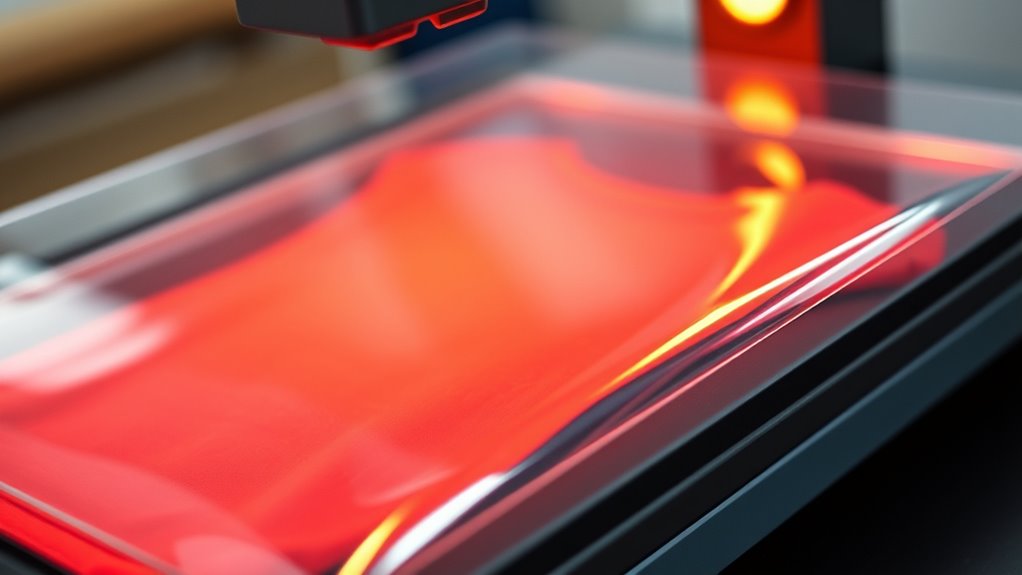
Although shrink wrap is designed to withstand heat, it can only handle so much before deforming or melting. When you expose shrink wrap to a heat press, you need to be cautious about the temperature and duration. Most shrink wraps tolerate temperatures around 250°F to 300°F, but heat presses often exceed this range, risking damage.
You should always check the manufacturer’s specifications for heat tolerance before applying any heat. If you use too high a temperature or press for too long, the shrink wrap can become distorted, lose its tight seal, or even melt. To avoid this, keep temperature and timing in check, and consider testing on a small piece first.
This way, you’ll know how your shrink wrap responds before committing to the full project.
What Happens When Shrink Wrap Meets a Heat Press?
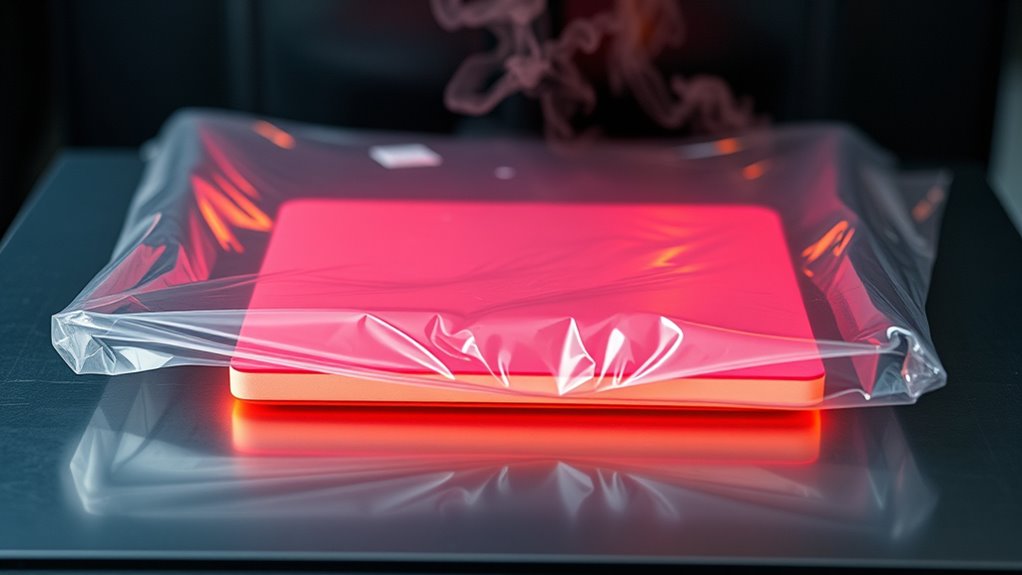
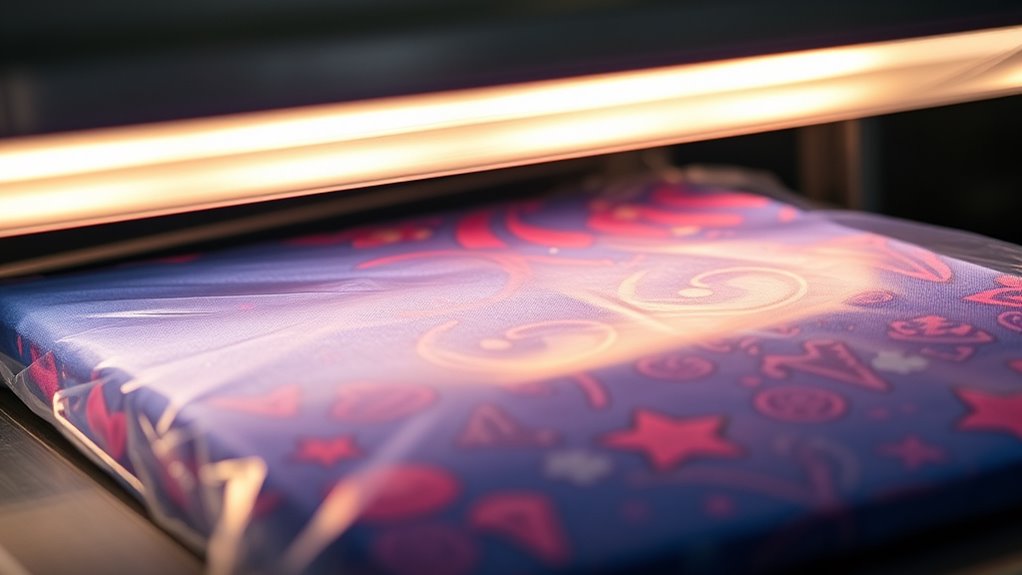
When you apply heat from a press to shrink wrap, the material quickly tightens and molds around the item beneath it. This reaction happens because the heat activates the wrap’s memory, causing it to contract.
Understanding how the wrap behaves under heat helps you control the final fit and finish.
Shrink Wrap Behavior
How does shrink wrap react under the intense heat of a heat press? When you apply heat, shrink wrap quickly softens and contracts. The material is designed to tighten around objects, so as it heats up, it pulls inward, conforming closely to whatever it covers.
You’ll notice it shrinking uniformly, reducing in size and becoming more rigid as it cools. The plastic’s flexibility decreases, making it snug and secure. However, if the heat is too high or applied too long, the wrap can warp, bubble, or even melt.
It’s important to understand this behavior because shrink wrap responds directly to temperature and pressure, changing shape and texture rapidly. This predictable shrinking action is why it’s popular for packaging and sealing.
Heat Press Effects
Once you apply a heat press to shrink wrap, the material reacts swiftly by softening and tightening around the object beneath it. The heat causes the wrap’s polymer chains to relax and contract, resulting in a smooth, snug fit that conforms perfectly to the item’s shape. You’ll notice the shrink wrap pulling taut, eliminating wrinkles and excess air pockets.
However, you need to control the temperature and time carefully—too much heat can cause the wrap to melt, bubble, or discolor. Too little heat, and it won’t shrink properly. Using a heat press allows for even, consistent pressure and heat distribution, which helps achieve a professional finish.
How to Safely Apply Shrink Wrap With a Heat Press
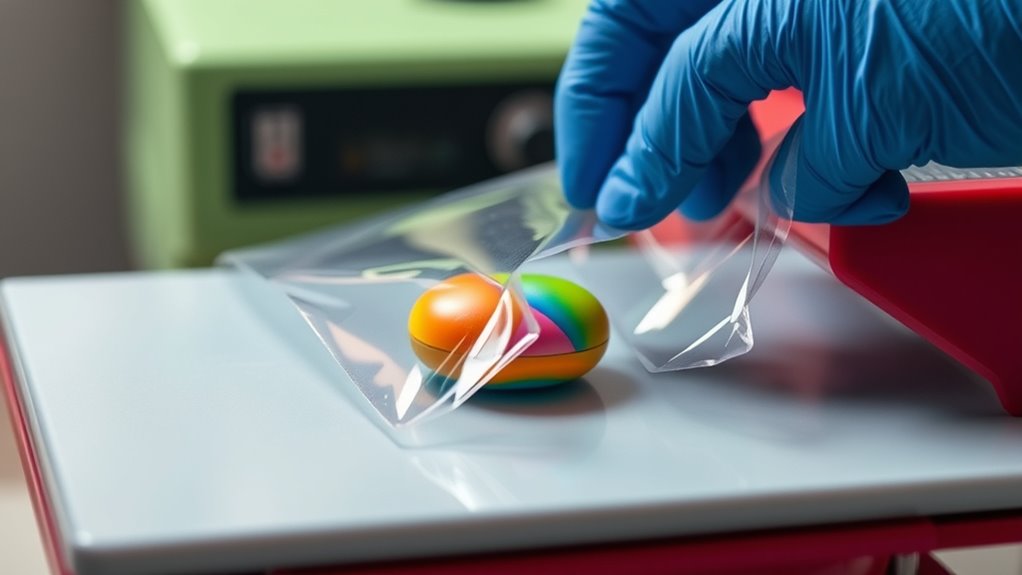
Before you start, make sure your shrink wrap materials are prepped and your heat press is set to the right temperature. You’ll want to follow safety precautions closely to avoid burns or damage.
Let’s go over the key steps to apply shrink wrap safely and effectively.
Preparing Shrink Wrap Materials
Why does preparing your shrink wrap materials properly matter? Proper preparation guarantees your project shrinks evenly and avoids damage. First, cut your shrink wrap to size, leaving a little extra room around your item.
This prevents tight edges that can cause curling or uneven shrinking. Next, clean your surfaces thoroughly—dirt or oils can affect adhesion and appearance. If you’re using shrink wrap sheets, pre-fold the edges to fit your item snugly, making the final pressing smoother.
Always handle the shrink wrap with clean, dry hands to avoid fingerprints or moisture spots. Finally, check for any wrinkles or creases, smoothing them out before pressing. Taking these steps sets you up for a professional, safe finish without surprises.
Heat Press Temperature Settings
With your shrink wrap materials prepped and ready, the next step is setting the right temperature on your heat press to guarantee safe and effective shrinking. Getting this right prevents overheating, melting, or uneven shrinkage.
Here’s how to adjust your heat press temperature properly:
- Check the shrink wrap packaging for manufacturer-recommended temperature ranges.
- Set your heat press between 250°F and 300°F as a general guideline, since most shrink wraps perform well in this range.
- Test on a small piece first to fine-tune the temperature without risking your final product.
- Adjust incrementally if you notice incomplete shrinking or overheating, increasing or decreasing by 10°F at a time until results are perfect.
Following these steps helps you get consistent, clean shrink wrap results every time.
Safety Precautions During Use
Although shrink wrapping with a heat press is straightforward, you need to take specific safety precautions to protect yourself and guarantee the best results. First, always wear heat-resistant gloves to prevent burns when handling hot materials. Make sure your workspace is well-ventilated to avoid inhaling fumes released during the shrinking process.
Never leave the heat press unattended while it’s on, and keep flammable materials away from the machine. Use tongs or heat-safe tools to position the shrink wrap, minimizing direct contact with hot surfaces. Before starting, double-check the temperature and time settings according to the shrink wrap manufacturer’s guidelines.
Finally, allow the wrapped item to cool completely before touching it directly to avoid burns and assure the wrap sets properly. Following these steps keeps you safe and improves your results.
Common Heat Press Mistakes With Shrink Wrap
When you’re working with shrink wrap in a heat press, even small mistakes can ruin your project. Avoid these common errors to ensure success:
- Using Incorrect Temperature – Too high, and the wrap melts; too low, and it won’t shrink properly. Always follow guidelines.
- Applying Excessive Pressure – Too much pressure can crush your item or cause uneven shrinking.
- Not Preheating the Press – Skipping this step leads to inconsistent heat, resulting in patchy shrinkage.
- Ignoring Timing – Leaving the shrink wrap under heat for too long or too short a time distorts the final product.
Best Types of Shrink Wrap for Heat Pressing
Mastering heat press settings is only part of getting great results with shrink wrap; choosing the right type of shrink wrap plays a big role too. You want shrink wrap that reacts well to heat without melting too quickly or losing clarity.
Polyolefin shrink wrap is a popular choice because it shrinks evenly and resists tearing. PVC shrink wrap works but can release fumes, so use it cautiously. For smaller, detailed projects, try polyethylene shrink wrap for its flexibility.
| Shrink Wrap Type | Best Use Case |
|---|---|
| Polyolefin | General heat press projects |
| PVC | Bulk packaging (use with care) |
| Polyethylene | Small, detailed wraps |
Selecting the right shrink wrap guarantees your heat press projects look professional and last longer.
Alternatives to Shrink Wrap for Heat Press Projects
If you’re looking to expand your creative options beyond shrink wrap, several alternatives can achieve similar effects with a heat press. These options offer versatility and unique finishes for your projects.
- Heat Transfer Vinyl (HTV) – Easy to cut and apply, HTV provides vibrant colors and durable designs.
- Sublimation Paper – Perfect for polyester fabrics, it creates detailed, permanent prints by transferring dye.
- Infusible Ink Sheets – These melt into the fabric for a seamless, professional look without peeling or cracking.
- Printable Heat Transfer Paper – Use this with your inkjet printer for custom images on light or dark fabrics.
Try these materials to diversify your heat press projects while maintaining quality and creativity.
Protecting Your Heat Press and Shrink Wrap Materials
Exploring different materials for your heat press projects is exciting, but safeguarding both your heat press and shrink wrap supplies guarantees lasting performance and quality results. Always use a protective sheet or Teflon sheet between the heat press platen and your shrink wrap to prevent sticking and damage.
Keep your heat press clean by wiping away any residue after each use, which helps avoid buildup that could affect future projects. Store your shrink wrap films in a cool, dry place to maintain their integrity and prevent warping or brittleness. Avoid overheating by following recommended temperature settings for shrink wrap materials to protect both the film and your machine.
Taking these precautions will extend the life of your equipment and keep your projects looking professional.
Creative Shrink Wrap and Heat Press Ideas
While shrink wrap and heat press techniques might seem straightforward, they open up a world of creative possibilities for customizing items. You can transform ordinary objects into unique, personalized gifts or products with just a few simple steps.
Here are some ideas to spark your creativity:
- Custom Phone Cases: Use shrink wrap with heat press designs to create vibrant, durable phone covers.
- Personalized Keychains: Cut shrink wrap into shapes, apply heat press designs, then shrink for unique accessories.
- Decorative Coasters: Combine heat press patterns with shrink wrap to make spill-proof, eye-catching coasters.
- DIY Jewelry Charms: Shrink wrap designs shrink into miniature charms perfect for bracelets or necklaces.
Frequently Asked Questions
Can I Reuse Shrink Wrap After Heat Pressing?
You can’t really reuse shrink wrap after heat pressing because it shrinks and conforms tightly. Once it’s been heated and shaped, it loses flexibility and won’t return to its original form for another use.
Does Shrink Wrap Emit Fumes When Heat Pressed?
Yes, shrink wrap can emit fumes when heat pressed, especially if overheated. You should work in a well-ventilated area and wear a mask to avoid inhaling potentially harmful fumes during the process for your safety.
How Long Does Shrink Wrap Take to Cool After Pressing?
Shrink wrap typically takes about 1 to 3 minutes to cool after pressing.
You’ll want to handle it carefully during this time to avoid warping or fingerprints while it solidifies into its final shape.
Can Shrink Wrap Damage My Heat Press Machine?
Don’t let shrink wrap become a wolf in sheep’s clothing; it can damage your heat press if it melts or sticks.
You should use it cautiously, ensuring proper temperature and timing to protect your machine’s surface.
Is Shrink Wrap Eco-Friendly for Heat Press Projects?
Shrink wrap isn’t very eco-friendly for heat press projects since it’s made from non-biodegradable plastics. If you want greener options, consider reusable or compostable materials to reduce waste and environmental impact during your crafting.
Conclusion
You can confidently combine shrink wrap and a heat press, but caution is key. Carefully controlling the temperature and timing lets you avoid warped wraps and wasted work.
With the right wrap and a watchful approach, you’ll protect your press and produce perfect, polished projects.
So, stay sharp, stay safe, and let your creativity shine—shrinking, sealing, and shining spectacularly with every press! Using shrink wrap in a heat press is a great way to achieve professional results while ensuring safety and efficiency.