Can I Use Parchment Paper on Heat Press
Yes, you can use parchment paper on a heat press to protect your materials from scorching and sticking. Parchment paper is a popular choice because it withstands high temperatures up to around 420°F.
This makes it ideal for heat pressing, helping guarantee even heat distribution and preventing damage to delicate fabrics or designs.
Just make sure you use fresh, wrinkle-free sheets within the recommended temperature range and avoid reusing them.
Using parchment paper correctly can significantly improve your heat press results.
If you want to get the best results and avoid common pitfalls, there’s a lot more helpful information to explore.
Key Takeaways
- Parchment paper is safe and effective to use on a heat press as it withstands temperatures up to 420°F without burning or sticking.
- It protects fabric and designs from scorching, sticking, and ink smudges during heat transfers.
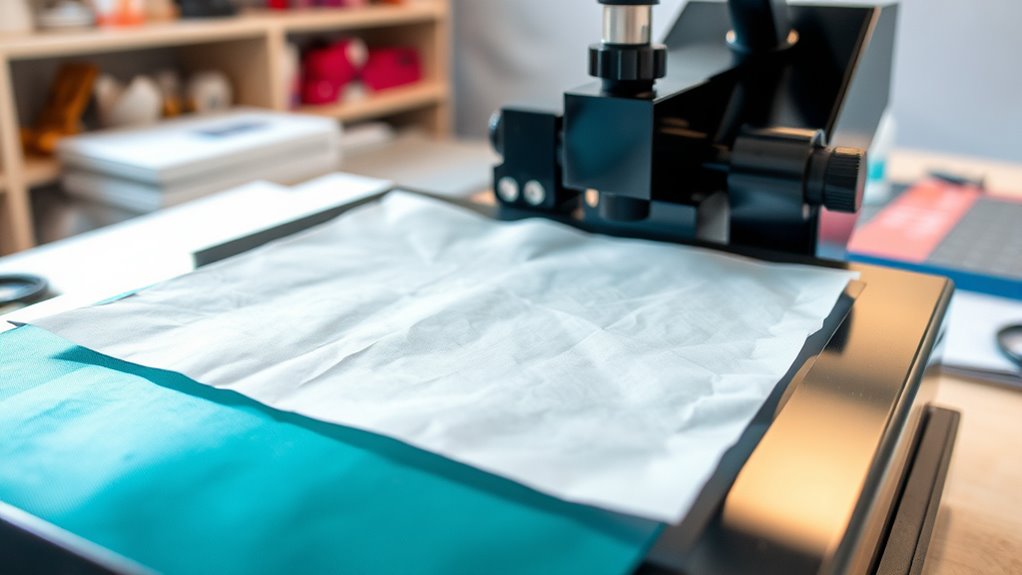
- Always use a fresh, wrinkle-free sheet of parchment paper centered over the design for even heat distribution.
- Avoid exceeding the paper’s heat tolerance and never reuse parchment paper to prevent brittleness and residue buildup.
- Parchment paper is preferred over butcher paper for heat pressing due to its reliable non-stick, heat-resistant coating.
What Is Parchment Paper and Its Role in Heat Pressing
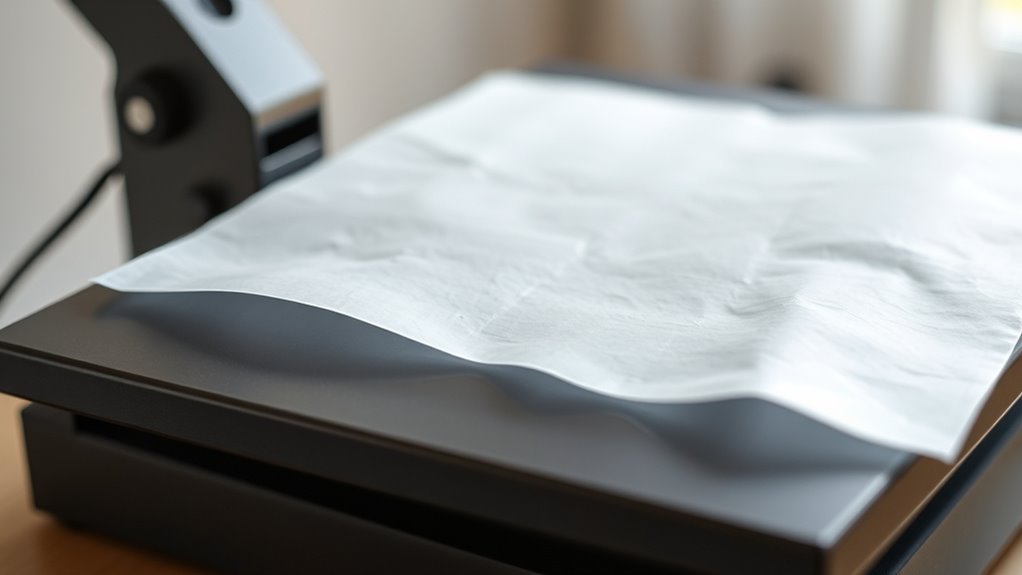
Although you might already know parchment paper from baking, it plays an essential role in heat pressing by protecting your materials and heat press machine. Parchment paper is a heat-resistant, non-stick paper that creates a barrier between your heat press and the item you’re pressing. This prevents direct contact, reducing the risk of scorching or sticking.
When you use parchment paper, it helps distribute heat evenly, which improves the quality of your transfer or imprint. You’ll also find it useful for protecting delicate fabrics and heat-sensitive designs. By incorporating parchment paper into your heat pressing routine, you’ll extend the life of your equipment and achieve cleaner, more professional results every time.
It’s a simple step that makes a big difference.
Can You Safely Use Parchment Paper on a Heat Press?
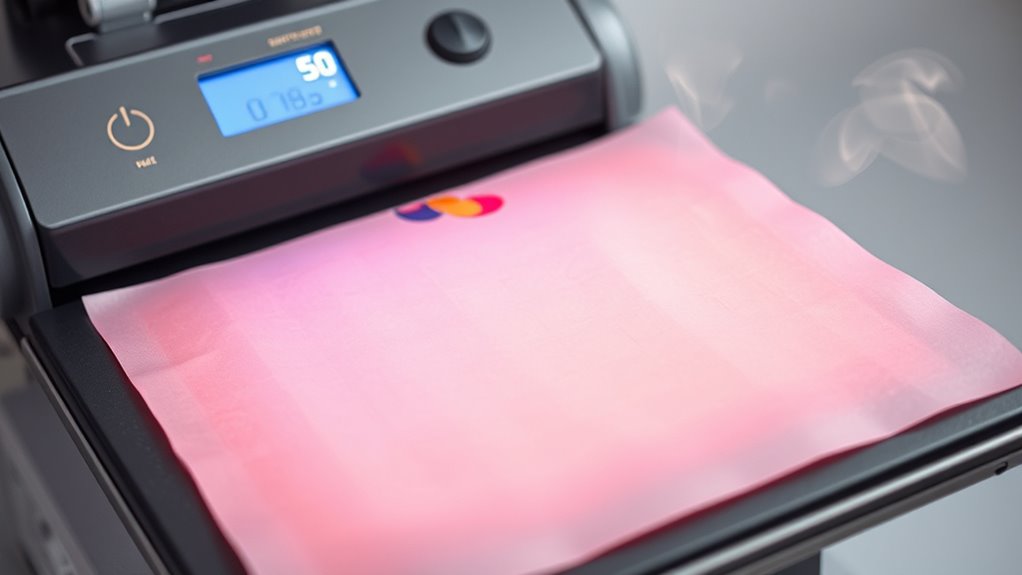
You can safely use parchment paper on a heat press as long as you consider its heat resistance, which typically withstands moderate temperatures. Unlike butcher paper, parchment is designed to handle heat without burning or sticking.
To get the best results, make sure to follow best practices like cutting the paper to size and avoiding direct contact with the heat platen.
Heat Resistance of Parchment
Since parchment paper is designed to withstand high oven temperatures, it can generally handle the heat of a heat press without burning or melting. Most parchment papers tolerate temperatures up to 420°F (215°C), which covers typical heat press settings. When you use parchment paper as a protective layer, it prevents direct contact between your heat press and your project, reducing the risk of scorching or sticking.
However, you should always check the specific temperature rating on your parchment paper’s packaging, as lower-quality brands might have lower heat resistance. Avoid exceeding these limits because the paper could discolor, become brittle, or even ignite. By respecting these temperature guidelines, you can safely incorporate parchment paper into your heat press workflow without damaging your materials or tools.
Parchment Paper vs. Butcher
When deciding between parchment paper and butcher paper for your heat press projects, it’s important to understand their differences in heat resistance and texture. Parchment paper is coated to withstand heat without sticking or burning, making it ideal for protecting your designs.
Butcher paper, on the other hand, is more porous and less heat-resistant, which can lead to scorching or sticking.
| Feature | Emotion You’ll Feel |
|---|---|
| Parchment Paper | Confidence knowing your design is safe |
| Butcher Paper | Anxiety over possible burns or smudges |
| Heat Resistance | Relief when your materials hold up |
Choosing parchment paper gives you peace of mind, while butcher paper can leave you worried about ruining your project.
Best Practices for Use
Although parchment paper is designed to withstand high temperatures, using it safely on a heat press requires some care to avoid damage to both your materials and the paper itself. Always cut the parchment paper slightly larger than your design to protect the heat press and prevent direct contact. Place it between the heat plate and your project to shield your materials from scorching and adhesive residue.
Avoid reusing parchment paper, as heat can cause it to become brittle and less effective. Keep your heat press temperature within parchment paper’s tolerance, typically below 425°F (218°C), to prevent burning. Finally, inspect the paper for any tears or wrinkles before use, as these could affect your design’s quality and safety during pressing.
Following these tips guarantees smooth, safe results every time.
When Should You Use Parchment Paper for Heat Press Projects?
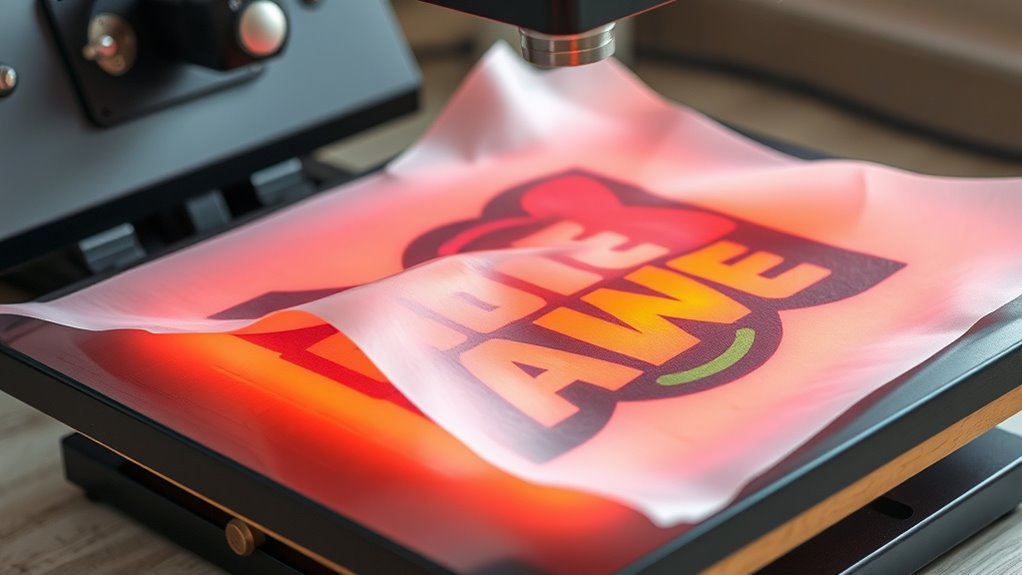
You should use parchment paper when working with delicate fabrics to protect them from direct heat and damage. It’s also essential to prevent ink smudges during the pressing process.
Knowing when to apply parchment paper helps guarantee clean, professional results every time.
Protecting Delicate Fabrics
How can you guarantee your delicate fabrics stay flawless during heat press projects? Using parchment paper is your secret weapon. It acts as a protective barrier, preventing direct heat contact and reducing the risk of scorching or fabric damage.
You should use parchment paper when:
- Pressing thin materials like silk or lace that can easily burn.
- Working with fabrics prone to shine or discoloration under high heat.
- Applying heat transfers on sensitive knits that might warp.
- Needing to protect embellishments or delicate stitching during pressing.
Preventing Ink Smudges
When exactly should you reach for parchment paper to prevent ink smudges during heat press projects? Use parchment paper whenever you’re working with designs that involve ink or vinyl prone to smudging under heat and pressure. It acts as a reliable barrier, stopping ink from bleeding or sticking to the heat press platen.
Always place a sheet of parchment paper over your design before pressing, especially with delicate or intricate prints. This simple step prevents unwanted transfer and keeps your project clean and sharp. Avoid skipping parchment paper when using sublimation, heat transfer vinyl, or printed transfers, as smudges can ruin your work.
Risks of Using Parchment Paper With Heat Transfers
Although parchment paper is heat resistant, using it incorrectly during heat transfers can lead to several issues that compromise your project’s quality. You might think it’s foolproof, but risks do exist. Here’s what you should watch out for:
- Uneven Heat Distribution – Parchment paper can cause hot spots, resulting in inconsistent transfers.
- Residue Build-Up – Over time, paper fibers may stick to your design or press, ruining the surface.
- Reduced Adhesion – It can act as a barrier, preventing proper bonding between transfer and fabric.
- Potential Tearing – Thin parchment tears easily, exposing your design to direct heat and damage.
If you’re not careful, these problems could waste your materials and time, leaving you frustrated and disappointed. Always handle parchment paper with precision.
How Parchment Paper Impacts Heat Transfer Vinyl (HTV)
Since heat transfer vinyl (HTV) requires precise temperature and pressure to bond properly, using parchment paper can substantially affect your results. Parchment paper acts as a protective barrier between the heat press and your vinyl, preventing direct contact that might otherwise scorch or stick. However, it can slightly reduce heat transfer efficiency because it adds an extra layer, which might require you to adjust pressing time or temperature.
If you don’t compensate, you risk incomplete adhesion, leading to peeling or lifting edges. Also, parchment paper can help distribute pressure more evenly, minimizing hot spots that could damage your design. Overall, using parchment paper with HTV is beneficial for protection but demands careful calibration of your heat press settings to maintain a strong, durable bond.
Alternatives to Parchment Paper for Heat Pressing
If you’re looking for alternatives to parchment paper for heat pressing, consider using a Teflon sheet, which offers excellent heat resistance and non-stick properties. Silicone mats are another great option, providing durability and even heat distribution. Butcher paper can also work well, especially for protecting your designs without leaving residue.
Teflon Sheet Benefits
Why choose a Teflon sheet over parchment paper when heat pressing? Teflon sheets offer superior durability and protection. Unlike parchment paper, they won’t tear or stick, making your heat press process smoother and less frustrating.
Here’s why you’ll appreciate using a Teflon sheet:
- Reusable – Saves money since you don’t need to replace it after every use.
- Non-stick surface – Prevents materials from sticking or burning, protecting your designs perfectly.
- Heat resistant – Handles high temperatures without degrading, ensuring consistent results.
- Easy to clean – Wipe it down quickly and keep it fresh for your next project.
Silicone Mat Uses
How can a silicone mat enhance your heat pressing projects? Silicone mats offer a durable, reusable alternative to parchment paper. Their heat-resistant surface evenly distributes heat, preventing scorching or sticking on your designs.
Unlike parchment paper, you won’t need to replace silicone mats after each use, saving you time and money. They also provide a non-slip surface, keeping your materials steady during pressing for more precise results. Silicone mats resist moisture and don’t tear easily, making cleanup simpler.
Plus, their flexibility allows you to use them on various heat press sizes and shapes. If you’re looking for a reliable, eco-friendly option that protects your heat press and transfers, silicone mats are a smart choice to contemplate.
Butcher Paper Pros
Although parchment paper remains popular, butcher paper offers distinct advantages that can elevate your heat pressing projects. When you switch to butcher paper, you’ll notice:
- Better heat resistance – It withstands higher temperatures without burning, protecting your designs.
- Less sticking – Your transfers peel off smoothly, reducing frustration and ruined prints.
- Cost-effectiveness – Butcher paper is often cheaper and available in larger rolls for extended use.
- Eco-friendly option – It’s usually uncoated and biodegradable, which helps you go green.
Protecting Your Heat Press and Materials
When you use parchment paper on your heat press, you’ll safeguard both the machine and your materials from potential damage caused by direct contact with heat and adhesive residue. Parchment paper acts as a barrier, preventing ink, adhesive, or vinyl from sticking to the heat platen, which can cause buildup and affect future projects.
It also protects your garments or substrates from scorching or unwanted marks. By placing parchment paper between your heat source and the design, you maintain the integrity of both your equipment and your creations. This simple step extends the lifespan of your heat press and ensures consistent, professional results without the risk of sticky messes or heat damage compromising your work.
Tips for Using Parchment Paper Safely and Effectively
To get the best results with parchment paper on your heat press, you should guarantee it’s properly positioned and free of wrinkles before each use. This ensures even heat distribution and prevents unwanted creases on your project.
Here are four tips to help you use parchment paper safely and effectively:
- Always check for tears or holes to avoid heat damage or ink transfer.
- Use fresh parchment paper for each press to maintain cleanliness and prevent buildup.
- Avoid folding the parchment paper, as creases can leave marks on your design.
- Keep the paper centered on your material to protect both your heat press and your project surface.
Following these steps will help you get professional results while protecting your equipment and materials.
Choosing the Right Heat Press Paper for Your Project
Since different projects require specific materials, choosing the right heat press paper can make a significant difference in your results. You’ll want to pick paper designed for your fabric type and transfer method. For example, if you’re working with vinyl, a Teflon sheet or parchment paper can protect your design and heat press surface.
Sublimation projects often need special sublimation paper that holds ink and releases it evenly under heat. Also, consider the paper’s thickness and heat resistance to prevent scorching or sticking. Don’t overlook the size of the paper—it should fully cover your design without excess.
Taking these factors into account *guarantees* your project turns out crisp, vibrant, and damage-free every time you press.
Common Heat Press Paper Mistakes and How to Avoid Them
Choosing the right heat press paper sets the stage for a successful project, but even with the best materials, mistakes can happen. Avoid these common errors to keep your work flawless:
- Using the wrong paper type – Not all papers handle heat the same; using parchment instead of heat transfer paper can ruin your design.
- Skipping pre-pressing – Failing to pre-press your fabric can cause wrinkles, leading to uneven transfers.
- Overlapping papers – Pressing multiple sheets without proper spacing can cause unwanted sticking or smudging.
- Ignoring paper position – Misaligning the paper results in crooked or incomplete prints, wasting time and materials.
Troubleshooting Heat Press Problems Related to Paper Choices
When you encounter issues like smudging, fading, or incomplete transfers, the problem often lies in your paper choice or handling. Using the wrong paper or not positioning it correctly can ruin your final product. Always select heat-resistant, non-stick papers like parchment or butcher paper.
Avoid glossy or thin papers that can melt or stick. Also, guarantee the paper fully covers your design to prevent scorching.
| Problem | Cause | Solution |
|---|---|---|
| Smudging | Paper too thin/sticky | Use parchment or butcher paper |
| Fading | Insufficient heat/time | Increase temp or press time |
| Incomplete Transfer | Paper shifted or misaligned | Secure paper properly |
Frequently Asked Questions
Can Parchment Paper Be Reused Multiple Times in Heat Pressing?
You can reuse parchment paper a few times during heat pressing, but it won’t last forever. It may lose its non-stick quality or burn, so keep an eye on its condition and replace it when it starts wearing out.
Does Parchment Paper Affect the Color Vibrancy of Heat Transfers?
You won’t believe it, but parchment paper actually protects your transfers without dulling colors! It acts like a magical shield, preserving vibrancy and detail so your heat press designs pop just as brilliantly as intended.
Is Parchment Paper Compatible With All Heat Press Machines?
You can’t use parchment paper with every heat press machine because some get too hot or uneven. Always check your machine’s temperature limits and manufacturer guidelines before using it to avoid damaging your materials or equipment.
How Thick Should Parchment Paper Be for Heat Press Use?
You should use parchment paper that’s about 0.03 to 0.05 millimeters thick for heat press use. This thickness protects your designs without affecting heat transfer, ensuring even pressure and preventing scorching or sticking during pressing.
Can Parchment Paper Prevent Ghosting on Heat Press Designs?
Yes, parchment paper can help prevent ghosting by evenly distributing heat and pressure during your heat press process.
Just make sure it’s thick enough and placed correctly to avoid unwanted marks or smudges on your design.
Conclusion
So, can you use parchment paper on a heat press? The answer isn’t a simple yes or no—it depends on your project and materials. Like a trusty sidekick, parchment paper can protect your designs but might also cause issues if misused.
Remember, choosing the right paper and using it correctly can make all the difference between a flawless finish and a frustrating flop. Ready to press on with confidence? Understanding when and how to use parchment paper on a heat press is key to achieving the best results.