Can You Heat Press Foam Koozies
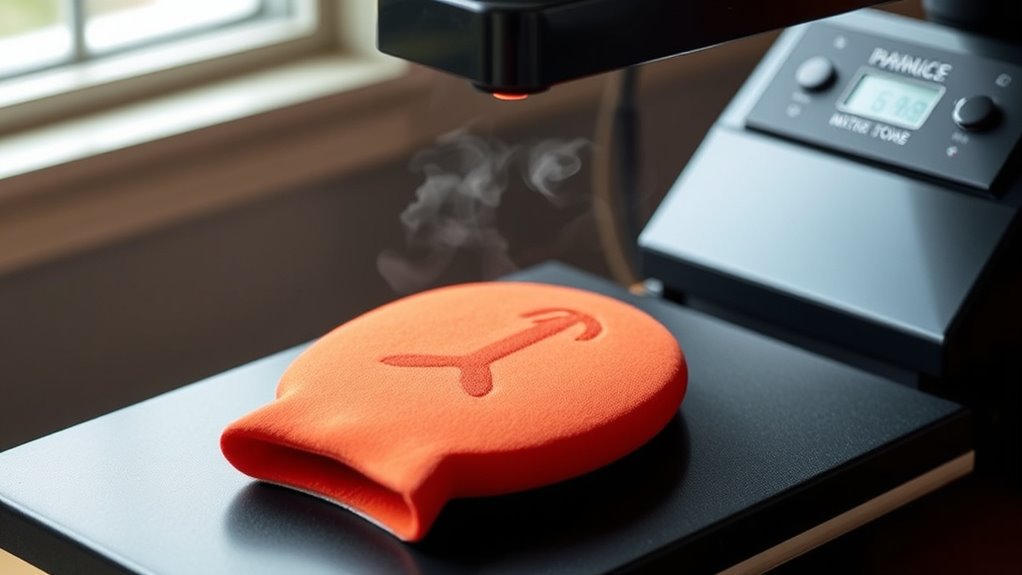
You can heat press foam koozies, but it requires careful handling to avoid damage. Foam koozies are popular for keeping drinks cold, and customizing them with heat press designs is a great way to personalize them.
However, the foam material is sensitive to high temperatures and pressure, so proper settings are crucial for success.
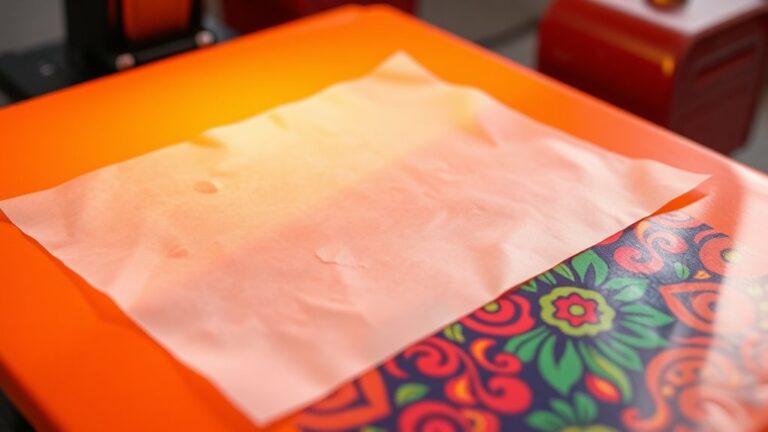
Use a temperature between 300°F and 320°F and press for just 10 to 15 seconds with medium pressure. Always protect the foam with a Teflon or parchment sheet to prevent scorching or melting.
Choosing flexible heat transfer vinyl helps with adhesion and durability.
If you take these precautions, you’ll get great results. There’s more to learn on perfecting this technique, so experiment carefully to find what works best for your foam koozies.
Key Takeaways
- Foam koozies can be heat pressed but require careful temperature and time control to avoid damage.
- Ideal settings are around 300°F to 320°F for 10 to 15 seconds with medium pressure.
- Always use a protective sheet like Teflon or parchment paper to prevent scorching and melting.
- Thin, flexible heat transfer vinyl (HTV) designed for foam ensures better adhesion and durability.
- Testing on sample koozies is essential to optimize heat, time, and pressure for best results.
Can You Safely Heat Press Foam Koozies?
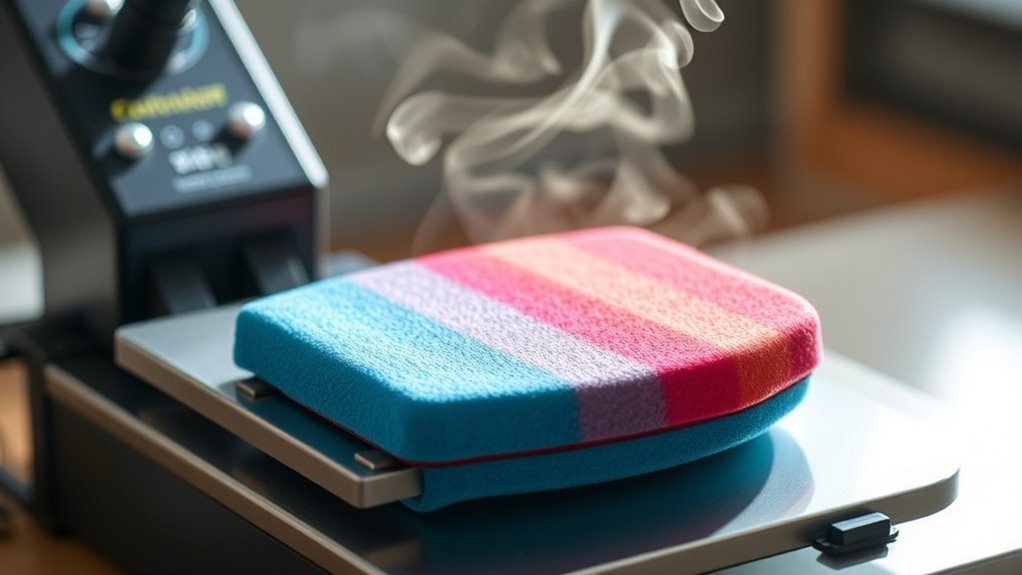
Although foam koozies are popular for customizing drinks, you might wonder if you can safely heat press them without damaging the material. The good news is, yes, you can heat press foam koozies, but you need to be cautious. Foam is sensitive to high temperatures and prolonged heat, so you’ll want to use a lower temperature setting and limit your pressing time.
Typically, setting your heat press between 300°F and 320°F and pressing for around 10 to 15 seconds works best. Always use a protective sheet to prevent direct contact with the heat platen, which helps avoid melting or warping. Testing on a sample koozie first will help you find the perfect balance between heat, time, and pressure, ensuring your design transfers cleanly without damage.
Why Foam Koozies Are Tricky to Heat Press
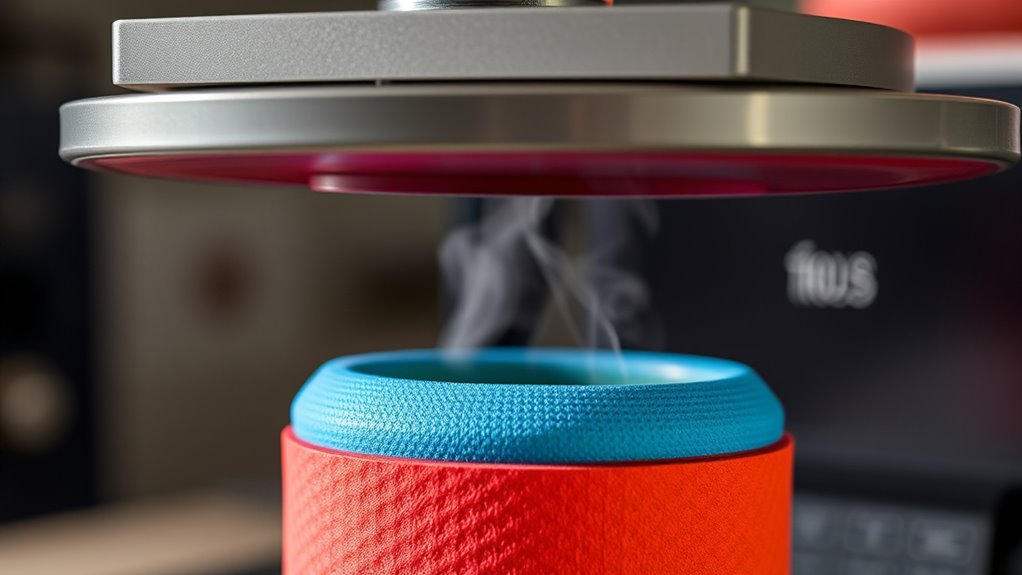
Getting the right temperature and timing is just part of the challenge when heat pressing foam koozies. Foam is sensitive to heat and pressure, which can cause it to warp, melt, or lose its shape if you’re not careful. Unlike flat fabrics, koozies have a curved, bulky shape that makes it hard to apply even pressure during pressing.
This uneven pressure can result in poor adhesion or distorted designs. Also, foam’s porous surface doesn’t always hold heat transfer vinyl or sublimation inks as well as other materials, so your design might not stick or look crisp. You’ll need to handle these factors thoughtfully to avoid damaging your koozies or ruining your artwork.
That’s why mastering this process takes some trial and error.
Best Heat Press Settings for Foam Koozies
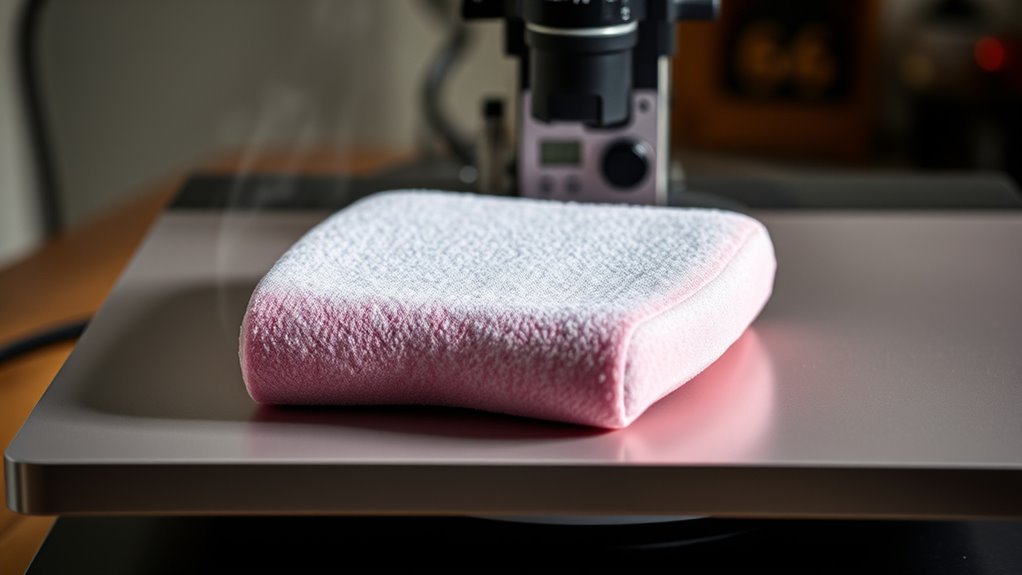
When you heat press foam koozies, finding the right combination of temperature, time, and pressure is essential to protect the material while ensuring your design adheres properly. Set your heat press to about 320°F (160°C) to avoid melting or warping the foam. Keep the pressing time short—around 15 seconds—to prevent the foam from compressing too much.
Use medium pressure; too much can damage the foam, and too little won’t secure the design. It’s a good idea to test on a sample koozie first, adjusting settings as needed. Always use a protective sheet like a Teflon or parchment paper between the heat press and the koozie to shield the foam and transfer.
This balance helps you achieve clean, lasting results.
Choosing the Right Transfer Materials for Foam Koozies
You’ll want to pick transfer materials that work well with foam’s unique texture to guarantee a strong bond. Consider durability and flexibility, since koozies need to stretch without cracking or peeling.
Choosing the right materials helps your design last through plenty of use.
Transfer Material Compatibility
How do you guarantee your heat press designs stick perfectly to foam koozies? The key is choosing transfer materials compatible with foam’s unique texture and heat sensitivity. Avoid standard vinyl or thick transfers that might not adhere well or could damage the foam.
Instead, opt for thin, flexible heat transfer vinyl (HTV) designed for delicate surfaces. Printable heat transfer films made specifically for foam also work well because they bond without compromising the koozie’s feel. Always check the manufacturer’s recommendations for temperature and pressure settings to prevent melting or warping.
Testing a small sample before full production helps assure your chosen transfer material adheres smoothly and looks vibrant. This compatibility ensures your designs stay crisp and your koozies maintain their shape.
Durability and Flexibility Factors
Since foam koozies undergo frequent stretching and handling, selecting transfer materials that offer both durability and flexibility is essential. You want materials that won’t crack or peel when the koozie bends or gets wet.
Look for heat transfer vinyl (HTV) specifically designed for soft, flexible substrates.
Here’s a quick comparison to help you choose:
| Material Type | Flexibility | Durability |
|---|---|---|
| Standard HTV | Moderate | High |
| Stretch HTV | High | Very High |
| Print & Cut Film | Moderate | Moderate |
Stretch HTV stands out for foam koozies because it moves with the material, ensuring your design stays intact and vibrant through use.
Step-by-Step Guide to Heat Pressing Foam Koozies
Before you start heat pressing foam koozies, gather all your materials and set up your workspace for efficiency. You’ll need a heat press machine, foam koozies, heat transfer vinyl (HTV), a weeding tool, and heat-resistant tape. Begin by designing and cutting your HTV to fit your koozie.
Weed out the excess vinyl carefully. Preheat your heat press to about 315°F (157°C). Place the koozie on the press, then position the vinyl design on the foam surface.
Secure it with heat-resistant tape to prevent shifting. Press with medium pressure for 15 seconds. After pressing, peel the carrier sheet off while the vinyl is warm.
Let the koozie cool completely before handling. Following these steps guarantees a clean, durable transfer on your foam koozies.
Common Mistakes and How to Avoid Heat Damage
Once you’ve mastered the basic steps of heat pressing foam koozies, it’s important to recognize common mistakes that can lead to heat damage. Avoid these pitfalls to keep your koozies looking great:
- Excessive Heat and Pressure – Using too high a temperature or too much pressure can scorch or deform the foam. Stick to recommended settings.
- Overheating Duration – Pressing for too long causes melting or warping. Set a timer and remove the koozie promptly.
- Ignoring Foam Type – Different foams handle heat differently. Make sure you know your material’s heat tolerance before starting.
Protecting Your Foam Koozies During Heat Pressing
Although heat pressing foam koozies requires careful attention, you can protect them by using proper barriers and adjusting your equipment settings. First, always place a Teflon sheet or parchment paper between the heat press and the koozie to prevent direct contact and avoid scorching.
Lower your heat press temperature to around 320°F (160°C) and reduce the pressing time to 10-15 seconds to minimize damage. Use gentle pressure to avoid compressing the foam excessively, which can deform your koozie.
Before starting, test your settings on a scrap piece to guarantee the foam holds up well. By taking these precautions, you’ll maintain the shape and texture of your foam koozies while achieving crisp, lasting designs without risking burns or warping.
Creative Design Ideas for Custom Foam Koozies
When you want your foam koozies to stand out, incorporating creative designs can make all the difference. You can easily personalize them to match your style or event.
Here are three design ideas to inspire you:
Discover three creative design ideas to make your foam koozies truly stand out and reflect your unique style.
- Bold Typography: Use catchy phrases or custom fonts that reflect your personality or brand. This grabs attention instantly.
- Vibrant Patterns: Incorporate geometric shapes, gradients, or abstract art to add visual interest and energy.
- Themed Graphics: Design around holidays, sports teams, or hobbies to create a connection with your audience or guests.
Frequently Asked Questions
Can Foam Koozies Be Customized Without a Heat Press?
Yes, you can customize foam koozies without a heat press by using adhesive vinyl, fabric paint, or permanent markers.
Just apply your design carefully and let it dry or set properly for lasting results.
How Do Foam Koozies Compare to Neoprene Koozies?
You’ll find foam koozies lighter and less stretchy than neoprene ones. Foam insulates well but neoprene offers better durability and flexibility.
Choose foam for budget-friendly options and neoprene if you want a snug, long-lasting fit.
Are Foam Koozies Environmentally Friendly?
Foam koozies aren’t very eco-friendly since they’re made from non-biodegradable materials. But don’t worry—you can extend their life by reusing them often, reducing waste and making your chill sessions greener.
Can Foam Koozies Be Machine Washed?
You shouldn’t machine wash foam koozies because the agitation can damage their shape and foam material.
Instead, gently hand wash them with mild soap and water, then air dry to keep them in good condition.
What Types of Drinks Are Best Suited for Foam Koozies?
You’ll find foam koozies work best with cold drinks like soda cans, beer bottles, and iced beverages. They keep your drink cool longer by insulating against heat and moisture, making them perfect for outdoor events and parties.
Conclusion
You can safely heat press foam koozies, but you need the right settings and materials to avoid damage. Did you know that 70% of heat press mistakes come from incorrect temperature or pressure? By following proper techniques and protecting your foam, you’ll create durable, custom designs without ruining your koozies.
Keep experimenting with creative ideas, and you’ll master heat pressing foam koozies in no time! Remember, using the correct temperature, pressure, and protective layers is key to successful foam koozie heat pressing. With practice, your custom foam koozie designs will stand out and last longer.