Can You Heat Press Any Mug
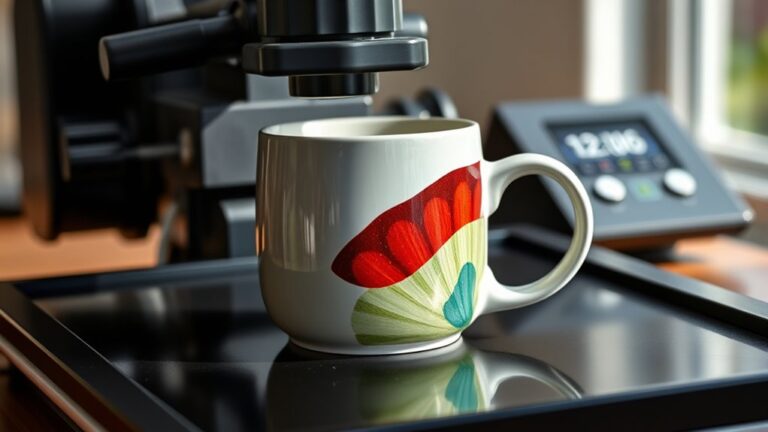
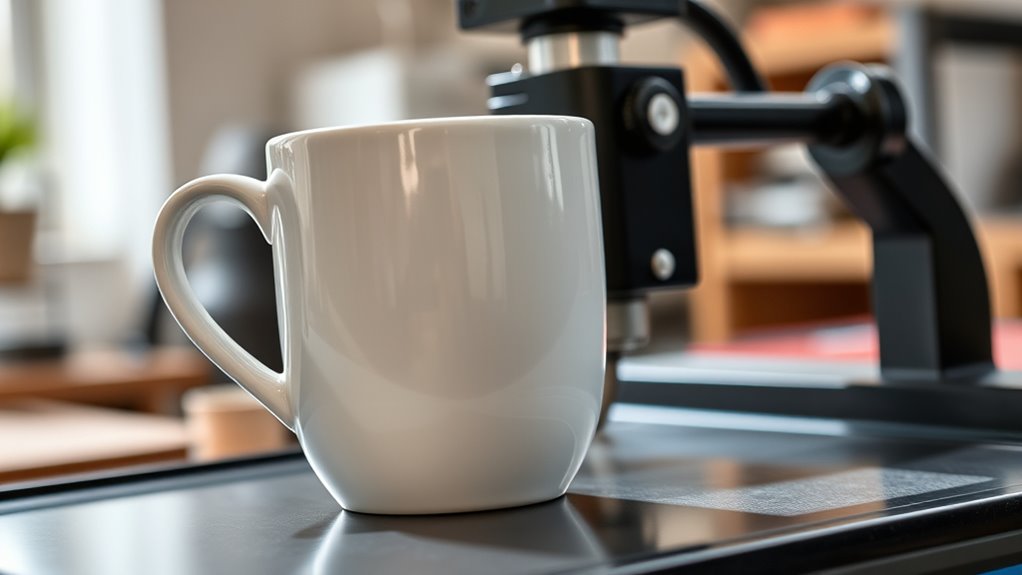
You can heat press many mugs, but not just any will work effectively. Ceramic mugs are your best bet since they handle high heat and pressure without damage, providing smooth, lasting transfers.
Specially coated metal mugs can also work but require proper coatings and adjustments to avoid issues.
Avoid plain glass, plastic, or untreated metals as they’re too sensitive or incompatible with the heat press process.
Different mug materials and shapes affect your results, so understanding these factors helps you get vibrant, durable designs.
Keep exploring for tips and tricks to master heat pressing on various mugs and achieve professional-quality prints every time.
Key Takeaways
- Not all mugs are suitable for heat pressing; ceramic mugs are ideal due to their heat resistance and smooth surface.
- Metal mugs require special coatings and adjusted techniques to avoid damage and ensure proper transfer.
- Glass, plastic, and untreated metal mugs generally cannot withstand heat pressing without risk of cracking or poor adhesion.
- Mug shape affects heat distribution; straight-sided mugs offer better contact and more even transfers than curved or tapered ones.
- Proper preparation, including cleaning and selecting compatible transfer paper, is essential for successful heat pressing results.
Which Mug Materials Are Suitable for Heat Pressing?
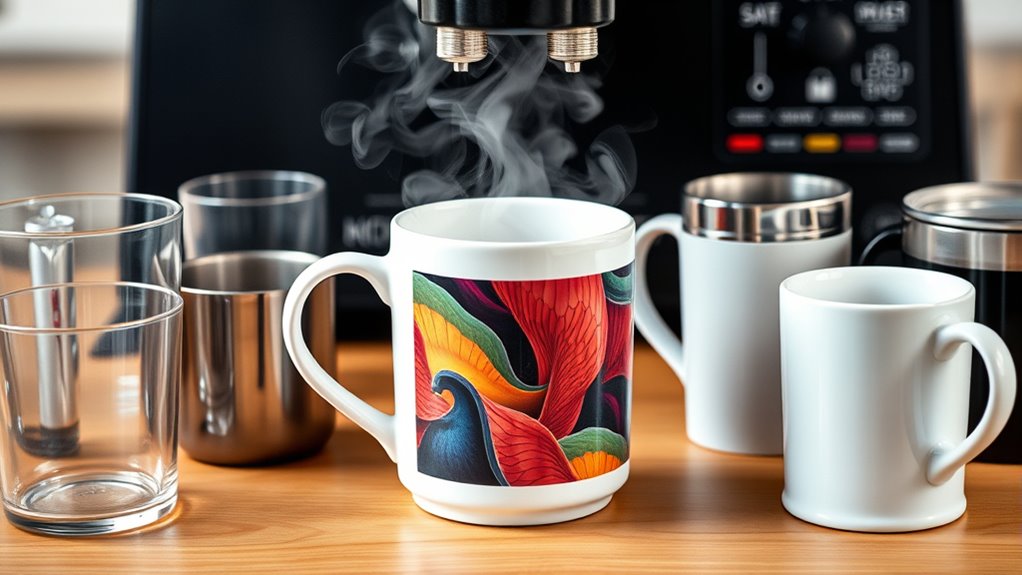
Although not all mugs work well with heat pressing, you’ll find that ceramic and specially coated metal mugs are the best choices. When you pick a ceramic mug, you’re choosing a material that can handle high temperatures without warping or cracking. The coating on these mugs is designed to bond with the heat transfer vinyl or sublimation ink, ensuring your design sticks well.
Metal mugs, on the other hand, must have a special polymer coating to be suitable for heat pressing; otherwise, the heat could damage the surface or the design won’t adhere properly. Avoid mugs made of glass, plastic, or untreated metal because they either can’t withstand the heat or don’t hold the transfer effectively. Selecting the right material saves you time and frustration.
Why Ceramic Mugs Are Best for Heat Pressing
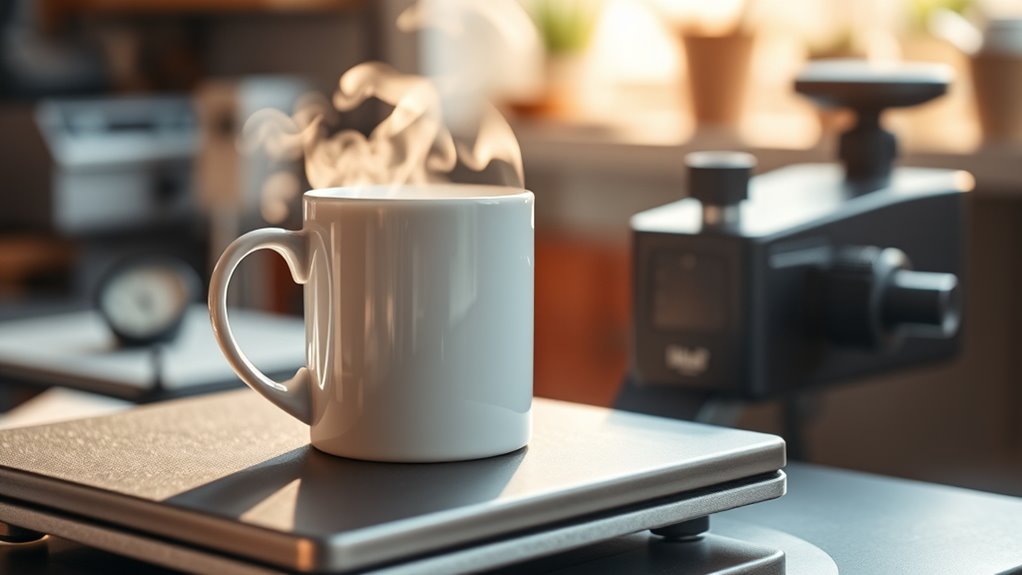
You’ll find ceramic mugs are perfect for heat pressing because they handle high temperatures without cracking. Their smooth surface helps transfer your designs clearly and evenly.
Plus, ceramic coatings work well with heat press materials, making your final product durable and vibrant.
Heat Resistance Properties
Because heat pressing involves applying high temperatures for a sustained period, choosing a mug with excellent heat resistance is essential to avoid damage. Ceramic mugs withstand the intense heat without cracking or warping, making them ideal for this process. Unlike plastic or metal mugs, ceramics maintain their shape and integrity under heat, ensuring your design transfers smoothly.
If you use a mug with poor heat resistance, you risk ruining both the mug and your artwork. Ceramic’s natural ability to handle heat evenly also prevents hot spots that can cause uneven transfers. So, when you pick a mug for heat pressing, go with ceramic—you’ll get consistent, professional results without worrying about heat-related issues.
Surface Texture Benefits
When you choose a ceramic mug for heat pressing, its smooth surface texture plays a crucial role in achieving a flawless design transfer. That even, non-porous finish allows your heat press to apply consistent pressure and temperature, ensuring your design adheres perfectly without blurring or fading.
Unlike rough or textured surfaces, ceramics won’t cause the transfer paper to wrinkle or shift during the process, giving you a crisp, sharp image every time. You’ll also find it easier to position your designs precisely, as the smoothness helps keep everything aligned.
Durable Coating Compatibility
Although many mug materials exist, ceramic mugs stand out for their durable coatings that bond exceptionally well with heat press transfers. When you use a ceramic mug, you get a smooth, heat-resistant surface that helps the transfer adhere firmly without peeling or fading. These coatings are specially designed to withstand high temperatures, so your design stays vibrant even after multiple washes.
In contrast, mugs made from materials like plastic or metal often lack this heat-resistant layer, causing transfers to crack or wear off quickly. Choosing ceramic guarantees your heat press projects last longer, giving you professional-quality results every time. If you want reliable, durable prints, ceramic mugs are your best bet for heat pressing.
Can You Heat Press Metal or Glass Mugs?
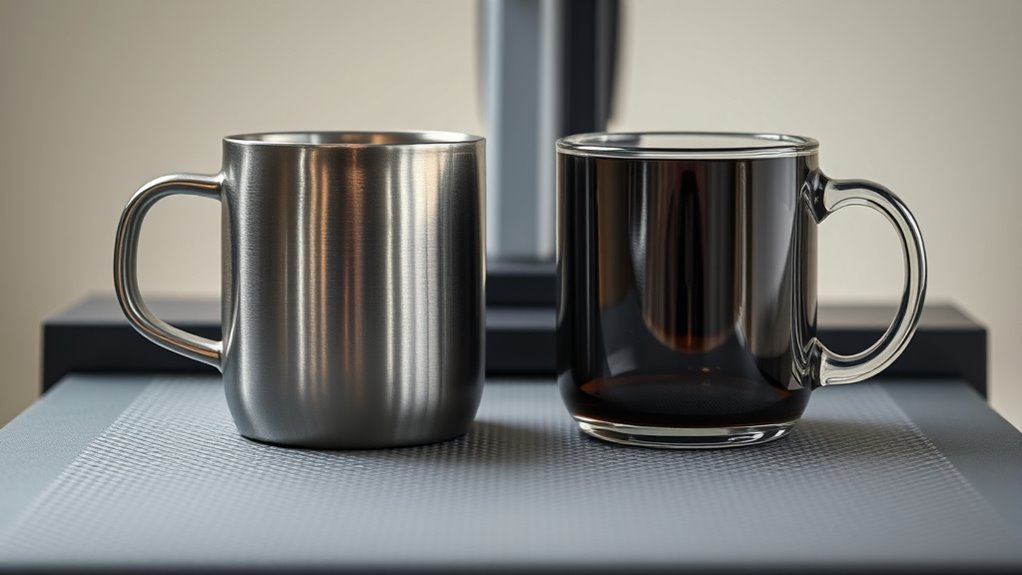
You might wonder if metal or glass mugs work with a heat press. Metal mugs need special protective coatings to handle the heat without damage.
Glass mugs, on the other hand, have strict heat limits you’ll need to follow carefully.
Metal Mug Heat Pressing
How do metal and glass mugs respond to heat pressing? Metal mugs can be tricky because they conduct heat quickly and unevenly, which might cause your design to warp or fade.
You can heat press metal mugs, but you’ll need to adjust your technique and equipment.
Here’s what to consider when heat pressing metal mugs:
- Use a heat press with adjustable temperature and pressure settings for better control.
- Apply a protective sheet to avoid direct contact and potential damage.
- Lower the temperature compared to ceramic mugs to prevent scorching.
- Limit pressing time to avoid overheating and warping the metal.
Glass Mug Heat Limits
Since glass mugs react differently to heat than metal or ceramic ones, you need to be careful when heat pressing them. Glass is more sensitive to temperature changes and can crack or shatter if overheated or exposed to uneven heat. You should always check the manufacturer’s temperature guidelines before starting.
| Factor | Recommended Limit |
|---|---|
| Maximum Temperature | 300°F (149°C) |
| Heat Press Duration | 60 seconds or less |
| Pressure | Low to medium |
| Cooling Method | Gradual, avoid shock |
Keep your heat press settings within these limits to protect the integrity of the glass mug. Avoid rapid temperature changes to prevent breakage and ensure your design transfers properly.
Protective Coatings Needed
Although metal and glass mugs can be heat pressed, they often require protective coatings to prevent damage and guarantee a successful transfer. Without these coatings, the surface might scratch, discolor, or fail to hold the design properly.
When preparing to heat press your mug, consider these key points:
- Use a high-temperature resistant coating designed for metal or glass surfaces.
- Apply the coating evenly to avoid bubbles or uneven texture that can ruin the design.
- Allow the coating to dry fully before starting the heat press process.
- Choose coatings that enhance adhesion to assure your design lasts longer.
How Mug Coatings Affect Heat Press Results
When you choose a mug for heat pressing, the coating plays a crucial role in the final outcome. Coatings like polymer or special sublimation-friendly layers help the ink bond evenly, producing vibrant, long-lasting designs. If the mug lacks the right coating, your print might fade quickly or peel off entirely.
Glossy coatings often enhance color sharpness, while matte finishes can dull the image slightly. Also, some coatings resist heat better, preventing warping or discoloration during pressing. You’ll want to avoid mugs with untreated ceramic or metallic finishes since they don’t hold sublimation inks well.
Understanding the coating type lets you adjust your heat press settings for ideal adhesion and durability, ensuring your design looks professional and lasts through many washes.
Why Mug Shape Matters for Heat Pressing
You’ll notice that mugs come in various shapes, like straight-sided, tapered, or curved. These shapes affect how evenly heat distributes during pressing, which impacts your final design.
Understanding this helps you choose the right mug for the best results.
Common Mug Shapes
Because mug shapes vary widely, understanding their differences is key to successful heat pressing. You’ll find that not all mugs are created equal, and their shapes affect how well your design transfers.
Here are four common mug shapes you should know:
- Standard Cylinder – The most heat press-friendly shape with even surface area, making it easy to apply designs.
- Conical – Wider at the top, narrowing toward the base, which can create alignment challenges.
- Square or Angular – Has flat sides but edges that might cause uneven pressure.
- Novelty Shapes – Includes curved or irregular forms that often require special equipment or adapters.
Impact On Heat Distribution
Although mug shapes vary, their impact on heat distribution during pressing is essential to understand. When you heat press a mug, the goal is even heat transfer for a clear, lasting design. Curved or tapered mugs often cause uneven pressure, leading to inconsistent heat application.
This can result in partial or distorted prints. Flat or straight-sided mugs generally allow better contact with the heat press, ensuring uniform temperature across the surface. If the mug’s shape creates gaps or pressure points, you might need specialized pads or adjustable presses to compensate.
Knowing your mug’s shape helps you adjust your setup for ideal heat distribution, avoiding wasted materials and poor results. In short, mug shape directly affects how heat spreads, so tailor your approach accordingly.
Safe Temperature and Pressure Settings for Mugs
When pressing a mug, selecting the right temperature and pressure is vital to guarantee your design adheres properly without damaging the surface. You want to avoid overheating, which can cause discoloration or cracking, and uneven pressure that might blur your design.
Follow these safe settings for the best results:
Use these safe heat press settings to achieve perfect mug designs every time.
- Set your heat press to 350°F (177°C) for ceramic mugs.
- Apply medium pressure – firm but not so hard that it risks cracking the mug.
- Press for 3 to 5 minutes; timing depends on your transfer material.
- Use a heat-resistant pad or silicone wrap to ensure even pressure distribution.
Preparing Your Mug for Heat Pressing
Getting your mug ready before applying heat guarantees your design sticks perfectly and lasts longer. First, clean the mug’s surface thoroughly using rubbing alcohol or a mild detergent to remove dust, oils, and residues. Avoid using lotions or greasy soaps as they can interfere with adhesion.
Next, dry the mug completely; any moisture can cause bubbles or poor transfer quality. If your mug has a curved or uneven surface, consider using a heat-resistant silicone pad or foam to assure even pressure during pressing.
Finally, make certain your mug is the right size for your heat press and that the area you plan to decorate is smooth and free of scratches. Proper preparation sets the stage for a flawless heat transfer.
Choosing Transfer Paper for Heat Pressing Mugs
Since the quality of your heat transfer depends heavily on the transfer paper you choose, selecting the right type is vital for achieving vibrant, durable designs on mugs. Not all transfer papers work well with every mug surface or ink type, so you need to match them carefully.
Choosing the right transfer paper is crucial for vibrant, long-lasting mug designs tailored to each surface and ink type.
Here’s how to pick the best transfer paper for your project:
- Identify your mug material—ceramic, glass, or metal—and verify the paper is compatible.
- Choose between sublimation paper for polyester-coated mugs or waterslide paper for others.
- Check the paper’s recommended heat and time settings to match your press capabilities.
- Look for papers with high ink absorption to prevent smudging and fading.
This way, your mug designs will look sharp and last longer.
Troubleshooting Common Heat Press Problems
Although heat pressing mugs can be straightforward, you’ll sometimes encounter issues like uneven transfers, fading, or paper sticking to your mug. If your transfer looks patchy, check your heat press temperature and pressure settings—they might be too low.
Fading often happens when the mug isn’t heat-resistant or the pressing time is too short. Sticky paper? It usually means you didn’t peel the transfer while it was hot or the paper quality is poor. Make sure you use mug-specific transfer paper and follow the recommended peeling time.
Also, always clean your mug’s surface before pressing to avoid any dirt or oils interfering with the design. These quick fixes should help you get consistent, vibrant results every time.
Sublimation vs. Regular Mugs: What You Need to Know
When you’re choosing mugs for heat pressing, understanding the difference between sublimation and regular mugs is essential. Sublimation mugs have a special polymer coating that allows the ink to bond permanently with the surface during heat pressing. Regular mugs, usually ceramic without this coating, won’t hold sublimation ink properly, causing designs to fade or peel.
Here’s what you need to know:
- Sublimation mugs require a polymer coating, regular mugs don’t.
- Heat pressing sublimation mugs produces vibrant, durable designs.
- Regular mugs often need vinyl or decal methods instead of sublimation.
- Using the wrong mug type can ruin your design and waste materials.
Knowing these differences helps you choose the right mug, ensuring your heat pressing projects turn out perfect every time.
Protecting Your Mug Design After Heat Pressing
To keep your mug design looking fresh and vibrant after heat pressing, you’ll need to take some precautions. First, allow your mug to cool completely before handling it to prevent smudging or damage. Avoid washing the mug immediately; instead, wait at least 24 hours to let the design fully set.
When cleaning, hand wash your mug gently with mild soap and avoid abrasive scrubbers or harsh chemicals that can fade or peel the design. Also, steer clear of dishwashers and microwaves unless the mug is specifically labeled as safe for those appliances. Storing your mug carefully, avoiding knocks or drops, will help maintain the integrity of the design.
These simple steps guarantee your heat-pressed mug stays beautiful and durable over time.
Tips for Consistent Heat Pressing Results
Achieving consistent heat pressing results requires careful attention to temperature, pressure, and timing. You’ll want to master these variables to guarantee your designs come out perfect every time. Here are four essential tips:
- Calibrate Your Heat Press – Regularly check and adjust your machine’s temperature settings to avoid fluctuations.
- Use Consistent Pressure – Apply uniform pressure on each mug to prevent uneven transfers or fading.
- Follow Recommended Timing – Stick strictly to the time guidelines for your specific mug and transfer material to avoid under or over-curing.
- Prepare Your Mug Surface – Clean and dry each mug thoroughly before pressing to guarantee the design adheres properly.
Frequently Asked Questions
How Long Does a Heat-Pressed Mug Design Typically Last?
Your heat-pressed mug design typically lasts about 6 to 12 months with regular use.
To keep it vibrant longer, avoid abrasive cleaning and dishwashers.
Hand wash your mug gently whenever possible.
Can You Heat Press Mugs With Existing Printed Designs?
You shouldn’t heat press mugs with existing printed designs, as the heat can damage or distort them.
Instead, use blank sublimation mugs for best results, ensuring your new design transfers cleanly and lasts longer.
What Types of Heat Press Machines Work Best for Mugs?
You’d think any heat press would work, but mug presses specifically designed for curved surfaces work best. They hug your mug tighter, ensuring even heat and pressure—because nobody wants a blotchy, half-baked design, right?
Is It Safe to Use Heat-Pressed Mugs for Drinking Hot Beverages?
Yes, you can safely drink hot beverages from heat-pressed mugs, as long as you use heat-safe, food-grade sublimation coatings and properly cure the design.
Avoid low-quality mugs to prevent harmful chemicals from leaching into your drink.
Can You Customize Heat-Pressed Mugs With Multiple Colors?
You can paint a rainbow with heat pressing by layering multiple colors carefully. Just remember, each layer needs precise timing and temperature control, or your vibrant design might turn into a dull watercolor mess.
Stay patient and creative!
Conclusion
Think of heat pressing mugs like planting a garden—you need the right soil, seeds, and care to see your design bloom beautifully. Ceramic mugs are your fertile ground, while coatings and shapes are the sunlight and water that nurture your creation.
With the right materials and attention, your heat-pressed mug will flourish, standing out like a vibrant flower in a field. Keep experimenting, and watch your designs grow perfectly every time.
Remember, not all mugs are suitable for heat pressing. Using ceramic mugs with proper coatings ensures the best results when you heat press any mug.