Can You Heat Press Cardboard
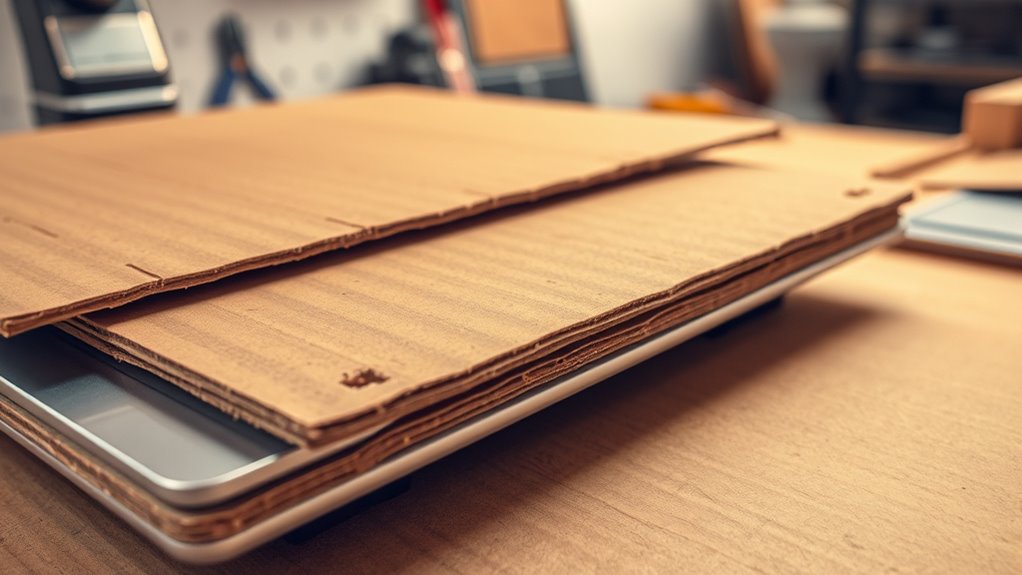
Yes, you can heat press cardboard, but it requires careful attention to temperature and pressure settings to achieve the best results. When heat pressing cardboard, it’s important to use lower temperatures, typically around 280°F to 300°F, to prevent warping or scorching.
Applying lighter pressure is also essential since cardboard is more rigid and porous compared to fabric.
Always protect the cardboard surface with parchment paper or Teflon sheets during the heat press process. Testing on scrap pieces first is highly recommended to ensure your settings won’t damage the material.
Because of cardboard’s unique nature, gentle handling and precise control are key to creating vibrant, durable designs.
With the right materials and heat press techniques, you can successfully customize cardboard for various projects. Keep experimenting to master your approach and avoid common pitfalls.
Key Takeaways
- Yes, cardboard can be heat pressed using lower temperatures and lighter pressure to avoid damage like warping or burning.
- Protective sheets like Teflon or parchment paper are essential to prevent direct heat contact and surface scorching.
- Ideal heat press settings for cardboard are 280°F to 300°F, 15-20 seconds, with medium to light pressure around 30-40 psi.
- Corrugated cardboard and chipboard are best suited for heat pressing due to their durability and smooth surfaces.
- Vinyl transfers and foil designs work well on cardboard, while sublimation is less effective because of the porous texture.
Is It Possible to Heat Press Cardboard Without Damage?
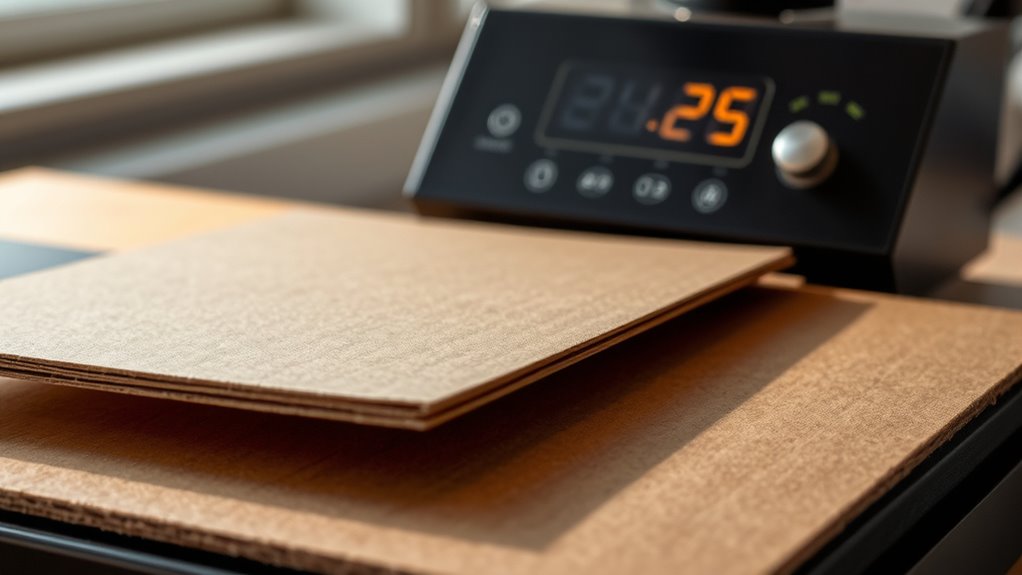
Can you heat press cardboard without causing damage? Yes, but you need to be careful. Cardboard is sensitive to heat and pressure, so you’ll want to use lower temperatures and lighter pressure than usual.
If you adjust your heat press settings properly, you can avoid warping or burning the cardboard. Using a protective sheet between the heat press and the cardboard also helps prevent direct contact and reduces the risk of damage. Always test on a scrap piece first to find the right combination of heat, pressure, and time.
What Happens to Cardboard When You Heat Press It?
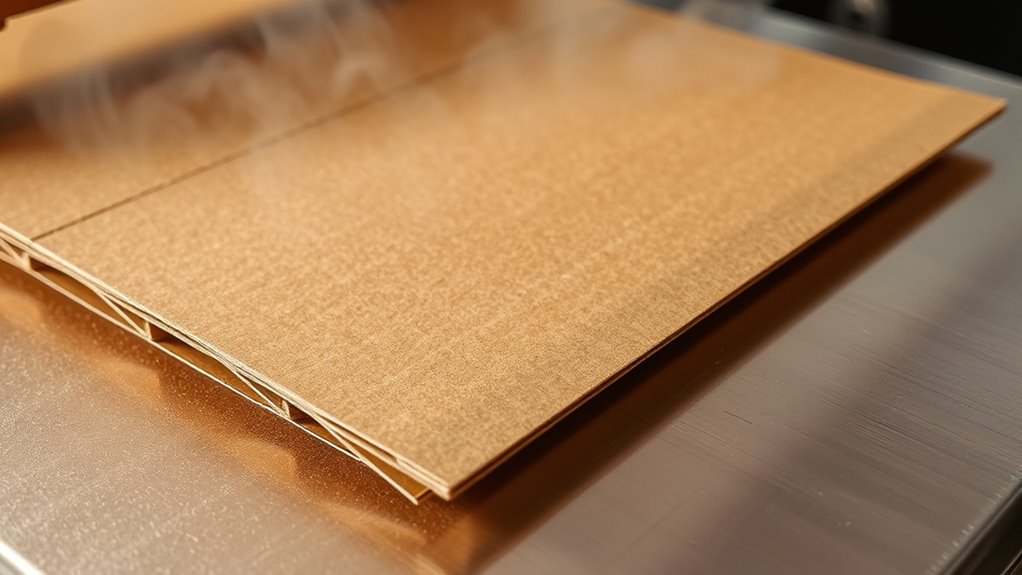
When you heat press cardboard, its structure starts to change as the heat affects the fibers. The intense temperature can weaken or even scorch the material, altering its strength and texture.
Understanding these effects helps you decide if heat pressing cardboard is worth the risk.
Cardboard Structural Changes
How does heat pressing affect the structure of cardboard? When you apply heat and pressure, the layers of cardboard compress and soften. This causes the corrugated flutes inside to flatten, reducing the cardboard’s thickness and rigidity.
You’ll notice the material becomes denser and less springy, which can change how it holds its shape. The heat also makes the adhesive between layers more pliable, allowing the layers to bond tighter under pressure. However, if you press too long or at too high a temperature, the cardboard may warp or develop permanent creases.
Heat Impact on Fibers
Although heat pressing reshapes cardboard’s structure, it also directly affects the fibers that make up its layers. When you apply intense heat and pressure, the cellulose fibers inside the cardboard start to soften and compress. This changes their original alignment and bonding, which can weaken the material.
Here’s what you can expect:
- Fibers soften and become pliable, allowing the cardboard to bend and mold.
- Compression causes fibers to pack tightly, reducing thickness but risking brittleness.
- Overheating breaks down fiber bonds, leading to weakened strength and potential cracking.
How Cardboard Differs From Fabric for Heat Pressing
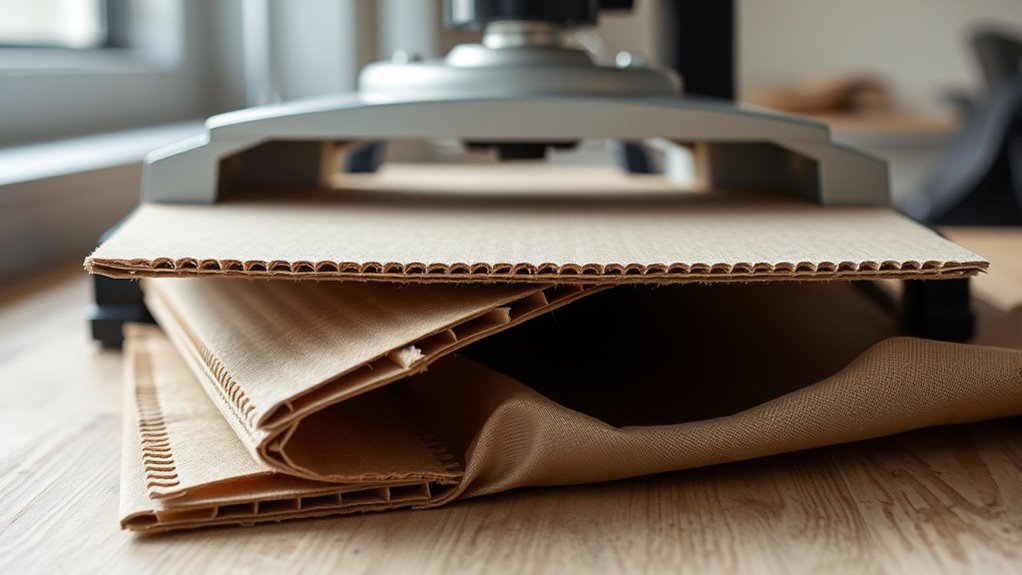
Since cardboard is a rigid and porous material, it reacts very differently to heat pressing than fabric does. You’ll notice that cardboard can warp or scorch quickly under heat, while fabric tends to be more flexible and heat-resistant. Unlike fabric, cardboard doesn’t stretch or absorb moisture, which affects how heat and pressure work during the process.
You’ll need to adjust your technique accordingly to avoid damaging the cardboard.
| Aspect | Cardboard |
|---|---|
| Flexibility | Rigid, no stretch |
| Heat Tolerance | Low, prone to scorching |
| Moisture Absorption | Minimal |
| Surface Texture | Porous, rough |
| Pressure Impact | Can cause warping or dents |
Understanding these differences helps you get better results when heat pressing cardboard.
Best Types of Cardboard for Heat Pressing Projects
When choosing cardboard for heat pressing, you’ll want to contemplate the type that handles heat and pressure best. Corrugated cardboard offers durability and cushioning, while chipboard works great for detailed projects. Kraft paper stands out for its strength and smooth surface, making it a solid choice too.
Corrugated Cardboard Benefits
If you want a sturdy and reliable base for your heat pressing projects, corrugated cardboard stands out as an excellent choice. Its unique layered structure offers strength without adding too much thickness, making it perfect for supporting your materials during heat transfer.
Here are three key benefits you’ll appreciate:
- Durability: The fluted middle layer resists bending and warping, ensuring your project stays flat and stable.
- Heat Resistance: Corrugated cardboard handles heat well without burning quickly, protecting your workspace and designs.
- Lightweight: Despite its strength, it’s easy to handle and move around, which makes your crafting process smoother.
Using corrugated cardboard helps you achieve professional results while keeping your setup safe and efficient.
Chipboard Uses
Although chipboard isn’t as commonly used as corrugated cardboard, it offers unique advantages for heat pressing projects that you might find valuable. Chipboard is denser and smoother, providing a stable, flat surface that helps your design transfer evenly. It’s less bulky, making it easier to handle and store compared to corrugated options.
You’ll find chipboard ideal for smaller, detailed projects like custom coasters, decorative plaques, or packaging inserts. Its consistent texture reduces the risk of uneven heat distribution, which can affect your final result. Just keep in mind that chipboard can be more prone to scorching if you apply too much heat or pressure, so starting with lower settings and testing first is smart.
This material balances durability with precision for quality heat-pressed creations.
Kraft Paper Strength
Chipboard’s firmness offers certain benefits, but kraft paper stands out for heat pressing because of its remarkable strength and flexibility. When you use kraft paper, you get a sturdy surface that won’t easily warp or tear under heat.
Plus, its natural fibers hold up well against the pressure and temperature of your heat press, making your project more durable.
Here’s why kraft paper is ideal:
- Durable Texture – It resists cracking and maintains integrity during pressing.
- Heat Resistance – Withstands higher temperatures without discoloration.
- Flexible Surface – Adapts to curves or slight bends without breaking.
Choosing kraft paper ensures your heat-pressed cardboard projects look professional and hold up over time.
Which Designs and Transfers Work Best for Heat Pressing Cardboard
When selecting designs and transfers for heat pressing cardboard, you’ll want to focus on those that can withstand moderate heat without damaging the material. Vinyl transfers, especially heat transfer vinyl (HTV), work well because they adhere smoothly without requiring excessive heat. Sublimation isn’t ideal since cardboard’s porous surface can cause blurry or faded images.
Instead, opt for screen-printed designs or foil transfers, which offer bold colors and durability. Keep your designs simple and avoid heavy, thick layers that might warp the cardboard. Also, choose transfers with adhesive backing formulated for lower temperatures to protect the cardboard’s structure.
How to Prepare Cardboard Before Heat Pressing
Before you start heat pressing, make sure the cardboard surface is clean and smooth to get the best results. You’ll also need to adjust your temperature and pressure settings carefully to avoid damaging the material.
Paying attention to these details will help your design transfer stick properly and look sharp.
Cardboard Surface Preparation
Although cardboard isn’t a traditional heat press material, you’ll need to prepare its surface carefully to guarantee good adhesion and prevent damage. Start by ensuring the cardboard is clean and dry; moisture or dust can ruin your design.
Next, flatten the cardboard to eliminate any bends or creases that could disrupt the heat press process. Finally, create a smooth surface by lightly sanding the area where you’ll apply the design, helping it stick better.
Here’s a quick checklist for prepping your cardboard:
- Wipe down with a dry cloth to remove dust and debris
- Press under a heavy object to flatten any warps
- Gently sand with fine-grit paper to smooth the surface
Proper preparation sets you up for a successful heat press job.
Temperature And Pressure Settings
Since cardboard is sensitive to heat and pressure, you’ll need to adjust your heat press settings carefully to avoid warping or scorching. Start by setting your heat press temperature between 250°F and 300°F, considerably lower than you’d use for fabric. Use light to medium pressure—too much can crush the cardboard, while too little won’t transfer the design properly.
Aim for about 30 to 40 psi. Limit the pressing time to 10-15 seconds to prevent damage. Before pressing, test on a scrap piece to fine-tune settings.
How to Protect Cardboard During Heat Pressing
When you heat press cardboard, protecting it from direct heat and pressure is essential to prevent warping or scorching. You can take simple steps to shield your cardboard effectively.
- Use a Protective Sheet: Place a Teflon sheet or parchment paper between the heat press and the cardboard. This barrier disperses heat evenly and prevents direct contact, reducing burn risk.
- Add a Heat-Resistant Pad: A silicone or felt pad underneath the cardboard cushions it, absorbing excess pressure and preventing dents or creases during pressing.
- Secure the Cardboard: Clamp or tape the cardboard to keep it flat and prevent shifting under heat, which can cause uneven pressing or damage.
Best Heat Press Settings for Cardboard (Temperature, Time, Pressure)
Protecting your cardboard sets the stage for successful heat pressing, but choosing the right settings will make all the difference in your final result. For temperature, keep it between 280°F and 300°F to avoid scorching the cardboard while ensuring the transfer adheres properly. Set your time for 15 to 20 seconds; longer exposure risks warping or burning.
When it comes to pressure, opt for medium to light—too much pressure can crush or deform the cardboard. Use a heat press with adjustable settings so you can fine-tune based on your specific cardboard thickness and transfer material. Always test a small piece first to confirm these settings work well with your materials, helping you achieve crisp, clean results without damage.
Troubleshooting Heat Press Problems on Cardboard
Although heat pressing cardboard can yield great results, you might run into issues like scorching, warping, or poor transfer adhesion. To fix these, you’ll need to adjust your approach carefully.
Here are three common problems and how to troubleshoot them:
- Scorching: Reduce the temperature or press time. Use a protective sheet like parchment paper to shield the cardboard from direct heat.
- Warping: Lower the pressure and avoid pressing for too long. Let the cardboard cool flat under a heavy book after pressing.
- Poor Adhesion: Check that your transfer material is compatible and that you’ve set the right temperature and time. Clean the cardboard surface to remove dust or oils before pressing.
Creative Heat Press DIYs on Cardboard
Mastering the basics of heat pressing on cardboard sets the stage for exploring creative DIY projects. You can personalize cardboard boxes by heat pressing custom designs, adding a unique touch for gifts or storage. Try making decorative wall art by transferring vibrant patterns onto sturdy cardboard sheets.
Another idea is crafting custom bookmarks or coasters—heat press your favorite quotes or images for a professional finish. When working on these projects, use heat-resistant tape to keep transfers in place and a protective sheet to avoid scorching. Experiment with different heat press settings to find the sweet spot that delivers crisp, lasting designs without damaging the cardboard.
With practice, you’ll release endless possibilities for creative, personalized cardboard crafts that stand out.
Frequently Asked Questions
Can Heat Pressing Cardboard Be Used for Commercial Product Packaging?
You can use heat pressing for commercial packaging, but you’ll need to control temperature and pressure carefully to avoid damaging the cardboard.
It works best for creating durable, custom designs or laminations on packaging materials.
Is Heat Pressing Cardboard Eco-Friendly Compared to Other Methods?
Think of heat pressing cardboard like baking bread—using just enough energy to transform without waste. You’ll find it’s eco-friendly, often using less energy and chemicals than other methods, making your packaging greener and cleaner.
How Long Does a Heat Pressed Design on Cardboard Typically Last?
Your heat pressed design on cardboard typically lasts several months to a year, depending on usage and exposure to moisture or sunlight.
To extend its life, keep it dry and avoid excessive friction or bending.
Can You Reuse Heat Pressed Cardboard for Multiple Projects?
You can’t reuse heat pressed cardboard for multiple projects because the design bonds permanently, like a fingerprint etched in time.
Each piece tells its own unique story, so start fresh to create new memories and art.
Are There Safety Concerns When Heat Pressing Cardboard at Home?
Yes, you should be cautious when heat pressing cardboard at home. It can release fumes or catch fire if overheated. Always work in a well-ventilated area,
use low temperatures, and never leave it unattended.
Conclusion
Just like a skilled alchemist transforms base metals into gold, you can turn simple cardboard into a canvas of creativity with the right heat press techniques. By understanding its unique nature and protecting it carefully, you’ll avoid the pitfalls and reveal its hidden potential.
So, don’t shy away—embrace the challenge, apply the proper settings, and watch your cardboard projects come to life with vibrant designs that defy expectations. When you heat press cardboard, it’s essential to balance temperature and pressure to prevent damage. With patience and precision, heat pressing cardboard can unlock amazing artistic possibilities.