Can You Heat Press Koozies
You can heat press koozies effectively if you choose the right materials like neoprene, foam, or polyester blends. These materials handle heat well and allow designs to adhere properly without damage.
Setting the temperature and pressure carefully is essential—around 300-350°F for 10-20 seconds works well.
Preparing your koozie by cleaning and preheating helps designs stick better and last longer. This step ensures the surface is free of oils or debris that might prevent proper adhesion.
Be cautious with delicate materials to avoid warping or damage.
If you want vibrant, lasting designs without risking your koozie’s shape, there are key techniques and alternatives worth exploring. Using heat transfer vinyl or sublimation printing can offer great results while protecting your koozie.
Key Takeaways
- You can heat press koozies made from neoprene, foam, or polyester blends with proper temperature, pressure, and timing settings.
- Use lower heat and shorter pressing times for foam and neoprene to avoid warping or melting the material.
- HTV works best for bold, simple designs on foam or neoprene, while sublimation suits polyester koozies for vibrant, detailed images.
- Always preheat koozies and clean surfaces to ensure better adhesion and longer-lasting heat press results.
- Avoid heat pressing sensitive or thin materials that may deform, and consider alternative methods if necessary.
How Koozie Materials Affect Heat Pressing Success
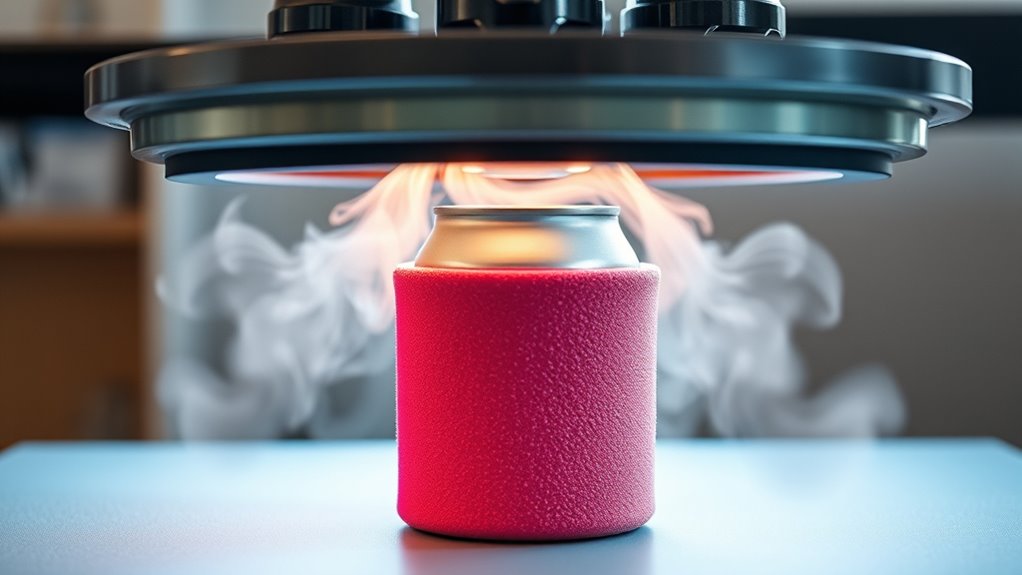
Although you might think all koozies respond the same way to heat pressing, their materials play a crucial role in the process. If your koozie is made from polyester or cotton blends, you’ll find they handle heat pressing well, allowing vibrant, lasting designs.
On the other hand, foam koozies require a gentler approach since excessive heat can warp or melt them. Similarly, neoprene koozies have unique heat tolerance, so you’ll need to adjust temperature and pressing time carefully to avoid damage.
Understanding the fabric or material composition helps you choose the right heat settings and avoid ruining your design or the koozie itself. So, always check the material before you start heat pressing to guarantee success and durability.
Is Heat Pressing Foam and Neoprene Koozies Safe?
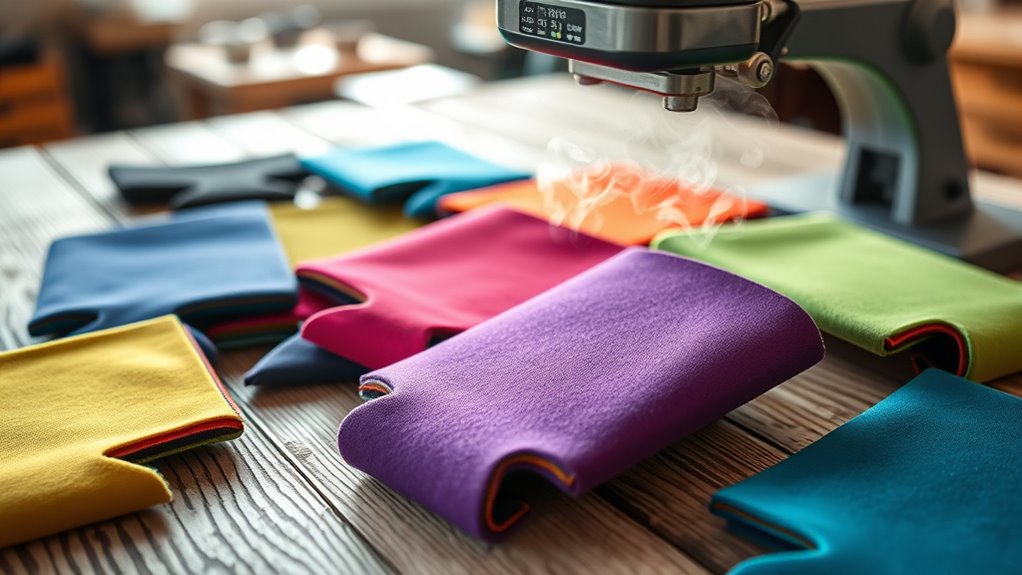
When you heat press foam and neoprene koozies, you need to be cautious because these materials react differently to heat compared to fabrics like polyester. You can easily damage or warp them if the temperature is too high or the pressing time is too long. To keep your koozies safe, follow these tips:
- Use a lower temperature setting, typically around 280°F (140°C), to avoid melting or deforming the foam or neoprene.
- Limit your pressing time to 10-15 seconds to prevent heat buildup that could ruin the material.
- Always place a Teflon sheet or parchment paper between the heat platen and the koozie to protect the surface and ensure even heat distribution.
Heat Pressing Koozies: HTV vs. Sublimation
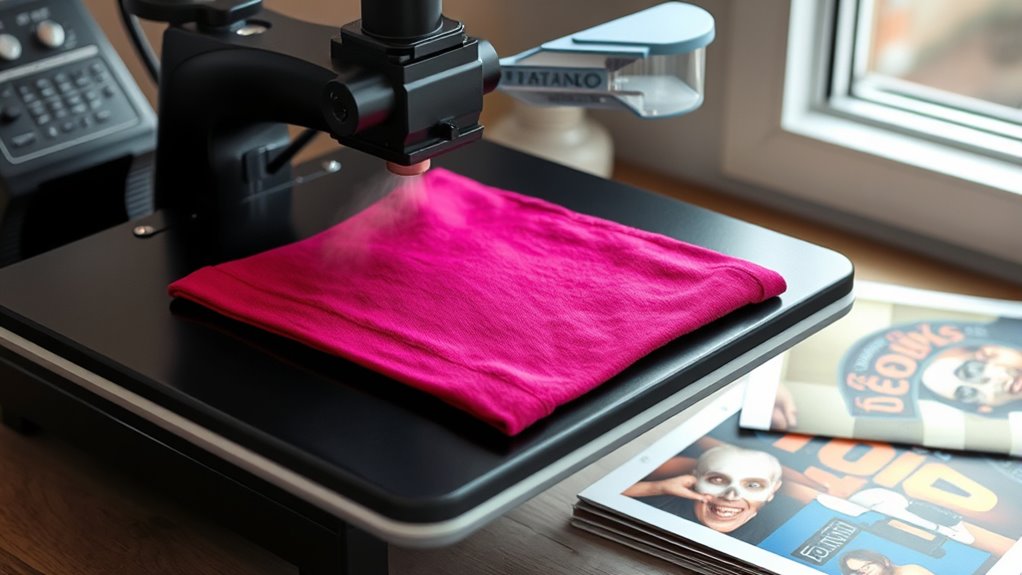
Since koozies come in various materials, choosing between HTV (heat transfer vinyl) and sublimation depends on the type of koozie you have and the design you want to apply. HTV works best on foam or neoprene koozies because it adheres well to their thicker surfaces and allows you to add bold, solid designs.
Sublimation, on the other hand, requires polyester or polymer-coated koozies, as the dye bonds chemically with these materials. Sublimation offers vibrant, full-color images and complex gradients that HTV can’t easily replicate.
If you want a durable, detailed print on a polyester koozie, sublimation is your go-to. But for simple, quick designs on foam or neoprene, HTV is easier and effective. Your choice hinges on both material compatibility and the style of design you prefer.
Preparing Koozies for Heat Pressing Safely
Choosing the right heat transfer method is just the start; preparing your koozies properly guarantees your design adheres well and lasts longer. Before you press, make sure you set up a clean, flat workspace to avoid wrinkles or bubbles. Handle your materials carefully to prevent dust or lint from ruining the finish.
Proper preparation ensures your design sticks well and stays flawless—start with a clean, wrinkle-free workspace.
Here’s how to prepare safely:
- Clean the koozie surface – Wipe with a lint-free cloth to remove dirt and oils.
- Preheat the koozie – Press it briefly without a design to eliminate moisture and smooth out wrinkles.
- Use a protective sheet – Place a Teflon sheet or parchment paper between the press and koozie to prevent scorching or melting.
These steps help you get a crisp, durable transfer every time.
Best Heat Press Settings for Different Koozie Types
Although koozies come in various materials, each type demands specific heat press settings to guarantee your design adheres properly without damage. For neoprene koozies, set your heat press to around 320°F with medium pressure and press for 15 seconds. This prevents scorching while securing the design.
Foam koozies require a lower temperature, about 300°F, with light pressure for 10-12 seconds to avoid melting the material. Polyester koozies handle higher temperatures, so aim for 350°F with medium pressure, pressing for 15 seconds. Remember, using too much pressure or heat can cause warping or discoloration.
Always adjust settings based on your particular heat press and materials. Testing on a sample koozie first helps assure perfect results every time.
Step-by-Step Guide to Heat Pressing Koozies at Home
To heat press koozies at home successfully, you’ll need to prepare them properly by smoothing out any wrinkles and positioning your design carefully.
Next, set your heat press to the right temperature and time based on the koozie material.
Following these steps guarantees a clean, durable transfer every time.
Preparing Koozies Properly
Before you start heat pressing your koozies, you’ll want to prepare them carefully to make certain the best results. Proper preparation *guarantees* your design adheres smoothly and lasts longer.
- Clean the Surface: Wipe down the koozie with a damp cloth to remove dust, oils, or residues that could interfere with heat transfer.
- Preheat the Koozie: Use your heat press or an iron to warm the koozie slightly for 5-10 seconds. This helps eliminate moisture and prevents bubbles.
- Position Your Design: Lay the transfer material flat and align it precisely on the koozie. Use heat-resistant tape if necessary to keep it from shifting during pressing.
Following these steps sets you up for a clean, professional finish every time.
Heat Press Settings
When you’re ready to heat press your koozies, setting the right temperature, time, and pressure is crucial for a crisp, lasting design. Start by preheating your heat press to 320°F (160°C). This temperature works well for most neoprene and polyester koozies.
Set the timer for 15 seconds to ensure the transfer adheres properly without warping the material. Use medium pressure—firm enough to press the design but not so hard that it compresses the koozie’s foam too much. Place your design face down on the koozie, cover it with a Teflon sheet or parchment paper, then press.
After the timer ends, carefully peel off the transfer sheet while it’s still warm for the best results. Adjust settings slightly if needed based on your specific materials.
Testing Your Heat Press Technique on Koozies
Although koozies are small and flexible, you’ll want to test your heat press technique carefully to avoid damaging the material or producing uneven designs. Start by using a scrap koozie to dial in your settings and get a feel for the process. Watch how the heat distributes and how the design adheres before committing to your final product.
Here’s how to test effectively:
- Place the koozie flat on the heat press, ensuring no wrinkles or folds.
- Apply consistent pressure and heat for the recommended time based on your material.
- Peel the transfer sheet slowly to check if the design sticks evenly without smudging or fading.
Testing helps you perfect your method and guarantees professional results every time.
Avoid These Heat Pressing Mistakes on Your Koozies
If you want your koozie designs to look sharp and last long, you need to steer clear of common heat pressing mistakes. First, avoid using excessive heat or pressure, which can warp or damage the foam material. Don’t rush the pressing time; too short won’t transfer properly, and too long can scorch the fabric.
Also, never skip preheating your press or the koozie itself—this ensures even heat distribution. Make sure your transfer is aligned correctly before pressing, so you don’t waste materials on a crooked design. Finally, avoid pressing over zippers or seams, as uneven surfaces lead to poor transfers.
Tips for Vibrant, Long-Lasting Koozie Designs
To get vibrant, long-lasting koozie designs, you need to pick durable materials that hold up well under heat. You’ll also want to use the best heat press settings to avoid fading or peeling.
Let’s explore how these factors can make your designs pop and last.
Choosing Durable Materials
Where should you start when aiming for vibrant, long-lasting koozie designs? It all begins with choosing the right materials. The durability and appearance of your design heavily depend on the fabric and transfer type you pick.
Focus on materials that can withstand heat pressing without warping or fading.
Consider these three key factors when selecting materials:
- Neoprene or foam – These are common koozie bases that handle heat well and provide a smooth surface for printing.
- High-quality heat transfer vinyl (HTV) – Look for HTV designed for flexible fabrics to ensure your design stays crisp and resists cracking.
- Polyester blends – These blend well with heat transfer methods and maintain vibrant colors over time.
Picking durable materials sets the foundation for your koozie’s longevity and vivid design.
Optimal Heat Press Settings
Although selecting the right materials is crucial, mastering your heat press settings guarantees your koozie designs turn out vibrant and durable. Start by setting your heat press to around 320°F (160°C), a temperature that works well with most heat transfer vinyl and sublimation inks on neoprene koozies. Apply firm pressure to ensure the design bonds evenly without gaps or bubbles.
Keep the press time between 15 to 20 seconds—too long can scorch the fabric, too short may cause poor adhesion. Always preheat your koozie for a few seconds to remove moisture and wrinkles, improving transfer quality. After pressing, peel the backing carefully per the vinyl type—hot or cold peel—to preserve your design’s sharpness and longevity.
Following these settings will help you achieve professional, long-lasting results every time.
When to Skip Heat Pressing and Use Alternative Methods
Even if heat pressing is a popular method for customizing koozies, you might want to skip it when working with materials that can warp or melt under high heat. For instance, some foam or thin fabrics may deform, ruining your design.
Instead, consider alternative methods that maintain the integrity of your koozie.
Here are three situations when you should avoid heat pressing:
- When the koozie material is sensitive to heat, like thin foam or certain plastics.
- When your design involves intricate details that require precision beyond heat press capabilities.
- When you need a quick, no-heat application, such as using adhesive vinyl or screen printing.
Choosing the right method ensures a durable, attractive finish without damaging your koozie.
Frequently Asked Questions
Can You Wash Heat-Pressed Koozies Without Damaging the Design?
Yes, you can wash heat-pressed koozies without damaging the design if you use cold water and gentle cycles. Avoid harsh detergents and high heat drying to keep the design intact and looking fresh longer.
What Types of Ink Work Best on Kozies for Heat Pressing?
You’ll want to use water-based or plastisol inks for heat pressing koozies. They bond well with foam, resist cracking, and withstand washing.
Avoid solvent-based inks since they may not adhere properly or fade quickly.
How Long Do Heat-Pressed Designs on Koozies Typically Last?
Heat-pressed designs on koozies typically last several months to a year, depending on usage and care. You’ll want to avoid excessive stretching or washing to keep your design vibrant and intact for as long as possible.
Proper handling can significantly extend the life of your design. Avoid exposing the koozie to harsh conditions or abrasive surfaces.
Regular gentle cleaning is recommended over machine washing. Taking these precautions helps maintain the look and feel of your heat-pressed design.
Can Custom Koozies Be Made in Bulk Using Heat Pressing?
You can absolutely make custom koozies in bulk using heat pressing; it’s a well-oiled machine once set up. Just prepare your designs, control your timing, and watch your personalized koozies come to life efficiently.
Are There Eco-Friendly Materials Suitable for Heat-Pressed Koozies?
Yes, you can use eco-friendly materials like organic cotton or recycled neoprene for heat-pressed koozies. These sustainable options reduce environmental impact while still allowing you to customize your koozies effectively and creatively.
Choosing materials that are biodegradable or made from recycled content supports environmental responsibility. Organic cotton is soft, durable, and perfect for heat pressing.
Recycled neoprene offers insulation similar to traditional neoprene but with a smaller carbon footprint. Both options help you create unique, eco-conscious koozies without compromising quality.
Conclusion
You might worry that heat pressing koozies could ruin their material, but with the right settings and prep, you’ll get vibrant, lasting designs every time. Don’t let fear hold you back—foam and neoprene koozies respond well to careful heat pressing, especially using HTV or sublimation techniques. Just test first and avoid common mistakes.
Once you master it, your custom koozies will look professional and stand out, making all your efforts worth it. Heat pressing koozies is a great way to create personalized, durable products that attract attention. With proper technique, heat press koozies can become a successful part of your custom merchandise lineup.