Can You Heat Press on Burlap
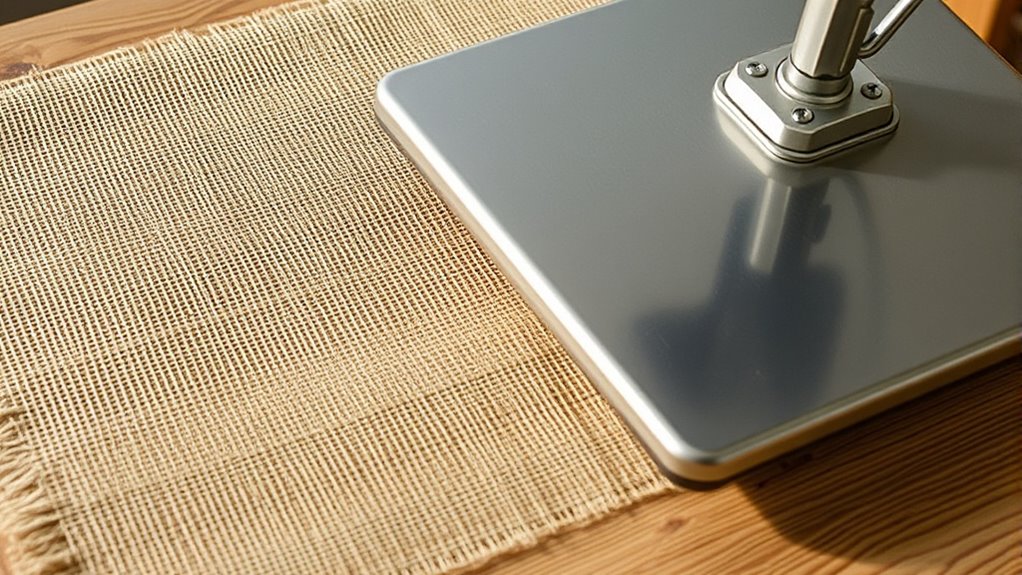
Yes, you can heat press on burlap, but it requires careful temperature control to protect its delicate texture. Burlap’s coarse fibers are prone to scorching if exposed to high heat, so maintaining an ideal temperature around 250°F is essential for success. Proper preparation of the fabric also plays a crucial role in achieving the best results.
Start by washing and drying the burlap to remove any dirt or stiffeners, then flatten out wrinkles before pressing. Using a protective Teflon or parchment sheet during the heat press process is highly recommended to shield the fabric. Press briefly with light to medium pressure, ensuring even heat distribution across the textured surface.
Because burlap’s texture affects how heat is absorbed, following these guidelines helps prevent damage and yields cleaner, more precise designs. Keep reading to discover additional tips for perfecting your burlap heat press projects.
Key Takeaways
- Burlap can be heat pressed but requires controlled temperature around 250°F to avoid scorching or fiber damage.
- Use protective layers like Teflon or parchment paper to prevent direct heat contact and fabric scorching.
- Apply light to medium pressure with short pressing times (10–15 seconds) for even heat distribution and design adhesion.
- Prepare burlap by washing, drying completely, and trimming loose threads to reduce snagging during pressing.
- Always test heat press settings on small burlap samples to ensure optimal results without damaging the fabric.
Why Burlap’s Texture Affects Heat Pressing
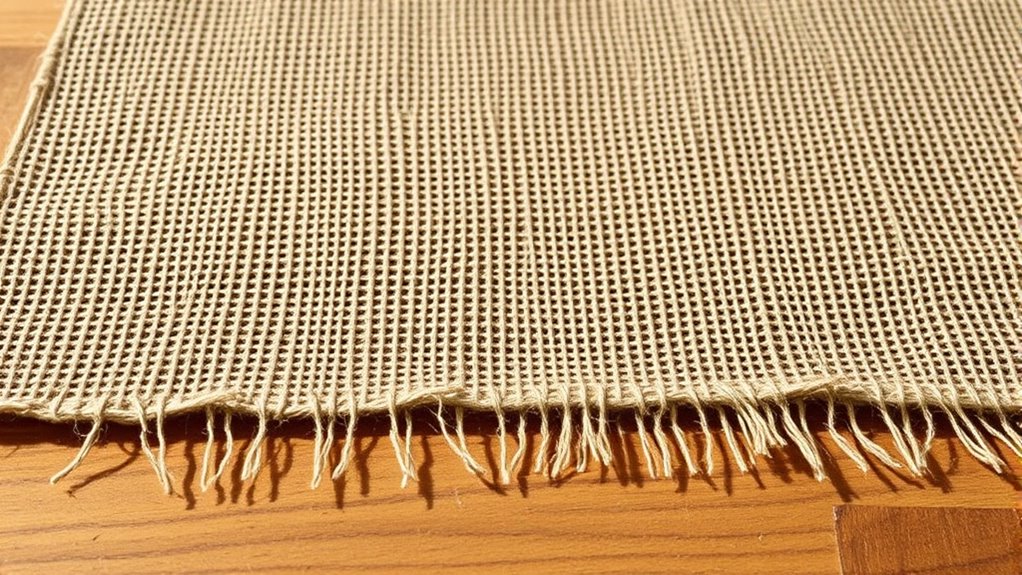
Because burlap has a coarse and uneven texture, it can be challenging to get a smooth, consistent heat press. When you apply heat, the fabric’s rough fibers create an uneven surface, making it difficult for the heat transfer to adhere properly. You might notice gaps or incomplete designs because the pressure doesn’t distribute evenly.
Plus, the open weave means the backing paper or transfer vinyl might snag or shift, causing misalignment. You’ll also find that the texture affects how heat penetrates the material, potentially leading to uneven curing or sticking issues.
Understanding burlap’s unique texture helps you anticipate these problems and adjust your technique or materials accordingly, ensuring you’re better prepared before you start your heat pressing project.
Can You Safely Use a Heat Press on Burlap?
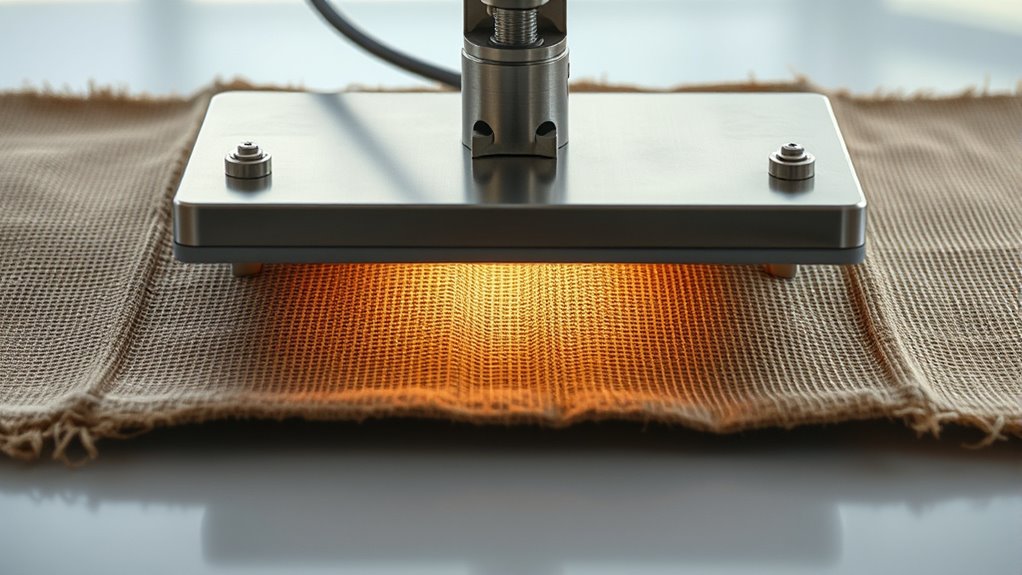
You can use a heat press on burlap, but you need to be careful because burlap has limited heat resistance. Make sure to adjust the temperature and pressing time to avoid burning or scorching the fabric.
Taking these safety precautions will help protect both your burlap and your heat press.
Burlap Heat Resistance
Although burlap is a durable fabric made from jute fibers, it has a low tolerance for high heat. When you use a heat press, understanding burlap’s heat resistance is essential to avoid scorching or weakening the fabric. Burlap typically withstands temperatures up to around 250°F (121°C).
Exceeding this can cause burns or melting in heat-sensitive blends.
Here’s a quick reference on burlap heat resistance:
| Temperature (°F) | Effect on Burlap | Recommended Use |
|---|---|---|
| Below 200 | Safe | Heat press at low temps |
| 200-250 | Caution needed | Short pressing times |
| 250-300 | Risk of scorching | Avoid |
| 300-350 | Fabric damage likely | Do not use |
| Above 350 | Melting/burning | Unsafe |
Always keep heat settings moderate for best results.
Safety Precautions
When working with burlap on a heat press, taking safety precautions guarantees both your project and fabric remain intact. First, always test a small burlap scrap to check how it reacts to heat and pressure. Burlap’s rough texture can cause uneven heat distribution, so use a Teflon sheet or parchment paper to protect your heat press and prevent scorching.
Keep the temperature between 300°F and 350°F to avoid burning the fibers. Don’t apply pressure for too long—30 seconds is usually enough. Handle the fabric carefully right after pressing, as it will be hot.
Finally, work in a well-ventilated space since burlap can release odors or small fibers when heated. Following these steps helps you safely heat press on burlap without damage.
How to Prepare Burlap Before Heat Pressing
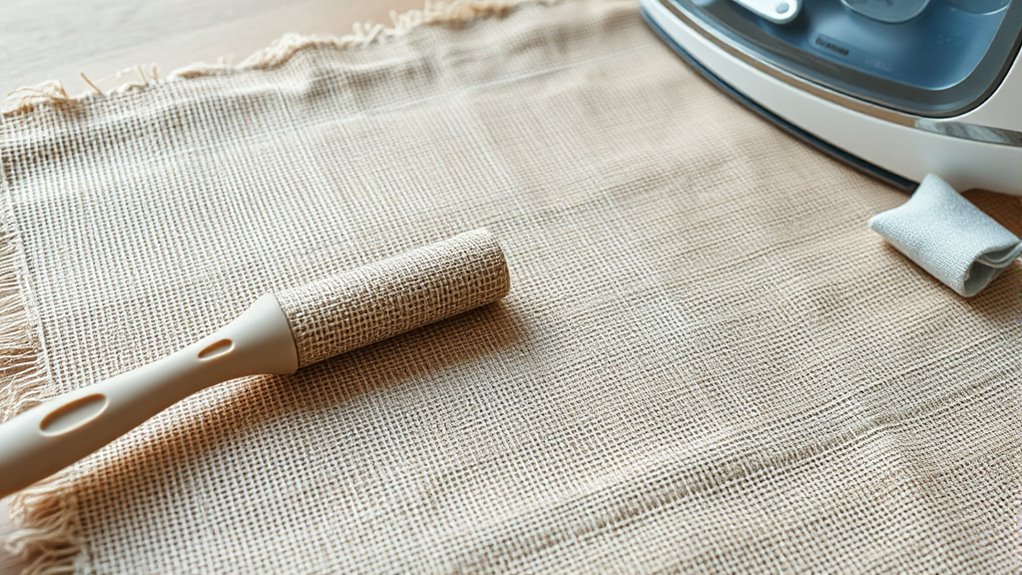
Before heat pressing burlap, it’s important to prepare the fabric properly to guarantee a smooth and lasting transfer. Start by washing the burlap to remove any dirt, dust, or chemicals that might interfere with adhesion. Let it dry completely—moisture can cause uneven pressing.
Next, iron the burlap on a low setting to flatten wrinkles and creases, providing a smooth surface for your design. Since burlap is loosely woven, place a thin, heat-resistant pressing sheet or parchment paper over it to protect the fibers during pressing. Finally, trim any loose threads that could get caught or create bumps.
Taking these steps ensures your burlap is clean, flat, and ready, which helps your heat press produce the best possible results without damaging the fabric.
Best Heat Press Settings for Burlap
Since burlap is a delicate and loosely woven fabric, you’ll need to adjust your heat press settings carefully to avoid damaging the material while ensuring a strong transfer. Set your heat press temperature between 300°F and 320°F to prevent scorching. Use a light to medium pressure to avoid crushing the burlap’s texture.
Limit the pressing time to about 10-15 seconds to reduce the risk of heat damage. Before pressing, place a Teflon sheet or parchment paper between the heat platen and burlap to protect the fibers. Always test on a small burlap scrap first to fine-tune settings.
This approach helps you achieve a clean transfer without compromising the fabric’s integrity or appearance.
How to Pick Transfer Materials for Burlap
Although burlap’s rough texture and open weave can make transfers tricky, choosing the right transfer material is crucial to achieving a clean and durable design. You’ll want to pick transfer materials that can handle the fabric’s uneven surface without bleeding or peeling.
Vinyl transfers, especially heat transfer vinyl (HTV) designed for textured fabrics, work well because they create a solid barrier. Alternatively, consider using sublimation sheets if your burlap has a polyester blend, as they bond directly with synthetic fibers. Avoid thin or delicate transfer papers, since they might not adhere properly or could tear during pressing.
Also, look for materials labeled as flexible and durable to ensure your design lasts. By matching your transfer to burlap’s unique properties, you’ll get the best results.
Tips to Prevent Damage When Heat Pressing Burlap
When heat pressing burlap, you need to handle the fabric carefully to avoid scorching, warping, or fraying. Start by lowering the temperature slightly below the usual setting for cotton or polyester. Use a heat press pillow or folded towel underneath to provide even pressure and prevent distortion.
Always cover the burlap with a Teflon sheet or parchment paper to shield it from direct heat. Limit pressing time to avoid burning the fibers. Make certain your burlap is clean and free of wrinkles, as creases can cause uneven transfers or damage.
Finally, test your settings on a small scrap piece before working on your main project. These steps help you protect burlap’s texture and ensure a crisp, lasting design.
Heat Press Mistakes to Avoid on Burlap
Even with careful preparation, certain mistakes can still ruin your burlap heat pressing project. One common error is using too much heat or pressure, which can scorch or flatten the burlap’s natural texture. Always test on a scrap piece first.
Avoid skipping a protective barrier like parchment paper; direct contact with the heat plate can cause scorching or melted ink. Don’t rush the pressing time—too short won’t set the design, too long will damage fibers. Another mistake is ignoring the burlap’s loose weave; it can shift during pressing, causing misaligned or blurred designs.
Lastly, avoid washing or handling the burlap roughly after pressing, as burlap is delicate and can fray or distort your work. Take your time, and you’ll get better results.
Creative Heat Press Design Ideas for Burlap Crafts
Since burlap’s rustic texture offers a unique canvas, you can create striking heat press designs that highlight its natural charm. To make your burlap crafts stand out, focus on designs that complement its rough, organic feel rather than clash with it. Try bold, simple shapes or typography that contrasts with the coarse background.
You can also layer designs for depth or add metallic foils for a touch of elegance.
Here are some creative ideas to inspire you:
- Farmhouse-style quotes with bold fonts
- Nature-inspired silhouettes like leaves or animals
- Geometric patterns emphasizing texture
- Holiday-themed motifs for seasonal décor
These approaches help you harness burlap’s distinctive look while ensuring your heat press designs pop beautifully.
Alternatives to Heat Press for Burlap Personalization
While heat pressing can create stunning designs on burlap, its rough texture and natural fibers sometimes limit the effectiveness of this method. If you’re looking for alternatives, consider fabric paint or markers. They allow you to apply vibrant, lasting designs without worrying about heat damage.
Stenciling is another great option—simply place a stencil on the burlap and dab paint over it for clean, sharp patterns. You might also try embroidery, which adds texture and a handcrafted touch. If you prefer a quicker method, iron-on transfers designed for rough fabrics can work, but test first.
Each alternative lets you personalize burlap creatively while avoiding heat press challenges, giving you flexibility to match your project’s needs.
How to Care for Heat-Pressed Burlap Items
Although burlap is a sturdy material, heat-pressed designs require gentle care to stay vibrant and intact. To keep your burlap items looking great, you’ll want to avoid harsh treatment that might damage the fibers or fade the design. Handle them with care, especially when cleaning and storing.
Burlap’s strength doesn’t protect heat-pressed designs from harsh care—handle gently to keep them vibrant and intact.
Here are some tips to help you care for heat-pressed burlap items:
- Spot clean with a damp cloth instead of machine washing.
- Avoid soaking or submerging in water to protect the design.
- Store in a cool, dry place away from direct sunlight to prevent fading.
- Keep away from sharp objects that can snag the burlap fibers or peel the design.
Following these steps will extend the life of your personalized burlap items.
Frequently Asked Questions
Can Burlap Be Heat Pressed for Outdoor Use Items?
You can heat press burlap for outdoor items, but you’ll need to use a protective sheet to prevent scorching and choose heat-resistant inks.
Expect some texture challenges, so test first for durability in outdoor conditions.
Does Humidity Affect Heat Pressing on Burlap?
Yes, humidity affects heat pressing on burlap by making it more prone to warping and uneven adhesion.
You’ll want to work in a dry environment to guarantee crisp, lasting results without damaging the fabric or design.
What Types of Inks Work Best With Burlap Heat Pressing?
You’ll want to use plastisol or water-based inks for burlap heat pressing. They adhere well and withstand the fabric’s rough texture.
Avoid solvent-based inks, as they might not bond properly or could damage the burlap fibers.
Can You Layer Multiple Heat Transfers on Burlap?
You can layer multiple heat transfers on burlap, but it’s not a walk in the park. You’ll need lower temps and gentle pressure to avoid ruining the fabric or previous layers.
Take it slow and steady!
Is Burlap Eco-Friendly for Heat Pressing Projects?
Yes, burlap’s eco-friendly nature comes from its natural jute fibers, which are biodegradable and renewable. When you use it for heat pressing, you’re choosing a sustainable option that reduces environmental impact compared to synthetic materials.
Conclusion
Now that you know burlap’s tricky texture and the secrets to prepping it right, you might wonder—can you really pull off a perfect heat press design? The answer is yes, but only if you follow the right steps and avoid common slip-ups.
Ready to transform that rough fabric into a stunning craft? Just remember, with burlap, patience and precision make all the difference.
Your next masterpiece is waiting—are you bold enough to try heat pressing on burlap and create a beautiful, lasting design?