Can You Heat Press on Cotton
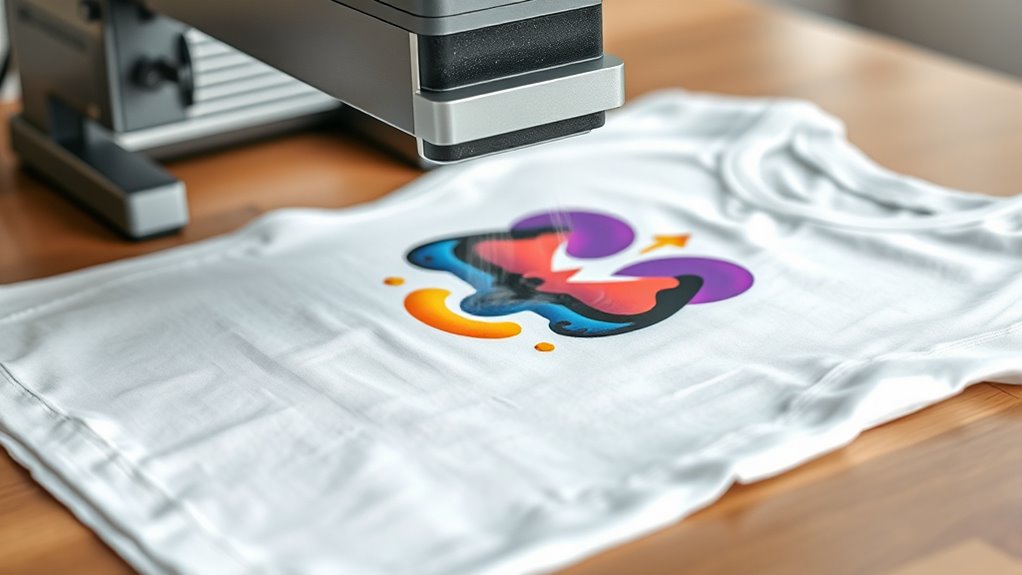
Yes, you can heat press on cotton effectively by using the right temperature, usually between 350°F and 375°F, and timing around 10 to 15 seconds. Heat pressing cotton is a popular method for applying vibrant, lasting designs on fabric.
Proper preparation and technique are essential for the best results. You’ll want to prepare your cotton by removing wrinkles and dust, using protective sheets, and ensuring even pressure to avoid scorching or shrinking.
Cotton blends need a bit gentler care with lower heat. Keep these basics in mind, and you’ll create vibrant, lasting designs.
There’s plenty more to know to master perfect heat pressing on cotton. With practice, you can achieve professional-quality results every time.
Key Takeaways
- Cotton is suitable for heat pressing, producing vibrant, durable designs when proper temperature and pressure are used.
- Ideal heat press temperature for cotton ranges between 350°F and 375°F for 10-15 seconds to avoid scorching.
- Preheat and prepare cotton fabric by removing wrinkles and lint to ensure optimal heat transfer quality.
- Use heat-resistant sheets and compatible transfer materials like HTV or sublimation paper for best results on cotton.
- Avoid pressing over seams or excessive heat to prevent fabric damage, shrinking, or color fading on cotton.
Can You Heat Press on Cotton? How It Works
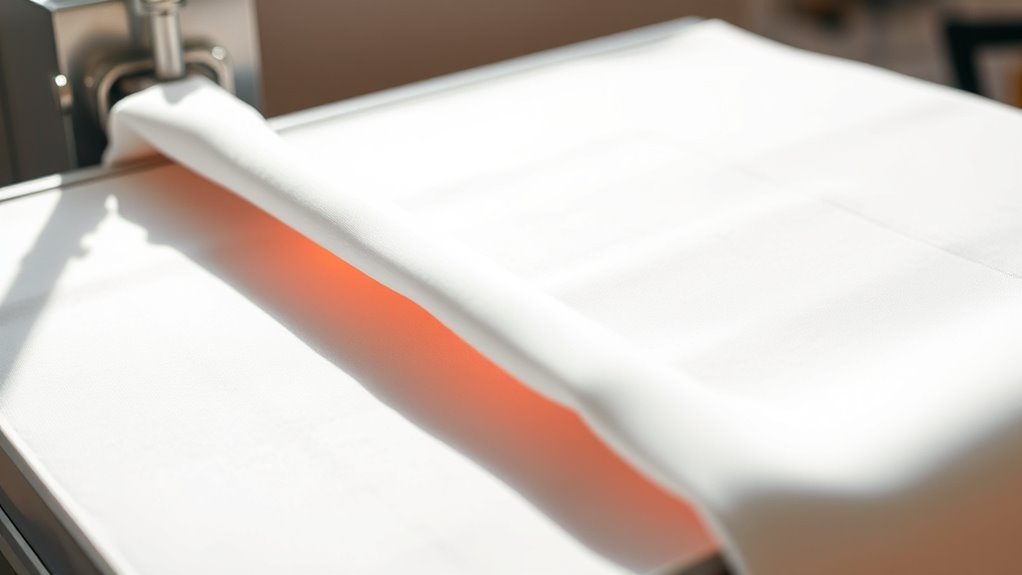
Although cotton is a natural fiber, you can definitely heat press on it with the right approach. When you heat press cotton, you’re fundamentally using heat and pressure to transfer designs onto the fabric. The heat activates the adhesive on the transfer paper or vinyl, bonding it firmly to the cotton fibers.
You’ll want to make sure the fabric is clean and wrinkle-free before you start, as any imperfections can affect the final print. The cotton’s natural texture absorbs the ink or vinyl well, resulting in vibrant, durable designs. Just keep in mind that cotton’s breathability means it can handle heat, but you’ll need to be cautious to prevent scorching or shrinking.
With practice, you’ll get consistent, professional-looking results on your cotton items.
Best Temperature and Time Settings for Heat Pressing Cotton
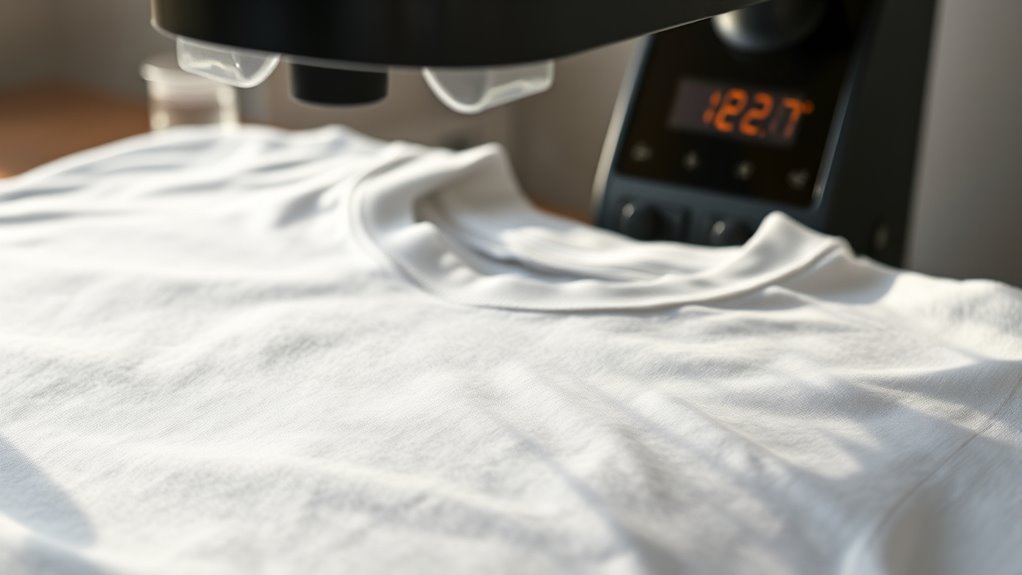
To get the best results when heat pressing cotton, you’ll need to set the right temperature and time. Generally, a suitable heat press temperature ranges between 350°F to 375°F, with pressing times around 10 to 15 seconds.
Finding the right balance helps guarantee your design adheres well without damaging the fabric.
Optimal Heat Press Temperature
How hot should you set your heat press when working with cotton? The ideal temperature usually falls between 350°F and 375°F (175°C–190°C). This range ensures the heat activates the transfer adhesive without scorching the fabric.
Setting your press too high might burn the cotton or cause the design to warp, while a lower temperature may prevent the transfer from bonding properly. Always preheat your press to the target temperature before pressing, so the heat is consistent. Use a heat-resistant cover sheet to protect both the cotton and the design.
Ideal Pressing Duration
When you heat press cotton, the duration you apply heat is just as essential as the temperature. Typically, you’ll want to set your heat press between 350°F and 375°F and press for about 10 to 15 seconds. This timeframe ensures the heat transfer adheres properly without scorching the fabric.
If you press too briefly, the design won’t fully bond; too long, and you risk damaging the cotton fibers or fading colors. Always use a reliable timer to control the pressing time precisely. Remember, thicker cotton fabrics may require slightly longer pressing, while lighter ones need less time.
Testing on a small fabric piece first can help you find the perfect balance for your specific cotton garment.
Materials and Tools Needed to Heat Press Cotton
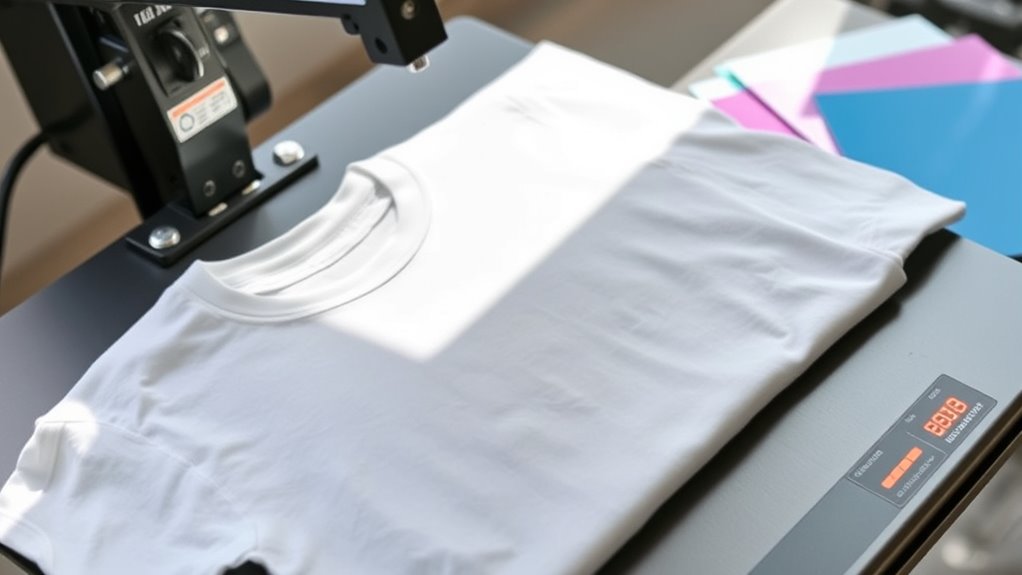
To heat press cotton effectively, you’ll need the right equipment, including a reliable heat press machine and heat-resistant tape. Choosing transfer materials that work well with cotton is key to getting a crisp, lasting design.
Don’t forget to prepare your cotton fabric properly to guarantee the best results.
Essential Heat Press Equipment
Although heat pressing cotton might seem straightforward, having the right equipment makes all the difference in achieving a clean, professional result. First, you’ll need a reliable heat press machine with adjustable temperature and pressure settings to suit cotton’s sensitivity. A digital display helps you monitor heat accurately.
Next, invest in a Teflon sheet or heat-resistant parchment paper to protect your fabric and prevent scorching. You’ll also want a heat-resistant glove to handle hot materials safely. A silicone pad or pressing pillow is useful to ensure even pressure, especially on seams or uneven surfaces.
Finally, keep a lint roller handy to remove any debris that could affect your transfer. With these essentials, you’ll set yourself up for consistent, high-quality heat pressing on cotton every time.
Choosing Cotton-Friendly Transfer Materials
How do you guarantee your heat press designs bond perfectly to cotton fabrics? Start by choosing transfer materials made specifically for cotton. Look for heat transfer vinyl (HTV) labeled as compatible with cotton or natural fibers.
These materials have adhesive properties that withstand cotton’s texture and washing. You can also use specially formulated sublimation paper designed for cotton blends or cotton-polyester mixes, but pure cotton requires a polymer coating or pretreatment. Avoid generic transfers, as they may peel or fade quickly.
Additionally, select a heat-resistant Teflon sheet or parchment paper to protect your design during pressing. Investing in quality vinyl, transfer paper, and protective sheets ensures your cotton projects come out crisp, durable, and vibrant every time you use your heat press.
Preparing Cotton Fabric Properly
Choosing the right transfer materials sets the stage, but preparing your cotton fabric properly guarantees your heat press designs stick and last. Before you start, gather these essentials:
- Lint Roller – Remove all dust and fibers to ensure a smooth surface.
- Heat Press or Iron – Preheat your cotton fabric to eliminate moisture and wrinkles.
- Teflon Sheet or Parchment Paper – Protects the fabric and transfer during pressing.
First, use the lint roller to clear any debris that could affect adhesion. Then, preheat your fabric with a quick press for 3-5 seconds to flatten it and remove moisture.
Finally, place a Teflon sheet or parchment paper over the design to prevent scorching and ensure even heat distribution. With these tools, you’re ready to achieve crisp, durable heat press results on cotton.
How to Prepare Cotton Garments Before Heat Pressing
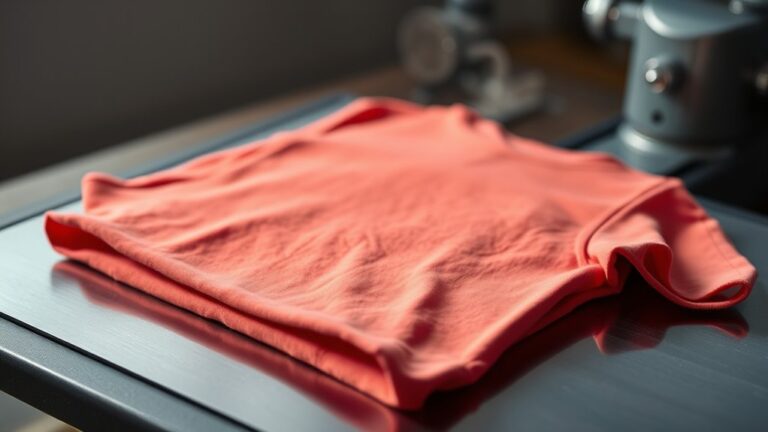
Before you start heat pressing on cotton garments, you need to make certain the fabric is clean and wrinkle-free. Wash your cotton item with a mild detergent and avoid fabric softeners, which can interfere with adhesion. Dry the garment completely, as any moisture can cause poor transfer results.
Iron the fabric to remove wrinkles, focusing on the area where you’ll apply the design. This guarantees a smooth surface for even heat distribution. Lay the garment flat on your heat press or pressing surface, making sure it’s taut but not stretched.
Pre-press the garment for a few seconds to eliminate any remaining moisture and flatten the fibers. Taking these steps helps you achieve a sharp, durable heat transfer on your cotton garment.
What Heat Transfer Designs Work Best on Cotton?
When working with cotton, you’ll find that certain heat transfer designs adhere better and last longer due to the fabric’s natural texture and breathability. To get the best results, focus on designs that complement cotton’s properties.
Certain heat transfer designs adhere better and last longer on cotton due to its natural texture and breathability.
Here are three types that work especially well:
- Vinyl Transfers – They create a smooth, durable finish and bond well with cotton fibers, making your design pop without cracking.
- Plastisol Transfers – These offer vibrant colors and excellent durability, ideal for detailed, colorful designs that stand up to washing.
- Sublimation with Polyester Blends – While pure cotton doesn’t hold sublimation well, blends with polyester allow for vivid, long-lasting prints.
Choosing these designs helps guarantee your heat-pressed cotton garments look great and endure regular wear and washing.
How to Avoid Common Heat Pressing Mistakes on Cotton
To get the best results when heat pressing on cotton, you need to set the right temperature and avoid damaging the fabric. Using the proper heat press accessories can also make a big difference in protecting your material.
Let’s look at how these steps help you avoid common mistakes.
Proper Temperature Settings
Although cotton is a durable fabric, using the wrong heat press temperature can easily damage your garment or transfer. To get the best results without ruining your cotton item, you need to set the heat press correctly.
Follow these key temperature guidelines:
- Set the heat press between 350°F and 375°F. This range melts the transfer adhesive properly without burning the cotton.
- Avoid going above 380°F, as excessive heat may scorch the fabric or cause colors to fade.
- Use a temperature setting aligned with your specific transfer material’s instructions, since different transfers require slightly different heat levels.
Avoiding Fabric Damage
Since cotton can be sensitive to high heat and prolonged pressure, you’ll need to be careful to avoid common mistakes that can damage your fabric during heat pressing. First, don’t leave the heat press on the fabric for too long; excessive time can scorch or weaken the fibers. Always adjust the temperature according to the cotton blend you’re working with—too hot can cause yellowing or shrinkage.
Avoid pressing over seams or thick areas, as uneven pressure can create unwanted marks. Make sure your fabric is clean and dry to prevent stains or steam damage. Finally, test on a scrap piece before working on your final project to catch any issues early.
Taking these steps will help you preserve your cotton’s quality every time.
Using Heat Press Accessories
When you use the right heat press accessories, you’ll protect your cotton fabric from common mistakes like scorching or uneven pressure. To get the best results, consider these three essential accessories:
- Teflon Sheets – These create a barrier between the heat plate and your cotton, preventing scorch marks and protecting delicate prints.
- Heat-Resistant Tape – Use this to secure your transfer paper or vinyl in place, avoiding shifting that causes blurry or misaligned designs.
- Silicone Pads or Pillows – These help distribute pressure evenly across the fabric, especially on seams, buttons, or thick areas, ensuring a clean, consistent press.
Using these accessories helps you avoid damage and achieve professional-quality heat pressing on cotton every time.
Can You Heat Press Cotton Blends? Tips and Settings
If you want to heat press cotton blends, you’ll need to adjust your technique slightly to protect the fabric and achieve the best results. Cotton blends often contain polyester or other synthetic fibers, which react differently to heat than pure cotton. Set your heat press between 300°F and 320°F to avoid scorching or melting the fibers.
Use medium pressure and reduce pressing time to about 10-15 seconds to prevent damaging the blend. Always test on a small fabric area first to gauge the reaction. Using a Teflon sheet or parchment paper can help protect the surface and improve heat distribution.
How to Care for Heat Pressed Cotton to Make Designs Last
Achieving great results on cotton or cotton blends is just the first step; maintaining your heat-pressed designs takes careful attention. To make your designs last, follow these essential care tips:
- Wash inside out in cold water – This reduces friction and prevents the design from fading or cracking.
- Use mild detergent and avoid bleach – Harsh chemicals can break down the adhesive and damage the fabric.
- Air dry or tumble dry low – High heat in dryers can cause the design to peel or warp over time.
What to Do If Your Cotton Fabric Scorches or Warps
A scorched or warped cotton fabric can be frustrating, but you don’t have to give up on your project just yet. First, act quickly—cool the fabric and avoid further heat. For scorch marks, try gently rubbing with a mixture of baking soda and water or use a mild bleach solution on white cotton.
Warping may be corrected by steaming and carefully reshaping the fabric. Prevention is key, so always monitor heat and pressure.
| Problem | Cause | Quick Fix |
|---|---|---|
| Scorch Marks | Excessive heat/time | Baking soda paste or mild bleach |
| Warping | Too much pressure | Steam and reshape gently |
| Color Fading | Overheating | Avoid heat, use protective sheet |
These steps will help save your cotton and keep your project on track.
How to Test Heat Press Settings Safely on Cotton Garments
Preventing damage like scorching or warping starts with knowing how to test your heat press settings properly. Before working on your main cotton garment, grab a scrap piece of the same fabric. This lets you experiment without risking your project.
Follow these steps:
- Set Temperature and Time: Start with manufacturer-recommended settings for cotton, usually around 350°F for 10-15 seconds.
- Press and Inspect: Apply heat and pressure on the scrap, then check for any discoloration, shrinkage, or texture changes.
- Adjust as Needed: If you see damage or uneven pressing, lower the temperature or reduce the press time incrementally. Repeat testing until you get a perfect result.
Frequently Asked Questions
Can You Heat Press on Colored Cotton Without Fading?
Yes, you can heat press on colored cotton without fading if you use the right temperature, time, and quality ink or transfer paper.
Always test a small area first to guarantee colors stay vibrant and fabric remains intact.
Is It Safe to Heat Press Cotton With Metallic Prints?
Heat pressing cotton with metallic prints is like walking on thin ice—you can do it, but cautiously. Use low temperature and short press time to avoid melting or damaging the metallic layer, keeping your design safe and shiny.
How Does Humidity Affect Heat Pressing Cotton?
Humidity affects heat pressing cotton by increasing moisture content, which can cause uneven adhesion or scorching. You should adjust temperature and pressing time accordingly to guarantee a smooth, durable transfer without damaging the fabric or design.
Can Heat Pressing Damage Cotton Fabric Fibers?
You won’t damage cotton fibers if you keep the temperature below 375°F. Over 70% of fabric damage happens from excessive heat or pressing too long, so always monitor your heat press settings carefully to protect your cotton.
Are There Eco-Friendly Heat Transfer Options for Cotton?
Yes, you can use eco-friendly heat transfer options like water-based inks, biodegradable vinyl, or natural dyes. These choices reduce environmental impact while keeping your cotton fabric vibrant and soft.
They do this without harmful chemicals or plastic waste.
Conclusion
You can heat press on cotton successfully by choosing the right temperature, setting the correct time, and preparing your garment properly. You can use various heat transfer designs, but you should always test settings first.
You can care for your heat-pressed cotton by washing gently, avoiding harsh detergents, and storing it carefully. You can fix issues like scorching or warping by adjusting your press or using protective layers.
Heat pressing cotton is easy when you follow these steps consistently. By understanding how to heat press on cotton and applying the proper techniques, you ensure durable and vibrant results every time.