Can You Heat Press on Mesh
You can heat press on mesh fabric, but it requires careful adjustments to temperature, pressure, and timing to prevent damage. Mesh’s open weave and delicate fibers make it especially vulnerable to scorching, warping, or stretching if exposed to excessive heat or force.
To protect your mesh material, use protective barriers such as Teflon sheets or parchment paper. Choosing softer heat transfer materials also helps maintain the integrity of the fabric.
Handle the mesh gently and always test on small sections first to ensure the best results.
By following these precautions, you can successfully heat press on mesh without compromising its quality. Keep reading to discover the best methods and materials designed specifically for mesh fabrics.
Key Takeaways
- You can heat press on mesh using lower temperatures (around 300°F) and light to medium pressure to avoid fabric damage.
- Use protective barriers like Teflon sheets to prevent scorching and preserve mesh integrity during pressing.
- Thin, stretchable materials like PU heat transfer vinyl and sublimation inks work best for mesh fabrics.
- Always preheat mesh, position designs carefully, and limit pressing time to 10-15 seconds for optimal results.
- Avoid heat pressing on very delicate or open-weave mesh; consider screen printing or embroidery as alternatives.
Can You Heat Press Mesh Without Damage?
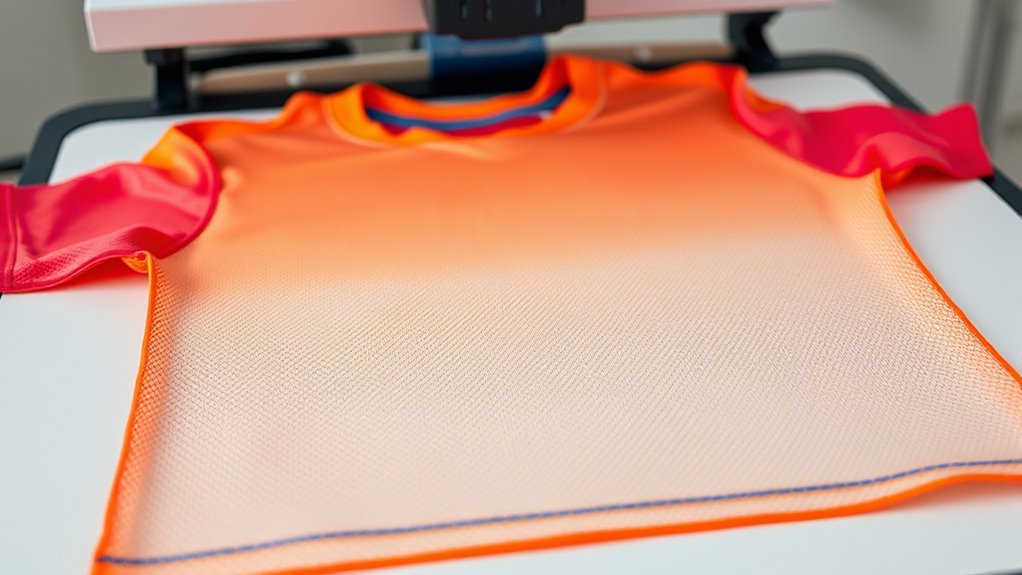
Although mesh fabric is delicate, you can heat press it without causing damage if you take the right precautions. First, always use a lower temperature setting than you would for regular fabrics—typically around 300°F or less. You’ll want to limit the pressing time to 10-15 seconds to avoid melting or warping the fibers.
Using a protective Teflon sheet or parchment paper between the heat press and the mesh prevents direct contact and safeguards the material. Also, apply gentle, even pressure rather than heavy force to maintain the fabric’s structure. By carefully monitoring temperature, time, and pressure, you guarantee the mesh stays intact while achieving a clean, lasting design.
With these steps, you can confidently heat press mesh without worrying about damage.
Why Is Mesh Fabric Tricky for Heat Pressing?
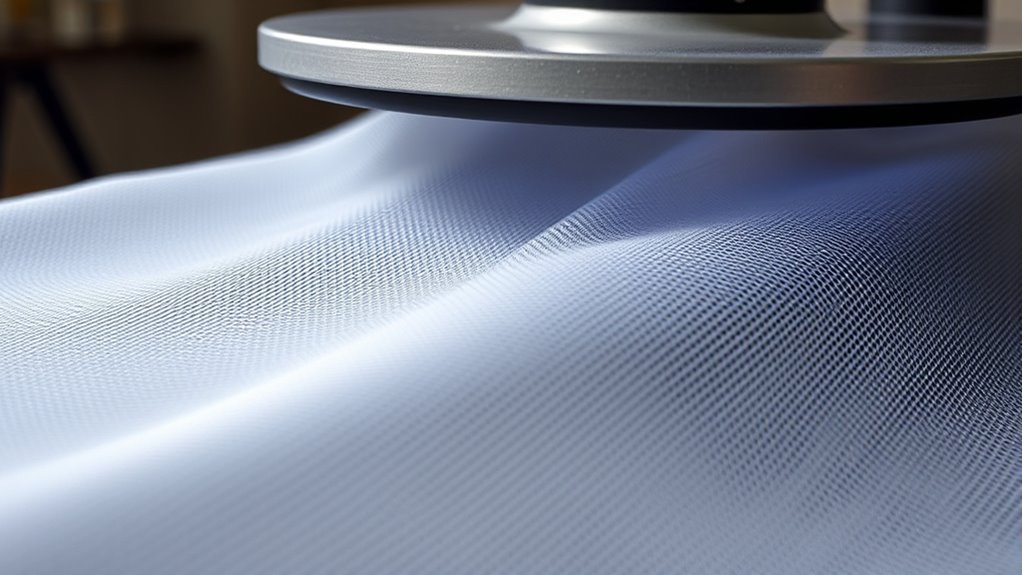
While you can heat press mesh fabric carefully, it still poses unique challenges compared to regular materials. The open weave and holes in mesh make it tricky because heat and pressure can easily damage or distort the fabric. If you press too hard, the fabric can stretch or get imprints from the platen.
Also, the heat might not distribute evenly because of the gaps, causing uneven adhesion or scorching. Since mesh is lightweight, it’s more prone to warping or melting if the temperature or time isn’t just right. You’ll need to be extra cautious with your settings and placement to avoid ruining your project.
Understanding these quirks helps you approach heat pressing mesh with the care it demands.
Best Heat Transfer Materials for Mesh Fabric
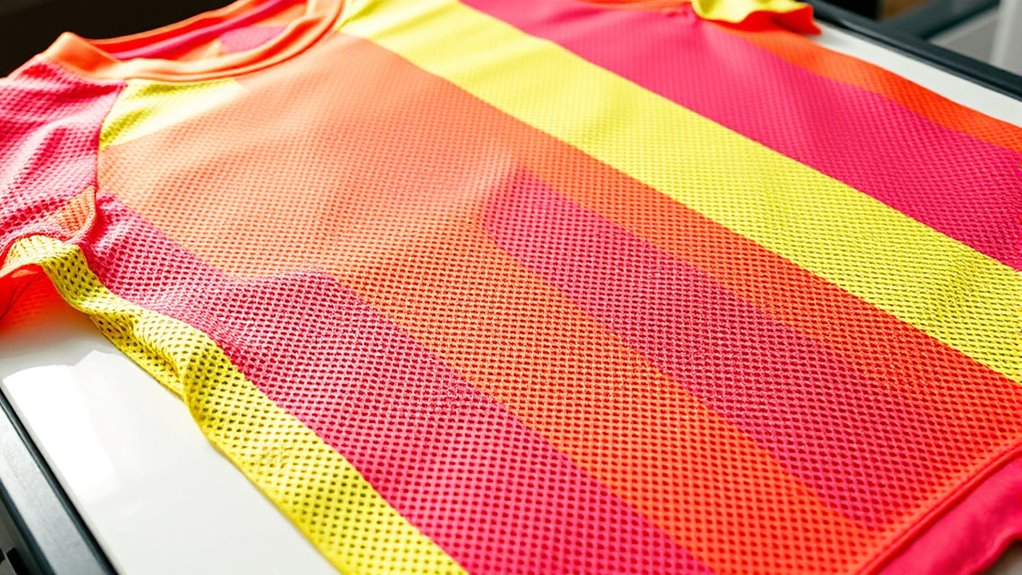
Since mesh fabric requires gentle handling, choosing the right heat transfer material is essential to achieve a clean, durable design without damaging the fabric. You’ll want materials that are lightweight, flexible, and breathable to maintain the mesh’s qualities.
Here are the best options to consider:
- PU (Polyurethane) Heat Transfer Vinyl: Thin, stretchable, and soft, perfect for mesh.
- Flock Heat Transfer Vinyl: Adds texture but still breathable if applied carefully.
- Sublimation Inks: Ideal for polyester mesh, as the dye bonds without adding layers.
- Screen-Printed Transfers: Thin and flexible, allowing airflow through the mesh.
- Plastisol Transfers: Durable with moderate flexibility; use lower heat settings.
Picking the right material guarantees your design lasts and keeps the mesh comfortable and intact.
How to Prepare Mesh Fabric for Heat Pressing
Before you start heat pressing on mesh fabric, you need to prepare it carefully to avoid damage and guarantee your design adheres properly. Begin by washing and drying the mesh to remove any sizing or chemicals that might interfere with adhesion. Iron the fabric if needed, using a low heat setting to smooth wrinkles.
Place a protective sheet, like parchment paper, between the heat press and fabric to prevent scorching. Make sure the mesh lies flat on the press to avoid uneven transfers.
| Step | Action | Tip |
|---|---|---|
| 1 | Wash fabric | Use mild detergent |
| 2 | Dry completely | Air dry or low heat dryer |
| 3 | Iron fabric | Use low setting |
| 4 | Position fabric | Ensure flat and taut |
| 5 | Use protective sheet | Prevent scorching |
Optimal Temperature and Pressure for Heat Pressing Mesh
To achieve a successful heat press on mesh fabric, you’ll need to carefully control both temperature and pressure. Too much heat or pressure can damage the fabric, while too little won’t properly transfer your design. Aim for a balanced approach to get the best results.
Here are some key guidelines:
- Set the temperature between 300°F and 320°F (149°C to 160°C)
- Apply medium pressure—firm but not overly tight
- Limit pressing time to 10-15 seconds to avoid heat damage
- Use a heat press with adjustable settings for precise control
- Test on a small fabric piece before the full press
Following these tips helps ensure your mesh fabric stays intact and your design adheres perfectly.
Protecting Mesh Fabric During Heat Pressing
Although mesh fabric is breathable and lightweight, it requires extra care during heat pressing to prevent damage. You need to protect the delicate holes and fibers from direct heat and pressure, which can cause melting, warping, or distortion. Always use a protective barrier, like a Teflon sheet or parchment paper, between the heat press and the mesh.
This shield distributes heat evenly and prevents scorching. Adjust your heat press settings to lower temperatures and lighter pressure than you’d use on solid fabrics. Avoid leaving the heat press on the mesh for too long to reduce the risk of burns.
Step-by-Step Guide to Heat Pressing on Mesh
Before you start heat pressing on mesh, make sure the fabric is clean and flat to avoid wrinkles. You’ll want to use specific techniques like lower temperatures and shorter press times to protect the mesh.
Following these steps will help you achieve the best results without damaging the material.
Preparing Mesh Fabric
When working with mesh fabric, you’ll want to start by ensuring the material is clean and free of wrinkles to achieve the best heat press results. Proper preparation helps prevent uneven pressing and damage. Here’s how to get your mesh ready:
- Wash the fabric gently to remove dirt and residues.
- Allow it to dry completely to avoid steam issues during pressing.
- Iron on a low setting if necessary, using a pressing cloth to protect the mesh.
- Lay the mesh flat on a heat-resistant surface, smoothing out any folds.
- Use heat-resistant tape to secure the fabric, preventing shifting during pressing.
Following these steps will set you up for a smooth heat pressing process without harming your mesh fabric.
Heat Press Techniques
How do you guarantee a perfect transfer when heat pressing on mesh fabric? You follow precise steps and adjust your technique to mesh’s unique texture.
First, preheat your press and mesh to remove moisture. Use a heat press with adjustable pressure and a Teflon sheet to protect the fabric.
| Step | Action |
|---|---|
| 1. Preheat | Warm mesh fabric and heat press |
| 2. Position Design | Place transfer carefully on mesh |
| 3. Adjust Pressure | Use medium to light pressure |
| 4. Press & Cool | Heat press 10-15 seconds, then cool fully |
Common Mistakes to Avoid When Heat Pressing Mesh
Although mesh fabric offers great breathability and style, you’ll find it tricky to heat press if you don’t avoid certain pitfalls. To get the best results, steer clear of these common mistakes:
- Applying too much pressure, which can crush the mesh and ruin the design.
- Using high temperatures that can melt or warp the fabric.
- Neglecting to use a protective Teflon sheet or parchment paper, risking scorching.
- Failing to align the design properly, leading to crooked or off-center prints.
- Ignoring the mesh’s stretchiness, causing distortion when worn.
How to Test Your Heat Press Settings on Mesh
Avoiding common mistakes is only the beginning of successful heat pressing on mesh fabric. To get the best results, you need to test your heat press settings carefully. Start by selecting a scrap piece of the same mesh material.
Set your heat press to a lower temperature and shorter time than you think necessary. Press the test fabric and check for any damage or incomplete adhesion. Gradually increase the temperature or time in small increments, pressing new test pieces each time.
Pay attention to how the mesh reacts—too much heat can melt fibers, while too little won’t bond the design properly. Once you find the right balance, note the exact temperature, pressure, and timing. This guarantees consistent results without harming your mesh fabric.
Caring for Heat-Pressed Designs on Mesh Fabric
Once you’ve successfully heat pressed your design onto mesh fabric, proper care becomes essential to maintain its appearance and durability. You’ll want to treat the fabric gently to avoid peeling or fading of the design. Follow these tips to keep your heat-pressed mesh looking fresh:
- Wash inside out in cold water to protect the design and fabric.
- Use mild detergent; avoid bleach or harsh chemicals.
- Air dry or tumble dry on low heat to prevent heat damage.
- Avoid ironing directly on the design; use a protective cloth if needed.
- Store the garment flat or folded to prevent unnecessary stretching or cracking.
When Should You Skip Heat Pressing and Try Another Method?
If your mesh fabric has large holes or a very loose weave, heat pressing might not give you the results you want. The heat and pressure can cause the design to warp or fail to adhere properly. Also, if the fabric is too thin or delicate, the heat might damage it or cause melting.
In these cases, you should skip heat pressing and consider alternative methods like screen printing or embroidery, which work better on open-weave or fragile fabrics. Additionally, if your design requires vibrant, long-lasting colors that won’t crack or peel, these other methods might be more dependable. Always test a small area first to avoid ruining your fabric.
Choosing the right method ensures your design looks great and lasts longer.
Where to Buy Heat Press Supplies for Mesh Fabric
When you decide heat pressing is the right choice for your mesh fabric, finding the right supplies becomes your next step. You want reliable tools and materials that protect your fabric and deliver crisp results. Look for quality heat presses, Teflon sheets, and heat-resistant tape tailored for mesh.
Here are some great places to check out:
- Specialty craft stores like Michaels or Joann Fabrics
- Online marketplaces such as Amazon or Etsy
- Dedicated heat press supply websites like Heat Press Nation
- Local printing or garment supply shops
- Wholesale suppliers if you plan on buying in bulk
Shopping from these sources guarantees you get the right products to avoid damage and achieve professional heat press results on mesh fabric.
Frequently Asked Questions
Can You Heat Press on Mesh Fabric With Logos Already Printed?
You can heat press on mesh fabric with logos already printed, but you need to be careful. Use a lower temperature and a protective sheet to avoid damaging the existing design or fabric, ensuring the new press adheres properly.
How Long Does a Heat-Pressed Design on Mesh Typically Last?
A heat-pressed design on mesh typically lasts several washes if you follow care instructions carefully. You’ll want to avoid high heat and harsh detergents to keep the design vibrant and prevent peeling or cracking over time.
Is Mesh Fabric Suitable for Commercial Heat Press Production?
Yes, mesh fabric suits commercial heat press production if you use the right temperature and pressure settings. You’ll need to handle it carefully to avoid damage, but with proper technique, you can achieve durable, high-quality results consistently.
Can You Heat Press on Mesh Fabric With Different Thread Counts?
You can heat press on mesh with varying thread counts, but you’ll need to adjust temperature and pressure carefully. Thicker threads handle more heat, while finer ones require gentler settings to avoid damage or distortion during pressing.
Does Mesh Fabric Shrink After Heat Pressing Over Time?
Yes, mesh fabric can shrink after heat pressing over time, especially if you use high heat or press for too long.
You should use lower temperatures and quick press times to minimize shrinkage and maintain fabric integrity.
Conclusion
You can definitely heat press mesh without turning it into a hot mess, but it takes a gentle touch and the right tools. Think of mesh like a delicate dance partner—you’ve got to move carefully with the right temperature, pressure, and materials to keep it intact. Test your settings first, and if it feels off, don’t force it.
With care, your design will stick beautifully and last through the wash. Proper heat press techniques on mesh ensure durability and vibrant results. Remember, mastering how to heat press on mesh is key to achieving professional-quality finishes.