Can You Heat Press Permanent Vinyl on Wood
You can heat press permanent vinyl on wood, but proper surface preparation is essential for the best results. Sanding and cleaning the wood thoroughly will help guarantee strong adhesion of the vinyl.
Using the right heat press settings is also crucial to avoid damage. Set your heat press to a moderate temperature between 270°F and 300°F.
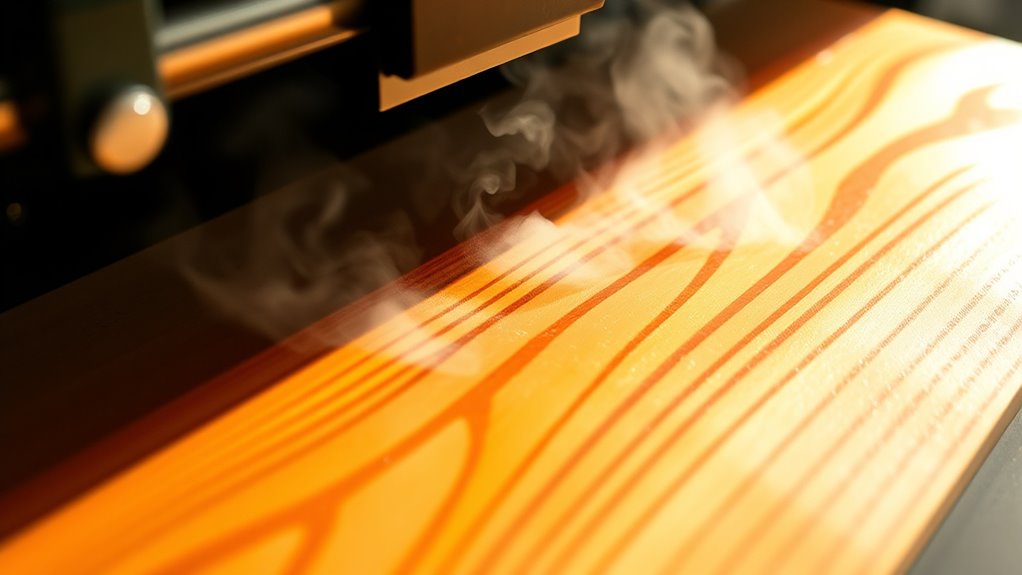
Apply even pressure during pressing to prevent scorching or warping both the wood and vinyl. Always protect your design by placing parchment or Teflon sheets over the vinyl while heat pressing.
Following these steps ensures your permanent vinyl bonds well and lasts longer on wood surfaces. Keep reading to discover helpful tips and avoid common mistakes for optimal heat pressing results.
Key Takeaways
- Heat pressing permanent vinyl on wood is possible but requires properly sanding and cleaning the surface for optimal adhesion. Use a temperature around 270°F to 300°F with light to medium pressure to prevent scorching or warping.
- Applying a protective layer like parchment paper during pressing shields the vinyl and ensures even heat distribution. Wood’s porosity and thermal expansion can affect vinyl durability, so moderate heat and pressure are essential for longevity.
- Alternative tools like household irons or heat guns can work if a heat press is unavailable, but test on scrap wood first.
Can You Heat Press Permanent Vinyl Directly on Wood?
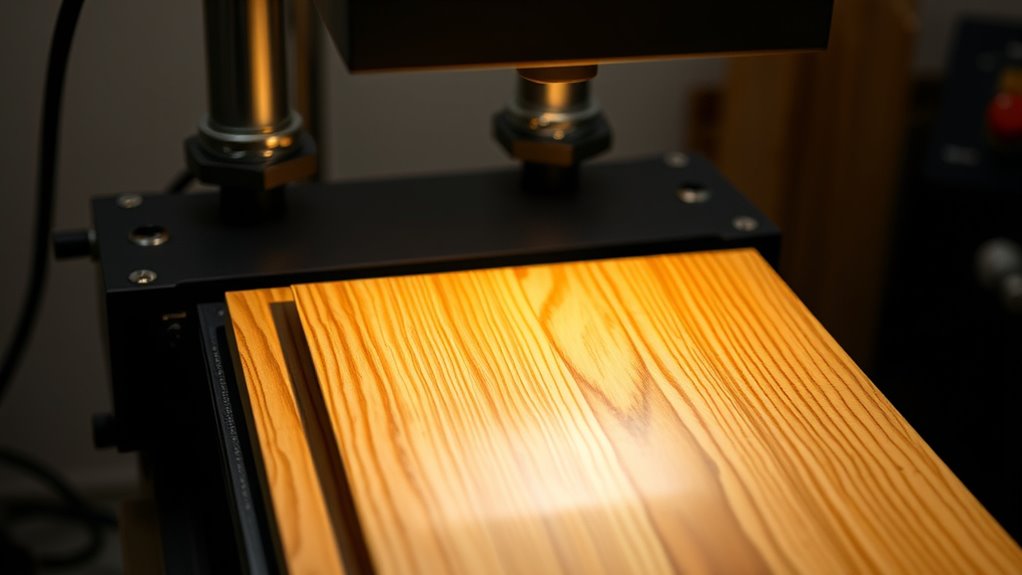
Although heat pressing vinyl on fabric is common, you might wonder if you can heat press permanent vinyl directly on wood. The short answer is yes, but it’s not as straightforward. Wood’s porous and uneven surface makes it trickier to get a smooth, lasting bond compared to fabric.
You’ll need to prepare the wood properly by sanding it smooth and cleaning off any dust or oils. Using a heat press at the right temperature and pressure is essential to avoid burning or warping the wood. Also, not all permanent vinyl is created equal—some types handle heat better than others.
If you’re aiming for a durable finish, consider these factors carefully before you start pressing vinyl directly onto your wooden project.
How Permanent Vinyl Reacts to Heat on Wood
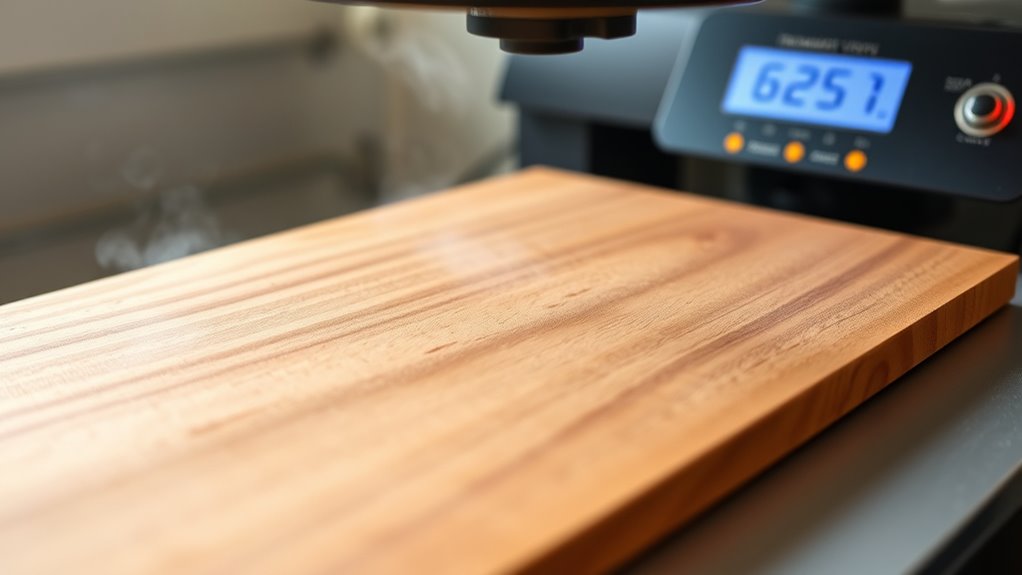
When you apply heat to permanent vinyl on wood, the adhesive activates and bonds tightly to the surface. However, too much heat can damage the wood or weaken the vinyl’s durability over time.
Understanding the right temperature balance is key to getting a lasting, strong finish.
Vinyl Adhesion Under Heat
Because permanent vinyl responds directly to heat, understanding how it bonds on wood is essential for a lasting finish. When you heat press vinyl onto wood, the heat activates the adhesive, allowing it to grip the surface securely. However, wood’s texture and moisture content can affect this process, so you need to manage the heat and pressure carefully.
Here’s what you should keep in mind for *ideal* vinyl adhesion under heat:
- Apply consistent pressure to guarantee the adhesive bonds evenly across the wood’s surface.
- Use the correct temperature, usually between 270°F and 300°F, to activate the vinyl’s adhesive without damaging it.
- Allow the vinyl to cool completely before handling to let the adhesive set firmly and prevent peeling.
Mastering these steps will help you achieve durable, professional results every time.
Heat Impact On Wood
Since wood naturally expands and contracts with heat, you need to take into account how this affects the vinyl’s adhesion during heat pressing. When you apply heat, the wood slightly swells, which can cause the vinyl to stretch or shift if not pressed properly. This movement may lead to bubbles or peeling over time.
To minimize this, make certain you use a moderate temperature and apply even pressure so the vinyl bonds securely without stressing the wood. Also, consider the wood’s moisture content, as drier wood reacts differently than moist wood under heat. By understanding how heat influences the wood’s behavior, you can adjust your heat pressing technique to maintain a strong, lasting bond between the permanent vinyl and your wooden surface.
Temperature Effects On Durability
Although vinyl is designed to withstand heat, applying the right temperature during heat pressing is crucial to guarantee its durability on wood. If the temperature’s too low, the vinyl won’t properly adhere, leading to peeling or fading over time. Too high, and the vinyl can scorch or warp, weakening its bond and affecting the wood’s surface.
You want to find that sweet spot for long-lasting results. Keep these points in mind:
- Use a temperature range recommended by your vinyl manufacturer, usually around 300°F to 320°F.
- Limit pressing time to avoid overheating; 15-20 seconds is often ideal.
- Apply consistent pressure to ensure even adhesion without damaging the wood.
How to Prepare Wood for Vinyl Application
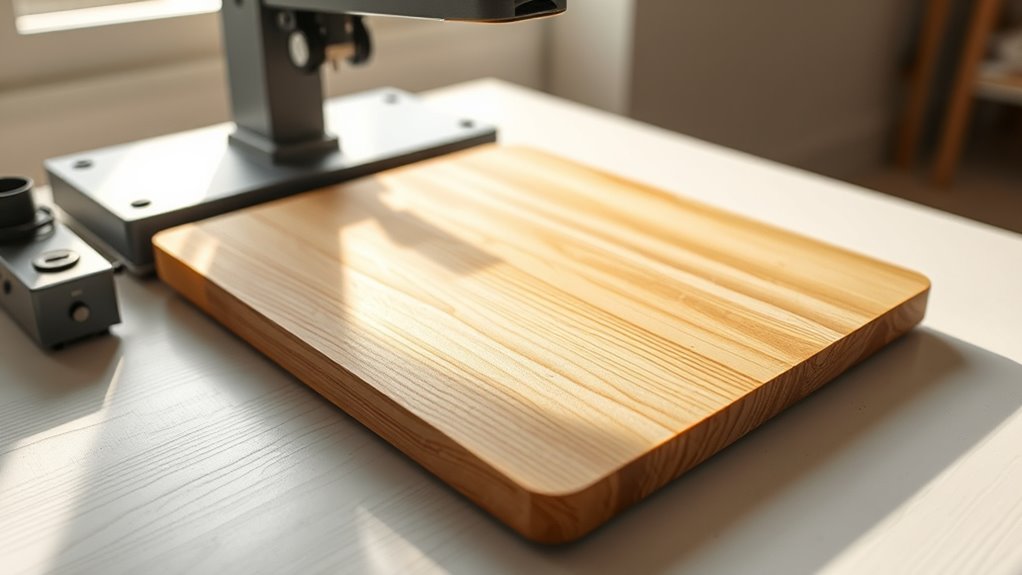
Before applying vinyl to wood, you’ll want to make certain the surface is clean, smooth, and dry to help the adhesive bond properly. Start by wiping the wood with a damp cloth to remove dust, dirt, and oils. Let it dry completely before moving on.
Next, sand the surface lightly using fine-grit sandpaper—this smooths out imperfections and opens wood pores, improving vinyl adhesion. After sanding, remove any leftover dust with a tack cloth or a vacuum. Avoid using oily or waxy finishes since they can prevent the vinyl from sticking well.
If your wood has a rough texture or uneven grain, consider applying a thin coat of primer or paint, then sanding again for an even surface. These steps guarantee your vinyl adheres firmly and lasts longer.
Using a Heat Press Safely on Wood
When you use a heat press on wood, you need to control the temperature and pressure carefully to avoid damaging the surface or vinyl. Too much heat can scorch the wood or warp the vinyl, while excessive pressure might leave indentations. Here’s how to stay safe:
Carefully manage heat and pressure on wood to prevent scorching, warping, or indentations during heat pressing.
- Set the heat press to a moderate temperature, usually around 300°F, to safeguard the wood.
- Use light to medium pressure to ensure the vinyl adheres without crushing the wood grain.
- Always place a protective sheet, like parchment paper or a Teflon sheet, between the heat press and the vinyl to prevent direct contact.
Applying Permanent Vinyl on Wood Without a Heat Press
If you don’t have a heat press, you can still apply permanent vinyl on wood using a household iron or a strong adhesive method. Start by cleaning the wood surface thoroughly and letting it dry. Use a low to medium iron setting without steam, pressing gently and evenly to adhere the vinyl.
Alternatively, apply a clear adhesive like Mod Podge before placing the vinyl, then seal it with another layer on top.
| Method | Tools Needed | Key Tip |
|---|---|---|
| Household Iron | Iron, parchment paper | Use steady pressure |
| Strong Adhesive | Mod Podge, brush | Apply thin layers |
| Combination | Iron + adhesive | Seal vinyl for durability |
These options work well when you want a reliable bond without specialized equipment.
Tips to Make Permanent Vinyl Stick Longer on Wood
To make permanent vinyl stick longer on wood, you’ll want to focus on prepping the surface properly and adjusting your heat press settings. Cleaning and sanding the wood can create a better grip for the vinyl.
Then, fine-tuning temperature and time on your heat press guarantees a strong, lasting bond.
Surface Preparation Techniques
Although vinyl can adhere well to wood, preparing the surface properly guarantees a longer-lasting bond. You want to verify the wood is smooth, clean, and dry before applying vinyl.
Follow these simple steps to prep your wood surface:
- Sand the wood: Lightly sand with fine-grit sandpaper to remove rough spots and create a smooth surface for vinyl to grip.
- Clean thoroughly: Wipe away dust, dirt, and oils using a damp cloth or rubbing alcohol. Let it dry completely.
- Seal the wood (optional): Applying a clear sealant or primer can prevent moisture from affecting adhesion and give the vinyl a better surface to stick to.
Heat Press Settings
When you apply heat pressing to vinyl on wood, adjusting the temperature, pressure, and timing guarantees a strong, lasting bond. Set your heat press to about 305°F (150°C) to avoid scorching the wood or vinyl. Use medium pressure—too much can damage the wood, while too little won’t secure the vinyl properly.
Press for 10 to 15 seconds; longer times risk burning, shorter may not adhere well. Always preheat the wood surface for a few seconds to remove moisture and assure even heat distribution. After pressing, peel the carrier sheet while warm to prevent lifting.
Test your settings on a scrap piece to fine-tune results. Proper heat press settings will help your permanent vinyl stick longer, making your wooden projects look professional and durable.
Common Mistakes to Avoid When Applying Vinyl to Wood
Even if you’ve carefully prepared your wood surface, skipping a few essential steps can ruin your vinyl application. Avoid these common mistakes to guarantee your design sticks well and looks professional.
- Not cleaning the wood properly: Dust, oils, or residues can prevent vinyl from adhering firmly. Always wipe the surface with a lint-free cloth and isopropyl alcohol before applying vinyl.
- Using too much heat or pressure: Excessive heat can scorch the wood or warp the vinyl. Stick to recommended settings and test on scrap wood first.
- Applying vinyl on rough or uneven surfaces: Vinyl adheres best to smooth, flat wood. Sand down rough patches and fill holes for a flawless finish.
Alternative Tools for Applying Permanent Vinyl on Wood
If you don’t have a heat press, you can still achieve a strong, permanent bond between vinyl and wood using alternative tools. A household iron works well—just set it to medium heat without steam. Press firmly and evenly over the vinyl for about 30 seconds, then check adhesion.
Another effective tool is a heat gun; it allows precise heat application without direct contact. Hold it a few inches away, moving constantly to avoid scorching. You can also use a laminator for thin wood pieces, as its even heat distribution helps vinyl stick securely.
Regardless of the tool, always protect your vinyl with parchment or butcher paper to prevent damage. These methods offer flexibility when a heat press isn’t available.
Frequently Asked Questions
Can You Remove Permanent Vinyl From Wood Without Damaging It?
Yes, you can remove permanent vinyl from wood without damaging it. Gently heat the vinyl with a hairdryer, then slowly peel it off.
Use adhesive remover carefully to clean any leftover residue without harming the wood surface.
What Types of Wood Are Best for Vinyl Application?
Smooth, sturdy surfaces suit vinyl superbly! You’ll find maple, birch, and poplar perfect for pristine, polished projects.
Their fine grain and flat finish help your vinyl stick securely without peeling or puckering, ensuring lasting looks.
How Long Does Permanent Vinyl Last on Outdoor Wood Surfaces?
You can expect permanent vinyl to last 3-5 years on outdoor wood, depending on weather exposure and surface prep.
Sealing the wood and using UV-resistant vinyl helps extend its durability considerably in harsh conditions.
Can You Use Permanent Vinyl on Painted Wood?
Imagine your painted wood as a canvas ready for a masterpiece—you can absolutely use permanent vinyl on it.
Just make sure the paint is fully dry and smooth, so your vinyl sticks like a loyal shadow, lasting beautifully.
Does Humidity Affect Vinyl Adhesion on Wood?
Yes, humidity affects vinyl adhesion on wood. You’ll find high moisture levels can weaken the bond, causing peeling or bubbling.
To guarantee better adhesion, apply vinyl on dry, well-prepared wood and avoid humid environments during application.
Conclusion
Think of wood and permanent vinyl like dance partners—you need the right steps to make the bond last. Heating vinyl directly on wood is like leading a delicate waltz: too much heat, and you risk a misstep; too little, and the connection won’t hold.
By preparing your wood and applying heat carefully, you guarantee a graceful, lasting performance. Follow these tips, and your vinyl and wood will dance together beautifully for years to come.
In conclusion, you can heat press permanent vinyl on wood successfully by ensuring proper surface preparation, controlling heat settings, and applying pressure evenly. This approach ensures a strong, durable bond between the vinyl and wood.