Can You Heat Press Vinyl on Felt
Yes, you can heat press vinyl on felt, but it requires careful attention to temperature, pressure, and timing to achieve the best results. Felt’s unique texture and thickness can make vinyl adhesion a bit tricky, so using heat transfer vinyl (HTV) specifically designed for fabrics is essential.
Applying gentle pressure around 270°F for about 10-15 seconds usually works well without damaging the felt.
To protect your felt material, place a Teflon sheet over it during the heat pressing process. This helps prevent scorching or warping and ensures even heat distribution.
If you want tips on preparation, testing, and caring for your finished project, this guide will help you master the technique with confidence.
Key Takeaways
- Yes, felt can be heat pressed with vinyl using proper temperature and pressure settings for effective adhesion.
- Use HTV designed for fabrics, preferably smooth polyurethane or flocked vinyl, for best results on felt.
- Maintain a lower heat press temperature around 270°F with gentle, even pressure to prevent scorching or warping.
- Always pre-press felt to remove moisture and use a protective sheet to avoid fabric damage during pressing.
- Test on scrap felt pieces first to adjust time, temperature, and pressure for optimal vinyl bonding and fabric safety.
Can You Really Heat Press Vinyl on Felt?
Wondering if you can really heat press vinyl on felt? The short answer is yes, you can. Felt is a popular fabric for crafts, and heat pressing vinyl onto it adds a personalized touch.
You’ll find that felt’s texture allows the vinyl to stick well when you use the right settings. Just make sure your heat press temperature isn’t too high, or you risk damaging the felt. Using a protective sheet between the vinyl and the press helps prevent scorching.
Also, opt for HTV (heat transfer vinyl) designed for fabrics. With careful temperature control and pressure, you’ll get a clean, lasting bond. So, go ahead and customize your felt projects with confidence!
Why Felt Can Be Tricky for Heat Pressing Vinyl
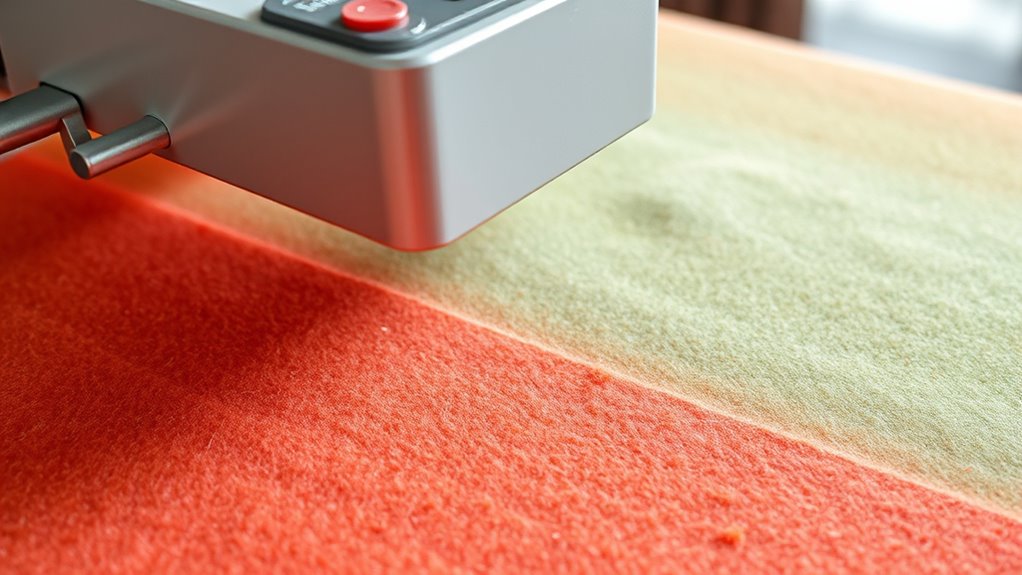
Although felt is a great fabric for crafts, it can be tricky to heat press vinyl onto because of its texture and thickness. Felt’s dense fibers create an uneven surface, making it hard for the vinyl to fully adhere. You might notice that the heat and pressure don’t distribute evenly, causing some areas of the vinyl to lift or peel.
Plus, felt’s thickness can prevent the heat press from reaching the vinyl at the proper temperature, leading to weak bonds. You also need to be careful with the temperature and pressure settings, as too much heat can scorch or distort felt. Understanding these challenges helps you adjust your approach and avoid ruining your project.
Best Heat Press Vinyl Types for Felt
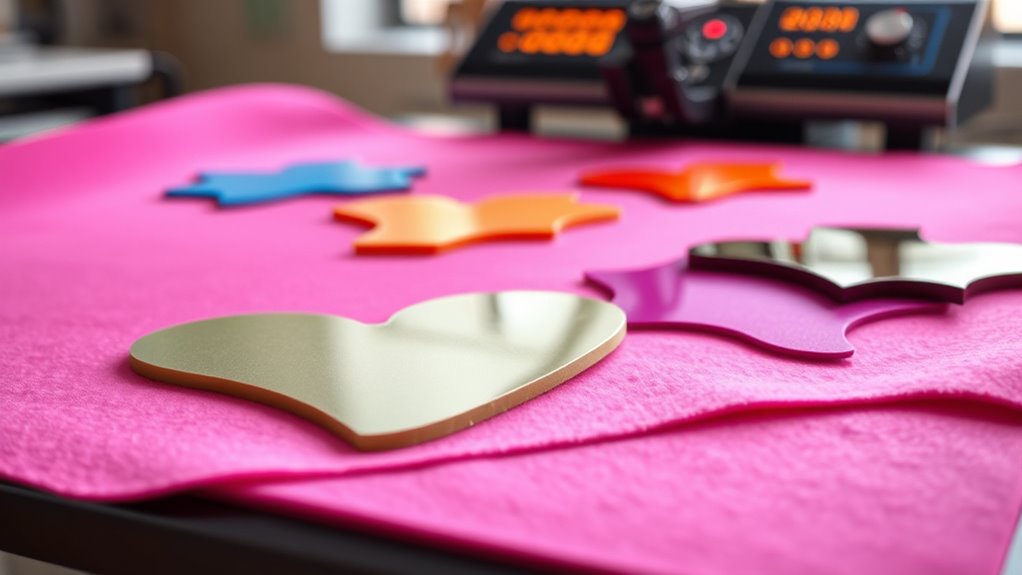
When choosing vinyl for felt, you’ll want to pick materials that bond well without damaging the fabric. Pay close attention to adhesion strength and adjust your temperature and pressure settings accordingly.
These factors guarantee your design sticks properly and looks sharp.
Compatible Vinyl Materials
Which types of vinyl work best for heat pressing onto felt? You’ll want to focus on heat transfer vinyl (HTV) designed for fabric. Everyday standard HTV, like smooth polyurethane vinyl, adheres well to felt’s textured surface.
Flocked vinyl, with its fuzzy texture, complements felt’s softness and adds dimension. Glitter or metallic HTV can also work, giving your project a vibrant, eye-catching finish. Avoid vinyl types that require extremely high temperatures or long pressing times, as felt is sensitive to heat.
Always check the vinyl’s recommended temperature and pressure settings to guarantee compatibility. By choosing vinyl materials made for fabric and considering felt’s unique qualities, you’ll get clean, lasting results without damaging the material.
Adhesion Strength Considerations
Since felt has a textured and porous surface, you’ll want to prioritize vinyl types that offer strong adhesion without damaging the fabric. Heat transfer vinyl (HTV) with a softer, flexible carrier works best, as it conforms well to felt’s uneven texture. Avoid stiff or thick vinyls that might peel or crack over time.
Stretchable or flocked vinyls often provide better grip on felt because they can press into the fibers more effectively. You should also consider vinyl with a strong adhesive backing designed for fabrics with irregular surfaces. Testing a small patch first helps guarantee the vinyl bonds securely without lifting.
Choosing the right vinyl ensures your design stays vibrant and intact, even after repeated use or washing.
Temperature And Pressure Settings
Although felt’s texture demands careful handling, you can achieve excellent heat press results by selecting the right temperature and pressure settings. Typically, keep your heat press around 300°F to 320°F to avoid scorching the felt while ensuring the vinyl adheres properly. Use medium pressure—not too hard, as excessive force can crush the felt’s fibers and distort your design.
Applying firm but gentle pressure helps the vinyl bond without damaging the base material. Press for about 10 to 15 seconds, then peel the carrier sheet according to your vinyl’s instructions. Remember, different vinyl types may require slight adjustments, so always test a small piece first.
Ideal Heat Press Settings for Vinyl on Felt
When you heat press vinyl on felt, choosing the right temperature, pressure, and time is essential to guarantee a strong bond without damaging the fabric. Set your heat press to around 305°F (150°C) to effectively activate the adhesive without scorching the felt. Apply medium pressure—firm enough to ensure contact but gentle enough to avoid crushing the felt’s texture.
Press the vinyl for about 10 to 15 seconds; this duration allows the vinyl to adhere properly without overheating. Avoid exceeding 15 seconds, as prolonged heat can cause felt to shrink or warp. Always use a Teflon sheet or parchment paper between the vinyl and heat press to protect both materials.
These settings help you achieve a clean, durable transfer on your felt projects.
Preparing Felt for Heat Transfer Vinyl Application
Before you apply heat transfer vinyl on felt, make certain to clean the surface to remove any dust or debris. You’ll also want to use pre-pressing techniques to flatten the felt and reduce moisture. These steps help guarantee a smooth, strong bond between the vinyl and felt.
Cleaning Felt Surface
Since felt has a textured surface that easily traps dust and fibers, you’ll want to clean it thoroughly before applying heat transfer vinyl. Start by gently brushing the felt with a lint roller or a soft-bristled brush to remove loose debris. Avoid using water, as moisture can affect vinyl adhesion.
Next, inspect the felt for any stubborn lint or pet hair and use a piece of masking tape to lift them off. A clean surface ensures better vinyl bonding and a smooth finish.
| Step | Tool Needed | Purpose |
|---|---|---|
| Remove loose dust | Lint roller | Clear surface debris |
| Brush textured areas | Soft-bristled brush | Dislodge trapped fibers |
| Lift stubborn lint | Masking tape | Remove stubborn particles |
Pre-Pressing Techniques
After cleaning the felt surface thoroughly, you’ll want to focus on pre-pressing techniques to guarantee the vinyl adheres properly. Begin by placing a protective sheet, like parchment paper or a Teflon sheet, over the felt to prevent scorching. Pre-press the felt at a lower temperature (around 270°F) for 5-7 seconds without applying vinyl.
This step removes moisture and flattens the fibers, creating a smooth surface for the vinyl. Avoid pressing too long to prevent distortion or damage. Once pre-pressed, let the felt cool slightly before positioning your heat transfer vinyl.
This preparation assures better bonding, reduces bubbling, and improves the overall durability of your design. Proper pre-pressing sets a solid foundation for a successful heat pressing on felt.
Step-by-Step Guide to Heat Pressing Vinyl on Felt
When you’re ready to heat press vinyl on felt, following a clear step-by-step process guarantees the best results without damaging the fabric. First, preheat your heat press to about 300°F (149°C). Place the felt on a flat, heat-resistant surface.
Position your vinyl design on the felt, ensuring it’s aligned correctly. Cover the vinyl with a Teflon sheet or parchment paper to protect it. Press down with medium pressure for 10-12 seconds.
After pressing, carefully peel the carrier sheet while the vinyl is warm or cool, depending on the vinyl type. Allow the felt to cool completely before handling further. This method assures your vinyl adheres well, keeping your felt soft and intact without wrinkles or bubbles.
How to Avoid Warping and Burning Felt
To keep your felt looking its best, you need to carefully control the heat and pressure during the pressing process. Excessive heat can scorch the fibers, while too much pressure can cause the fabric to warp or distort.
To avoid these issues, follow these key steps:
- Use a lower temperature setting than you would for cotton or polyester—around 270°F (132°C) works well.
- Apply gentle, even pressure to prevent crushing or stretching the felt.
- Limit pressing time to 10-15 seconds to reduce the risk of burning or warping.
Testing Your Heat Press Method Safely on Felt
Although felt is delicate, you can safely test your heat press method by starting with small, inconspicuous pieces. Cut a scrap of the same felt you’ll use and apply a small vinyl design. Set your heat press to a low temperature, around 270°F, and a short time, about 5 seconds.
Use minimal pressure and gradually increase if needed. After pressing, check the felt for any signs of warping, scorching, or vinyl adhesion issues. Adjust temperature, time, or pressure based on these results.
Testing like this helps prevent ruining your main project and *guarantees* you find the safest settings. Always document your ideal settings for future use, so you don’t have to guess next time.
Caring for Felt Items With Heat Pressed Vinyl
Once you’ve found the right heat press settings for your felt, caring for your finished piece guarantees the vinyl stays vibrant and the fabric stays intact. You’ll want to treat your felt item gently to maintain its look and durability. Follow these key tips:
Proper care ensures your felt and vinyl project stays vibrant and durable for years to come.
- Hand wash only: Use cold water and mild detergent to avoid heat or harsh chemicals that can damage the vinyl or felt.
- Air dry flat: Avoid wringing or twisting; lay your item flat to dry to prevent distortion or peeling.
- Avoid ironing directly on vinyl: If you need to remove wrinkles, place a cloth over the vinyl and use low heat briefly.
Frequently Asked Questions
Can I Use a Regular Iron Instead of a Heat Press on Felt?
You can use a regular iron on felt, but be careful with heat settings to avoid scorching. Press gently, use a protective sheet, and don’t apply too much pressure or heat for too long to protect the fabric and vinyl.
Always test on a scrap piece first to ensure the heat setting is safe for your specific felt and vinyl. Keep the iron moving to prevent any one spot from overheating.
Avoid using steam, as moisture can affect the adhesive on the vinyl. Use a low to medium heat setting and monitor closely throughout the process. This will help you achieve the best results without damaging your materials.
Does the Color of Felt Affect Vinyl Adhesion?
Yes, the color of felt can affect vinyl adhesion slightly. Darker felt may show vinyl colors differently, and some dyes might interfere with bonding.
You’ll want to test on your specific felt before pressing your final design.
How Long Does Heat Pressed Vinyl Last on Felt?
Your vinyl on felt will enjoy a good run, typically lasting several washes with proper care. Just avoid harsh scrubbing or high heat, and you’ll keep your design looking fresh and vibrant for quite a while.
Can I Wash Heat Pressed Vinyl on Felt in a Washing Machine?
Yes, you can wash heat pressed vinyl on felt in a machine, but use cold water and a gentle cycle. Avoid harsh detergents and tumble drying to keep the vinyl intact and prevent peeling or cracking over time.
Are There Eco-Friendly Vinyl Options Suitable for Felt?
Think of eco-friendly vinyl as a gentle breeze nurturing your felt canvas. You’ll find biodegradable and water-based options that reduce waste and toxins, letting you create sustainable, vibrant designs without harming the planet or your cozy fabric.
Conclusion
You might be surprised to learn that about 65% of DIY crafters struggle with heat pressing vinyl on felt because it’s tricky to get just right.
But with the right vinyl, careful temperature control, and prepping your felt properly, you can create beautiful, lasting designs.
Just follow the steps to avoid warping or burning.
Keep practicing, and you’ll master this technique in no time, making your felt projects truly stand out!
In conclusion, heat pressing vinyl on felt requires patience and precision, but with the proper materials and methods, your felt crafts will showcase stunning, durable vinyl designs.