Can You Heat Press Jersey Material
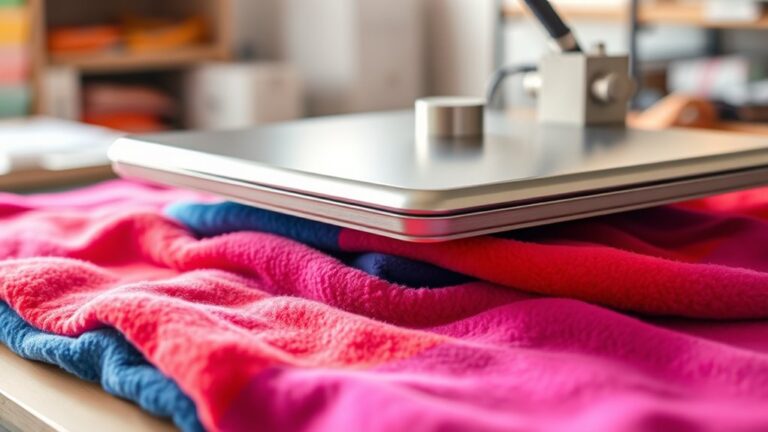
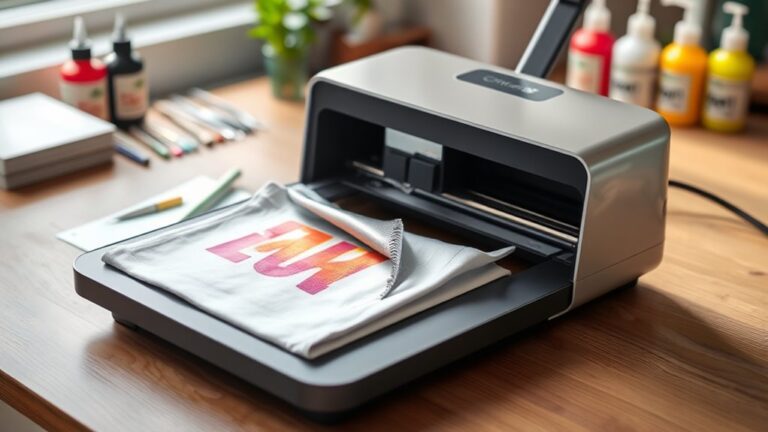
Yes, you can heat press jersey material safely by using the right temperature, pressure, and protective layers designed for delicate polyester blends.
Heat pressing jersey fabric requires careful attention to settings to avoid damaging the material. Proper technique ensures your design adheres well and lasts longer.
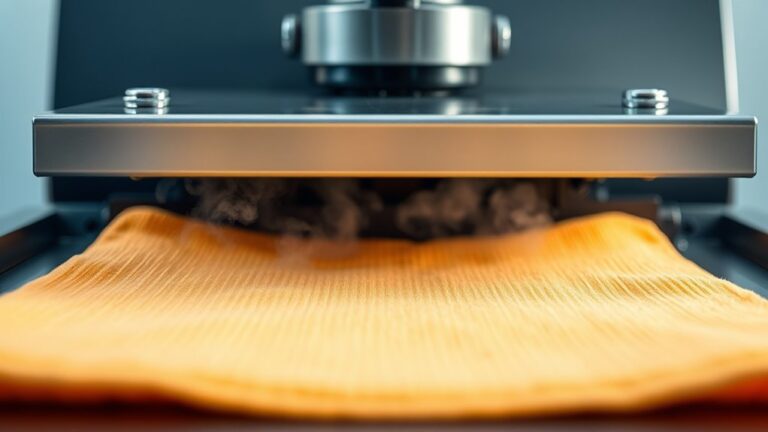
Keep your heat between 305°F and 320°F, apply medium pressure for 10-15 seconds, and always use a Teflon or silicone sheet to protect the fabric.
These measures prevent scorching and help maintain the jersey’s softness. Testing on scrap material before the final press is essential to avoid mistakes.
Following proper care and technique helps your design last longer and look professional.
Explore the best methods and tips to master this process and achieve excellent results every time.
Key Takeaways
- Yes, jersey materials like polyester blends can be heat pressed using appropriate temperature and pressure settings.
- Use temperatures between 305°F and 320°F with medium pressure for optimal results without damaging fabric.
- Always place protective layers like Teflon sheets between the heat press and jersey to prevent scorching or adhesion issues.
- Test on scrap jersey material first to ensure compatibility and adjust heat press settings accordingly.
- Choose transfers designed for synthetic fabrics, such as sublimation or heat transfer vinyl made for polyester jerseys.
Can You Safely Heat Press Jersey Material?
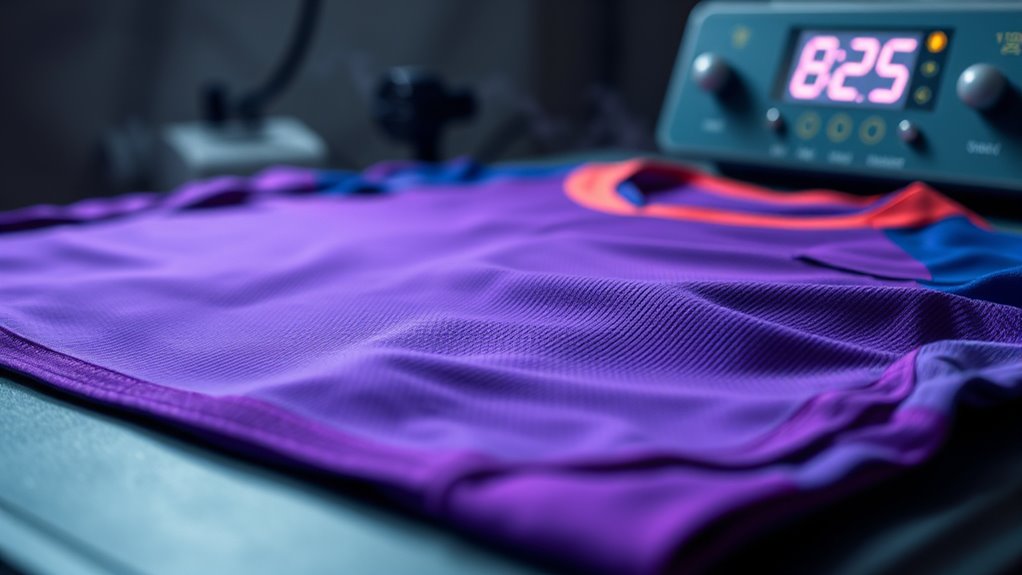
Although heat pressing jersey material requires some care, you can safely do it if you follow the right steps. Jerseys are often made from delicate fabrics like polyester blends that react differently to heat than cotton. You’ll want to handle them gently to avoid scorching or melting the fibers.
Using a protective barrier, such as a Teflon sheet or parchment paper, between the heat press and the jersey helps prevent direct contact and potential damage. It’s also important to position your design correctly and apply even pressure to guarantee the transfer adheres properly without puckering.
What Temperature and Settings Work Best for Jerseys
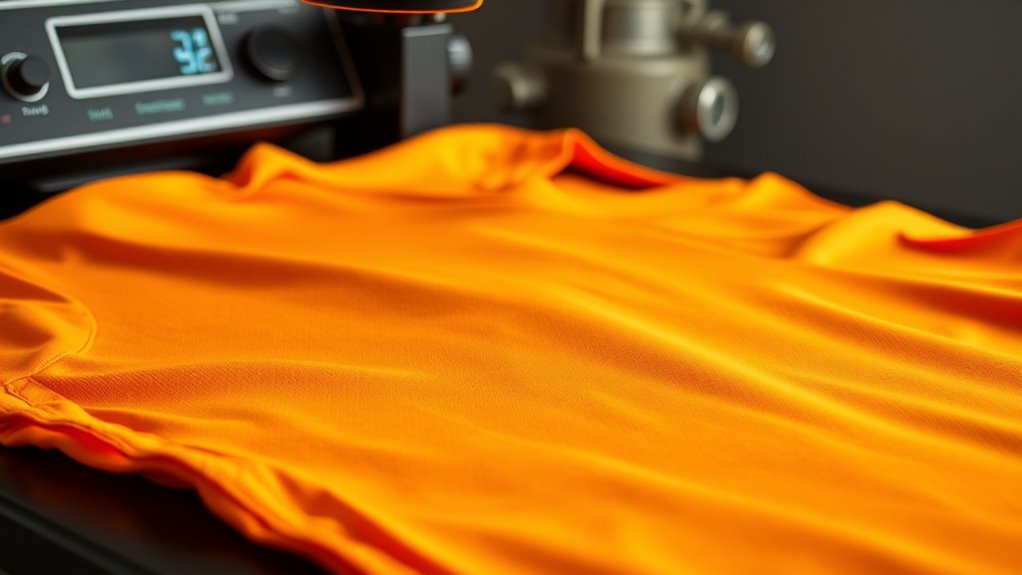
When heat pressing jersey material, choosing the right temperature and settings is essential to protect the fabric while ensuring a strong transfer. Generally, set your heat press between 305°F and 320°F (150°C to 160°C). Use medium pressure to avoid damaging the fibers.
The pressing time usually ranges from 10 to 15 seconds, but always check your transfer’s instructions for precise timing. Avoid high heat or extended pressing, as jerseys often contain synthetic fibers that can melt or warp. Also, make sure your heat press distributes heat evenly to prevent scorching.
How to Use Protective Layers When Heat Pressing Jerseys
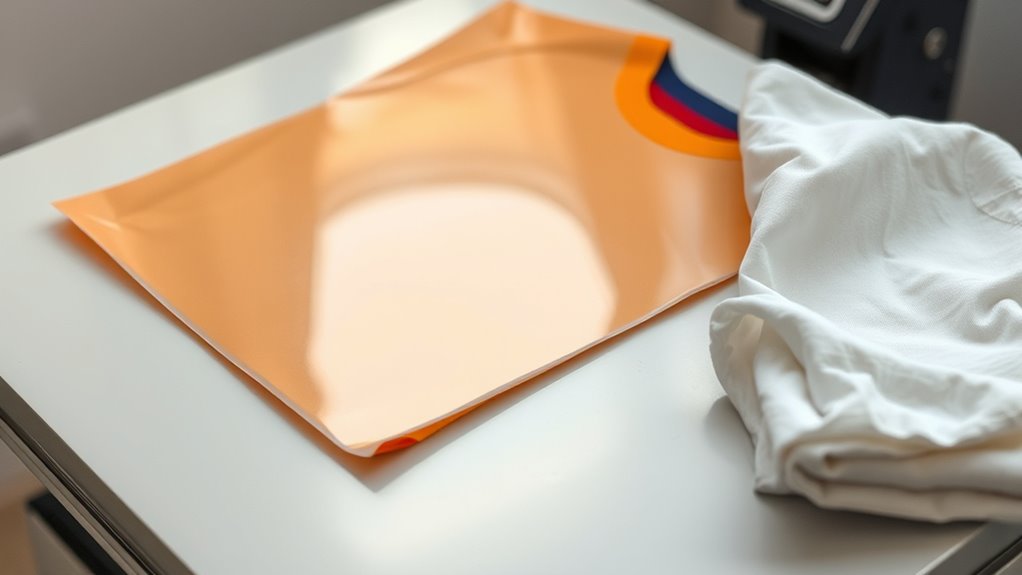
When heat pressing jerseys, you need to pick the right protective materials to prevent damage. Placing these layers correctly between the heat press and your jersey is key to even heat distribution.
Let’s look at how to choose and position these protective layers for the best results.
Choosing Appropriate Protective Materials
Since heat pressing jerseys involves high temperatures and pressure, using the right protective materials is essential to prevent scorching, melting, or damaging the fabric and graphics. You should opt for materials that can withstand heat without transferring it unevenly, such as Teflon sheets or specialized heat-resistant parchment paper. These protect your jersey from direct contact with the heat platen and prevent adhesive bleed-through.
Avoid using regular paper or thin fabrics, as they can cause uneven heat distribution or stick to the material. Additionally, consider silicone-coated sheets, which offer excellent heat resistance and durability for repeated use. By choosing appropriate protective layers, you’ll guarantee your jersey maintains its color, texture, and design integrity throughout the heat pressing process, resulting in a professional finish every time.
Layer Placement Techniques
How do you guarantee your protective layers work effectively during heat pressing? You place them strategically to shield the jersey and design while making certain of even heat distribution. Start with a Teflon sheet over the design, then add a silicone pad for extra cushioning.
Avoid wrinkles to prevent creases or uneven prints.
Here’s a quick guide to layer placement:
| Layer | Purpose |
|---|---|
| Base Sheet | Protects heat press platen |
| Jersey | Target material |
| Transfer Paper | Holds the design |
| Teflon Sheet | Prevents scorching |
| Silicone Pad | Ensures even pressure |
Follow this order, and your jersey will come out crisp and vibrant every time.
What Types of Transfers Are Safe for Jersey Material
Although jersey material requires careful handling, you can confidently use several types of transfers that won’t damage its delicate fibers. Heat transfer vinyl (HTV) designed for polyester blends works well, as it adheres without causing stiffness or cracking. Sublimation transfers are another excellent option, especially for polyester jerseys, because the dye penetrates the fabric, leaving no added layer on top.
Screen-printed transfers formulated for sportswear also suit jerseys, offering durability and flexibility. Avoid transfers with heavy adhesives or thick plastisol inks, as they can stiffen or crack with wear. When choosing transfers, look for those labeled as safe for synthetic or athletic fabrics.
How to Avoid Common Heat Press Mistakes That Damage Jerseys
To keep your jerseys looking sharp, you need to avoid common heat press mistakes that can cause damage. First, always check the fabric’s heat tolerance and adjust the temperature accordingly. Using too much heat or pressure can scorch or melt the material.
Don’t skip the test press on a scrap piece; it helps prevent costly errors. Avoid pressing the same spot for too long to prevent discoloration or warping. Make sure to use a protective sheet between the heat plate and the jersey to shield the fabric and transfer.
Finally, handle the jersey carefully after pressing—don’t stretch or pull the design while it’s hot, as that can cause cracking or peeling. Following these steps keeps your jerseys durable and vibrant.
When to Use Alternatives to Heat Pressing Jerseys
Whenever your jersey material can’t handle the high heat or pressure of a traditional heat press, you’ll need to explore alternative methods. For delicate fabrics, like mesh or lightweight polyester blends, heat pressing can cause shrinkage or distortion. If your design includes sensitive embellishments, such as glitter or puff inks, direct heat might damage them.
Also, when working with jerseys that have pre-existing prints or decals, applying more heat can lead to peeling or discoloration. In these cases, consider methods like cold peel heat transfer vinyl, screen printing, or using a lower temperature with a protective barrier. Knowing when to switch methods helps safeguard your jersey’s quality and ensures your design stays vibrant without risking damage during the pressing process.
How to Care for Jerseys After Heat Pressing
Protecting your heat-pressed jersey doesn’t stop once the design is applied. To keep it looking sharp, always wash it inside out in cold water. Use a gentle cycle and avoid bleach or fabric softeners, as they can damage the print.
When drying, skip the high heat—air drying is best, but if you use a dryer, choose a low heat setting. Avoid ironing directly over the design; if necessary, place a cloth over it and use a low temperature. Store your jersey flat or folded neatly to prevent creases on the print.
Following these simple care steps will help maintain the quality of your heat-pressed jersey, ensuring it stays vibrant and wearable for many games to come.
Tips for Making Your Heat Pressed Jersey Designs Last
To make your heat pressed jersey designs last, you need to master proper washing techniques and get your heat press settings just right. Using the wrong temperature or washing method can cause your design to peel or fade quickly.
Let’s explore how to keep your jerseys looking fresh and vibrant for the long haul.
Proper Washing Techniques
Although heat-pressed jersey designs are durable, proper washing techniques are essential to keep them looking fresh and vibrant. Always turn the jersey inside out before washing to protect the design from friction. Use cold water and a gentle cycle to minimize wear.
Avoid bleach or harsh detergents, as they can damage both fabric and print. Skip fabric softeners, which may break down adhesive bonds. When drying, opt for air drying or tumble dry on low heat to prevent heat damage.
Avoid ironing directly on the design; if necessary, place a cloth over it. Following these steps helps preserve your heat-pressed jersey’s colors and prevents peeling, ensuring your custom design lasts through many washes without fading or cracking.
Heat Press Settings
When you set up your heat press correctly, you guarantee your jersey designs stay vibrant and intact for the long haul. Start by setting the temperature between 320°F and 350°F, depending on the heat transfer material you’re using. Too much heat can damage the jersey fibers, while too little won’t properly bond the design.
Apply medium pressure—enough to assure good contact without crushing the fabric. Set the timer for 10 to 15 seconds, then carefully peel the transfer according to the material’s instructions, usually warm or cold peel. Always test on a scrap jersey if you can.
These precise settings help prevent cracking, peeling, or fading, keeping your heat-pressed jerseys looking fresh and professional through every wash and wear.
Frequently Asked Questions
Can You Heat Press Custom Names and Numbers on Jerseys?
Yes, you can heat press custom names and numbers on jerseys. Just make sure to use the right temperature, pressure, and time settings to avoid damaging the fabric. Always test on a small area first for best results.
Does Heat Pressing Affect the Breathability of Jersey Fabric?
Yes, heat pressing can slightly reduce jersey fabric’s breathability, but if you use proper temperature and pressure settings, you won’t notice much difference.
Just avoid overheating to keep the fabric comfortable and breathable during wear.
Can You Use a Home Iron Instead of a Heat Press for Jerseys?
You can’t just wave a magic wand, but yes, you can use a home iron for jerseys.
Just press carefully, use a protective cloth, and avoid too much heat to keep your jersey looking perfect without damage.
How Long Does the Heat Pressing Process Take for Jerseys?
The heat pressing process for jerseys usually takes about 10 to 15 seconds.
You’ll want to apply firm pressure and the right temperature to guarantee the design adheres properly without damaging the fabric.
Are There Specific Brands of Heat Transfer Vinyl for Jerseys?
You’ll find brands like Siser and Cricut dominate, with Siser’s EasyWeed covering 70% of jersey transfers for its stretch and durability.
They’re perfect when you want vibrant, long-lasting designs that move with the fabric.
Conclusion
So, can you heat press jersey material without ruining it? Absolutely—but only if you use the right temperature, protective layers, and transfer types.
By avoiding common mistakes and caring for your jersey properly, you’ll keep your designs looking fresh and vibrant.
Why settle for anything less when you can make your custom jerseys last longer and look professional?
With these tips, you’re ready to create standout heat-pressed jerseys every time.
Remember, understanding how to heat press jersey material is key to achieving durable, high-quality results that showcase your design perfectly.