Can You Heat Press Sublimation on Cotton
You can heat press sublimation on cotton, but it requires special coatings or treatments to achieve vibrant, lasting prints. Cotton doesn’t naturally bond with sublimation ink like polyester does, so without these coatings, colors tend to fade and peel quickly.
Proper preparation, heat settings, and quality materials are essential for successful results.
Using sublimation on cotton involves understanding the limitations and working around them with innovative techniques. If you want to explore effective methods and alternatives that guarantee bright, durable designs on cotton, there’s plenty more to discover ahead.
With the right approach, you can enjoy the benefits of sublimation printing on cotton fabrics successfully.
Key Takeaways
- Sublimation ink bonds best with polyester, making direct sublimation on cotton produce dull, less durable prints.
- Special coatings applied to cotton enable sublimation dye to bond, resulting in brighter and longer-lasting designs.
- Proper fabric cleaning and heat press settings (around 375°F for 45-60 seconds) are critical for successful sublimation on cotton.
- Alternatives like heat transfer vinyl or inkjet transfer paper offer better color vibrancy and durability on cotton.
- Using polyester blends or pretreated cotton fabrics improves sublimation results while maintaining cotton’s comfort.
How Sublimation Works on Polyester vs. Cotton
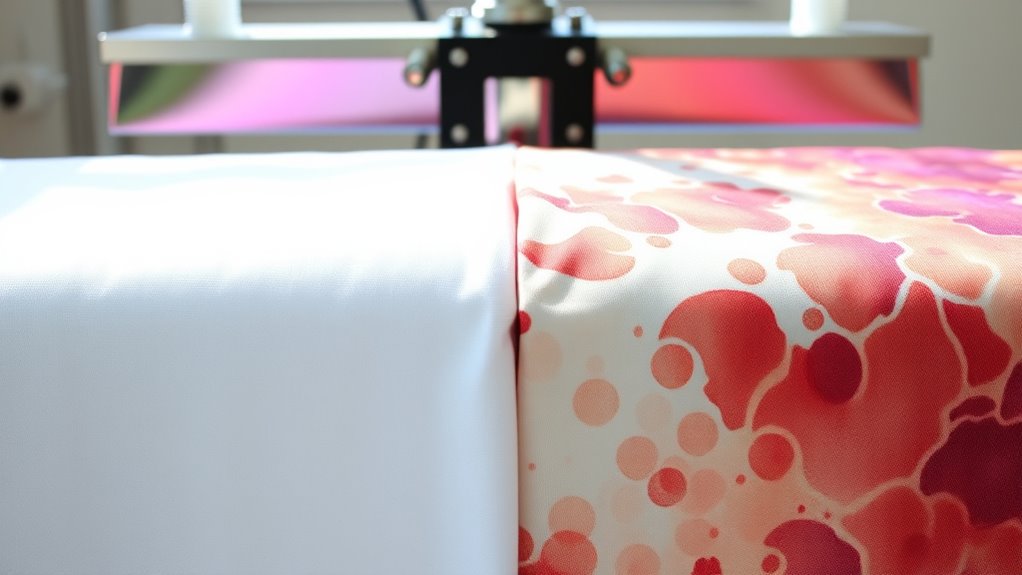
Although sublimation is most effective on polyester, understanding how it interacts with cotton can help you decide the best fabric for your project. When you sublimate polyester, the dye turns into gas and bonds directly with the polyester fibers, creating vibrant, durable designs. The process fuses the ink into the fabric, so the color stays bright and won’t crack or peel over time.
With cotton, sublimation doesn’t bond in the same way because cotton fibers lack the chemical structure that holds the dye. Instead, the ink tends to sit on the surface, which can result in dull colors and less lasting prints. Knowing this difference lets you choose polyester for long-lasting vibrancy or explore alternatives if you want to print on cotton.
Why Sublimation Usually Doesn’t Stick to Cotton
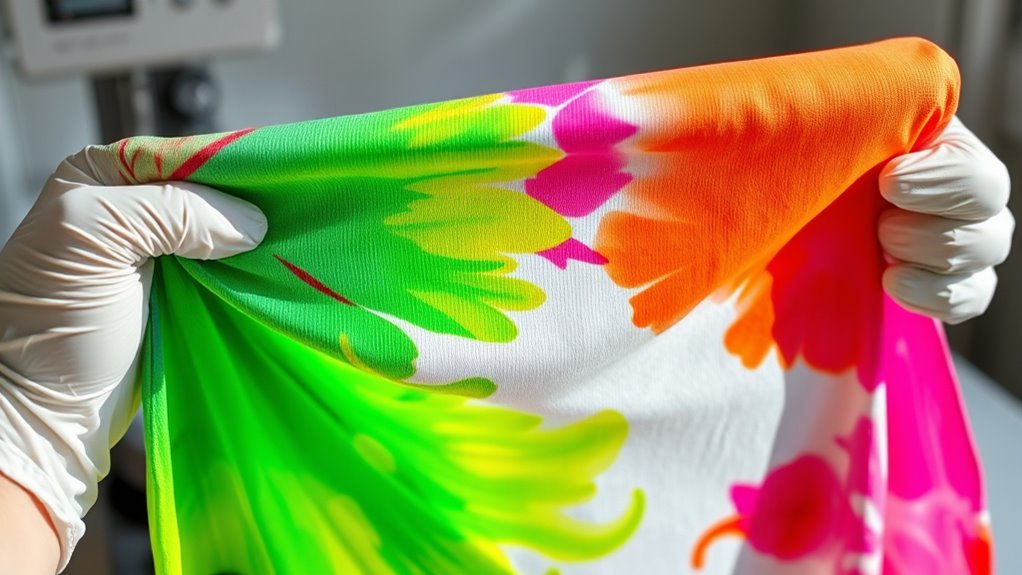
When you try to sublimate on cotton, you’ll notice the ink struggles to bond properly. That’s because sublimation ink turns into gas when heated and embeds itself into polyester fibers, which have a chemical structure that holds the ink well. Cotton, however, is made of cellulose, which doesn’t absorb the ink in the same way.
Instead of embedding, the ink tends to sit on top of the cotton fibers, leading to faded, patchy, or easily washed-out designs. Since sublimation relies on a chemical reaction with synthetic fibers, natural fibers like cotton simply don’t provide the right surface for the ink to latch onto. This fundamental difference is why sublimation usually doesn’t stick well to cotton fabrics.
Can Special Coatings Make Cotton Suitable for Sublimation?
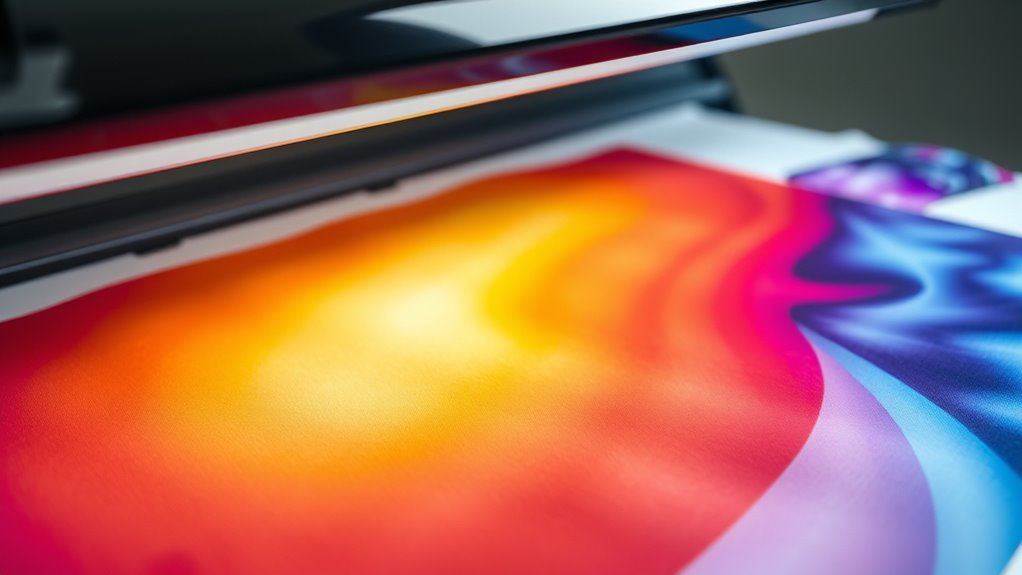
If you want to sublimate on cotton, applying a special coating can make a big difference. These coatings create a polymer layer on the fabric’s surface, allowing sublimation dyes to bond effectively. Without this layer, the ink won’t adhere properly, resulting in faded or washed-out designs.
You can find spray-on or brush-on coatings specifically designed for cotton sublimation. After applying, you’ll need to let it dry completely before heat pressing. Keep in mind, the coating changes the fabric’s feel slightly but preserves flexibility.
Using these coatings opens up possibilities for vibrant, durable prints on cotton, combining the comfort of natural fibers with the brilliance of sublimation colors. So, if you’re aiming for high-quality cotton sublimation, special coatings are definitely worth trying.
Preparing Cotton for Heat Press Sublimation
Before you start heat pressing sublimation on cotton, you’ll need to prepare the fabric properly. This means cleaning it thoroughly and applying a special sublimation coating or pre-treatment solution.
Taking these steps guarantees your design adheres well and looks vibrant.
Pre-Treatment Solutions Overview
Although cotton doesn’t naturally hold sublimation ink well, you can achieve vibrant, lasting prints by applying a proper pre-treatment. Pre-treatment solutions create a polymer coating on the cotton fibers, allowing sublimation dyes to bond effectively. You’ll find various pre-treatment sprays and liquids designed specifically for cotton that you apply evenly before printing.
Make sure to follow the product instructions carefully, as application methods and drying times can vary. Pre-treating also helps prevent color fading and improves wash durability. Using a heat press to cure the pre-treatment before sublimation guarantees the coating is ready to accept the dye.
Cleaning Cotton Fabric
Applying the right pre-treatment sets the stage for vibrant sublimation on cotton, but guaranteeing your fabric is clean takes that preparation a step further. Before you start, wash your cotton fabric to remove oils, dirt, and any sizing agents that might block ink absorption. Use a mild detergent and avoid fabric softeners or bleach, as they can leave residues that interfere with sublimation.
After washing, let the fabric dry completely—moisture can cause uneven transfers. Iron the fabric to remove wrinkles, creating a smooth surface for better heat press contact. Taking these steps guarantees your cotton is free of contaminants, helping your sublimation results come out sharp and bright.
Clean fabric is key to a successful sublimation process on cotton.
Applying Sublimation Coating
How can you guarantee your cotton fabric truly captures sublimation inks? Applying a sublimation coating is key. This coating acts as a polymer layer, allowing the ink to bond with the cotton fibers during heat pressing.
You can spray or brush the coating evenly, ensuring full coverage without clumps.
Here’s a simple guide to applying sublimation coating:
| Step | Action | Tip |
|---|---|---|
| 1 | Lay fabric flat | Use a clean, dry surface |
| 2 | Apply coating evenly | Avoid thick spots |
| 3 | Let fabric dry completely | Air dry or use low heat |
| 4 | Heat press with sublimation | Follow ink and temp specs |
Best Heat Press Settings for Sublimating Cotton
To get the best results when sublimating on cotton, you need to focus on the right temperature and time settings. You’ll also want to apply the correct pressure and prepare your fabric properly before pressing.
These factors work together to guarantee your design transfers clearly and lasts longer.
Temperature And Time
Although sublimating on cotton can be tricky, getting the temperature and time right is essential for vibrant, lasting results. You’ll want to set your heat press to around 375°F (190°C). This temperature is hot enough to transfer the sublimation ink without damaging the fabric.
Keep the press closed for about 45 to 60 seconds to allow the ink to properly bond to the cotton fibers. Pressing for too long or at too high a temperature risks scorching or fading your design. Conversely, too little heat or time may cause weak or patchy prints.
Stick to these guidelines, and you’ll consistently achieve bright, durable sublimation prints on cotton items with your heat press.
Pressure And Preparation
Since cotton requires a firm hold for the sublimation ink to bond properly, you’ll want to apply medium to heavy pressure when using your heat press. This guarantees the ink penetrates the fabric evenly.
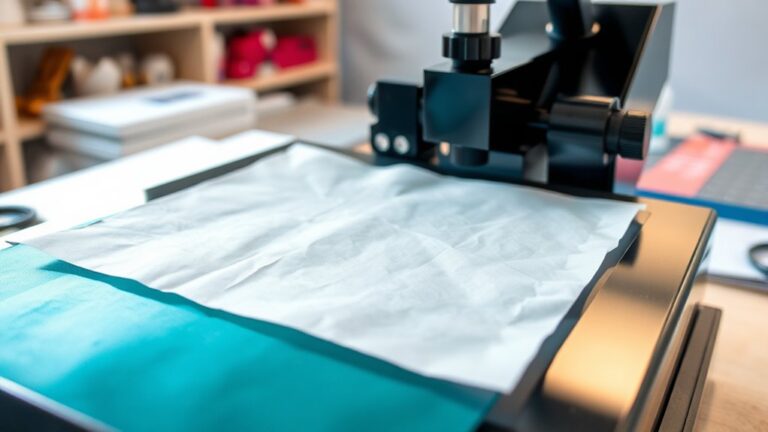
Before pressing, make sure your cotton item is clean and wrinkle-free; any moisture or creases can affect the final print quality. Pre-press the fabric for a few seconds to remove moisture and smooth out wrinkles. Position your sublimation transfer paper carefully to avoid shifting during pressing.
Use a protective sheet, like parchment paper, between the heat press and your transfer to prevent ink from bleeding onto the press. Proper pressure and preparation work together to create vibrant, lasting sublimation prints on cotton fabrics.
Comparing Sublimation Results: Cotton vs. Polyester
When you compare sublimation results on cotton versus polyester, you’ll notice a clear difference in vibrancy and durability. Polyester fibers bond directly with sublimation dyes, producing bright, sharp images that last through multiple washes.
Cotton, on the other hand, doesn’t hold sublimation ink well because it lacks the chemical structure to lock in the dye. As a result, prints on cotton often appear faded, less vibrant, and may wash out quickly. You might get some color transfer on cotton if you use special coatings or blends, but it won’t match polyester’s crispness or longevity.
Best Printing Alternatives to Sublimation on Cotton
If you’re working with cotton and want vibrant, lasting prints, you’ll need to explore alternatives to sublimation. Direct-to-garment (DTG) printing is a popular choice, offering detailed, colorful designs directly onto cotton fabrics with excellent durability.
You might also consider screen printing, especially for bulk orders; it provides vibrant colors and lasts through many washes. Heat transfer vinyl (HTV) is another option—it allows you to cut designs from colored vinyl and heat press them onto cotton, creating bold, durable prints.
Finally, inkjet transfer paper lets you print your design on special paper and transfer it to cotton with a heat press, giving you decent color vibrancy and detail. These methods guarantee you get strong, eye-catching prints on cotton without the challenges of sublimation.
Tips to Improve Sublimation Color on Cotton
Exploring alternatives to sublimation on cotton is useful, but you can still achieve better color results with sublimation by applying specific techniques. First, use a polyester coating or a sublimation cotton blend shirt to help the ink bond better. Pre-treat your cotton fabric with a specialized sublimation spray to enhance color vibrancy.
Make sure your heat press is set to the right temperature—usually around 380°F to 400°F—and apply firm, even pressure for 45-60 seconds. Using high-quality sublimation inks and paper also makes a significant difference. Ultimately, always allow your print to cool before handling to prevent smudging.
These tips will help you get richer, more durable colors on cotton substrates, improving your sublimation projects noticeably.
Common Mistakes When Heat Pressing Sublimation on Cotton
When heat pressing sublimation on cotton, watch out for temperature and pressure mistakes that can ruin your design. You’ll also want to make certain your ink is compatible with cotton fabrics to avoid poor color results.
Getting these details right is key to a successful print.
Temperature And Pressure Errors
Although sublimation works best on polyester, you can still achieve decent results on cotton by carefully controlling temperature and pressure. If you get either wrong, your design may appear faded, blurry, or uneven. Too much heat can scorch the fabric, while too little won’t transfer the ink properly.
Similarly, pressure that’s too light won’t press the ink into the fibers, and too much pressure can distort the fabric or the image.
Watch out for these common temperature and pressure errors:
- Setting the heat press above 400°F, which can damage cotton fibers.
- Applying inconsistent pressure, causing patchy or uneven prints.
- Rushing the pressing time, leading to incomplete ink transfer.
Ink Compatibility Issues
Because sublimation ink is formulated primarily for polyester, using it on cotton often leads to compatibility issues that affect the vibrancy and durability of your design. When you try to sublimate directly onto cotton, the ink doesn’t bond well, causing colors to appear faded or dull. You might also notice that the design wears off quickly after washing.
To avoid these problems, don’t rely on standard sublimation ink alone. Instead, consider using specially formulated sublimation inks designed for cotton or pretreating the cotton fabric with a polymer coating. Without these adjustments, your heat-pressed cotton projects won’t achieve the bright, lasting results you expect.
Always check your ink’s compatibility to guarantee your final product looks professional and lasts longer.
When to Choose Sublimation on Cotton for Your Projects
Why choose sublimation on cotton for your projects? You might want to when you’re aiming for a soft, breathable fabric feel combined with vibrant, lasting designs. While traditional sublimation works best on polyester, newer techniques and coatings let you enjoy sublimation’s benefits on cotton too.
Consider sublimation on cotton if:
- You want to create personalized apparel that feels comfortable for everyday wear.
- Your project demands eco-friendly or natural fabric options without sacrificing color quality.
- You’re experimenting with unique textures or blends that polyester alone can’t provide.
Choosing sublimation on cotton means balancing fabric comfort with creative expression, making your projects stand out with both style and substance.
Frequently Asked Questions
Can You Wash Sublimated Cotton Without Fading the Print?
You can wash sublimated cotton without fading the print if you use cold water, gentle detergent, and avoid bleach.
Turn the garment inside out and air dry or use a low heat setting to keep colors vibrant longer.
Is Sublimation on Cotton Safe for Children’s Clothing?
Oh, absolutely—because nothing says “kid-friendly” like vibrant, lasting prints on soft cotton! You can safely dress your kids with sublimation, as long as you use non-toxic inks and proper curing to keep their skin irritation-free.
How Long Does a Sublimated Cotton Print Last?
Your sublimated cotton print lasts about 20-30 washes if you wash it inside out in cold water and avoid harsh detergents. Proper care helps maintain vibrancy, but it won’t be as durable as polyester prints.
Can Sublimation Be Combined With Other Printing Methods on Cotton?
Imagine vibrant colors dancing together on soft cotton—yes, you can combine sublimation with screen printing or heat transfer vinyl. Just layer carefully, so each technique shines, creating a unique, eye-catching design you’ll love wearing.
Are There Eco-Friendly Sublimation Inks for Cotton Materials?
Yes, you can find eco-friendly sublimation inks designed for cotton materials. These inks use water-based or biodegradable formulas, letting you create vibrant designs while reducing environmental impact and keeping your printing process greener and safer.
Conclusion
You might think sublimation on cotton is impossible, but with the right tricks and coatings, it’s closer than you imagine. Don’t give up just yet—prepare your cotton well, tweak your heat press settings, and explore alternatives if needed.
The secret to vibrant, lasting prints is within your reach. Ready to transform your cotton projects? Jump in, experiment, and watch your creations come to life like never before.
When considering can you heat press sublimation on cotton, remember that proper preparation and technique are key. With patience and practice, sublimation on cotton can yield impressive, durable results. Embrace the process and enjoy the creative possibilities.