Can Nylon Be Heat Pressed
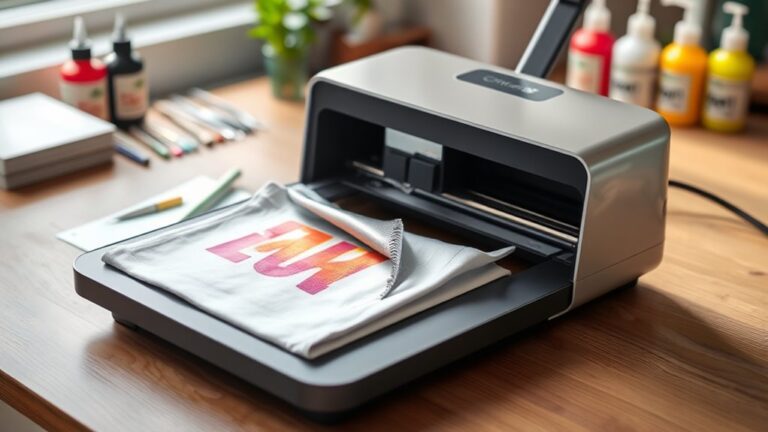
Yes, you can heat press nylon, but it requires caution to avoid damaging the fabric. Nylon is sensitive to high temperatures, so using low heat—ideally below 300°F—is essential for successful heat pressing.
Applying light to medium pressure helps prevent warping or melting the material.
Always protect the nylon with a Teflon or parchment sheet to avoid scorching during the process. Keep the pressing time short, around 10 to 15 seconds, to minimize heat exposure.
Testing on fabric scraps first is a smart way to ensure your settings won’t harm the nylon.
Overheating can easily melt or warp nylon, so staying cautious is key. If you want to get the best results, there’s more to take into account.
Following these guidelines will help you safely heat press nylon for lasting, high-quality results.
Key Takeaways
- Nylon can be heat pressed but requires low temperatures below 320°F (160°C) to prevent melting or warping.
- Use minimal pressure and short pressing times (10-15 seconds) to avoid fabric damage.
- Always place a protective sheet like parchment or Teflon between the heat press and nylon to prevent scorching.
- Test heat settings on a scrap piece first to ensure fabric integrity and proper adhesion.
- Maintain consistent temperature and pressure while allowing nylon to cool completely before handling.
Can You Heat Press Nylon?
Although nylon is a durable and versatile fabric, you need to be cautious when heat pressing it because it melts at relatively low temperatures. Yes, you can heat press nylon, but it requires careful temperature control to avoid damage. You should use a low heat setting, generally below 320°F (160°C), and apply minimal pressure.
Using a protective sheet, like parchment paper or a Teflon sheet, between the nylon and the heat press can prevent direct contact and scorching. Quick, gentle presses work best to avoid melting or warping the fabric. If you follow these guidelines, you can successfully transfer designs onto nylon without ruining your garment.
Just remember, patience and precision are key when heat pressing nylon.
Why Nylon Is Tricky to Heat Press
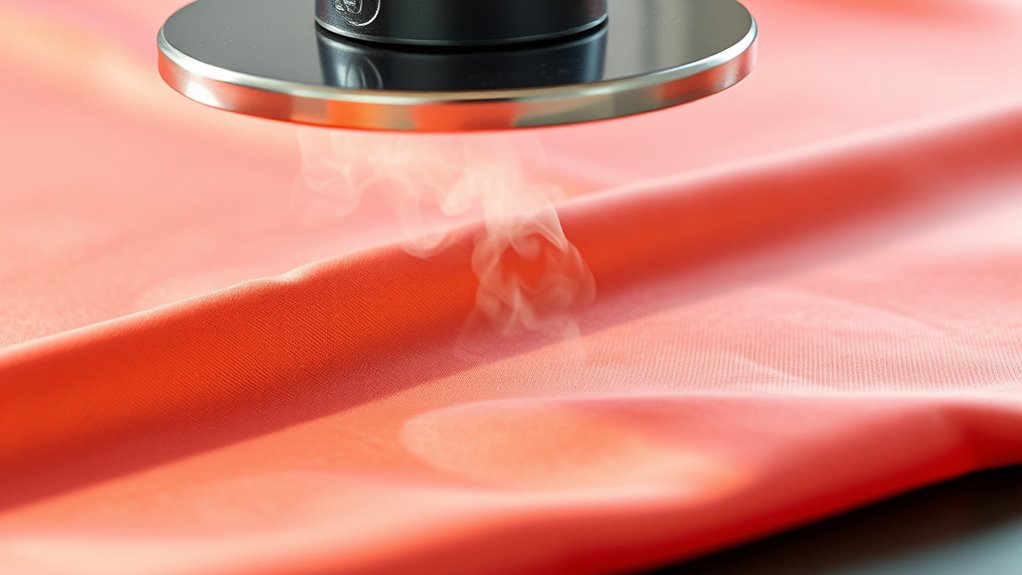
You’ll find nylon tricky to heat press because it’s highly heat sensitive, which means it can easily melt or warp if you’re not careful. Its slick surface texture also makes it tough for transfers to stick properly.
Understanding these challenges helps you adjust your technique for better results.
Heat Sensitivity Challenges
Why does nylon pose such a challenge when heat pressing? It’s because nylon is highly sensitive to heat. When you apply excessive temperature or pressure, nylon can melt, shrink, or warp quickly.
Unlike cotton or polyester, nylon’s melting point is relatively low, so you have to be extra cautious. You’ll need to use a lower temperature setting—usually below 320°F—and avoid prolonged pressing times. If you don’t, the fabric can develop shiny spots or permanent damage.
Additionally, nylon tends to react unpredictably, so even small variations in heat or pressure can ruin your project. To protect your fabric, always test on a scrap piece first and use a protective sheet between the heat press and nylon. This way, you minimize the risk and get better results.
Surface Texture Issues
Handling nylon’s heat sensitivity is only part of the challenge when heat pressing; its surface texture adds another layer of complexity. Nylon often has a smooth, shiny finish that can make it difficult for heat transfer vinyl (HTV) or sublimation inks to adhere properly. When you apply heat and pressure, the slick surface may cause designs to slip or not bond evenly, resulting in patchy or peeling transfers.
You’ll need to adjust your technique—use a protective sheet to prevent scorching and experiment with pressure settings to verify the design sticks without damaging the fabric. Additionally, some nylon fabrics have a slight stretch or weave that can distort your design during pressing. Being mindful of these texture issues helps you get clean, long-lasting results on nylon.
What Happens If You Overheat Nylon?
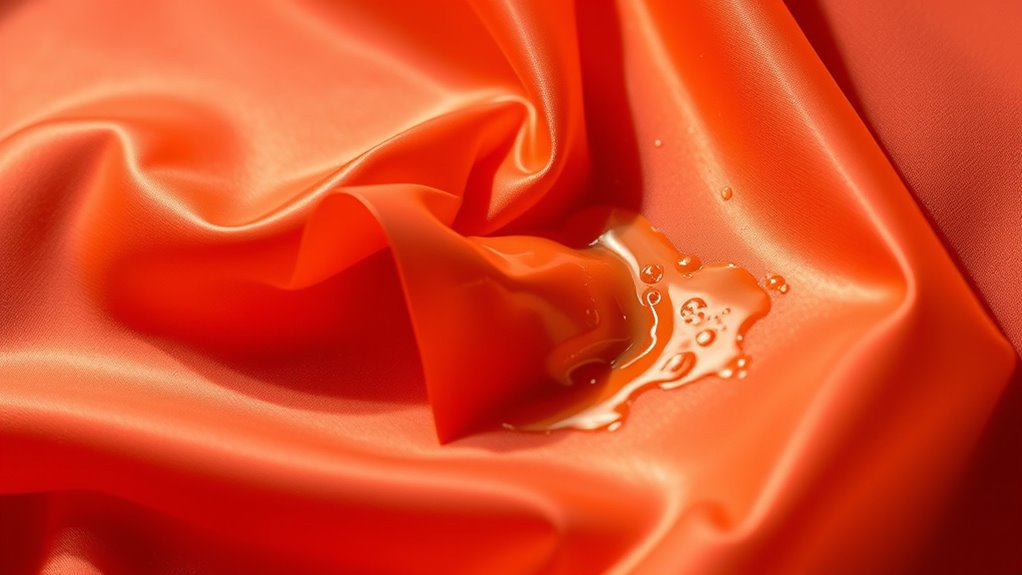
If nylon gets too hot during heat pressing, it can quickly lose its shape and structural integrity. You’ll notice it melting or warping, which ruins the fabric and any design you’re applying. Overheating causes nylon fibers to soften and fuse together, leading to a shiny, sticky surface that’s hard to work with.
You might also see discoloration or scorching, which permanently damages the material. Once nylon is overheated, it won’t bounce back, so your project could be wasted. Avoid pushing the temperature limits because nylon has a low melting point compared to other fabrics.
To protect your work, always monitor heat settings closely and press for the recommended time. That way, you keep your nylon looking crisp and intact without any heat damage.
How to Test Nylon Before Heat Pressing
Since overheating nylon can easily ruin your project, it’s smart to test the fabric before using a heat press. Start by cutting a small nylon scrap from your material. Place it on a heat-resistant surface and briefly apply your heat source—like an iron—at a low temperature for just a few seconds.
Watch closely for any signs of melting, warping, or discoloration. If the fabric shows damage, lower the temperature or reduce pressing time. Next, try pressing a sample with your planned heat press settings on another scrap.
Check if the fabric holds up without distortion or adhesive issues. This quick test helps you avoid costly mistakes and makes sure your final project will turn out great without damaging the nylon.
Choose the Right Heat Press Settings for Nylon
You’ll need to set your heat press to the right temperature, pressure, and time to protect your nylon fabric. Too much heat or pressure can damage it, so stick within the ideal range for best results.
Let’s look at the best settings to keep your nylon looking great.
Optimal Temperature Range
When working with nylon, selecting the right temperature on your heat press is crucial to prevent damage and guarantee proper adhesion. Nylon is sensitive to heat, so you need to stay within a specific range to avoid melting or warping the fabric.
Here’s the ideal temperature range to keep in mind:
- Set your heat press between 270°F and 300°F (132°C to 149°C).
- Avoid exceeding 300°F to prevent fabric distortion.
- Use a lower temperature for thin or delicate nylon blends.
- Always test a small swatch before pressing the entire piece.
Pressure and Time Settings
Although nylon requires careful handling, adjusting the pressure and time settings on your heat press guarantees a strong, lasting bond without damaging the fabric. You should use medium pressure—not too light to avoid weak adhesion, nor too heavy to prevent fabric distortion.
Aim for a pressure that feels firm but allows some give when you press. For time, keep it short—typically between 10 to 15 seconds. Longer pressing risks melting or warping the nylon.
Always test on a scrap piece first to fine-tune these settings. Remember, every nylon blend reacts differently, so adjusting based on your material is key. By balancing pressure and time carefully, you’ll achieve professional results with your nylon heat press projects.
Pick the Best Heat Transfer Materials for Nylon
Choosing the right heat transfer materials for nylon is essential to guarantee durability and vibrant results. Nylon’s sensitivity to heat means you need materials that bond well without causing damage. Here are four top options to contemplate:
- PU (Polyurethane) Vinyl – Flexible and durable, it adheres well at lower temperatures, perfect for nylon.
- Sublimation Transfers – Best for light-colored nylon, offering vibrant, permanent colors but requiring precise temperature control.
- Printable Heat Transfer Vinyl (HTV) – Allows detailed designs; choose low-temp HTV to protect nylon fibers.
- Screen Printed Transfers – Offers excellent color opacity and longevity, ideal for bulk production on nylon fabrics.
Selecting from these materials ensures your nylon projects look sharp and last long without compromising fabric integrity.
Use Protective Barriers When Heat Pressing Nylon
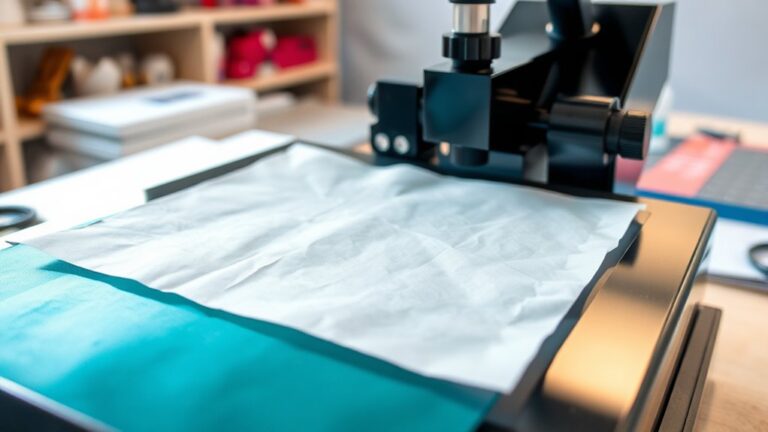
How can you protect your nylon fabric from heat damage during pressing? Using protective barriers is essential to shield nylon from direct heat, which can cause melting or discoloration. You can place a Teflon sheet or a piece of parchment paper between the heat press and the nylon to create a buffer.
This barrier distributes heat evenly and prevents scorching or shiny marks. Avoid using materials that can stick or transfer unwanted textures onto the fabric. Additionally, make sure the barrier covers the entire area being pressed to avoid any exposed spots.
Step-by-Step: How to Heat Press Nylon Safely
To heat press nylon safely, you’ll start by properly preparing the fabric to avoid wrinkles and damage.
Next, you’ll set the heat press to the right temperature to prevent melting or scorching.
Finally, you’ll protect the nylon with a barrier to guarantee even, safe pressing every time.
Preparing Nylon Fabric
Before you start heat pressing nylon fabric, you need to prepare it carefully to prevent melting or warping. Proper preparation ensures the best results and protects your fabric. Follow these steps:
- Clean the fabric – Make sure your nylon is free of dirt or oils by washing and drying it thoroughly.
- Use a pressing cloth – Place a thin cloth between the heat press and nylon to shield the fabric from direct heat.
- Test a scrap piece – Heat press a small sample of the nylon to check how it reacts before working on your main piece.
- Smooth out wrinkles – Iron the fabric gently on a low setting to avoid creases that could affect the heat transfer.
Heat Press Temperature Settings
What temperature should you set your heat press to when working with nylon? You’ll want to keep it between 270°F and 300°F (132°C to 149°C). Nylon is sensitive to high heat, so setting your press too hot can cause melting or distortion.
Start at the lower end of this range and test on a scrap piece first. Use a short press time, around 10 to 15 seconds, to avoid overheating. Avoid temperatures above 320°F, as nylon’s melting point is close to that, and going higher risks ruining your fabric.
Protecting Nylon During Press
Maintaining the right temperature sets the foundation, but protecting your nylon during the heat press is just as important. Nylon can scorch or melt if exposed directly to the heat or pressure for too long. To guarantee your project turns out flawless, follow these steps:
- Always place a Teflon sheet or parchment paper between the heat plate and the nylon.
- Use a heat press pillow or foam pad under the fabric to distribute pressure evenly.
- Avoid pressing for longer than recommended—usually 10 to 15 seconds is enough.
- Let the nylon cool completely before removing any protective layers or handling the fabric.
Avoid These Common Heat Pressing Mistakes on Nylon
Although nylon is a versatile fabric, you’ll run into problems if you don’t adjust your heat pressing technique properly. Common mistakes include using too much heat, applying excessive pressure, or pressing for too long — all of which can damage nylon’s delicate fibers.
You should also avoid skipping protective layers or ignoring the recommended temperature settings. Below is a quick guide to help you steer clear of these pitfalls:
| Mistake | Impact on Nylon |
|---|---|
| Excessive heat | Melting or warping |
| Too much pressure | Distorted fabric texture |
| Overly long pressing | Discoloration or damage |
| No protective sheet | Direct heat damage |
| Wrong temperature | Ink smudging or poor adhesion |
How to Fix Heat Pressing Mistakes on Nylon
If you’ve accidentally applied too much heat or pressure while pressing nylon, don’t worry—you can often salvage your project by adjusting your technique and taking quick corrective steps.
Here’s how to fix common heat pressing mistakes on nylon:
- Cool Down Quickly: Remove the nylon from the press immediately to prevent further damage.
- Use Steam or a Damp Cloth: Gently steam the affected area or place a damp cloth over it and press lightly to relax the fibers.
- Adjust Heat Settings: Lower your heat and pressure settings for the next attempt to avoid scorching or melting.
- Test on Scrap Fabric: Always test your corrections on a scrap piece before reapplying to your main project.
Following these steps helps you rescue your nylon and improve future heat pressing results.
Alternative Design Methods for Nylon Without Heat Pressing
Mistakes with heat pressing on nylon can be frustrating, so exploring alternative design methods might save you time and stress. Instead of heat pressing, consider screen printing, which uses ink that adheres well to nylon without heat. You can also try sublimation printing if you use nylon blends designed for this process, though pure nylon isn’t ideal for sublimation.
Another option is using fabric paint or markers to create custom designs by hand, giving you full control without risking heat damage. For a no-mess solution, iron-on patches applied with a lower heat setting or glued fabric appliqués work well too. These methods let you personalize your nylon items while avoiding heat-related issues, keeping your projects looking sharp and durable.
How to Care for Nylon Garments After Heat Pressing
Once you’ve heat pressed your nylon garment, proper care is essential to maintain the design’s vibrancy and prevent damage. Nylon is sensitive to heat and harsh treatments, so follow these tips to keep your garment looking its best:
Proper care after heat pressing nylon ensures vibrant designs and prevents damage from heat and harsh treatments.
- Wash the garment inside out in cold water to protect the design and fabric. Use a gentle detergent and avoid bleach or fabric softeners that can weaken fibers.
- Air dry or tumble dry on low heat; high heat can distort the design or melt fibers.
- Iron only on the reverse side with a low setting, using a protective cloth if necessary.
Frequently Asked Questions
Can Heat Pressing Damage Nylon’s Water Resistance?
Yes, heat pressing can damage nylon’s water resistance if the temperature is too high or applied too long.
You should use a lower heat setting and test a small area first to avoid ruining the fabric’s coating.
Is Nylon Suitable for Commercial Heat Press Machines?
You can use nylon with commercial heat press machines, but you’ll need to adjust the temperature and pressure carefully.
Too much heat might damage the fabric, so always test a small area before full pressing to avoid ruining it.
How Long Does Heat-Pressed Design Last on Nylon?
Your heat-pressed design on nylon can last like a lighthouse in a storm—durable and bright for years. If you press with care and wash gently, your design will stay vibrant through countless wears and washes.
Can You Wash Heat-Pressed Nylon Immediately After Pressing?
You shouldn’t wash heat-pressed nylon immediately after pressing; wait at least 24 hours to let the adhesive fully cure.
This guarantees your design stays vibrant and strong through multiple washes without peeling or fading.
Does Heat Pressing Affect Nylon’s Color Vibrancy?
Yes, heat pressing can affect nylon’s color vibrancy if you use too much heat or press too long. You’ll want to use lower temperatures and quick presses to keep the colors bright and vibrant.
Conclusion
So, can you heat press nylon? Sure, if you enjoy playing with fire and risking instant fabric meltdown. Just remember, nylon isn’t your average easy-going material—it’s more like that high-maintenance friend who demands perfect timing and temp control.
Overheat it, and you’ll have a melted mess faster than you can say “oops.” So, follow the tips, test first, and maybe keep a fire extinguisher handy—because heat pressing nylon isn’t for the faint-hearted!
In conclusion, heat pressing nylon requires careful attention to temperature and timing to avoid damage. Always perform a test press and adjust settings accordingly to ensure the best results when you heat press nylon.