Can You Heat Press a Mug Twice
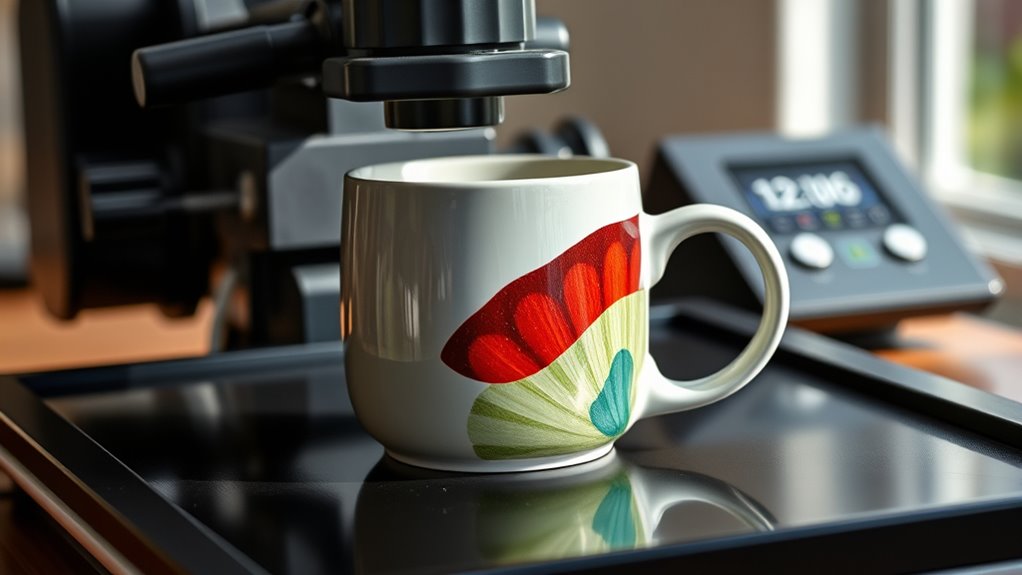
You can heat press a mug twice, but it requires caution to avoid damaging the design or coating. Heat pressing a mug twice is possible, but you must ensure the first design is fully cured and cooled before applying heat again. This helps maintain the quality and longevity of your mug’s appearance.
When heat pressing a mug for the second time, use lower temperatures, shorter press times, and medium pressure to protect the surface. Not all mug materials and coatings can handle double pressing well, so it’s important to check their durability first.
If you want to keep your mug looking great and learn safer techniques, you’ll find helpful tips ahead. Following these guidelines will help you achieve the best results without compromising your mug’s finish.
Key Takeaways
- Heat pressing a mug twice is possible but risks damaging the surface or distorting the design if not done carefully.
- Always allow the mug and first design to fully cool and cure before applying the second press.
- Use lower heat settings, shorter press times, and medium pressure during the second pressing to minimize damage.
- Repeated heat exposure can weaken coatings, cause fading, peeling, or bubbling, reducing the mug’s durability and appearance.
- Assess mug material and coating type beforehand and follow best practices to ensure even heat distribution and design alignment.
Can You Heat Press a Mug Twice Without Damage?
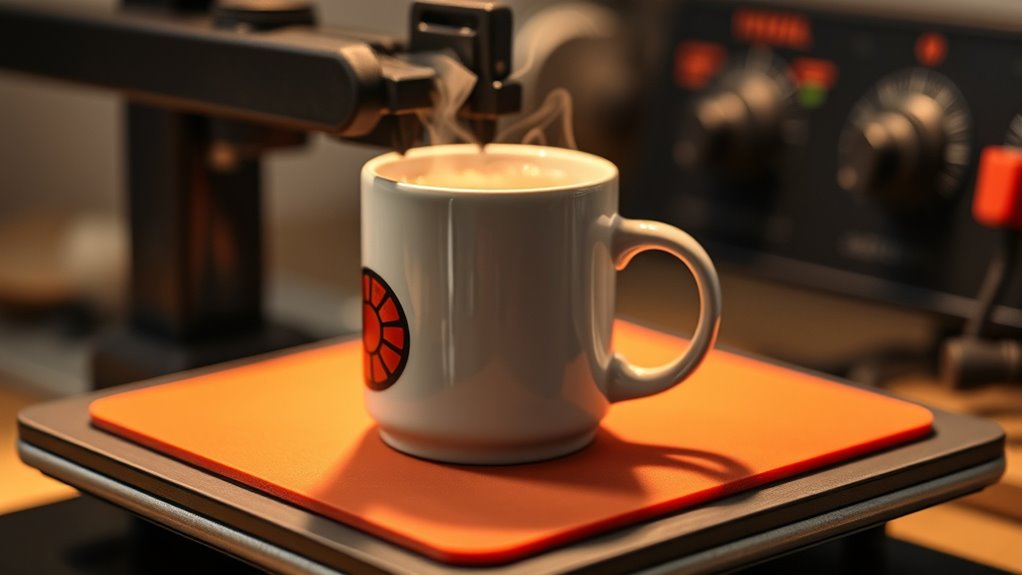
Although it’s technically possible to heat press a mug twice, you should be cautious because doing so can damage the surface or distort the design. If you decide to press it again, make sure the first design is fully cured and cooled to reduce risks. You’ll want to use lower heat settings and shorter press times during the second application to avoid overheating.
Also, consider the type of mug and the quality of the coating; some materials handle multiple pressings better than others. Keep in mind that repeated heat exposure can weaken the adhesive or cause colors to fade.
What Happens to Your Mug’s Coating When Heat Pressed Twice
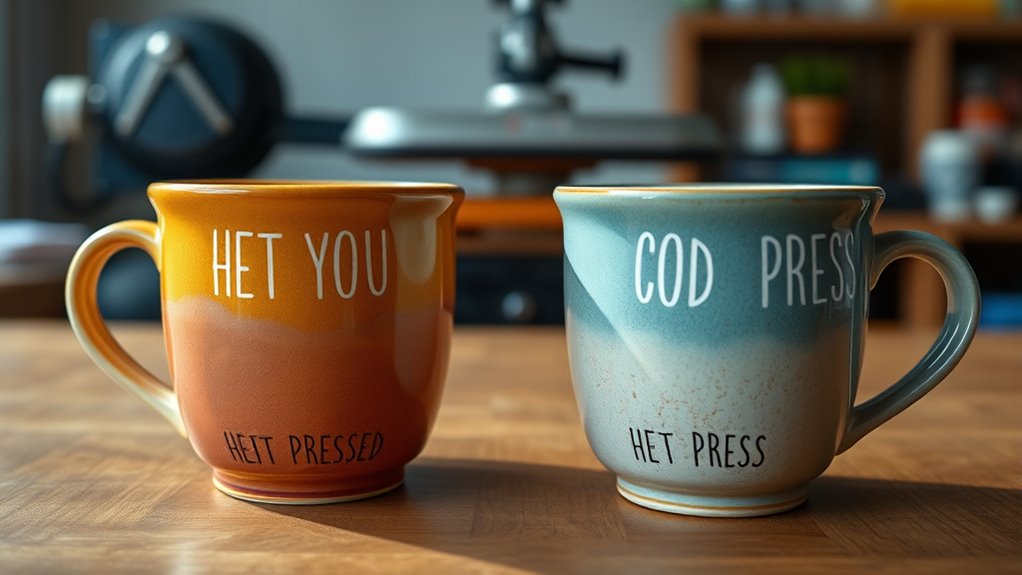
When you heat press a mug twice, the coating can weaken and lose its durability. The repeated exposure to high heat may cause fading or peeling over time.
Understanding how heat affects the coating helps you avoid damaging your mug.
Coating Durability Impact
If you apply heat pressing to your mug more than once, you risk compromising its coating’s integrity. The repeated exposure to high heat and pressure can weaken the protective layer that holds your design in place. Over time, this can cause the coating to degrade, leading to fading, peeling, or even bubbling.
Your mug’s surface may lose its smooth finish, making the design appear dull or patchy. Additionally, the coating might become more susceptible to scratches and wear during regular use. To keep your mug looking vibrant and durable, it’s best to avoid multiple heat pressing sessions.
Each additional press increases the chance of damaging the coating, which ultimately shortens the lifespan of your customized mug.
Heat Pressing Effects
Since heat pressing applies intense heat and pressure, pressing your mug twice can considerably affect its coating. The first heat press bonds the design to the coating, but a second press risks damaging that layer. The coating might blister, fade, or peel, reducing the mug’s durability and visual appeal.
You’ll also notice color shifts or texture changes that aren’t reversible. It’s best to avoid double pressing unless necessary, and always test a sample mug first.
| Effect on Coating | Description |
|---|---|
| Blistering | Coating bubbles due to heat |
| Fading | Colors lose vibrancy |
| Peeling | Design lifts off the surface |
Understanding these effects helps you decide before pressing twice.
How to Tell if Your Mug Can Withstand a Second Heat Press
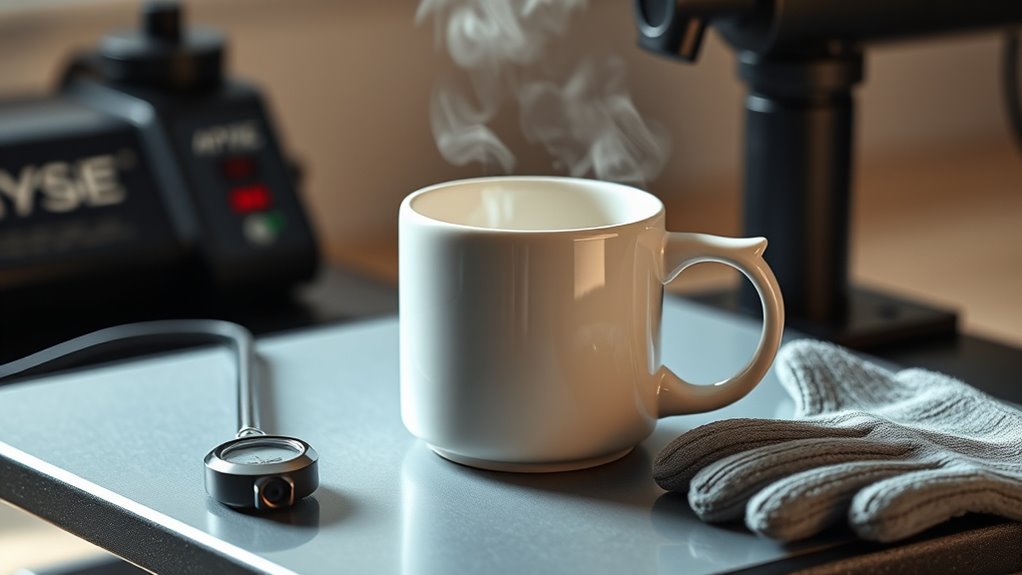
To know if your mug can handle a second heat press, start by checking the material’s durability and the type of coating it has. You’ll also want to review any heat guidelines from the manufacturer to avoid damage.
These steps will help you decide if pressing it again is safe.
Material Durability Check
Although many mugs look similar, their ability to endure multiple heat presses varies widely. Before you attempt a second press, you need to check the material durability carefully. Here’s what to take into account:
- Material Composition – Ceramic mugs generally handle heat better than plastic or metal ones.
- Thickness – Thicker mugs can dissipate heat more evenly, reducing the risk of cracks.
- Previous Heat Exposure – If the mug shows signs of stress or discoloration from the first press, it might not survive another.
- Manufacturer Guidelines – Always review any heat resistance information provided by the maker.
Coating Type Identification
Before you attempt a second heat press, you need to identify the type of coating on your mug, as this directly affects its heat tolerance. Most heat press mugs have a polymer coating designed for sublimation, but some use ceramic or enamel finishes that respond differently to heat. To check, look for any labels or packaging info specifying the coating type.
If that’s unavailable, try a simple scratch test on an inconspicuous spot—polymer coatings feel smoother and softer, while ceramic coatings are harder and more brittle. Knowing this helps you gauge whether your mug can handle another round of heat without damage, such as bubbling or peeling. Recognizing the coating type ensures you won’t ruin your mug when applying a second design layer.
Manufacturer Heat Guidelines
When you want to heat press a mug a second time, checking the manufacturer’s heat guidelines is vital to avoid damage. These guidelines tell you the maximum temperature and duration your mug can handle without cracking or losing its coating.
To determine if your mug can withstand another heat press, follow these steps:
- Locate the product packaging or instruction manual for specific temperature and time limits.
- Check the manufacturer’s website for updated heat press recommendations.
- Identify if the mug is labeled as “sublimation-safe” or “heat press compatible.”
- Contact customer support if the information isn’t clear or available.
Following these steps helps you avoid ruining your mug and guarantees your design stays vibrant.
Common Risks of Heat Pressing a Mug Twice
If you heat press a mug twice, you risk damaging the surface coating and compromising the design’s quality. The heat and pressure applied during the process can cause the coating to weaken, peel, or develop bubbles. This not only ruins the mug’s appearance but also shortens its lifespan.
Additionally, the design itself might fade, blur, or distort because the inks or sublimation dyes can overheat and break down. You might also notice discoloration or uneven patches where the heat was applied inconsistently. Over-pressing can lead to cracking or warping of the mug, especially if it’s thin or low-quality.
To avoid these issues, it’s vital to follow specific heat press guidelines and handle the mug carefully after the initial pressing.
How to Fix Heat Press Mistakes by Re-Pressing Your Mug
Although re-pressing a mug can be risky, you can often fix heat press mistakes by carefully adjusting your technique. If your design didn’t transfer fully or has misaligned spots, follow these steps to improve the final result without damaging the mug.
Fix heat press mistakes by adjusting your technique carefully to improve results without damaging the mug.
- Check Temperature and Time: Lower the heat slightly and shorten the pressing time to avoid overexposure.
- Realign the Design: Make sure the transfer paper is perfectly positioned before pressing again.
- Use Heat-Resistant Tape: Secure the design firmly to prevent shifting during the second press.
- Apply Even Pressure: Ensure consistent pressure to avoid patchy transfers or bubbles.
Best Practices for Heat Pressing a Mug Twice Safely
Since heat pressing a mug twice carries some risks, you’ll want to follow specific guidelines to protect both your design and the mug itself. First, always let the mug cool completely between presses to avoid thermal shock, which can crack the ceramic. Use heat-resistant gloves when handling the mug to prevent burns.
Make sure your design is aligned properly before the second press to avoid distortion. Avoid excessive pressure or extended pressing time during the second heat press, as this can damage the mug’s coating. Also, clean the mug surface gently to remove any debris without scratching the design.
Heat Press Settings for Pressing a Mug Twice
When you heat press a mug twice, adjusting your settings becomes essential to protect both the design and the mug’s surface. You’ll want to lower the temperature slightly and reduce pressing time to avoid overexposure that could cause fading or damage.
Here are four key settings to beware of:
- Temperature: Drop the heat by 10-15°F from your original setting to prevent scorching.
- Time: Shorten the press duration by 5-10 seconds to avoid overheating the design.
- Pressure: Maintain medium pressure; too much can distort the mug or design.
- Cooling: Allow the mug to cool completely before pressing again to stabilize the first design layer.
Fine-tuning these settings helps keep your mug looking sharp and vibrant after multiple presses.
Alternatives to Heat Pressing Twice for Adding Colors or Layers
If you want to add colors or layers without risking damage from pressing a mug twice, several alternative methods can help you achieve vibrant, multi-layered designs. One option is to use sublimation blanks that allow for full-color prints in a single press, eliminating the need for multiple heat cycles.
You can also apply heat transfer vinyl (HTV) with different colors in a single press by layering thin vinyl sheets carefully. Another approach is to use hand-painting or ceramic markers to add details after the initial heat press, then seal them with an oven cure or dishwasher-safe coating.
These methods protect your mug’s surface while giving you creative freedom to build complex, colorful designs without the hazards of reheating.
Frequently Asked Questions
What Type of Mugs Are Best for Heat Pressing?
You’ll want ceramic or specially coated sublimation mugs for heat pressing. These mugs hold heat well and allow the design to transfer clearly without fading or peeling.
Avoid plastic or untreated mugs for best results.
Can You Use a Regular Oven Instead of a Heat Press?
You can’t exactly bake magic in a regular oven like a heat press does. While an oven can warm the mug, it won’t apply the precise pressure and temperature needed for a perfect, lasting transfer.
How Long Does a Heat-Pressed Design Typically Last on a Mug?
Your heat-pressed design typically lasts for years if you follow care instructions. Avoid harsh scrubbing and dishwasher use to keep it vibrant.
Hand washing gently helps preserve the image and prevents fading over time.
Does Humidity Affect the Heat Pressing Process?
You might think humidity doesn’t matter, but it actually affects heat pressing. High humidity can cause moisture buildup, leading to poor adhesion or bubbling on your mug’s design.
Can You Heat Press Mugs With Pre-Existing Designs?
You can heat press mugs with pre-existing designs, but be careful. Applying heat again might cause the original design to fade, smudge, or distort.
Test on a similar mug first to avoid ruining your project.
Conclusion
You can heat press a mug twice, but you need to be cautious to avoid damaging the coating. For example, imagine you accidentally misaligned your design the first time—you can carefully re-press it with slightly lower heat and shorter time to fix it. Always check your mug’s material and follow recommended settings.
By doing this, you’ll preserve the mug’s quality and get a flawless, vibrant design without ruining your project. Remember, when you heat press a mug twice, proper temperature and timing are essential to maintain the mug’s integrity. Following these guidelines ensures successful mug heat pressing every time.