Can You Heat Press on Silk
You can heat press on silk safely if you keep temperatures low—between 250°F and 300°F—and always use a protective barrier like a Teflon sheet to prevent damage.
Heat pressing on silk requires careful attention because silk is delicate and sensitive to heat. Starting with the right temperature and protection ensures your fabric stays beautiful and intact.
Start by testing on a scrap piece to avoid scorching or shiny marks, and limit pressing time to about 10-15 seconds.
Different silk types need varied care, so taking extra precautions and proper preparation is vital. Keep these basics in mind to guarantee your silk stays beautiful and intact.
Key Takeaways
- You can heat press on silk using low temperatures (250°F–300°F) to avoid damage or scorching.
- Always place a protective barrier like a Teflon sheet between the heat press and silk to prevent marks and fabric distortion.
- Conduct patch tests on scrap silk to adjust heat, pressure, and timing before pressing the main fabric.
- Use light to medium pressure and limit pressing time to 10–15 seconds to preserve silk’s texture and sheen.
- Avoid steam and moisture during pressing, as combined heat and moisture can weaken silk fibers.
Can You Heat Press Silk Safely?
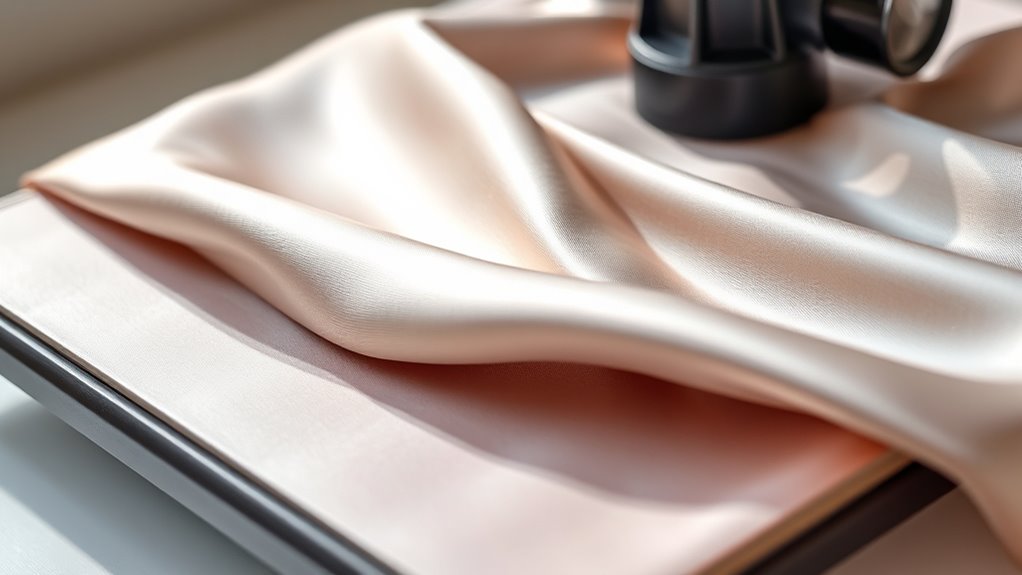
Although silk is delicate, you can heat press it safely if you take the right precautions. You need to control the temperature carefully—too much heat can scorch the fabric or cause watermarks. Always use a lower heat setting than you would for cotton or polyester, and test on a scrap piece first.
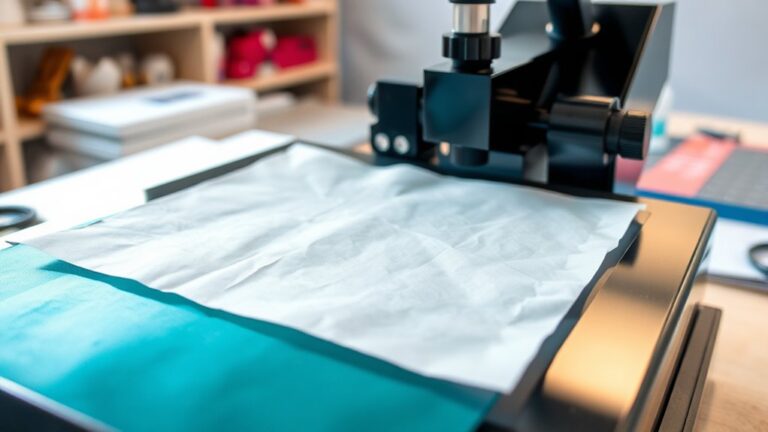
Place a protective sheet, like a Teflon or parchment paper, between the silk and the heat press to prevent direct contact and potential damage. Avoid pressing for too long; brief, gentle pressure works best. Make sure your fabric is clean and dry before heat pressing to avoid stains or water spots.
Which Silk Types Can You Heat Press?
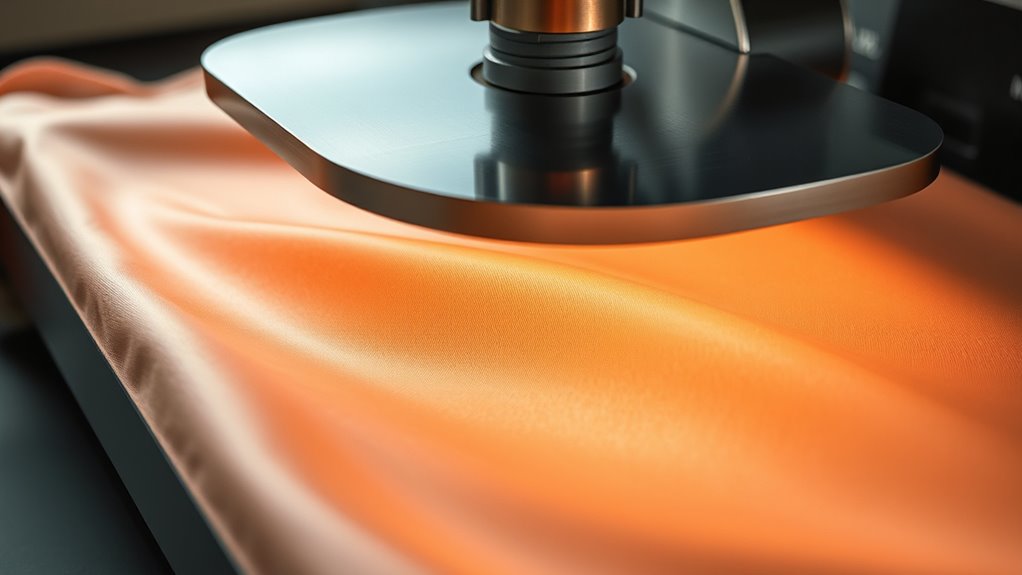
You’ll want to know which silk types handle heat pressing best before you start. Mulberry silk generally tolerates heat well, but wild silks need extra care due to their texture.
Synthetic silk blends vary, so checking the fabric’s heat tolerance is key.
Mulberry Silk Heat Tolerance
How much heat can mulberry silk handle before it gets damaged? Mulberry silk is delicate but surprisingly resilient when you use the right heat settings. You’ll want to keep the temperature low to avoid scorching or weakening the fibers.
Here’s what you need to know:
- Temperature Limit: Keep your heat press below 300°F (150°C) to prevent damage.
- Press Duration: Limit pressing time to 5-10 seconds to avoid heat buildup.
- Protective Layer: Always use a pressing cloth between the silk and heat source to shield the fabric.
Wild Silk Considerations
Mulberry silk’s heat tolerance sets a useful benchmark, but not all silks respond the same way to heat pressing. Wild silks, like tussah, eri, and muga, are more textured and less uniform, which affects their heat sensitivity. You’ll find tussah silk tends to be coarser and may handle moderate heat, but it’s prone to uneven pressing due to its natural texture.
Eri silk, known for its durability, can tolerate slightly higher temperatures but still requires caution to avoid scorching. Muga silk, prized for its natural golden hue, is delicate and best pressed at lower temperatures to preserve its color and sheen. When working with wild silks, always test on a small swatch first and adjust your settings carefully to prevent damage.
Synthetic Silk Variations
Although synthetic silks mimic the look and feel of natural silk, they respond differently to heat pressing. You need to know which types can handle heat without damage.
Here are three common synthetic silk variations and how they perform:
- Polyester Silk: Durable and heat-resistant, polyester silk works well with heat pressing at moderate temperatures (around 300°F). It maintains color and texture without scorching.
- Nylon Silk: More sensitive to heat, nylon silk requires lower temperatures and shorter pressing times to avoid melting or warping.
- Rayon Silk: Though semi-synthetic, rayon silk can be heat pressed cautiously at low temperatures, but it’s prone to water stains and shrinkage.
Safe Heat Press Temperature and Settings for Silk
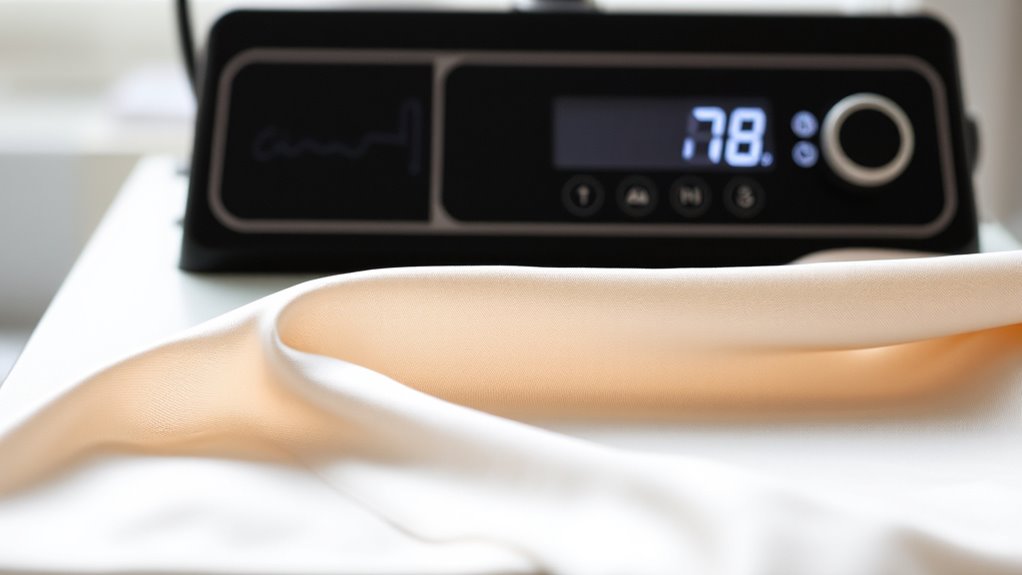
You’ll want to set your heat press to a temperature between 250°F and 300°F to protect the silk fibers. Use light to medium pressure to avoid crushing the fabric, and keep the pressing time short—usually around 10 to 15 seconds.
Adjust these settings carefully to prevent damage and achieve the best results.
Optimal Temperature Range
How hot should you set your heat press when working with silk? You want to keep the temperature low enough to avoid damage but high enough to get a good transfer. Generally, the ideal temperature range for silk is between 250°F and 300°F.
Here’s what you should keep in mind:
- Start at 250°F for delicate or lightweight silk fabrics to prevent scorching or discoloration.
- If the transfer isn’t sticking well, gradually increase the temperature in 10°F increments, but don’t exceed 300°F.
- Always test on a scrap piece first to ensure the fabric handles the heat without damage.
Staying within this range helps preserve silk’s natural texture and shine while ensuring your design adheres properly.
Recommended Pressure And Time
Once you’ve set the right temperature for your silk, the next step is to adjust the pressure and time to guarantee a smooth transfer without damaging the fabric. Use light to medium pressure—silk is delicate, so heavy pressure can crush the fibers or leave marks.
Generally, a pressure setting around 2-3 on a dial (or low-medium) works well. For timing, keep it brief: 10 to 15 seconds is usually enough to transfer your design without overheating. Always use a protective sheet, like parchment paper or a Teflon sheet, between the silk and the heat press to prevent scorching.
Remember to test on a scrap piece first to fine-tune your settings. This careful approach keeps your silk looking flawless.
How to Prepare Silk Fabric for Heat Pressing
Preparing silk fabric for heat pressing starts with ensuring it’s clean and wrinkle-free. You want a smooth surface to get the best results and avoid damaging the delicate fibers.
Follow these three steps to prep your silk properly:
- Wash gently: Use a mild detergent and cold water to hand-wash your silk. Avoid harsh chemicals or bleach that can weaken the fabric.
- Dry carefully: Lay the fabric flat on a clean towel to air dry. Don’t wring or twist it, as this can cause wrinkles or distortion.
- Remove wrinkles: Use a low-heat iron on the silk setting, placing a pressing cloth between the iron and fabric to prevent scorching.
What Transfer Materials Work Best on Silk?
Because silk is a delicate fabric, choosing the right transfer materials is essential to achieve vibrant designs without damaging the fibers. You’ll want to opt for lightweight, low-temperature transfer papers specifically designed for delicate fabrics. Sublimation transfers can work well if your silk is polyester-blend, but pure silk requires special care.
Heat transfer vinyl (HTV) made for delicate textiles is another good choice, as it adheres gently and can be applied with lower heat settings. Avoid thick or heavy transfer materials that require high heat or pressure, as they can scorch or crush silk fibers. Always test a small area first to ensure the transfer material bonds correctly without altering silk’s natural sheen or texture.
Selecting the right materials helps you get crisp, lasting results on silk.
Tips to Preserve Silk’s Texture While Heat Pressing
Although heat pressing can produce stunning results on silk, you’ll need to take extra care to maintain its delicate texture. Silk’s fine fibers can easily get damaged by excessive heat or pressure, so following these tips will help preserve its natural softness and sheen.
Heat pressing silk requires careful handling to protect its delicate fibers and preserve its natural beauty.
- Use a Teflon Sheet or Parchment Paper: Place it between the heat press and the silk to protect the fabric from direct heat and prevent scorch marks.
- Lower the Temperature: Set your heat press to a lower temperature, typically around 250°F (121°C), and shorten pressing time to avoid damaging the fibers.
- Apply Gentle Pressure: Use light to medium pressure to prevent crushing the silk’s delicate weave while ensuring the transfer adheres properly.
Following these steps keeps your silk looking smooth and vibrant after heat pressing.
What Common Mistakes Should You Avoid When Heat Pressing Silk?
When heat pressing silk, you’ll want to steer clear of common mistakes that can ruin its delicate fibers and finish. First, avoid using excessive heat; silk is sensitive and can scorch easily. Always set your heat press to a low temperature recommended for silk.
Second, don’t press for too long—overexposure can cause permanent damage. Third, never apply direct pressure without a protective barrier, like a Teflon sheet or parchment paper, to prevent shiny marks or fabric distortion. Also, avoid using steam, as moisture combined with heat can weaken silk fibers.
Finally, don’t skip testing your settings on a scrap piece first. These precautions help you achieve a smooth, professional heat press without compromising silk’s natural beauty.
How to Safely Test Heat Press Techniques on Silk
Before heat pressing silk, you need to choose safe heat settings to prevent damage. Always conduct small patch tests on a hidden area to see how the fabric reacts.
This way, you can adjust your technique without risking the whole piece.
Choosing Safe Heat Settings
How do you determine the safest heat settings for pressing silk without damaging its delicate fibers? Start by adjusting your heat press to a low temperature and gradually increase it, paying close attention to the fabric’s reaction.
Here’s how you can choose safe settings:
- Set Temperature Between 250°F to 300°F: Silk is sensitive, so keep the heat low to avoid scorching or discoloration.
- Use Minimal Pressure: High pressure can crush silk’s natural sheen and texture, so opt for light to medium pressure.
- Limit Pressing Time to 5-10 Seconds: Prolonged heat exposure risks weakening silk fibers or causing shine marks.
Conducting Small Patch Tests
After selecting safe heat settings, it’s wise to conduct small patch tests on a hidden section of your silk fabric. This lets you see how the silk reacts without risking the entire piece. Cut a small fabric scrap or use an inconspicuous area, then apply your chosen temperature, pressure, and timing.
Check for any discoloration, scorching, or texture changes immediately after pressing. If the patch looks good, you can proceed with more confidence on the main fabric. If not, adjust your settings and test again.
What Are the Alternatives to Heat Pressing Silk?
Although heat pressing is popular for customizing silk, you might want to explore other methods that better preserve its delicate texture and sheen. Silk’s fragile fibers can’t always handle high heat, so choosing gentler techniques helps maintain its natural beauty.
Here are three alternatives to heat pressing silk:
- Screen Printing: This method uses water-based inks applied with a mesh screen, ensuring vibrant designs without heat damage.
- Hand Painting: Using fabric paints or dyes, you can create unique, detailed designs by hand, allowing full control over pressure and moisture.
- Embroidery: Adding stitched designs enhances silk’s elegance without any heat, offering durability and texture without risking fabric harm.
Each alternative respects silk’s delicate nature while letting your creativity shine.
Final Tips for Heat Pressing Silk Successfully
While alternatives to heat pressing silk offer gentler options, mastering the heat press technique can still yield stunning results if done carefully. First, always test on a scrap piece to avoid costly mistakes. Use a lower temperature setting, typically between 250°F and 300°F, to prevent scorching.
Protect the silk by placing a Teflon sheet or a thin cloth between the press and the fabric. Keep the pressing time short—around 10 to 15 seconds—to minimize heat exposure. Avoid applying too much pressure, as silk is delicate and can easily get damaged.
Finally, allow the silk to cool completely before handling or removing the protective cover. Following these tips guarantees your heat press designs stay vibrant without ruining the luxurious feel of silk.
Frequently Asked Questions
Can Heat Pressing Damage Silk’s Natural Color Over Time?
Yes, heat pressing can fade silk’s natural color over time if you use high heat or press too long. You should always use low temperatures and test a small area first to protect the fabric’s vibrancy.
This helps minimize the risk of damage and keeps the silk looking bright. Be cautious with the duration of heat application as well. Too much heat for too long increases the chance of fading.
Is Heat Pressing Suitable for Silk Blends With Synthetic Fibers?
Yes, you can heat press silk blends with synthetic fibers, but you’ll need to lower the temperature and use a protective sheet.
This helps prevent damage while ensuring your design adheres properly without ruining the fabric.
How Long Does a Heat-Pressed Design Last on Silk Fabric?
Your heat-pressed design on silk can last several months to years with proper care. Avoid high heat washing and harsh detergents, and always turn the fabric inside out to keep the design vibrant and intact longer.
Can You Use Heat Press on Silk Scarves With Intricate Patterns?
You can use a heat press on silk scarves with intricate patterns, but you’ll need low temperature and a protective sheet to avoid damage.
Be careful to preserve the design and fabric’s delicate texture during pressing.
Does Humidity Affect the Heat Pressing Process on Silk?
Yes, humidity affects heat pressing on silk by altering moisture content, which can impact the fabric’s reaction to heat and pressure. You’ll want to control humidity for consistent results and to avoid damage or uneven transfers.
Conclusion
You can heat press silk safely by choosing the right temperature and materials. Imagine Sarah, who carefully tested a low heat setting on a silk scarf before a full press—her design came out vibrant without damage. By prepping your fabric and avoiding common mistakes, you’ll protect silk’s delicate fibers.
Remember, patience and practice pay off, letting you create beautiful, lasting prints on silk every time. Give it a try and see your designs shine! Heat pressing on silk requires care, but with the right approach, your silk heat press projects will be stunning and durable.