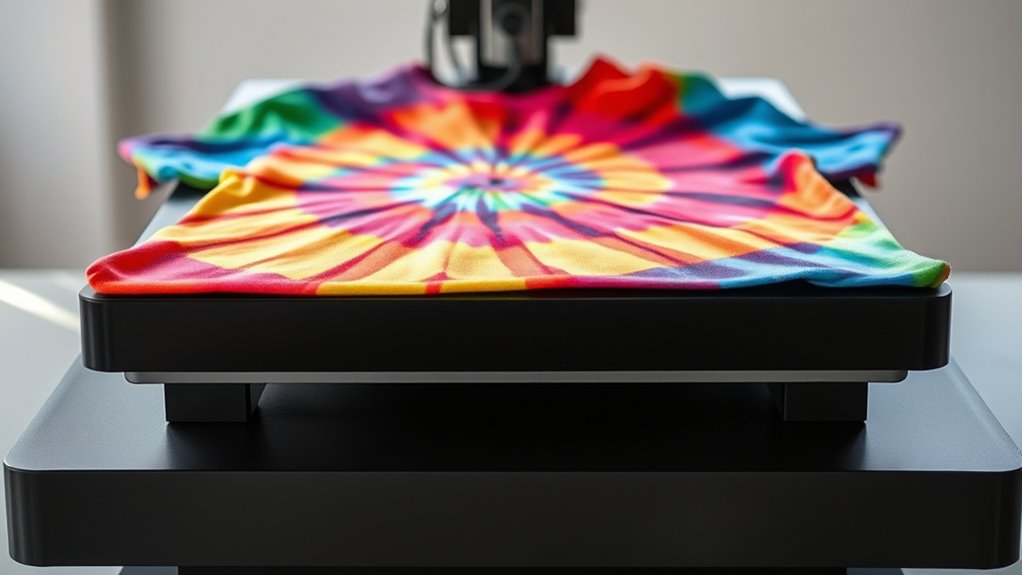
Can You Heat Press a Tie Dye Shirt
Yes, you can heat press a tie dye shirt without fading its colors by using lower temperatures (around 300°F to 320°F) and short pressing times (10-15 seconds).
Heat pressing tie dye shirts requires careful attention to temperature and timing to maintain the vibrant colors. Proper technique ensures your shirt stays bright and colorful while benefiting from the heat press’s efficiency.
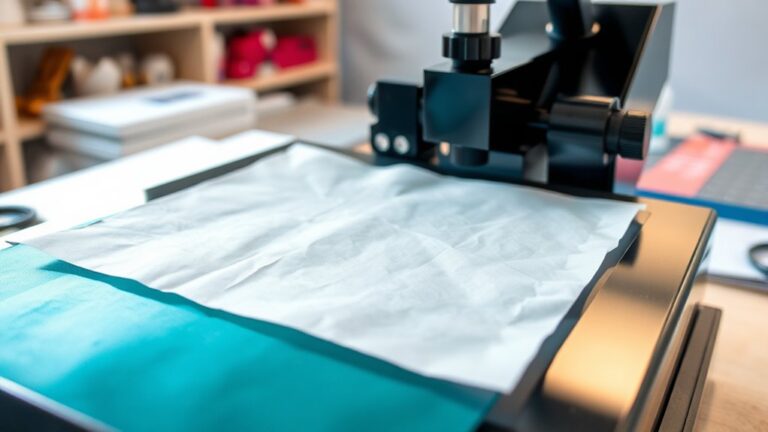
Always place a protective barrier like parchment paper or a Teflon sheet between the heat press and your shirt to prevent scorching and color damage.
Applying medium pressure evenly and testing on scrap fabric first helps protect the vibrant design.
Keep your shirt’s look fresh by following these careful steps—you’ll find helpful tips to optimize your process ahead.
Key Takeaways
- You can heat press a tie dye shirt using low temperatures (around 300-320°F) and short pressing times (10-15 seconds) to protect colors. Always place a protective barrier like parchment paper or a Teflon sheet between the press and shirt to prevent scorching and color fading.
- Avoid high heat and prolonged pressing to prevent dye bleeding, fading, and fabric damage or shrinkage. Test heat press settings on a scrap or hidden area to ensure colorfastness and fabric integrity before full pressing.
- For sensitive designs, consider alternatives like fabric paints, patches, or screen printing to avoid heat-related damage.
Can You Heat Press a Tie Dye Shirt Without Fading Its Colors?
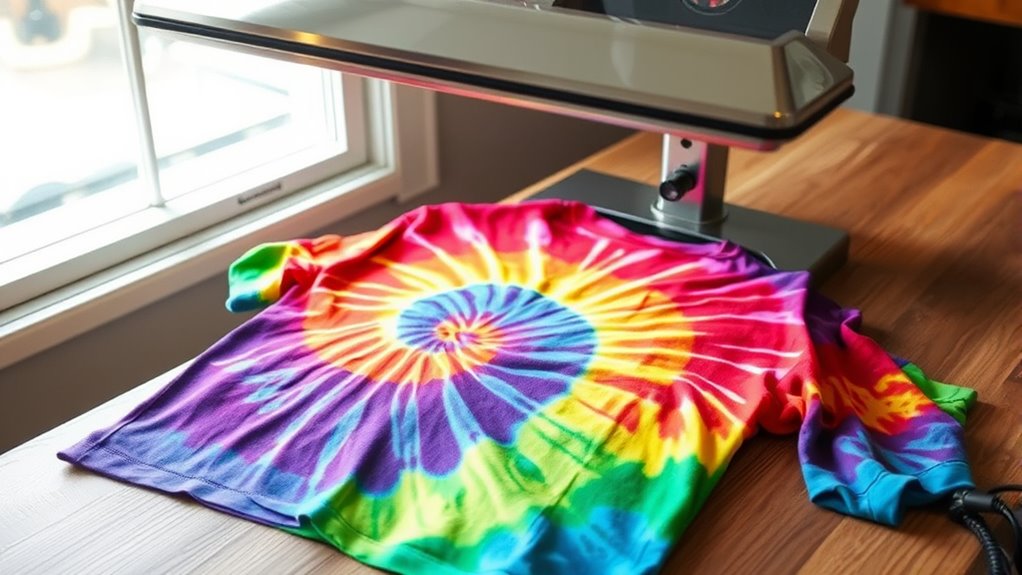
Although heat pressing can be a quick way to add designs to your tie dye shirt, you need to be careful to avoid fading its vibrant colors. To protect your shirt, use a lower temperature setting and reduce the pressing time. Always place a protective sheet, like parchment paper or a Teflon sheet, between the heat press and your shirt to prevent direct contact.
Also, avoid pressing the same spot multiple times. Testing on a scrap piece or a less visible area is a smart move before pressing the entire design. By controlling heat and pressure carefully, you can keep your tie dye bright and eye-catching while still adding your custom design.
What Heat Does to Tie Dye Colors and Fabric Stability
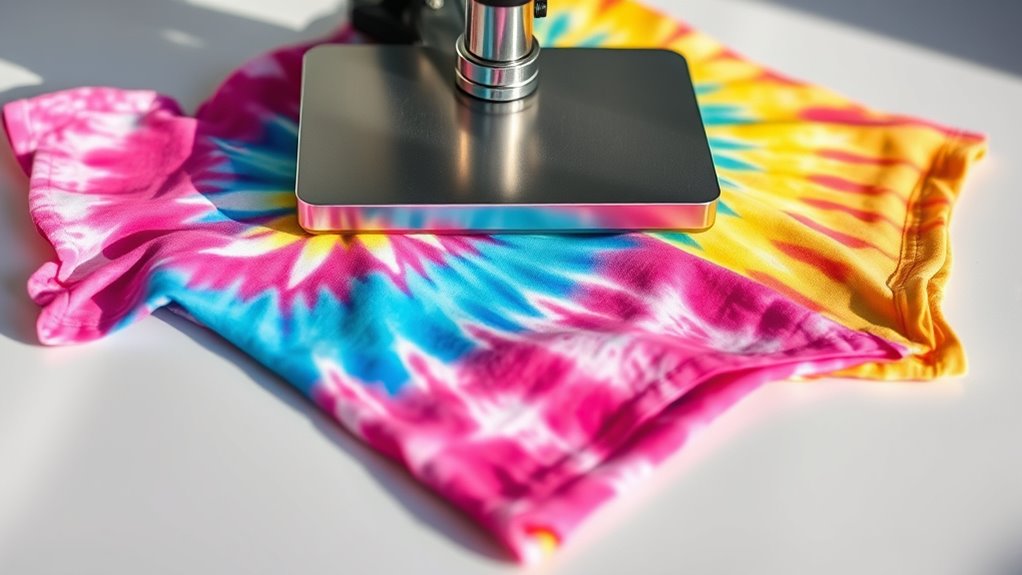
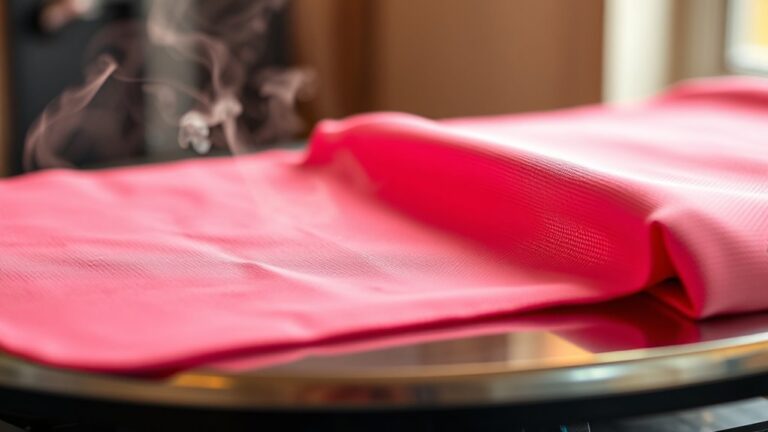
When you apply heat to a tie dye shirt, it can affect how bright the colors stay over time. Too much heat might cause the colors to fade or bleed, changing the look you love.
It can also weaken the fabric’s fibers, reducing the shirt’s overall durability.
Color Vibrancy and Fading
How does applying heat affect the vibrant colors of your tie dye shirt? When you heat press, the intense temperature can cause some color fading or dullness if you’re not careful. Here’s what you should know:
- Color Brightness: Excessive heat may bleach or weaken the dye, reducing the brightness of your tie dye patterns.
- Dye Setting: Proper heat can help set the dye if done right, locking in colors temporarily and preventing immediate bleeding.
- Fading Risk: Overheating or prolonged exposure increases the risk of colors fading faster over time.
To keep your tie dye looking fresh, use a moderate temperature and limit heat press duration. This balance helps maintain vibrant colors without sacrificing the design’s appeal.
Fabric Integrity and Durability
Maintaining the vibrant colors of your tie dye shirt is important, but you also need to think about how heat affects the fabric itself. When you use a heat press, excessive temperature or prolonged exposure can weaken fibers, causing the fabric to lose its softness and durability. Cotton, the most common tie dye fabric, can shrink or become brittle if heated too much.
Additionally, heat can break down fabric elasticity and lead to premature wear and tear. To protect your shirt’s integrity, always use the lowest effective temperature setting and limit pressing time. This helps preserve both the fabric’s strength and the vibrancy of the dye, ensuring your tie dye shirt lasts longer without compromising its look or feel.
How to Choose the Best Heat Press Settings for Tie Dye Shirts
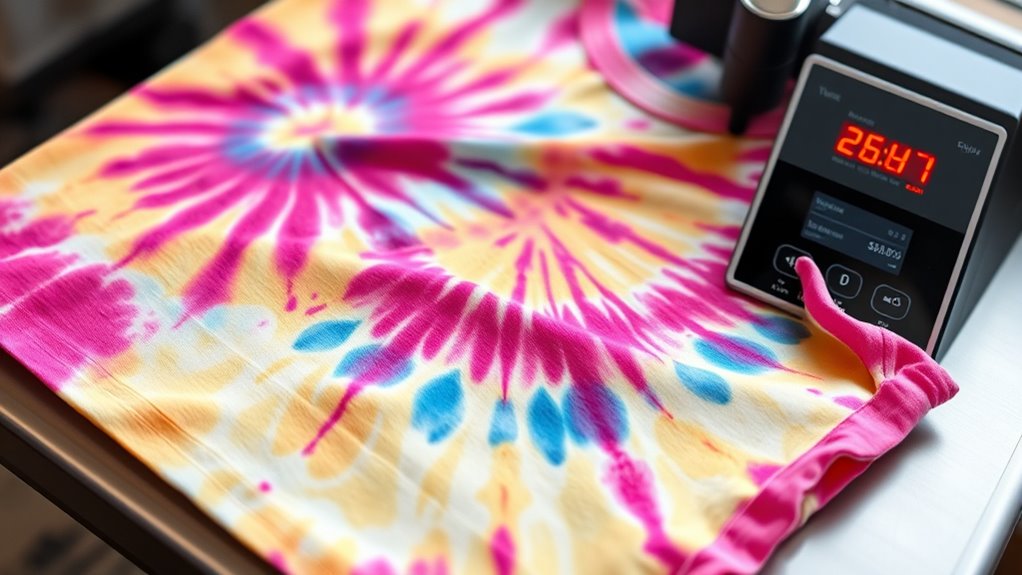
Although tie dye shirts can be delicate, you can achieve great results by selecting the right heat press settings. The key is balancing temperature, time, and pressure to preserve the vibrant colors without damaging the fabric.
Here’s how you can choose the best settings:
- Temperature: Set your heat press between 300°F and 320°F. Too hot can fade colors; too cool won’t set the design properly.
- Time: Limit pressing to 10-15 seconds. Longer exposure risks bleeding or burning the dye.
- Pressure: Use medium pressure to ensure even heat distribution without crushing the shirt fibers.
How to Use a Protective Barrier When Heat Pressing Tie Dye
When heat pressing your tie dye shirt, you’ll want to use the right protective barrier to shield the colors and fabric. Options like parchment paper or a Teflon sheet work great to prevent scorching or color fading.
Picking the right barrier helps keep your design vibrant and your shirt looking fresh.
Choosing The Right Barrier
Because tie dye fabrics are sensitive to direct heat, you’ll need to use the right barrier to protect your shirt during the heat press process. Choosing the proper barrier guarantees your vibrant colors stay bright and prevents scorching or unwanted marks.
Here’s what to evaluate when selecting your barrier:
- Heat resistance: Pick a barrier that can withstand high temperatures without melting or burning.
- Non-stick surface: Ensure it won’t stick to the fabric or transfer any residue onto your shirt.
- Thickness: Use a barrier thick enough to diffuse heat evenly but thin enough to allow proper heat transfer.
Barrier Material Options
Since you need to protect your tie dye shirt from direct heat, choosing the right barrier material is essential. You can use parchment paper or butcher paper as effective barriers—they’re heat-resistant and prevent scorching. Another great option is a Teflon sheet; it’s reusable and provides even heat distribution, making it perfect for repeated pressing.
If you don’t have these, a clean cotton cloth can work in a pinch, but make sure it’s free of any dyes or treatments that could transfer. Always place the barrier between your heat press and the shirt to shield the fabric and design. Using the right barrier material guarantees your tie dye stays vibrant and undamaged while you apply heat safely and efficiently.
Protecting Colors And Fabric
To keep your tie dye colors vibrant and the fabric intact, you’ll need to use a protective barrier during heat pressing. This barrier prevents direct heat from fading colors or scorching the fabric. Here’s how to do it right:
- Choose the right barrier – Use parchment paper, a Teflon sheet, or a thin cotton cloth to shield your shirt.
- Position carefully – Lay the barrier flat over the tie dye, ensuring no wrinkles or folds that could cause uneven heat.
- Apply consistent pressure and time – Follow your heat press instructions closely, but always keep the barrier in place to protect your design.
Using a barrier helps maintain your shirt’s vibrant look and prevents damage, making your heat pressing both safe and effective.
How Long Should You Heat Press a Tie Dye Shirt?
When you heat press a tie dye shirt, timing plays a crucial role in preserving the vibrant colors and the fabric’s integrity. Typically, you should heat press your shirt for about 10 to 15 seconds. Pressing too long can cause the colors to fade or the fabric to scorch, while too little time might not set any design or added elements properly.
Make sure your heat press is set to the correct temperature, usually around 305°F (150°C), and apply firm, even pressure during this time. Always follow the heat press instructions specific to your shirt material and any transfer or ink used. Being precise with timing helps maintain the shirt’s bright look and durability.
How to Test Your Tie Dye Shirt Before Heat Pressing
Before you heat press your tie dye shirt, you should test its colors and fabric resilience to avoid any unwanted damage. This simple step guarantees your design stays vibrant and your fabric stays strong.
Testing your tie dye shirt first ensures vibrant colors and durable fabric during heat pressing.
Here’s how to test your shirt:
- Colorfastness Test: Dampen a white cloth with water and gently rub a small, inconspicuous area. If color transfers, heat pressing might cause bleeding.
- Fabric Strength Check: Stretch the shirt lightly in the tested area to ensure the fabric won’t weaken or distort under heat and pressure.
- Heat Test: Use a low heat setting on an iron for 10 seconds on a hidden spot. Look for any discoloration or texture change.
These tests help you confidently heat press your tie dye shirt without surprises.
Common Heat Pressing Mistakes That Damage Tie Dye Shirts
Testing your tie dye shirt carefully helps prevent surprises during heat pressing, but even with proper preparation, mistakes can still happen. One common error is using too high a temperature, which can cause colors to fade or bleed. Always follow the recommended heat settings for your fabric.
Another mistake is pressing for too long, which may scorch the shirt or distort the dye patterns. Avoid applying excessive pressure; heavy pressure can flatten the vibrant textures and affect the shirt’s feel. Also, neglecting to use a protective Teflon sheet or parchment paper can lead to unwanted shine or damage on the fabric.
Finally, pressing a damp shirt can cause uneven color transfer, so ensure your tie dye is completely dry before heat pressing.
Can You Use Heat Transfer Vinyl With Heat Press on Tie Dye Shirts?
You can use heat transfer vinyl with a heat press on tie dye shirts, but you need to be careful with the settings. Make sure the temperature and pressure are just right to avoid damaging the fabric or vinyl.
Properly prepping the shirt and pressing with the right technique will help the vinyl stick well and last longer.
Heat Press Compatibility
Although tie dye shirts have unique textures and colors, you can still use heat transfer vinyl (HTV) with a heat press to customize them. The key is guaranteeing the heat press settings and materials are compatible with the vibrant fabric.
To get the best results, consider these points:
- Temperature Control: Use moderate heat (around 305°F) to avoid fading or damaging the tie dye.
- Pressure Settings: Apply medium pressure to ensure HTV adheres without squashing the shirt’s texture.
- Pressing Time: Limit the pressing time to 10-15 seconds to protect the fabric’s colors and prevent vinyl distortion.
Vinyl Adhesion Tips
Mastering vinyl adhesion on tie dye shirts depends on more than just temperature and pressure settings. You need to take into account the fabric’s texture and the vinyl type. Since tie dye often uses cotton, standard heat transfer vinyl (HTV) works well, but you’ll want to preheat the shirt briefly to remove moisture and wrinkles.
Always use a Teflon sheet or parchment paper between the vinyl and heat press to protect the design and colors. Apply firm, even pressure and follow the vinyl manufacturer’s recommended temperature and pressing time closely—usually around 305°F for 10-15 seconds. After pressing, peel the carrier sheet carefully, either warm or cold, depending on your vinyl.
These steps help you achieve a clean, long-lasting adhesion on your vibrant tie dye shirt.
Alternatives to Heat Pressing for Customizing Tie Dye Shirts
When heat pressing isn’t an option, several creative techniques let you customize tie dye shirts without losing their vibrant patterns. You can still add personal touches with methods that protect the colors and fabric.
Here are three great alternatives:
- Fabric Paints and Markers: Use these to hand-draw or stencil designs directly onto your shirt. They’re easy to control and won’t require heat.
- Sewing or Iron-On Patches: Attach decorative patches for a textured look. Iron-ons require less heat and can be applied carefully.
- Screen Printing with Water-Based Inks: This method uses gentle inks that won’t damage your shirt’s dye and gives a professional finish.
These techniques keep your tie dye vibrant while letting your creativity shine without a heat press.
What Temperature Is Safe for Heat Pressing Tie Dye Shirts?
Since tie dye shirts often use delicate dyes and fabrics, you need to be careful with the temperature when heat pressing. Generally, keeping the heat press between 270°F and 300°F is safe for most tie dye materials. Going higher risks fading or bleeding the vibrant colors.
You should also shorten the pressing time to about 10-15 seconds to prevent heat damage. Use a protective sheet, like parchment paper or a Teflon sheet, between the heat press and the shirt to further shield the fabric. Always test on a small area or a similar fabric first to guarantee no color distortion occurs.
How to Care for Tie Dye Shirts After Heat Pressing
After carefully heat pressing your tie dye shirt at the right temperature and time, you’ll want to focus on how to maintain its vibrant colors and fabric quality. Proper care extends the life of your shirt and keeps it looking fresh.
- Wash Inside Out and Cold: Turn your shirt inside out and use cold water to prevent colors from fading or bleeding.
- Use Mild Detergent: Choose a gentle detergent without bleach or harsh chemicals to protect the fabric and dyes.
- Air Dry or Low Heat: Avoid high heat in dryers; instead, air dry or tumble dry on low to prevent shrinkage and preserve the print.
Following these steps helps your tie dye shirt stay bright and soft after heat pressing.
Frequently Asked Questions
Can You Heat Press Tie Dye Shirts Made From Different Fabrics?
You can heat press tie dye shirts made from different fabrics, but you’ll need to adjust the temperature and time based on the material.
Always use a protective sheet to avoid damage and test on a small area first.
Does the Age of the Tie Dye Shirt Affect Heat Pressing Results?
Yes, the age of your tie dye shirt can affect heat pressing results. Older shirts might have faded colors or weakened fibers, so you’ll need to adjust time and temperature carefully to avoid damage or dull prints.
Taking extra care with older fabric helps maintain the design’s vibrancy. It’s always a good idea to test a small area first before applying heat to the entire shirt. This ensures the best possible outcome without risking the whole garment.
Can You Use a Home Iron Instead of a Heat Press on Tie Dye?
You can’t tame a wild storm with a gentle breeze—using a home iron on tie dye won’t deliver the even heat a press does. You’ll need patience and care to avoid scorching your vibrant masterpiece.
The heat from an iron is often uneven and can create hot spots. This means your tie dye might not set properly or could get damaged.
To get the best results, a heat press is preferred for consistent temperature and pressure. However, if a heat press isn’t available, carefully using an iron with low to medium heat and constant movement can work in a pinch.
How Does Humidity Impact Heat Pressing Tie Dye Shirts?
Humidity affects heat pressing tie dye shirts by making the fabric slightly damp, which can impact ink absorption and heat transfer. You’ll want to adjust time and temperature to avoid smudging or uneven pressing for best results.
Are There Specific Brands of Tie Dye Shirts Better for Heat Pressing?
You’ll find brands like Gildan and Bella+Canvas work great for heat pressing due to their cotton blends and durability. They handle heat well, giving you vibrant, lasting designs without damaging the tie dye patterns.
Conclusion
You can heat press a tie dye shirt, but you’ll want to be careful to preserve those vibrant colors. Using lower temperatures and a protective barrier helps prevent fading and fabric damage. Always test a small area first to see how your shirt reacts.
Remember, patience and proper settings make all the difference. With the right approach, you’ll enjoy customizing your tie dye shirts without losing their unique, colorful charm. Heat pressing a tie dye shirt successfully requires attention to detail and the right techniques to maintain its bright, eye-catching design.