Can You Heat Press Over Heat Press
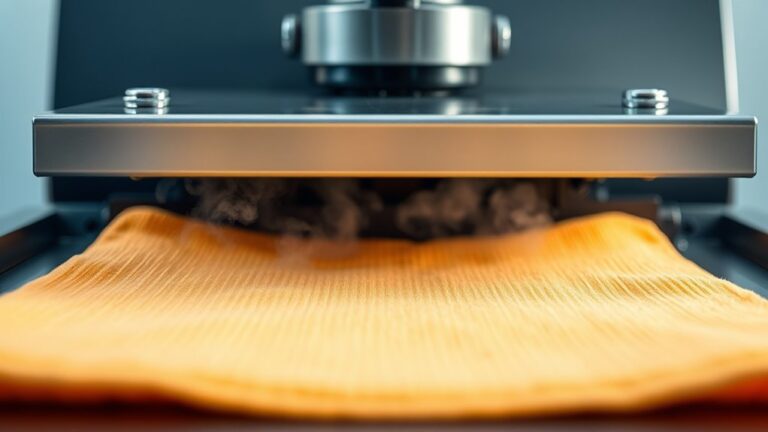
Yes, you can heat press over an existing design, but it requires careful attention to avoid damaging your print. When you heat press over heat press prints, it is crucial to ensure the original design is fully cured and completely cool before applying heat again. This helps to prevent warping, peeling, or fading of the layers.
Lower the temperature and reduce the pressing time when reheating to protect the material. Using protective sheets between the heat press and your design can also prevent damage.
Some fabrics and materials may not handle reheating well, so always perform a test press first.
If you want your layered design to last and avoid mistakes, there are smart techniques to prepare and press your design properly. Taking these precautions ensures your final product looks great and maintains durability over time.
Key Takeaways
- You can heat press over existing designs if fully cured and cooled to avoid damage like peeling or warping.
- Use lower temperature, reduced press time, and medium to light pressure when reheating layered designs.
- Avoid pressing over thick or complex designs to prevent uneven heat damage and distortion.
- Protect designs with parchment paper or Teflon sheets during reheating to maintain print quality.
- Signs like bubbling, cracking, or peeling indicate you should stop reheating to prevent further damage.
Can You Heat Press Over an Existing Heat Press Design?
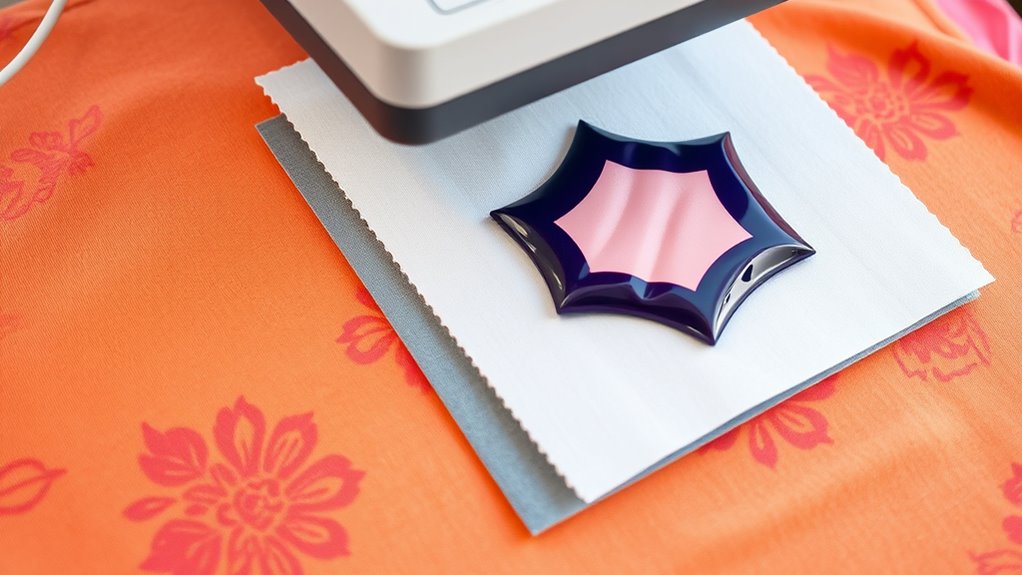
Can you heat press over an existing heat press design? Yes, you can, but you need to be cautious. When you apply heat and pressure on top of a finished design, you risk damaging the original print or causing unwanted distortion.
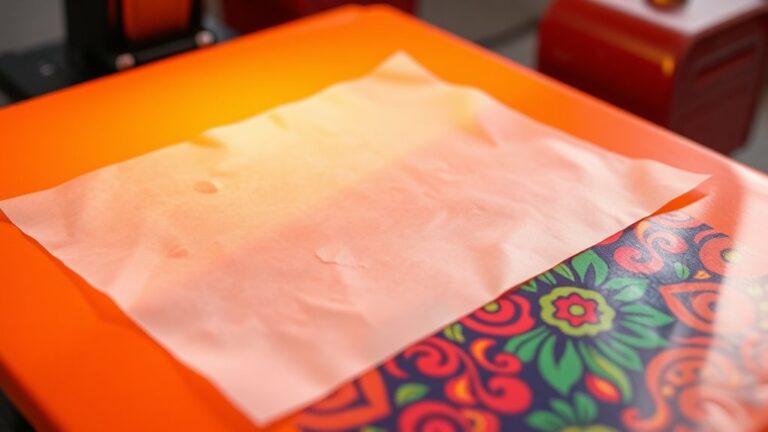
To avoid this, make sure the original design is fully cured and cool before pressing again. Use a protective sheet, like parchment paper or a Teflon sheet, between your heat press and the design to prevent sticking or melting. Adjust your heat press settings—lower the temperature and reduce pressing time—to minimize risks.
Carefully aligning your new design is also essential to avoid overlapping or uneven pressure. Following these steps will help you add layers without ruining the initial artwork.
What Happens When You Heat Press Twice on the Same Spot?
If you heat press the same spot twice, you risk damaging the fabric by weakening its fibers. You’ll also notice the print quality can suffer, becoming faded or distorted.
Plus, overheating can cause unwanted shrinkage or scorching, so you have to be careful.
Effects On Material Integrity
Although it might seem harmless, heat pressing the same spot twice can weaken the fabric and distort the design. When you apply heat and pressure repeatedly, the fibers in the material break down faster, making the fabric thinner or even causing small holes. This damage compromises the garment’s durability and comfort.
Additionally, the heat can cause the material to stretch or warp, which affects the overall fit. If you’re using heat transfers or vinyl, pressing twice over the same area can also cause the adhesive to overheat, leading to peeling or cracking over time.
To maintain your garment’s integrity, avoid double pressing the same spot unless absolutely necessary, and always follow recommended temperature and time settings for your specific fabric type.
Impact On Print Quality
Damaging the fabric is just one part of the problem when you heat press the same spot twice. When you apply heat and pressure again, the print’s colors can fade or blur, making your design look dull and less vibrant. The ink or vinyl might start to peel or crack because it wasn’t intended to endure multiple heat cycles in the same area.
You’ll also notice that the texture of the print changes—what was once smooth could become rough or uneven. This happens because the repeated heat press affects the adhesive and the material underneath, weakening the bond. So, if you want your design to last and look sharp, avoid pressing over the same spot more than once.
Risks Of Overheating
When you heat press twice on the same spot, you risk overheating the fabric and print, which can cause permanent damage. Overheating breaks down the fibers and ink, leading to issues that aren’t easy to fix. Here are three common risks you face:
- Fabric Burn or Scorch Marks – Excessive heat weakens and discolors the fabric, leaving unsightly burn marks.
- Print Cracking or Peeling – The design may become brittle and start cracking or peeling off, ruining your work.
- Color Fading – Repeated heat exposure can dull colors, making your print look faded and less vibrant.
To avoid these problems, always monitor your pressing time and temperature carefully. Don’t rush the process by pressing over the same spot multiple times.
Preparing Your Project for a Second Heat Press
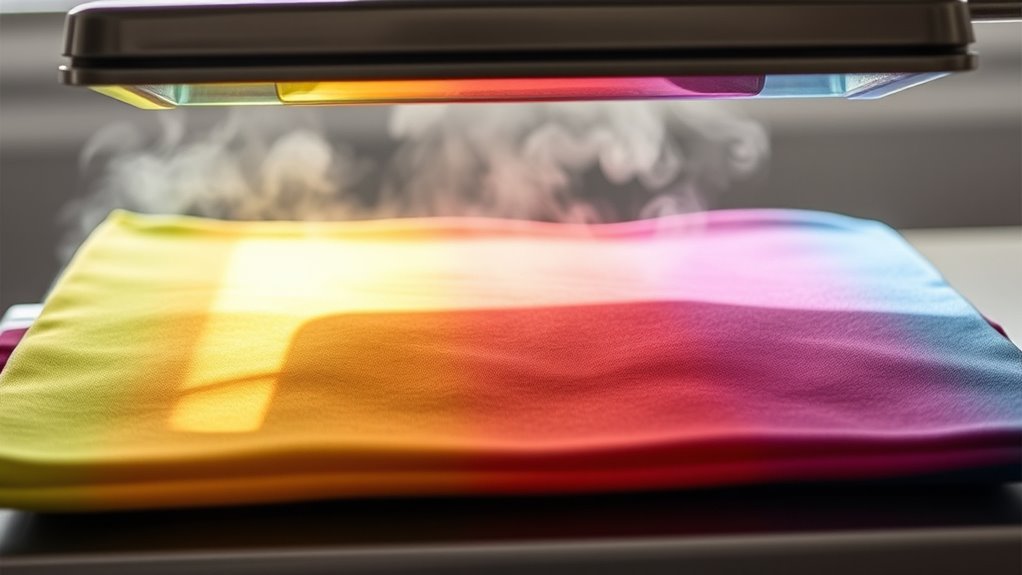
Before applying a second heat press, make sure your fabric can handle the extra heat without damage. Check the quality of your initial press to see if it needs any adjustments.
Finally, align your design carefully to avoid misprints or overlapping.
Assess Fabric Heat Tolerance
Although applying heat a second time can enhance your design, you need to evaluate your fabric’s heat tolerance carefully. Not all fabrics respond well to repeated heat exposure, and pushing the limits can damage your project.
Here’s how to assess your fabric’s heat tolerance:
- Check Fabric Type: Natural fibers like cotton tolerate heat better than synthetics like polyester, which can melt or warp.
- Review Manufacturer Guidelines: Always consult the care label or fabric specs for maximum safe temperature and pressing time.
- Perform a Heat Test: Press a small, inconspicuous fabric area at the intended temperature and duration to observe any adverse effects.
Check Initial Press Quality
Evaluating your fabric’s heat tolerance establishes the stage for gauging the quality of your initial press. Once you’ve made the first heat press, take a close look at the transfer’s adhesion and overall appearance. Check for any peeling edges, uneven spots, or wrinkles that might signal an imperfect bond.
Feel the fabric’s texture—if it’s overly stiff or shows signs of scorching, you’ll want to proceed cautiously. Also, inspect the design’s color vibrancy; dull or faded areas could mean you need to adjust your technique. This assessment helps you decide if a second press is necessary or if the design is already secure.
Taking these steps ensures your project is ready for the next stage without risking damage or distortion.
Align Design Precisely
When you prepare for a second heat press, you need to align your design with exact precision to avoid any shifting or distortion. Misalignment can ruin your project, wasting time and materials.
To make certain your design stays perfectly positioned, follow these steps:
- Use heat-resistant tape to secure your design firmly in place before pressing again.
- Mark registration points lightly with a fabric-safe pencil or chalk to guide your placement.
- Double-check alignment by folding or measuring the garment to ensure symmetry and consistency.
Taking these precautions helps maintain the integrity of your design and guarantees a professional finish. Remember, precision at this stage prevents costly mistakes and keeps your project looking sharp and clean after the second press.
Best Heat Press Settings for Layered Designs
Since layered designs require multiple presses, you’ll need to carefully adjust your heat press settings to avoid damaging previous layers. Lower the temperature by about 10-15°F from the recommended setting for single-layer designs. Reduce the press time slightly, usually by 5-10 seconds, to prevent overheating.
Use medium to light pressure to avoid pressing too hard, which can squish or shift layers. Always place a protective sheet, like parchment paper or a Teflon sheet, over the design to shield it from direct heat. Between each layer, give the garment a short cooldown to help set the design without melting or warping earlier layers.
Which Materials Work Best for Layered Heat Press Designs
Although layering heat press designs offers creative freedom, choosing the right materials is essential to guarantee your final product holds up well. You want layers that bond securely without peeling or cracking over time.
Here are three materials that work best for layered heat press designs:
- Heat Transfer Vinyl (HTV) – It’s flexible, durable, and adheres well to most fabrics, making it perfect for multiple layers.
- Sublimation Prints – These bond directly with polyester fabrics, allowing smooth layering without adding thickness or stiffness.
- Screen Print Transfers – They provide vibrant colors and strong adhesion, suitable for adding detailed layers over HTV.
Picking these materials ensures your layered design stays vibrant and intact, giving your project a professional finish you can be proud of.
When to Avoid Heat Pressing Over Previous Transfers
Choosing the right materials for layered heat press designs helps guarantee your artwork looks great and lasts long. However, you should avoid heat pressing over previous transfers when the original layer is delicate or has a low melting point. Applying heat again can cause warping, peeling, or discoloration.
Also, skip reheating if the initial transfer wasn’t properly cured, as this can ruin both layers. Avoid pressing over complex or thick designs since uneven pressure can damage your artwork or fabric. When using materials like vinyl or specialty inks, reheating might compromise adhesion or texture.
If you notice bubbling, cracking, or residue from the first press, it’s best not to apply more heat. Knowing when to hold back saves your project from irreversible damage.
How to Fix Heat Press Mistakes by Layering New Designs
Wondering how to salvage a heat press mishap without starting over? You can fix mistakes by layering new designs right over the original transfer. Here’s how:
- Choose a complementary design: Pick a pattern or graphic that covers or cleverly integrates the mistake without clashing. This helps mask errors and refreshes the look.
- Use proper heat settings: Adjust temperature and time to avoid damaging the original layer. Lower heat and shorter press times usually work best when layering.
- Align carefully: Make sure your new design is positioned precisely to cover the mistake and enhance the overall appearance. Use heat-resistant tape to secure it in place.
Tips to Make Your Layered Heat Press Last Longer
If you want your layered heat press designs to stay vibrant and intact, you need to take extra care with how you handle and maintain them. Always follow the recommended temperature and pressure settings for each layer to avoid damaging the previous design. Use a protective sheet like parchment paper between layers to prevent sticking or scorching.
Let each layer cool completely before applying the next to guarantee proper adhesion. When washing garments, turn them inside out and use gentle cycles with cold water to preserve the design. Avoid harsh detergents and bleach, which can degrade the layers.
Finally, store your heat press machine in a clean, dry place and perform regular maintenance to keep it working efficiently, assuring your layered designs last much longer.
Frequently Asked Questions
Can You Use Different Types of Heat Presses Together?
Yes, you can use different types of heat presses together. Just make sure each press has the right temperature, pressure, and time settings for your materials.
That way, you’ll get consistent, quality results every time.
How Long Should You Wait Between Multiple Heat Press Sessions?
Think of your heat press like a marathon runner catching its breath. You should wait at least 5-10 minutes between sessions, letting it cool down to avoid overheating and guarantee consistent, vibrant results every time you press.
Does Heat Pressing Affect Fabric Color or Texture?
Yes, heat pressing can affect fabric color and texture if you apply too much heat or press too long. You’ll want to test settings first to avoid fading, scorching, or altering the fabric’s feel and appearance.
Can Heat Pressing Damage Heat Press Machines?
Yes, you can damage heat press machines if you apply excessive pressure, use incorrect settings, or overheat them. Always follow manufacturer guidelines and avoid stacking presses to keep your machine running smoothly and prevent damage.
Are There Safety Precautions for Heat Pressing Layered Designs?
Yes, you should always wear heat-resistant gloves, guarantee proper ventilation, and avoid overheating layers.
Don’t rush the process, check materials’ heat tolerance, and keep your workspace clear to prevent accidents while heat pressing layered designs.
Conclusion
You can heat press over an existing design, but it’s like walking a tightrope—you need balance and care. Pressing twice can enhance your project if you prepare properly and choose the right materials and settings. Avoid rushing or overdoing it to prevent damage.
When done right, layering brings new life to your creations. Keep these tips in mind, and your heat press designs will stand strong, shining bright like a well-polished gem. Remember, you can heat press over heat press safely by following the right steps and precautions.