Can You Heat Press Rayon and Spandex
You can heat press rayon and spandex safely by using low temperatures (around 270°F) and gentle, even pressure to avoid stretching or damaging the fabric.
When heat pressing delicate materials like rayon and spandex, it’s important to take extra care to maintain their integrity and appearance. Always place a Teflon or parchment sheet between the heat press and the fabric to protect it from direct heat.
Limit pressing time to 10-15 seconds and test on scraps first to prevent discoloration or melting.
These precautions help ensure your fabric stays vibrant and intact. Following these simple steps helps keep your fabric looking great—explore more tips to perfect your technique.
Key Takeaways
- Yes, you can heat press rayon and spandex using low temperatures around 270°F to avoid damage.
- Always use a Teflon or parchment sheet to protect fabric during heat pressing.
- Limit pressing time to 10-15 seconds with gentle, even pressure to prevent stretching or scorching.
- Test heat settings on scrap fabric first to ensure safe temperature and pressure levels.
- Avoid temperatures above 320°F and excessive pressure to maintain fabric elasticity and prevent melting.
Can You Heat Press Rayon and Spandex Safely? Best Practices
Although rayon and spandex are delicate fabrics, you can heat press them safely by following key precautions. First, always test a small, hidden area to check how the fabric reacts to heat. Use a lower temperature setting—typically around 270-300°F—to prevent scorching or melting.
Keep the pressing time short, around 5-10 seconds, to avoid damage. Place a protective Teflon sheet or parchment paper between the heat press and fabric to shield fibers from direct heat. Avoid applying excessive pressure, as spandex can stretch out of shape.
Ultimately, ensure the fabric is clean and dry to achieve the best results. By carefully controlling temperature, time, and pressure, you’re able to maintain the integrity of rayon and spandex while creating vibrant, lasting designs.
Picking the Right Heat Press for Rayon and Spandex
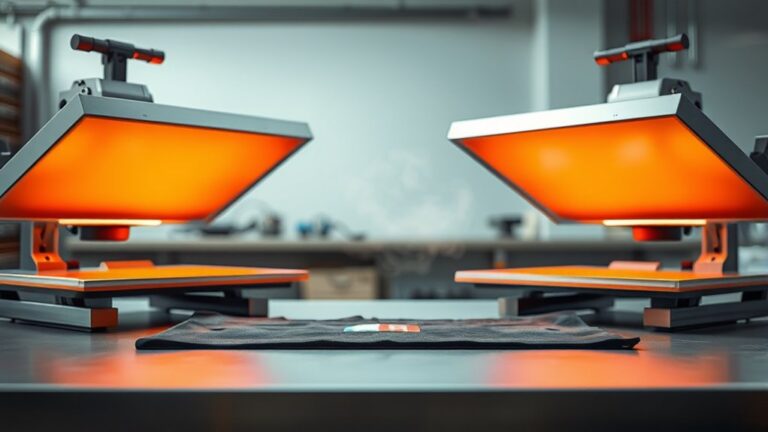
To protect delicate fabrics like rayon and spandex during heat pressing, you need the right equipment that offers precise control. Look for a heat press with adjustable temperature settings, so you can stay within safe heat limits. A press with even heat distribution is essential to avoid hot spots that can damage these sensitive materials.
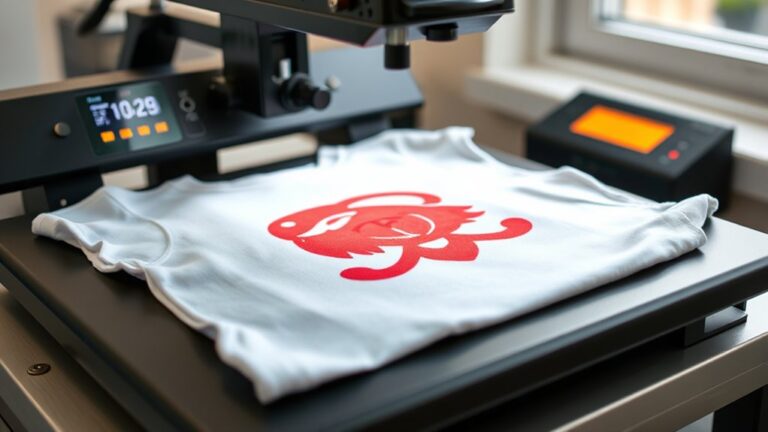
Choose one with adjustable pressure control, allowing you to apply gentle, consistent pressure without crushing the fabric. A digital display helps you monitor and maintain exact temperature and time settings. Clamshell or swing-away models both work, but swing-away presses give you more control and reduce accidental burns.
Investing in a quality heat press designed for delicate fabrics guarantees your rayon and spandex projects come out perfect every time.
How Rayon and Spandex Fabrics React to Heat Pressing
When you apply heat to rayon and spandex, their fibers respond differently than more durable fabrics. Rayon, being semi-synthetic, can weaken and shrink under high temperatures. Spandex, known for its elasticity, can lose stretch and become misshapen if exposed to excessive heat.
Understanding these reactions is key to avoiding damage when heat pressing.
Keep these points in mind:
- Rayon fibers are sensitive to heat and can burn or scorch easily.
- Spandex melts or deforms at lower temperatures than many other fibers.
- Excessive heat can cause rayon to shrink and spandex to lose elasticity.
- Quick, controlled heat application minimizes fabric stress and damage.
Preparation Tips for Heat Pressing Rayon and Spandex
Before you start heat pressing rayon and spandex, make sure to pre-wash the fabric to avoid shrinkage later. You’ll also need to set the right temperature and pressure to protect the material.
Getting these steps right guarantees your design comes out crisp without damaging the fabric.
Fabric Pre-Wash Guidelines
Although rayon and spandex fabrics feel soft and stretchy, you’ll need to pre-wash them carefully to prevent shrinking and distortion during heat pressing. Skipping this step can lead to uneven results or damage after the heat press.
To prepare your fabric properly, follow these guidelines:
- Use cold water to wash; hot water can shrink rayon and weaken spandex fibers.
- Avoid harsh detergents; choose mild, gentle soaps to protect fabric elasticity.
- Skip the dryer; air dry flat or hang to maintain shape and prevent stretching.
- Wash the fabric alone or with similar materials to avoid snagging or pilling.
Temperature And Pressure Settings
Since rayon and spandex are delicate fabrics, you’ll need to use carefully controlled temperature and pressure settings to avoid damage during heat pressing. Too much heat or pressure can cause shrinking, melting, or distortion. Aim for a moderate temperature and gentle pressure to safeguard the fabric’s integrity and keep your design crisp.
Here’s a quick guide to help you:
| Setting | Recommendation |
|---|---|
| Temperature | 270°F (132°C) |
| Pressure | Light to medium |
| Time | 10-15 seconds |
Always test on a scrap piece first. Remember, less is more—start with lower heat and pressure, then adjust if needed. Taking these precautions ensures your rayon and spandex projects come out flawless and vibrant every time.
Best Temperature and Time Settings for Rayon-Spandex
You’ll want to set your heat press to an ideal temperature between 280°F and 300°F for rayon-spandex blends. Pressing for about 10 to 15 seconds usually gives the best results without damaging the fabric.
Let’s explore how these settings help you achieve a smooth, lasting finish.
Ideal Temperature Range
When heat pressing rayon-spandex blends, you need to balance temperature and time carefully to avoid damaging the fabric. The ideal temperature range usually falls between 275°F to 310°F (135°C to 155°C). Staying within this range helps prevent scorching or melting the spandex fibers.
Here’s what you should keep in mind:
- Use a lower temperature for higher spandex content to avoid melting.
- Avoid temperatures above 320°F as they can weaken the fabric.
- Pre-test on a scrap piece to find the perfect setting for your specific blend.
- Adjust temperature slightly if you notice fabric puckering or discoloration.
Optimal Pressing Duration
How long should you press rayon-spandex blends to achieve the best results without damaging the fabric? Typically, you want to keep the pressing time short and efficient. Aim for 10-15 seconds to avoid scorching or losing fabric elasticity.
Too long under heat can weaken the fibers and ruin the garment’s look and feel.
Here’s a quick guide for pressing duration and temperature:
| Fabric Blend | Temperature (°F) | Pressing Time (seconds) |
|---|---|---|
| Rayon 95%/Spandex 5% | 300-320 | 10-12 |
| Rayon 90%/Spandex 10% | 310-330 | 12-15 |
| Rayon 85%/Spandex 15% | 320-340 | 10-14 |
Stick to these settings for the best balance of heat and time.
How to Test Heat Press Settings on Rayon and Spandex
Although rayon and spandex are delicate fabrics, testing your heat press settings carefully guarantees you avoid damage and achieve crisp, lasting designs. Start by adjusting your press to a low temperature and short time. Use a small fabric scrap to experiment without risking your final piece.
Observe how the material reacts, then fine-tune the heat, pressure, and duration accordingly.
Here’s how to test effectively:
- Set temperature between 270°F–300°F initially.
- Press for 5–7 seconds to gauge fabric response.
- Use medium pressure to prevent fabric distortion.
- Check for any discoloration or puckering after pressing.
Protecting Rayon and Spandex During Heat Pressing
Since rayon and spandex are sensitive to high heat and pressure, you’ll need to take extra precautions to protect them during heat pressing. Start by always using a protective barrier, like a Teflon sheet or parchment paper, between the heat press and the fabric. This prevents direct contact and reduces the risk of scorching or melting.
You should also avoid applying excessive pressure, as it can distort the fabric’s stretch and shape. Keep your heat press temperature lower than usual, and limit the pressing time to prevent damage. Additionally, make sure the fabric is clean and wrinkle-free before pressing, as any debris or folds can cause uneven heat distribution.
Heat Press Techniques to Protect Rayon-Spandex Fabrics
Taking extra precautions is just the start when working with rayon-spandex blends. You need to use specific heat press techniques to keep the fabric’s integrity intact. First, always lower the temperature to around 270°F (132°C) to avoid melting or scorching.
Next, reduce the pressing time to 10-15 seconds to prevent damage. Use a protective sheet like parchment paper or a Teflon sheet between the heat press and fabric to shield it from direct heat. Finally, apply gentle pressure; too much can distort the fabric’s stretch and shape.
Remember these key techniques:
- Set the heat press temperature low (around 270°F)
- Limit pressing time to 10-15 seconds
- Use a protective sheet (parchment or Teflon)
- Apply light, even pressure during pressing
This approach helps maintain your garment’s quality and longevity.
Signs of Heat Damage on Rayon and Spandex and How to Care
When you apply too much heat or pressure to rayon-spandex fabrics, you’ll notice clear signs of damage that can affect both the look and feel of your garment. These signs include discoloration, fabric shrinkage, loss of stretch, and a rough or stiff texture. The fabric might also develop shiny spots where the fibers have melted or flattened.
To care for heat-damaged rayon-spandex, avoid washing it in hot water or using high-heat drying, as this can worsen the damage. Instead, hand wash with cold water and mild detergent, then lay flat to dry. If you catch damage early, using fabric softener can help restore some softness.
Always test heat settings on a scrap piece before pressing your final garment to prevent these issues.
Frequently Asked Questions
Can You Use Heat Transfer Vinyl on Rayon-Spandex Blends?
Yes, you can use heat transfer vinyl on rayon-spandex blends, but you’ll need to use a lower temperature and quick pressing time to avoid damaging the fabric.
Always test first and use a protective sheet for best results.
Is It Safe to Wash Heat-Pressed Rayon and Spandex Garments?
Yes, you can safely wash heat-pressed rayon and spandex garments. Just turn them inside out, use cold water, and choose a gentle cycle.
Avoid bleach and high heat drying to keep the design vibrant and fabric intact.
How Does Humidity Affect Heat Pressing Rayon and Spandex?
Oh, humidity loves messing with your heat press! It makes rayon and spandex more sensitive, causing warping or uneven adhesion.
Can Rayon and Spandex Be Heat Pressed With Sublimation Prints?
You can heat press rayon and spandex with sublimation prints, but you’ll need a polyester coating or blend for the ink to bond properly. Use low heat and quick pressing to avoid damaging the fabric.
This ensures the sublimation ink adheres well without compromising the material’s integrity. Always test a small area first to check for any adverse reactions. Proper care will help maintain the print quality and fabric softness.
What Adhesives Work Best for Heat Pressing Rayon and Spandex?
You’ll want to use heat-activated adhesives like polyester-based or polyurethane glue sheets. They bond well with rayon and spandex without damaging the fabric. Avoid high temperatures and always test a small area first for best results.
Conclusion
When heat pressing rayon and spandex, remember that “slow and steady wins the race.” You can safely press these fabrics by choosing the right settings and protecting them well. Always test on a scrap piece first to avoid damage.
Keep temperatures moderate and pressure light to preserve their stretch and softness. With careful preparation and patience, you’ll achieve great results without ruining your fabric.
Take your time, and your heat press projects will shine! Proper heat pressing of rayon and spandex ensures your designs stay vibrant and the fabric maintains its quality.