Can You Heat Press Shoes
You can heat press shoes, especially canvas or leather ones, to apply custom designs using a heat press machine. Heat pressing shoes is a popular method for creating personalized footwear with vibrant and durable designs.
By using the right temperature, pressure, and materials like flexible heat transfer vinyl, you can achieve professional-looking results.
Just be sure to prep the shoes well and avoid overheating to prevent damage. Flat surfaces work best for heat pressing, while curved areas require extra care and precision.
With proper technique, you can customize your shoes effectively.
Keep going to uncover helpful tips and avoid common mistakes for perfect results when heat pressing your shoes.
Key Takeaways
- Yes, shoes made from canvas, leather, and some synthetic fabrics can be heat pressed with proper temperature and pressure settings.
- Flat, smooth surfaces like sneakers or slip-ons are ideal for even heat transfer application.
- Use flexible heat transfer vinyl (HTV) and protective sheets to prevent damage and ensure durable adhesion.
- Curved shoe areas require specialized techniques, such as foam inserts and adjustable pressure, for effective heat pressing.
- Always test heat settings on scrap materials and work in well-ventilated spaces to avoid damaging shoes or adhesives.
Can You Heat Press Shoes? A Quick Overview
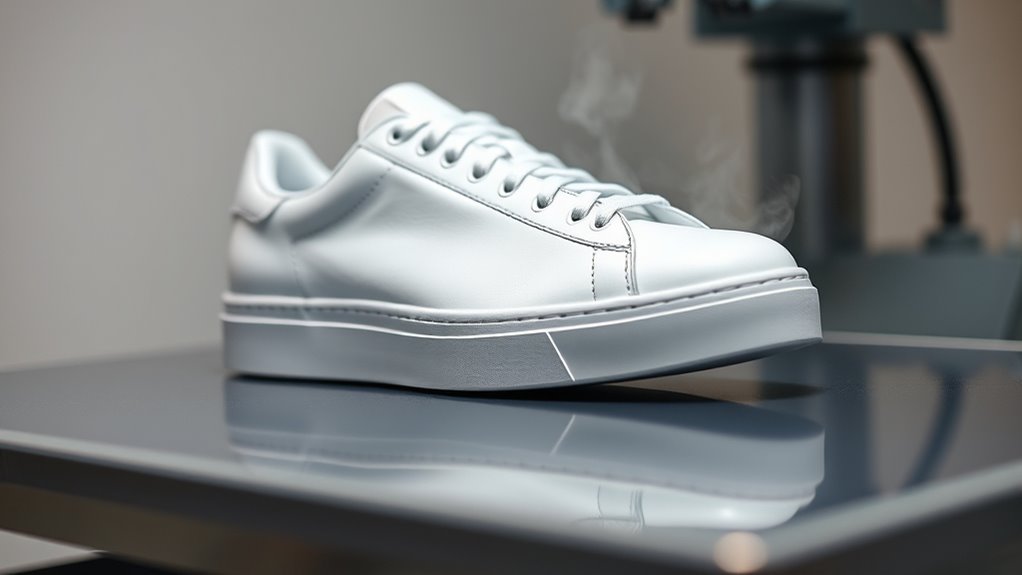
Although it might seem tricky at first, you can heat press shoes with the right tools and techniques. Heat pressing allows you to customize footwear by applying designs, logos, or patterns directly onto the shoe’s material. You’ll need a heat press machine that can accommodate the shoe’s shape, often with adjustable pressure and temperature settings.
Different shoe materials—like canvas, leather, or synthetic fabrics—respond uniquely to heat, so you’ll want to match your heat press settings accordingly. Using specialized shoe platens or molds helps apply even pressure without damaging the shoe’s structure. With proper preparation and technique, you can achieve vibrant, durable designs that won’t peel or crack easily.
Heat pressing shoes opens up creative possibilities beyond traditional apparel customization.
Safety Considerations for Heat Pressing Shoes
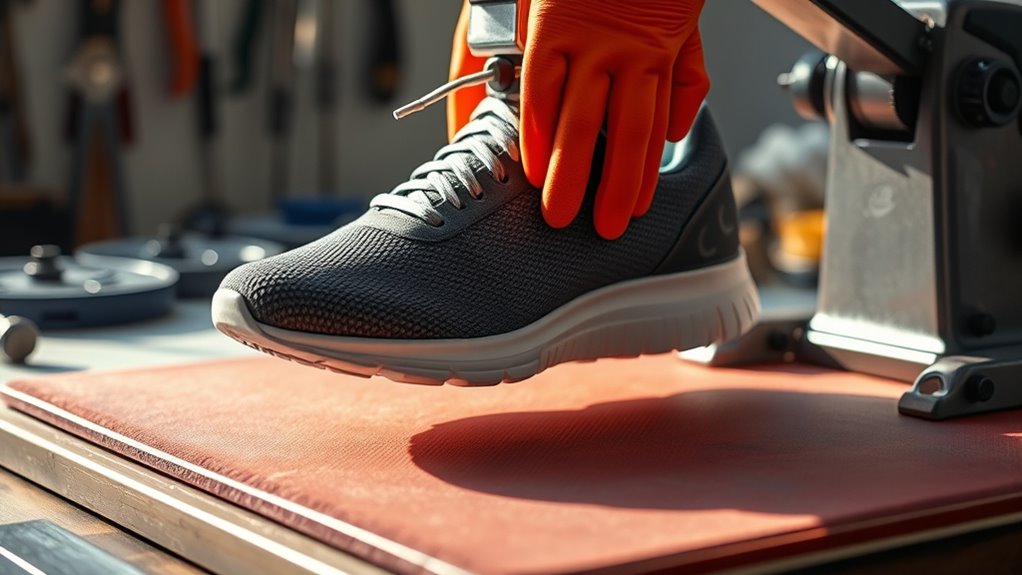
Before you heat press shoes, make sure you know the heat resistance of the materials involved to prevent damage. Always work in a well-ventilated area to avoid inhaling fumes.
Pay close attention to the temperature and time settings to avoid overheating and ruining your shoes.
Heat Resistance of Materials
How hot can your shoes handle before they get damaged? It depends largely on the materials used. Leather, for example, can usually withstand temperatures up to about 320°F (160°C), but going higher risks drying, cracking, or discoloration.
Synthetic fabrics like polyester or nylon have lower heat tolerances, often around 250°F (120°C), and can melt or deform if overheated. Rubber soles may start warping above 300°F (150°C). Before you heat press, check the manufacturer’s specs or test on a small, hidden area.
Using too high a temperature can ruin your shoes permanently, so never guess. Adjust your heat press settings carefully to match the material’s heat resistance, protecting your shoes while getting the best transfer results.
Proper Ventilation Importance
Why does proper ventilation matter when heat pressing shoes? When you use a heat press, the materials can release fumes or odors that might be harmful if inhaled. Good airflow prevents buildup of these fumes, keeping your workspace safe and comfortable.
Proper ventilation also helps control temperature and reduces the risk of overheating surrounding items.
Here’s a quick overview of why ventilation is essential:
| Aspect | Effect Without Ventilation | Benefit with Ventilation |
|---|---|---|
| Fume Accumulation | Harmful inhalation | Cleaner air |
| Temperature Control | Heat buildup | Stable heat levels |
| Fire Risk | Increased | Lowered risk |
Always make sure your heat press area has adequate air exchange to protect your health and equipment.
Avoiding Overheating Damage
Proper ventilation helps keep your workspace safe, but managing the heat itself is just as important when pressing shoes. You need to avoid overheating damage to protect both your shoes and yourself. Excessive heat can ruin shoe materials, cause burns, or even start fires.
To prevent this, always monitor your heat press settings closely and use a heat-resistant barrier between the shoe and press. Here are some key tips to avoid overheating damage:
- Set the temperature according to the shoe material’s guidelines
- Limit pressing time to avoid prolonged heat exposure
- Use protective sheets like Teflon or parchment paper
- Regularly check the shoe for signs of heat damage
- Never leave the heat press unattended during operation
Following these steps keeps your shoes safe and your workspace hazard-free.
Best Types of Shoes for Heat Pressing
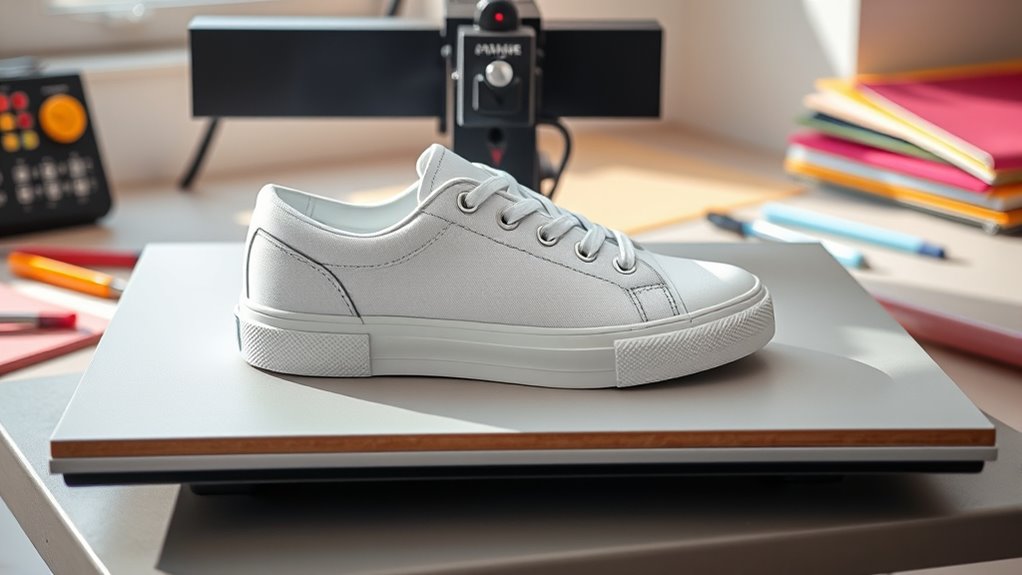
When selecting shoes for heat pressing, you’ll want to focus on materials that can withstand high temperatures without warping or melting. Canvas and leather shoes are excellent choices because they tolerate heat well and provide a sturdy surface for your designs. Avoid synthetic fabrics like polyester or nylon, as they’re prone to melting or deforming under heat.
Rubber soles generally hold up fine, but you should still keep the heat press away from direct contact with them. Shoes with a flat surface, like slip-ons or sneakers with smooth panels, make it easier to apply your heat press evenly. Ultimately, picking shoes that combine heat resistance with a smooth, flat area will help you achieve the best results without damaging your footwear.
Choosing Heat Transfer Vinyl for Heat Pressing Shoes
Even though many types of heat transfer vinyl (HTV) exist, not all are suitable for shoes. You need vinyl that’s flexible, durable, and compatible with your shoe material. Choosing the right HTV guarantees your design stays vibrant and intact despite movement and wear.
Look for vinyl types designed for fabrics similar to your shoe’s surface, like canvas or synthetic leather.
Consider these factors when picking your HTV:
- Flexibility to move with the shoe without cracking
- Strong adhesive that withstands bending and moisture
- Thickness suitable for shoe curves and seams
- Compatibility with your heat press settings and shoe material
- Availability in colors and finishes that suit your design
Picking the right HTV will make your heat pressing successful and long-lasting.
Preparing Shoes for Heat Pressing
Selecting the right heat transfer vinyl sets the stage, but preparing your shoes correctly guarantees your design adheres smoothly and lasts longer. First, clean your shoes thoroughly to remove dirt, dust, and oils that can interfere with adhesion. Use a mild cleaner and a soft cloth, then let them dry completely.
Next, remove any laces or accessories that might obstruct the pressing area. Position your heat transfer vinyl carefully on a flat, stable surface of the shoe, avoiding seams or curved edges that could cause uneven pressing. Use heat-resistant tape to secure the vinyl in place, preventing shifting during pressing.
Finally, insert a protective sheet, like parchment paper, between the shoe and the heat press to protect the material from direct heat and avoid damage.
Adjusting Heat Press Temperature and Pressure for Shoe Materials
Since different shoe materials respond uniquely to heat and pressure, you’ll need to modify your heat press settings accordingly to avoid damage and guarantee a strong bond. For instance, delicate fabrics require lower temperatures and gentler pressure, while sturdier materials can handle more intense settings. Knowing these specifics helps you prevent scorching, warping, or adhesive failure.
Here’s a quick guide to adjusting your heat press:
- Leather: Moderate heat (320°F), medium pressure
- Canvas: Higher heat (350°F), firm pressure
- Synthetic fabrics: Lower heat (300°F), light pressure
- Rubber or plastic: Low heat (280°F), very light pressure
- Mesh or breathable fabrics: Lower heat (300°F), minimal pressure
Always test on a small area first to ensure the best results.
Applying Heat Transfers on Curved Shoe Surfaces
When applying heat transfers on curved shoe surfaces, you’ll face unique challenges that require adapting your heat press techniques. You need to take into account how the material’s flexibility affects heat distribution to avoid wrinkles or incomplete adhesion.
Challenges With Curved Surfaces
Although heat pressing works well on flat surfaces, applying transfers to curved shoe surfaces presents unique challenges. You’ll find it tricky to get even pressure and heat distribution, which are essential for a clean transfer. The shoe’s shape can cause the transfer to wrinkle or peel, reducing durability and appearance.
Additionally, curved areas often require more precise placement, which complicates alignment. The materials on shoes, like leather or mesh, also react differently to heat, risking damage if not handled carefully.
Key challenges include:
- Uneven pressure on curves
- Heat distribution inconsistencies
- Wrinkling or bubbling of transfers
- Difficulty aligning designs precisely
- Risk of damaging sensitive shoe materials
Understanding these hurdles helps you prepare for successful heat pressing on shoes.
Heat Press Techniques Adaptation
Mastering heat press techniques for curved shoe surfaces means adapting your approach to guarantee even pressure and consistent heat application. Start by using a heat press with a flexible platen or a specialized shoe press designed to conform to curves. You can also use heat-resistant pillows or foam inserts to fill gaps and create a flat pressing area.
Adjust pressure settings carefully—too much pressure can distort the shoe, while too little won’t secure the transfer properly. It helps to pre-press the shoe briefly to reduce moisture and wrinkles. Position your transfer material precisely, then apply heat in short intervals, checking progress frequently to avoid overheating.
Material Flexibility and Heat
Because curved shoe surfaces require transfers to flex without cracking or peeling, understanding material flexibility and heat tolerance is essential. When you’re applying heat transfers, you need materials that can bend and stretch with the shoe’s contours. Heat can weaken some adhesives or cause rigid materials to break.
Choosing the right combination ensures durability and a smooth finish.
Keep these points in mind:
- Use flexible heat transfer vinyl (HTV) designed for curves
- Avoid excessive heat that damages adhesives or materials
- Test heat settings on scrap materials before pressing
- Consider stretchable inks or sublimation for fabric shoes
- Apply even pressure to prevent transfer shifting or cracking
Protecting Shoes From Heat Damage During Heat Pressing
When you heat press shoes, you need to take extra care to avoid damaging the materials. Start by selecting a protective barrier like a Teflon sheet to shield the shoe’s surface. Adjust the temperature and press time according to the shoe material to prevent scorching or warping.
Always test on a small, hidden area first. Avoid excessive pressure that can deform the shoe’s shape.
| Protection Method | Purpose | Tips |
|---|---|---|
| Teflon Sheet | Shields surface | Use a clean, wrinkle-free sheet |
| Lower Temperature | Prevents scorching | Follow material guidelines |
| Shorter Press Time | Avoids warping | Start with minimal seconds |
| Gentle Pressure | Maintains shape | Use light, even pressure |
These steps keep your shoes safe while heat pressing.
Common Heat Pressing Mistakes to Avoid on Shoes
Taking care to protect your shoes from heat damage is just one part of successful heat pressing. Avoid these common mistakes to guarantee your design looks great and lasts long. First, don’t set the temperature too high; excessive heat can warp or melt materials.
Second, avoid pressing for too long—overdoing it can ruin both the shoe and the design. Third, don’t skip using a protective sheet; it prevents direct contact and scorching. Fourth, avoid uneven pressure, which can cause incomplete adhesion or damage.
Finally, don’t neglect to position your design carefully—misalignment means wasted effort and materials.
- Using excessive heat settings
- Pressing longer than recommended
- Skipping a protective sheet
- Applying uneven pressure
- Misaligning the design before pressing
Testing Adhesion and Durability of Heat Pressed Designs
To make sure your heat pressed design sticks well, you’ll want to test its adhesion strength first. Then, check how it holds up under stress by simulating wear and tear. This helps you know if your design will last through everyday use.
Adhesion Strength Testing
Although heat pressing can create vibrant and lasting designs on shoes, you’ll want to verify how well those designs hold up over time. Adhesion strength testing helps you measure the bond between the design and the shoe surface, ensuring it won’t peel or crack easily.
To test adhesion, you can use simple methods like peeling tests or more technical approaches like tensile testing machines. Key factors to observe include how much force the design withstands before detaching and if any residue remains on the shoe.
Here are some adhesion strength testing methods you can try:
- Peel test (manual peeling of the design)
- Tape test (applying and removing adhesive tape)
- Scratch test (using a blunt tool to scratch the design)
- Flex test (bending the shoe to check for cracking)
- Tensile test (measuring force needed to pull the design off)
Durability Under Stress
When you put heat pressed designs on shoes, you need to see how well they hold up under everyday wear and tear. To test durability under stress, apply consistent pressure and flex the shoe repeatedly, simulating real-life movements. Check if the design cracks, peels, or fades after bending or stretching.
You should also expose the design to temperature changes and moisture to assess if heat or water affects adhesion. If the design remains intact and vibrant after these tests, it means the heat press method you used is reliable. Keep in mind that durability depends on the materials involved and the heat pressing technique.
Wear and Tear Analysis
Since heat pressed designs on shoes face constant movement and exposure, you’ll want to conduct a thorough wear and tear analysis to test their adhesion and durability. This process helps you verify the design stays intact under real-life conditions. Start by simulating daily use and environmental factors to observe how the design holds up.
You should focus on testing both the bond strength and visual integrity of your design. Consider these key steps for your analysis: flex the shoe repeatedly to mimic walking or running. Expose the design to moisture and varying temperatures.
Check for any peeling, cracking, or fading of the design. Perform abrasion tests using rough surfaces. Evaluate the overall comfort and flexibility of the shoe after pressing.
These tests help you confirm the longevity of your heat pressed designs.
Creative Ideas and Alternatives for Customizing Shoes
If you want to add a personal touch to your shoes without using a heat press, plenty of creative methods can help you customize them effectively. You can use fabric paint or permanent markers to create unique designs or patterns directly on your shoes. Applying patches or pins lets you express your style without permanent changes.
Tie-dye and bleach techniques work well on certain fabrics, offering vibrant, one-of-a-kind looks. For a quick update, swapping out laces with colorful or patterned ones can make a big difference. You might also consider iron-on transfers, which don’t require a heat press and can be applied with a regular iron.
These alternatives let you personalize your shoes easily without special equipment or risking damage.
Frequently Asked Questions
How Long Does a Heat Press Design on Shoes Typically Last?
Your heat press design on shoes typically lasts about 6 months to a year, depending on wear and care. If you avoid excessive moisture and abrasion, you’ll keep the design looking sharp for longer.
Proper maintenance plays a key role in prolonging the design’s life. Be gentle when cleaning and try not to expose the shoes to harsh conditions. With good care, your design can stay vibrant and intact.
Can Heat Pressing Shoes Affect Their Comfort or Fit?
Yes, heat pressing shoes can affect their comfort or fit if you apply too much heat or pressure. You should be careful to avoid warping materials or causing stiffness that makes the shoes uncomfortable to wear.
Applying excessive heat can alter the shoe’s shape, leading to a poor fit. Pressure that is too high might also compress cushioning or structural elements.
To maintain comfort, use moderate heat and pressure settings. Always test on a small area first. This helps ensure the shoes remain comfortable and properly fitted.
What Is the Best Way to Clean Heat Pressed Shoes?
Think of cleaning heat pressed shoes like tending a delicate garden.
You’ll want to gently wipe them with a damp cloth and mild soap, avoiding harsh scrubbing to keep the design vibrant and the shoes comfy for every step.
Are There Specific Brands of Heat Press Machines Recommended for Shoes?
Yes, brands like Cricut, PowerPress, and Fancierstudio offer heat press machines suitable for shoes. You’ll want one with adjustable pressure and temperature controls to guarantee even heat transfer without damaging your footwear.
These features help ensure your designs come out crisp and vibrant every time. Choosing a reliable brand can make a significant difference in the quality of your finished product. Always check for machines specifically designed or adaptable for shoe customization.
Can You Heat Press Shoes With Intricate or Multicolor Designs?
Absolutely, you can heat press shoes with intricate or multicolor designs—but you need precise timing, temperature control, and quality transfer materials.
Master these, and your shoes will showcase vibrant, detailed artwork that truly stands out.
Conclusion
You might think heat pressing shoes is like walking on thin ice, but with the right prep, it’s more like skating on a well-groomed rink. Just like a figure skater trusts their blades, you can trust your tools and techniques to avoid damage.
Remember, one small slip can cost you the design—so take your time, protect your shoes, and enjoy customizing. After all, even the best artists started with a single, careful step. When done correctly, heat pressing shoes can be a fun and effective way to personalize your footwear.