Can You Heat Press Satin Robes
You can heat press satin robes safely by using low temperatures around 270°F, gentle pressure, and short press times of 5 to 15 seconds. Heat pressing satin robes requires careful attention to detail to avoid damaging the delicate fabric.
Using the right technique ensures the robe maintains its smooth texture and vibrant appearance. Always protect the fabric’s shine with a Teflon or parchment sheet and test your settings on a small piece first.
Avoid high heat and heavy pressure to prevent shiny spots or scorching. With the right care and precautions, you’ll keep your satin looking smooth and vibrant.
Discover how to perfect this process and maintain your robes. Proper heat pressing will extend the life of your satin robes and keep them looking their best.
Key Takeaways
- Satin robes can be heat pressed safely using low temperatures (around 270°F) and light pressure to avoid damage.
- Always place a protective barrier like parchment paper or a Teflon sheet between the heat press and satin fabric.
- Conduct initial tests on scrap satin fabric with short pressing times (5-10 seconds) to find optimal heat press settings.
- Avoid high heat, excessive pressure, and skipping protective sheets to prevent shiny marks, scorching, or texture damage.
- Allow satin robes to cool fully after pressing and handle them gently to maintain their sheen and fabric integrity.
Can You Heat Press Satin Robes Without Damage?
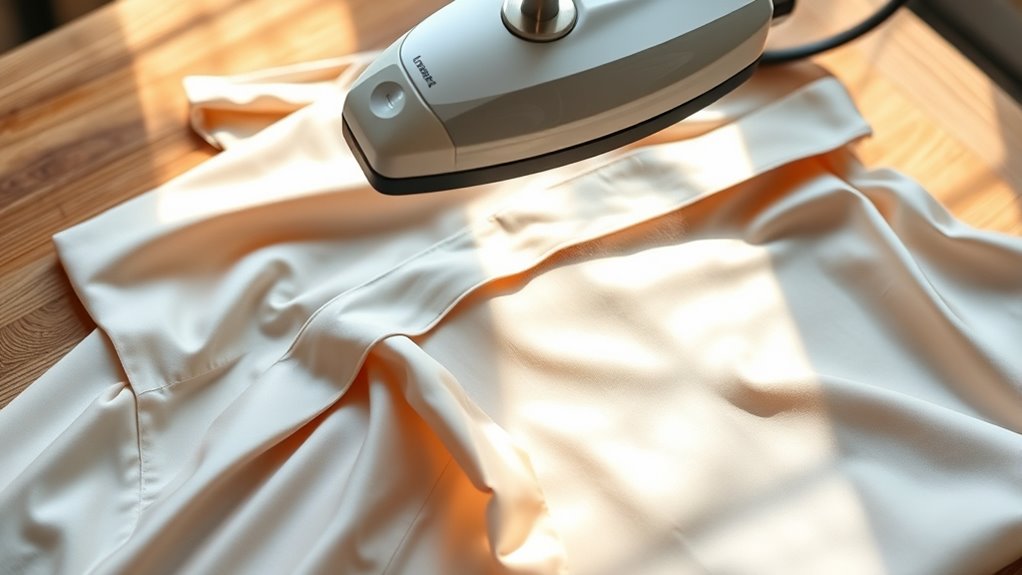
How can you heat press satin robes without causing damage? First, always test a small hidden area to check how the fabric reacts. Satin is delicate, so use a protective barrier like a Teflon sheet or parchment paper between the heat press and the robe.
Avoid applying direct heat to prevent shiny spots or melting. Keep the pressing time short and avoid excessive pressure to maintain the fabric’s smooth texture. Use the lowest heat setting that still achieves your desired transfer results.
Never skip the cooling step before handling the robe to let the fibers settle. By following these careful steps, you can protect the satin’s sheen and softness while successfully heat pressing your robes.
What Temperature and Pressure Work Best for Heat Pressing Satin?
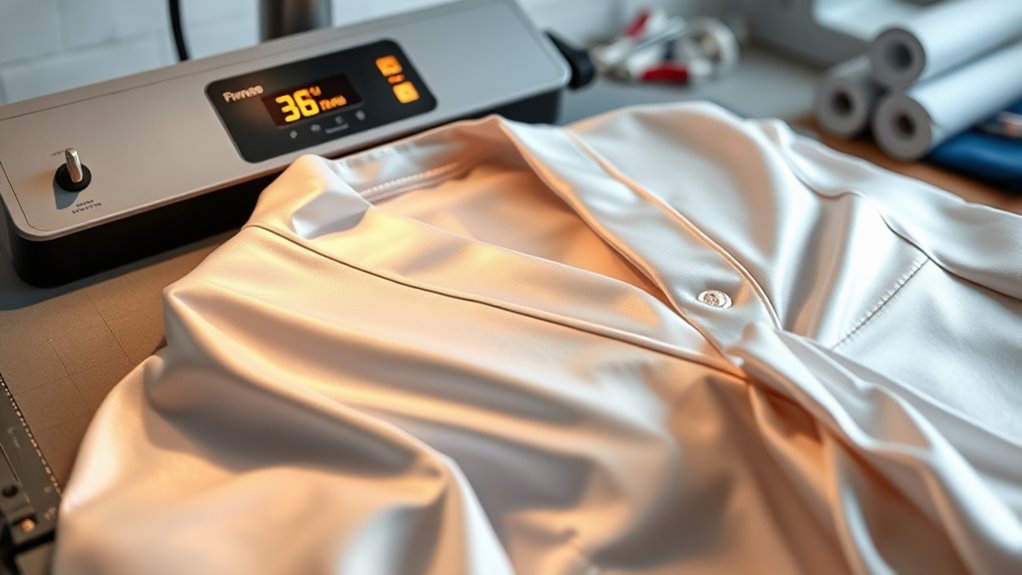
Although satin requires careful handling, you can achieve great results by using the right temperature and pressure settings on your heat press. Set your heat press between 270°F and 300°F (130°C to 150°C) to avoid melting or scorching the delicate fibers. Too high a temperature can ruin the fabric’s sheen.
Use medium pressure—not too light, so the design adheres well, but not too firm, which might crush or distort the satin’s smooth texture. Aim for about 40 to 60 psi, depending on your machine’s settings. Keep pressing time brief, generally 10 to 15 seconds, to protect the fabric further.
Always test on a scrap piece first to dial in the perfect balance for your specific satin robes.
How to Prepare Satin Robes for Heat Pressing
Before you start heat pressing your satin robes, make sure they’re clean and wrinkle-free by ironing them carefully. Always use a protective layer like a Teflon sheet to prevent damage during pressing.
Finally, adjust your heat press settings to suit the delicate fabric for the best results.
Cleaning And Ironing Tips
Since satin is a delicate fabric, you’ll want to clean and iron your robes carefully to avoid damage before heat pressing. Start by washing them in cold water with a mild detergent, avoiding harsh chemicals. Air dry your robe flat or hang it to prevent wrinkles and fabric distortion.
When ironing, use the lowest heat setting and place a cloth between the iron and satin to protect the fabric.
| Step | Tip |
|---|---|
| Washing | Use cold water, mild detergent |
| Drying | Air dry flat or hang |
| Ironing temperature | Set to low heat |
| Ironing method | Use a pressing cloth |
| Frequency | Iron only if necessary to avoid damage |
Following these steps keeps your satin robes pristine and ready for heat pressing.
Using Protective Layers
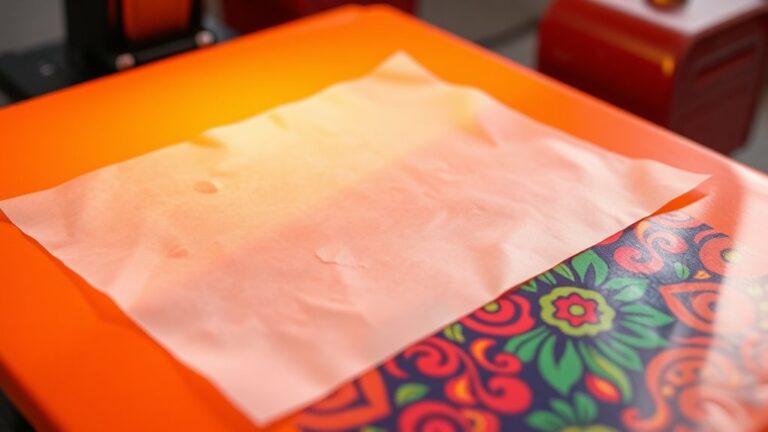
When you prepare your satin robe for heat pressing, using protective layers is essential to shield the delicate fabric from direct heat and potential damage. Start by placing a piece of parchment paper or a Teflon sheet over the area you want to press. This barrier prevents scorching, shiny marks, or melting on the satin’s smooth surface.
You can also use a thin cotton cloth if you don’t have parchment or Teflon sheets handy. Make sure the protective layer lies flat without wrinkles to avoid imprinting unwanted patterns onto the fabric. Using these layers helps distribute heat evenly and protects your robe’s finish, ensuring your design adheres properly without compromising the satin’s texture or appearance.
Always keep a protective barrier between the heat press and the satin robe.
Adjusting Heat Press Settings
Using protective layers helps prevent damage to your satin robe, but you also need to modify your heat press settings carefully to avoid ruining the fabric. Satin is delicate, so set your heat press to a lower temperature and reduce pressure and time.
Follow these general guidelines before pressing:
| Setting | Recommended Value | Notes |
|---|---|---|
| Temperature | 275°F (135°C) | Lower than cotton or polyester |
| Pressure | Light to medium | Prevents fabric crushing |
| Time | 10-15 seconds | Avoids melting or shining |
| Preheat | 3-5 seconds | Removes moisture |
| Protective Layer | Teflon sheet or parchment | Shields fabric from direct heat |
Adjust your settings based on the satin’s fiber content, and always test on a scrap piece first to ensure the best results.
Which Heat Transfer Materials Work Best on Satin Robes?
Although satin robes require careful handling, you can still achieve vibrant, durable designs by choosing the right heat transfer materials. For satin, opt for thin, flexible heat transfer vinyl (HTV) with a low-temperature adhesive. Stretchable, matte-finish HTV works well because it adheres smoothly without stiffening the fabric or causing damage.
Avoid thick or rigid materials like glitter or flock vinyl, as they can disrupt satin’s delicate texture. Sublimation transfers are another excellent choice if your satin is polyester-based—they bond directly with the fibers, ensuring lasting color without altering the fabric’s sheen. When picking materials, look for those labeled safe for delicate fabrics and compatible with lower heat settings.
This way, you’ll get vivid designs that complement satin’s smooth, luxurious feel.
How to Protect Satin’s Shine During Heat Pressing
To keep your satin robe’s shine intact, you’ll need to use the right temperature settings—too hot can dull the fabric. Always place a protective layer, like a Teflon sheet or parchment paper, between the heat press and the satin.
This barrier helps prevent direct heat damage while ensuring your design transfers smoothly.
Temperature Settings For Satin
When heat pressing satin, you’ll want to carefully control the temperature to preserve its delicate shine. Satin is sensitive to high heat, so set your heat press between 250°F and 300°F (120°C to 150°C). Avoid exceeding this range, as too much heat can cause the fabric to melt or lose its luster.
Always start at the lower end and test on a scrap piece if possible. Limit the pressing time to 10-15 seconds to prevent heat damage while ensuring the transfer adheres properly. Use medium pressure—not too heavy—to avoid crushing the fabric’s smooth surface.
Protective Layers And Materials
Since satin is delicate and prone to heat damage, using protective layers during heat pressing is essential to preserve its shine. You should always place a thin, heat-resistant barrier like a Teflon sheet or a piece of parchment paper between the heat press and the satin fabric. This prevents direct contact that can cause scorching or dullness.
Avoid using thick towels or materials that might trap too much heat, as they can create uneven pressure. Additionally, you can use a silicone mat designed for heat pressing, which evenly distributes heat while protecting the fabric.
How to Use a Protective Barrier When Heat Pressing Satin
Although satin is delicate and sensitive to high heat, you can protect it effectively by using a barrier during heat pressing. Start by placing a thin, heat-resistant sheet—like a Teflon sheet or parchment paper—between the heat press and the satin robe. This barrier prevents direct contact, reducing the risk of scorching or shiny marks.
Make sure the barrier is smooth and wrinkle-free to avoid imprinting unwanted textures onto the fabric. When positioning your design, place it under the barrier to shield both the satin and the transfer material. Always adjust the pressure to a light or medium setting, as too much pressure combined with the barrier can still damage the fabric.
Using this method, you safeguard your satin robes while achieving clean, vibrant heat press results.
How to Test Heat Press Settings Safely on Satin Robes
Before applying heat to your satin robe, you’ll want to test your heat press settings carefully to avoid damage. Start by cutting a small piece of satin fabric similar to your robe. Set your heat press to a low temperature, around 270°F (132°C), with light pressure and a short time of 5 seconds.
Place a protective barrier, like parchment paper, over the fabric piece before pressing. After pressing, check the fabric for any discoloration, shine, or texture changes. If it looks good, gradually increase the temperature or time in small increments, repeating the test each time.
This step-by-step approach helps you find the most suitable heat press settings without risking your satin robe’s delicate fibers or finish.
What Common Mistakes Should You Avoid When Heat Pressing Satin?
What pitfalls should you watch out for when heat pressing satin? Avoid using high temperatures, as satin is delicate and can scorch easily.
Don’t skip using a protective sheet; it prevents direct heat damage and shiny marks. Finally, avoid applying too much pressure, which can crush the fabric’s texture, leading to permanent impressions.
| Mistake | Consequence | How to Avoid |
|---|---|---|
| High Temperature | Scorching and fabric damage | Test and use low heat settings |
| No Protective Sheet | Shiny marks and heat damage | Always place a Teflon sheet |
| Excess Pressure | Crushed texture and permanent marks | Use gentle, even pressure |
How to Care for Satin Robes After Heat Pressing
Once you finish heat pressing your satin robe, you’ll want to handle it with care to keep the fabric looking smooth and vibrant. Always let the robe cool completely before touching or folding it to avoid creases or damage to the pressed design. When washing, turn the robe inside out and use cold water on a gentle cycle to protect both the fabric and the heat-pressed area.
Avoid bleach and harsh detergents, as they can dull the satin’s sheen. Air dry your robe flat or hang it up; steer clear of high heat in the dryer. If you need to iron, use a low heat setting with a pressing cloth between the iron and the fabric.
Proper care guarantees your satin robe stays beautiful and lasts longer.
Frequently Asked Questions
Can Satin Robes Be Heat Pressed With Colored or Patterned Designs?
Yes, you can heat press colored or patterned designs on satin robes, but you’ll need to use a low temperature and a protective sheet to prevent damage.
Test a small area first to guarantee the fabric handles it well.
How Long Does the Heat Pressing Process Take for Satin Robes?
You’ll only need about 10-15 seconds to heat press satin robes, so don’t worry about long wait times.
Just apply steady pressure and avoid overheating to keep the fabric smooth and vibrant.
Are There Specific Brands of Heat Press Machines Recommended for Satin?
You’ll want to choose heat press machines like Cricut EasyPress or PowerPress, which offer precise temperature control and even heat distribution, ensuring your satin robes won’t get damaged during pressing.
Always use a protective sheet!
Can You Heat Press Satin Robes at Home Without Professional Equipment?
Yes, you can heat press satin robes at home using a household iron or a basic heat press machine. Just use a low heat setting, a protective cloth, and press gently to avoid damaging the fabric.
Is It Safe to Wash Satin Robes Immediately After Heat Pressing?
About 70% of fabric damage happens during improper washing. You shouldn’t wash satin robes immediately after heat pressing; wait at least 24 hours to let the design set fully.
This prevents distortion and keeps your robes pristine.
Conclusion
You might think heat pressing satin robes risks ruining their delicate shine, but with the right temperature and protective barrier, you can press without damage. Testing settings first guarantees you avoid common mistakes that cause scorching or dullness.
By carefully prepping and using suitable transfer materials, you’ll keep your satin robes looking stunning.
So, don’t shy away—heat pressing satin robes can be safe and effective when done thoughtfully. With proper technique, heat pressing satin robes preserves their beauty and ensures long-lasting results.