Can You Heat Press Vinyl on Satin
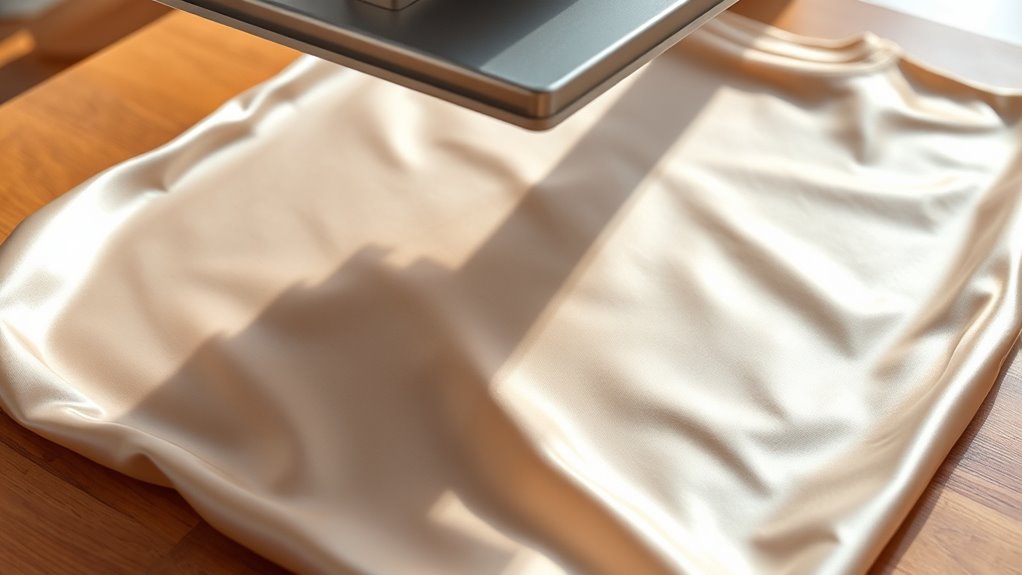
You can heat press vinyl on satin without ruining its finish by carefully controlling temperature, time, and pressure. Heat pressing vinyl on satin requires a gentle approach to maintain the fabric’s delicate texture and sheen. Using the right settings ensures your design adheres well without damaging the satin surface.
Use lower heat around 270°F and keep pressing short—5 to 10 seconds—to avoid scorching. Place a parchment or Teflon sheet between the vinyl and fabric to protect satin’s delicate surface.
Choose soft, flexible vinyl like polyurethane for best results.
Handle and clean your satin items gently to keep vinyl intact. Proper care will extend the life of your heat-pressed design. Keep going to discover tips that guarantee flawless vinyl on satin.
Key Takeaways
- Satin can be heat pressed with vinyl when using lower temperature settings around 270°F to avoid damage.
- Use protective layers like parchment paper or Teflon sheets between satin and heat press to prevent scorching or melting.
- Select soft, flexible vinyl types such as polyurethane (PU) or stretch HTV for optimal adhesion and fabric preservation.
- Apply gentle to medium pressure and limit pressing time to 5-10 seconds to protect satin fibers and ensure vinyl bonding.
- Always pre-wash and air dry satin, then iron on low heat to remove wrinkles before heat pressing vinyl.
Can You Heat Press Vinyl on Satin Without Ruining Its Finish?
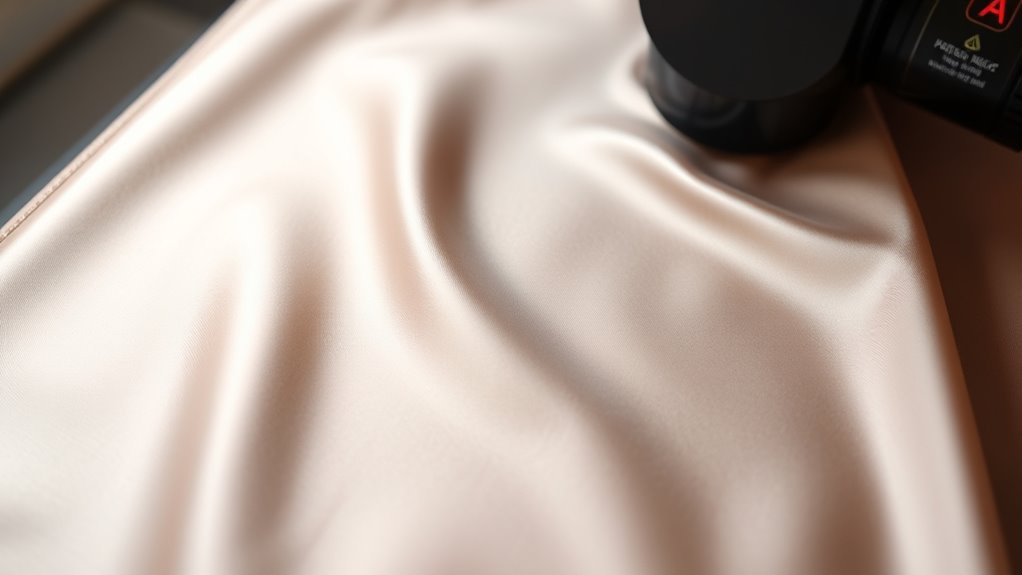
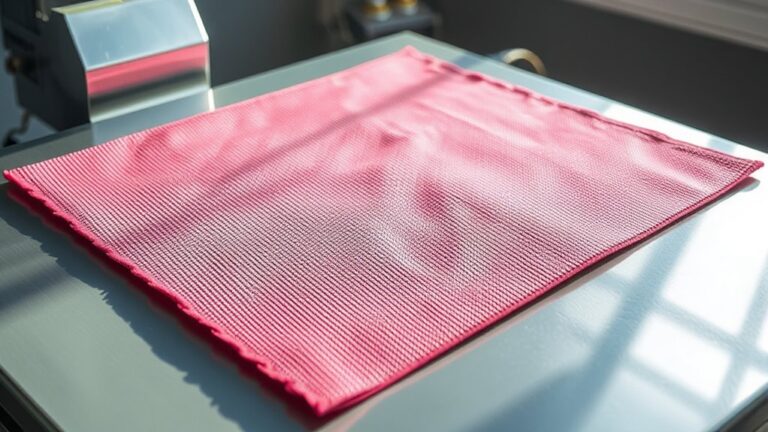
How can you heat press vinyl on satin without damaging its delicate finish? You need to approach it carefully, as satin’s smooth texture and sheen can easily get ruined by excessive heat or pressure.
Start by using a lower temperature setting than you would for cotton or polyester, typically around 270°F (130°C). Keep the pressing time short—about 5 to 7 seconds—to avoid scorching or melting the fabric. Use a Teflon sheet or parchment paper between the heat press and satin to protect the material from direct contact.
Apply gentle pressure to prevent crushing the satin’s fibers. By controlling heat, time, and pressure, you can successfully adhere vinyl without dulling or warping satin’s elegant surface.
Preparing Satin for Heat Pressing Vinyl
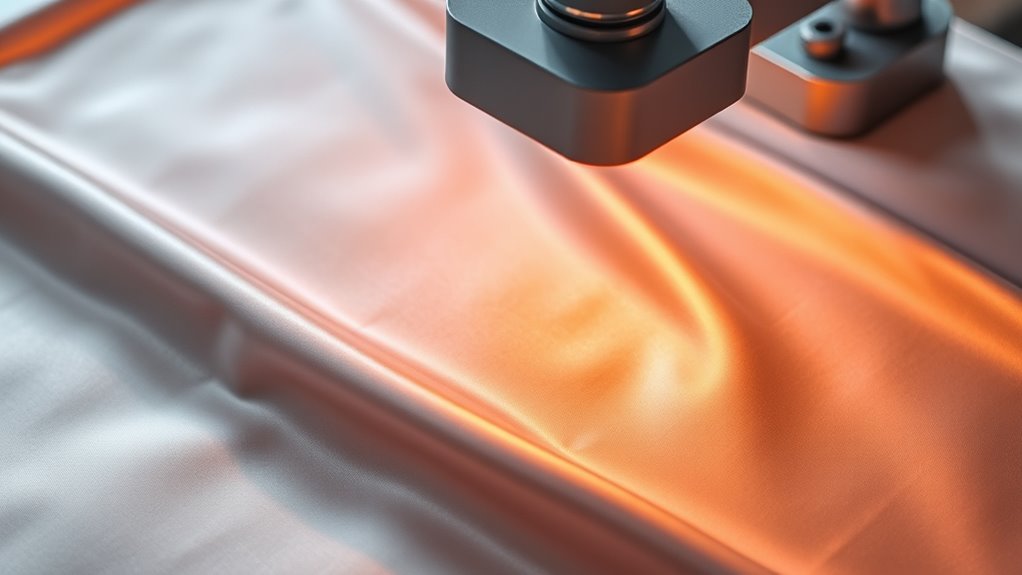
Before you start heat pressing vinyl on satin, proper preparation of the fabric can make all the difference in achieving a smooth, lasting finish. Begin by washing the satin to remove any sizing, oils, or residues that could interfere with vinyl adhesion. Use a gentle detergent and avoid fabric softeners, which might leave a slippery coating.
After washing, let the satin air dry completely, then iron it on a low setting to remove wrinkles. Be careful not to scorch the fabric. When you’re ready to press, place a heat-resistant sheet or parchment paper between the vinyl and your heat press to protect the delicate satin surface.
Taking these steps will help guarantee your vinyl adheres well and your satin keeps its luxurious look without damage.
Which Vinyl Types Work Best for Heat Pressing on Satin
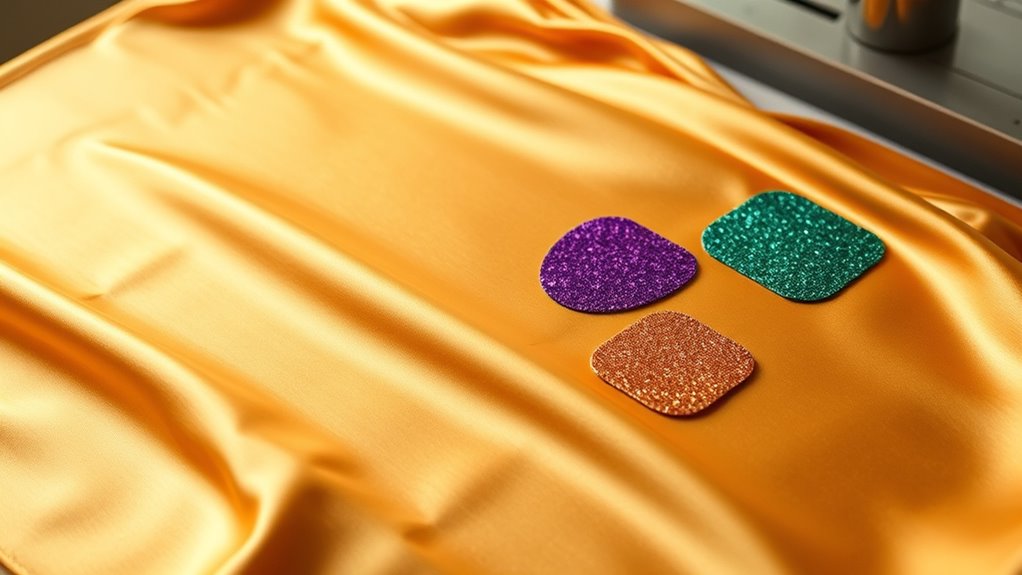
When working with satin, you’ll want to choose vinyl materials that handle heat gently and bond well without damaging the fabric. Not all vinyl types are created equal, so understanding which ones work best with your heat press is key.
Let’s explore the options that give you the best results on satin.
Best Vinyl Materials
Which vinyl materials hold up best under the heat press on delicate satin fabric? You want vinyl that’s flexible, adheres well, and won’t damage satin’s smooth texture. Here are the top choices:
- Stretch Vinyl (HTV with stretch) – It moves with the fabric, preventing cracking or peeling.
- Polyurethane (PU) Vinyl – Soft and thin, ideal for delicate satin without adding bulk.
- Flocked Vinyl – Adds texture while maintaining flexibility and durability.
- Printable HTV – Allows detailed designs and bonds well without harsh heat.
Avoid thick or rigid vinyls since they can stiffen satin or cause heat damage. Sticking to these materials guarantees your design lasts and your satin stays silky smooth.
Heat Press Compatibility
A careful selection of vinyl types guarantees your heat press won’t damage delicate satin fabric. When working with satin, you’ll want to choose vinyls designed for low heat and flexibility, like heat transfer vinyl (HTV) made from polyurethane or stretch vinyl. These materials adhere well without stiffening the fabric or causing scorch marks.
Avoid thick or rigid vinyls, as they can create pressure spots or shine on satin’s glossy surface. Also, opt for vinyls labeled as suitable for delicate or synthetic fabrics to guarantee compatibility. Always test a small piece first to fine-tune your temperature and press time.
Temperature and Time Settings to Protect Satin
Although vinyl requires heat to adhere properly, you’ll need to carefully adjust the temperature and pressing time to avoid damaging the delicate satin fabric beneath. Satin’s smooth, shiny surface is sensitive to high heat and prolonged pressing, so keeping settings low and brief is essential.
Here’s how to protect your satin while heat pressing vinyl:
- Set your heat press between 275°F and 300°F (135°C to 150°C).
- Limit pressing time to 10-15 seconds to prevent fabric scorching.
- Use medium pressure—too high can crush satin’s fibers.
- Always let the fabric cool before handling to avoid distortion or marks.
Following these steps guarantees your satin stays pristine while your vinyl adheres perfectly.
Protective Layers to Prevent Scorching on Satin
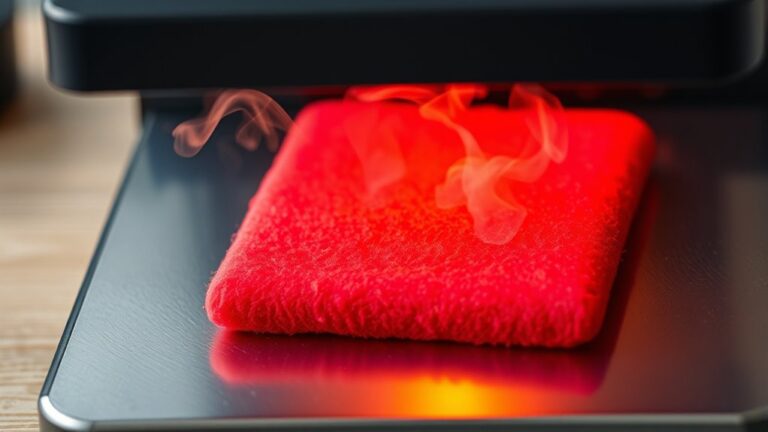
Since satin’s delicate fibers can easily scorch under direct heat, you’ll want to use protective layers during the heat pressing process. Placing a Teflon sheet or a piece of parchment paper between the heat press and the vinyl helps shield the fabric from direct contact with the heat. You can also use a thin cotton press cloth as a barrier to prevent scorching while allowing enough heat to transfer the vinyl properly.
Avoid using materials that might stick to the vinyl or fabric. These layers distribute heat evenly and protect satin’s sheen and texture. Always guarantee the protective layer covers the entire design area to prevent any accidental damage.
Using protective layers is a simple step that safeguards your satin while achieving a clean vinyl application.
Tips for Heat Pressing Vinyl on Satin
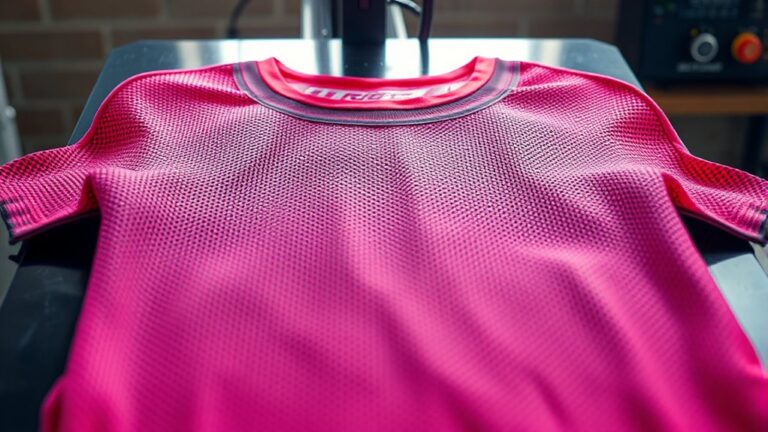
When heat pressing vinyl on satin, you’ll want to control both temperature and pressure carefully to avoid damaging the fabric. Satin is delicate, so gentle handling is key to getting a clean transfer without ruining the shine or texture. Follow these tips to guarantee great results:
- Use a lower temperature setting, around 270°F (132°C), to protect the satin’s fibers.
- Apply medium pressure—not too firm—to prevent crushing the fabric’s weave.
- Limit the pressing time to 8-10 seconds to avoid scorching or melting the vinyl.
- Always place a protective sheet, like parchment paper or Teflon, between the heat press and satin to shield the fabric.
Testing Your Heat Press Setup Safely on Satin
Before applying your vinyl design to the final satin piece, you should always test your heat press setup on a small scrap of the same fabric. This lets you check how the satin responds to temperature and pressure, preventing damage to your main project. Start with a lower temperature and shorter pressing time than you plan to use.
Observe if the fabric puckers, melts, or the vinyl adheres properly. Adjust the heat press settings based on your test results. Also, test peeling the carrier sheet to ensure the vinyl sticks well without lifting the fabric fibers.
Caring for Satin Garments With Heat Pressed Vinyl
When caring for satin garments with heat pressed vinyl, you’ll want to follow specific washing instructions to keep both the fabric and vinyl looking great. Always wash on a gentle cycle with cold water and avoid harsh detergents that could damage the vinyl.
Taking these simple steps will help prevent peeling or cracking and extend the life of your design.
Washing Instructions for Satin
Although satin requires gentle care, you can still keep your heat-pressed vinyl designs looking fresh by following specific washing instructions. Proper washing guarantees your garment’s longevity and preserves the vinyl’s appearance.
- Always turn the satin garment inside out before washing to protect the vinyl from abrasion.
- Use cold water and a gentle cycle to avoid stressing the fabric and vinyl.
- Choose a mild detergent without bleach or fabric softeners, which can damage both satin and vinyl.
- Air dry your garment flat or hang it up; avoid using a dryer to prevent heat damage and shrinkage.
Preventing Vinyl Damage
To keep your heat-pressed vinyl looking sharp on satin, you’ll need to handle the fabric with extra care during wear and storage. Avoid excessive stretching or abrasion, as satin is delicate and can cause the vinyl to peel or crack.
When storing, fold the garment with tissue paper between layers to prevent creasing and pressure on the vinyl.
Here’s a quick guide to prevent vinyl damage on satin:
| Action | Do’s | Don’ts |
|---|---|---|
| Wearing | Wear gently, avoid rough surfaces | Scrape or rub vinyl heavily |
| Storage | Fold with tissue paper | Hang in tight, cramped spaces |
| Cleaning | Use gentle hand wash | Use harsh detergents or bleach |
Frequently Asked Questions
Can Heat Pressing Vinyl on Satin Affect Its Color Vibrancy?
Yes, heat pressing vinyl on satin can affect its color vibrancy if you use too much heat or press too long. You’ll want to adjust temperature and time carefully to keep colors bright and fabric smooth.
Is It Possible to Remove Heat Pressed Vinyl From Satin?
You can peel heat pressed vinyl from satin, but it’s a delicate dance. Gently warm the area, then slowly lift the vinyl edge to avoid tearing the smooth, slippery fabric beneath.
Patience preserves both layers.
How Durable Is Heat Pressed Vinyl on Satin After Multiple Washes?
You’ll find heat pressed vinyl on satin holds up well after multiple washes if you follow care instructions—wash inside out, use cold water, and avoid harsh detergents or high heat.
This keeps your design vibrant longer.
Can You Use Heat Pressed Vinyl on Satin Accessories Like Bags?
Just like Cinderella’s slipper fit perfectly, you can use heat pressed vinyl on satin bags, but you’ll need to be gentle. Use low heat and test first to avoid damage, ensuring your accessory stays magical and flawless.
Handle the satin carefully to maintain its smooth texture and sheen. Applying too much heat or pressure can harm the fabric, so patience is key. With the right technique, your satin bag will look stunning with your custom design.
Does Heat Pressing Vinyl on Satin Work on All Satin Fabric Blends?
No, heat pressing vinyl doesn’t work on all satin blends. You’ll need to check the fabric’s heat tolerance and composition first, as some blends can melt or get damaged from the high heat during pressing.
Conclusion
Think of heat pressing vinyl on satin like painting a delicate butterfly’s wings—you want to be gentle yet precise. With the right preparation, temperature, and protective layers, you’ll preserve satin’s silky shine while adding your unique touch. Treat each press like a careful brushstroke, and you’ll create wearable art that lasts.
Remember, patience and testing are your best friends in this delicate dance, ensuring your satin stays as stunning as ever. Proper heat pressing vinyl on satin requires attention to detail and a gentle approach. By following these steps, you can confidently heat press vinyl on satin without damaging the fabric.