Can You Heat Press Adhesive Vinyl
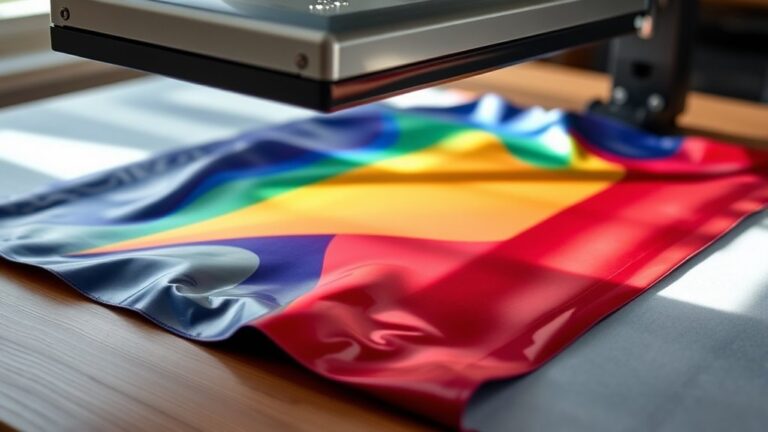
You can heat press adhesive vinyl to boost its bond on smooth, non-porous surfaces. Heat pressing adhesive vinyl helps improve adhesion and durability, making your designs last longer.
However, it requires careful control of temperature and pressure to avoid damage.
Use medium heat around 290°F for 10-15 seconds with firm pressure. Protect the vinyl by placing a Teflon sheet over it during pressing. Avoid overheating to keep the vinyl flexible and durable.
Mastering the best techniques and settings ensures optimal results. There’s more valuable information to explore next for perfecting your heat press adhesive vinyl projects.
Key Takeaways
- Yes, adhesive vinyl can be heat pressed to improve adhesion on smooth, non-porous surfaces.
- Heat pressing activates the adhesive slightly but is not required for all vinyl applications.
- Use moderate heat (around 290°F) and firm pressure for 10-15 seconds to enhance bonding.
- Always protect vinyl with a Teflon sheet or parchment paper during heat pressing to prevent damage.
- Avoid overheating to prevent warping or loss of stickiness and follow manufacturer guidelines closely.
What Is Adhesive Vinyl and How Does It Work
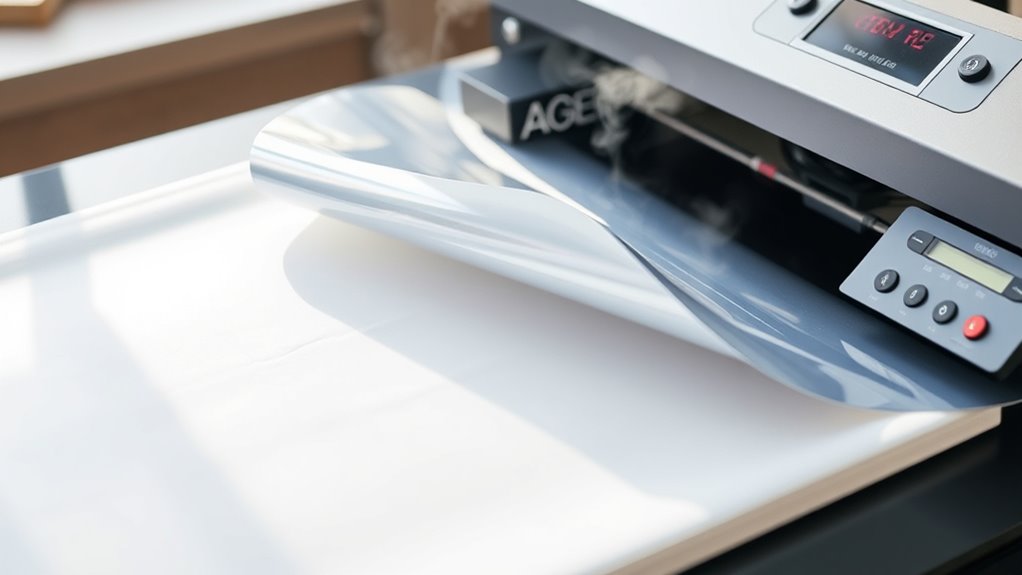
What exactly is adhesive vinyl, and how does it work? Adhesive vinyl is a thin, flexible material with a sticky backing that lets you easily attach it to various surfaces like glass, wood, or plastic. When you peel off the backing, the adhesive side sticks firmly, creating a smooth, durable finish.
You can cut adhesive vinyl into shapes or designs using a vinyl cutter or scissors, making it perfect for decals, signs, or crafts. The adhesive is pressure-sensitive, meaning it bonds better the more you press it down. This material is water-resistant and holds up well outdoors, so your designs last longer.
You’ll find adhesive vinyl handy for personalizing items or decorating spaces without permanent changes.
Can You Heat Press Adhesive Vinyl?
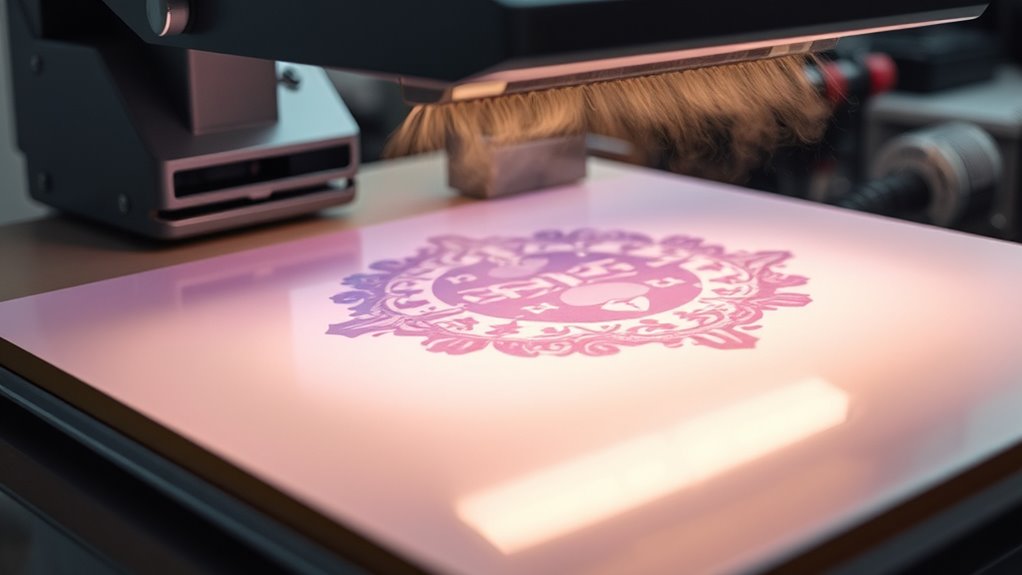
Although adhesive vinyl is designed to stick firmly on its own, you might wonder if you can use a heat press to apply it. The good news is yes, you can use a heat press with adhesive vinyl, but it’s not always necessary. Heat pressing can help improve adhesion on some surfaces, especially those that are smooth and non-porous.
However, applying heat incorrectly can cause the vinyl to warp or lose its stickiness. Unlike heat transfer vinyl (HTV), adhesive vinyl doesn’t have a heat-activated adhesive layer, so the heat press mainly enhances the bond rather than activating it. You’ll want to be cautious with temperature and pressure settings to avoid damaging the vinyl.
How to Heat Press Adhesive Vinyl Step-by-Step
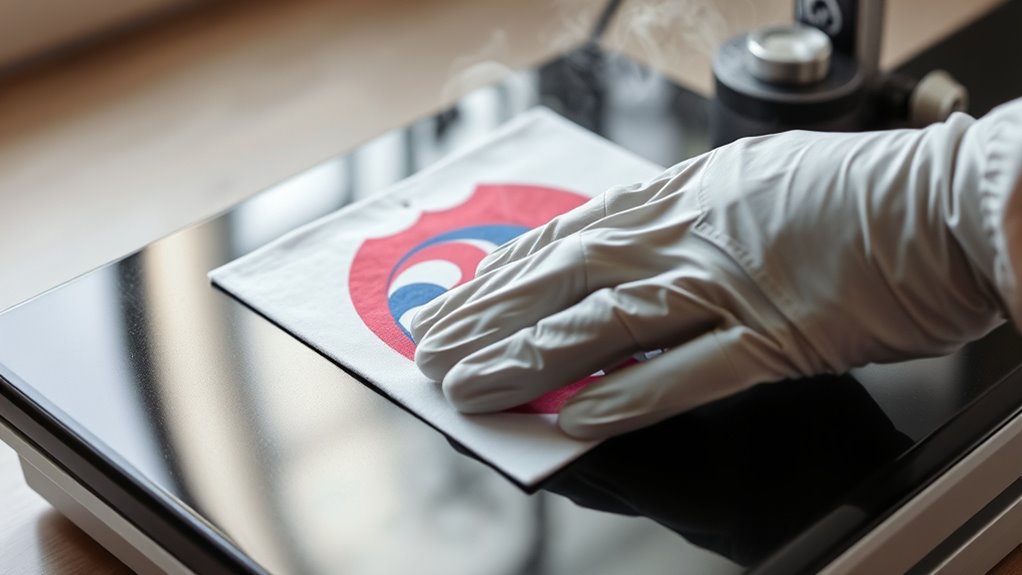
Using a heat press with adhesive vinyl can enhance its adhesion when done correctly. First, position your vinyl design on the desired surface, ensuring it’s smooth and free of wrinkles. Place a Teflon sheet or parchment paper over the vinyl to protect it from direct heat.
Next, lower the heat press onto the project and press firmly for the recommended time—usually around 10 to 15 seconds. After pressing, lift the heat press carefully and allow the vinyl to cool slightly. Then, slowly peel off the carrier sheet at a 45-degree angle.
If any edges lift, press again briefly. Following these steps guarantees a strong bond between the vinyl and your material, giving you a durable, professional finish every time.
Best Heat Press Settings for Adhesive Vinyl
When you set up your heat press for adhesive vinyl, selecting the right temperature, pressure, and time is essential to guarantee a strong, lasting bond without damaging your material. Generally, a temperature of 290°F (143°C) works well for most adhesive vinyl types. Apply medium pressure—enough to ensure contact but not so much that it squashes the vinyl.
Keep the pressing time between 10 to 15 seconds to allow the adhesive to activate without overheating. Always check your vinyl manufacturer’s guidelines, as some may recommend slightly different settings. After pressing, peel the carrier sheet carefully while it’s warm or cool, depending on the vinyl type.
Using these settings will help you achieve clean, professional results every time.
How Heat Pressing Affects Adhesive Vinyl Durability
Since heat pressing activates the adhesive on vinyl, it directly influences how well your design sticks and lasts over time. When you apply the right amount of heat and pressure, the adhesive melts just enough to bond firmly with the fabric or surface. This creates a strong, durable hold that resists peeling and cracking.
However, if heat pressing isn’t done properly, the adhesive may not fully activate, causing your design to lift or fade sooner. Overheating can break down the vinyl’s structure, reducing its lifespan. Proper heat pressing guarantees the vinyl remains flexible and secure, even after multiple washes or uses.
Ultimately, mastering this process maximizes the durability of your adhesive vinyl projects, giving you long-lasting, professional results.
How to Prevent Damage to Adhesive Vinyl When Heat Pressing
To keep your adhesive vinyl safe during heat pressing, you need to use the right temperature settings and apply the correct pressure. Always place a protective cover over the vinyl to shield it from direct heat.
These simple steps will help you avoid damage and achieve the best results.
Optimal Temperature Settings
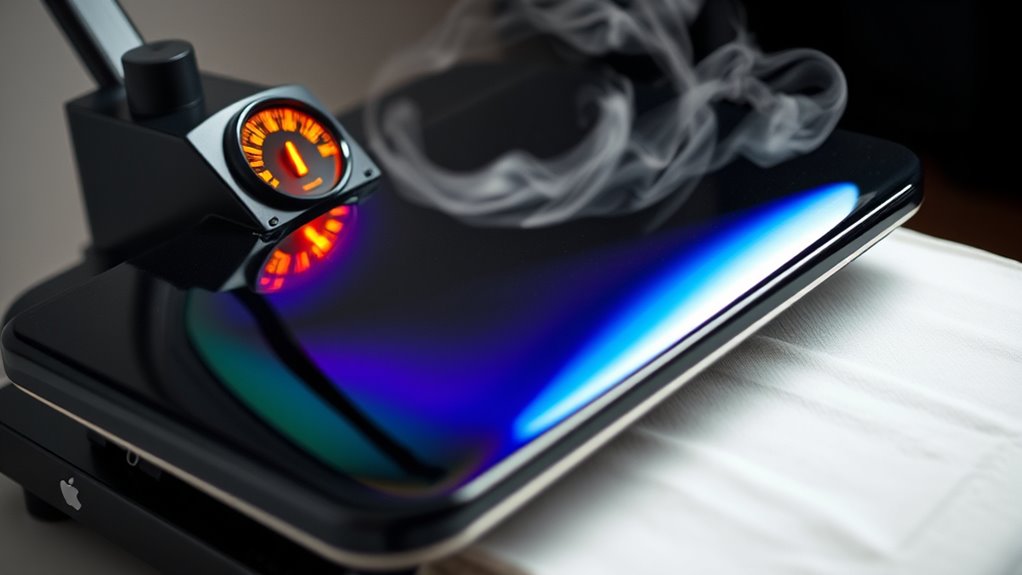
Although heat pressing adhesive vinyl requires careful attention, you can protect your material by using the right temperature settings. Typically, setting your heat press between 275°F and 305°F works best for most adhesive vinyl types. Going above this range risks melting or warping the vinyl, while lower temperatures might not activate the adhesive properly.
Always check the manufacturer’s instructions since different vinyl brands can vary. Start with a lower temperature and test a small piece first to avoid costly mistakes. Also, press for about 10 to 15 seconds to ensure a good bond without overheating.
Protective Cover Usage
When heat pressing adhesive vinyl, using a protective cover is essential to prevent scorching, melting, or unwanted sticking. You should place a Teflon sheet, parchment paper, or a thin cotton cloth over the vinyl before applying heat. This barrier shields the vinyl from direct contact with the heat platen, ensuring even heat distribution while protecting the material’s finish.
Avoid using materials that might stick or transfer ink onto the vinyl. Make sure the cover is smooth and wrinkle-free to prevent imprints or texture marks. Also, always double-check that the protective layer is clean; dirt or debris trapped underneath can damage your design.
Correct Pressure Application
Since applying the right pressure is essential, you’ll want to avoid pressing too hard or too lightly on adhesive vinyl. Too much pressure can cause the vinyl to stretch or distort, while too little pressure might result in poor adhesion. To get it right, adjust your heat press settings based on the vinyl type and fabric.
Use consistent, even pressure across the entire design to guarantee a smooth transfer.
Keep these tips in mind to prevent damage:
- Test pressure on a scrap piece before the final press
- Follow manufacturer guidelines for pressure settings
- Use a calibrated heat press for accuracy
- Apply firm but gentle pressure; avoid rocking or shifting
Proper pressure helps maintain vinyl quality and ensures a clean, long-lasting finish.
Common Mistakes When Heat Pressing Adhesive Vinyl
When heat pressing adhesive vinyl, using the wrong temperature can ruin your design or the vinyl itself. You also need to place the vinyl correctly to avoid wrinkles or misalignment.
Let’s look at these common mistakes so you can get the best results.
Incorrect Temperature Settings
How do you know if your heat press is set to the right temperature? Using incorrect temperature settings can ruin your adhesive vinyl project. Too high, and the vinyl can melt, bubble, or warp.
Too low, and the vinyl won’t properly adhere, causing lifting or peeling after washing. Always check the vinyl manufacturer’s recommended temperature before starting.
Common temperature mistakes include:
- Setting the press too hot, which damages vinyl and fabric
- Using too low heat, resulting in weak adhesion
- Ignoring temperature calibration of your heat press
- Failing to take into account fabric type, which affects ideal temperature
Improper Vinyl Placement
Getting the temperature right is just one part of a successful heat press project. You also need to focus on vinyl placement. If you don’t position the adhesive vinyl correctly, your design can end up crooked, off-center, or partially cut off.
Take your time to align the vinyl properly before pressing. Use a ruler or grid to guarantee everything’s straight and centered. Avoid placing vinyl too close to seams or edges, as these areas might not adhere well or could warp during pressing.
Tips to Make Adhesive Vinyl Stick Longer on Your Projects
Although adhesive vinyl is designed to stick well, you can boost its durability by properly preparing your surface and applying the vinyl with care. Start by cleaning the surface thoroughly to remove dust, oils, or moisture that can weaken adhesion. Make sure the surface is smooth and dry before application.
When placing the vinyl, apply firm, even pressure to avoid air bubbles and ensure strong contact.
Here are some tips to make your adhesive vinyl stick longer:
- Clean and dry the surface completely before application
- Use a squeegee or scraper to press the vinyl firmly
- Avoid stretching the vinyl during placement
- Allow the adhesive to cure for 24 hours before exposing it to water or heavy use
Following these steps will help your projects stay vibrant and intact longer.
Other Ways to Apply Adhesive Vinyl Without a Heat Press
Even without a heat press, you can successfully apply adhesive vinyl by using alternative methods that provide enough pressure and heat to guarantee strong adhesion. One common way is using a household iron set to the cotton or high heat setting. Press the vinyl firmly with the iron, moving it slowly to distribute heat evenly.
Another option is a hairdryer or heat gun; hold it close to the vinyl to warm the adhesive, then press down firmly with a squeegee or credit card. You can also rely on pressure alone for certain vinyl types by pressing firmly and allowing extended curing time. Just make certain your surface is clean and dry before applying, and use consistent pressure for the best results without a heat press.
Frequently Asked Questions
Can Adhesive Vinyl Be Reused After Removing It From a Surface?
You can’t really reuse adhesive vinyl once you remove it from a surface because the adhesive loses its stickiness. If you try, it won’t stick well, and the vinyl might tear or wrinkle, ruining your project.
What Tools Are Needed to Cut Adhesive Vinyl Precisely?
You’ll need a sharp craft knife or a vinyl cutter machine for precise cuts. A cutting mat helps protect surfaces, and a ruler guarantees straight lines.
Tweezers can assist with weeding small details accurately.
Is Adhesive Vinyl Waterproof or Weather-Resistant?
Just like a trusty raincoat, adhesive vinyl is weather-resistant but not fully waterproof. You’ll want to seal edges properly to keep moisture out, ensuring your designs stay vibrant through sun, rain, and wind without fading or peeling.
How Do Different Colors of Adhesive Vinyl Respond to Heat?
Different colors of adhesive vinyl react differently to heat; darker colors may absorb more heat and risk warping, while lighter ones handle it better.
You should always test a small piece to avoid damage.
Can Adhesive Vinyl Be Safely Used on Food Containers?
You shouldn’t use adhesive vinyl on food containers that directly touch food, as it may contain harmful chemicals.
Instead, apply vinyl on the container’s exterior to keep it safe and avoid contamination.
Conclusion
Now that you know the gentle art of heat pressing adhesive vinyl, you’re ready to add a little extra warmth to your projects without any fuss. Just remember to treat your vinyl with care, use the right settings, and avoid common pitfalls.
With a bit of patience and attention, your creations will stick around beautifully, shining quietly with lasting charm. Happy crafting—you’re well on your way to vinyl mastery!
In conclusion, heat pressing adhesive vinyl can be a simple and effective way to personalize your items. By following proper techniques and understanding the materials, you ensure durable and vibrant results every time.