Can You Use a Heat Press for Iron on Transfers
Yes, you can definitely use a heat press for iron-on transfers, and it actually works better than a traditional iron. Heat press machines provide consistent, even heat and firm pressure, which are key for successful iron-on transfers.
This ensures your designs transfer smoothly and last longer on the fabric.
A heat press is faster and more reliable, making it ideal for multiple items or bulk projects. It also helps reduce errors that often happen with handheld irons.
Just make sure you choose the right fabric and adjust the settings correctly to avoid any issues.
If you want to perfect your technique, there’s plenty more to explore about using a heat press effectively. With the right knowledge, you can achieve professional-quality results every time.
Key Takeaways
- A heat press applies consistent heat and pressure for durable, professional iron-on transfers.
- It offers precise temperature and time control tailored to different transfer materials.
- Heat presses ensure even heat distribution, preventing scorching and ensuring better adhesion.
- Using a heat press speeds up the transfer process compared to traditional irons.
- Proper calibration and maintenance of the heat press improve transfer quality and longevity.
How a Heat Press Works for Iron-On Transfers

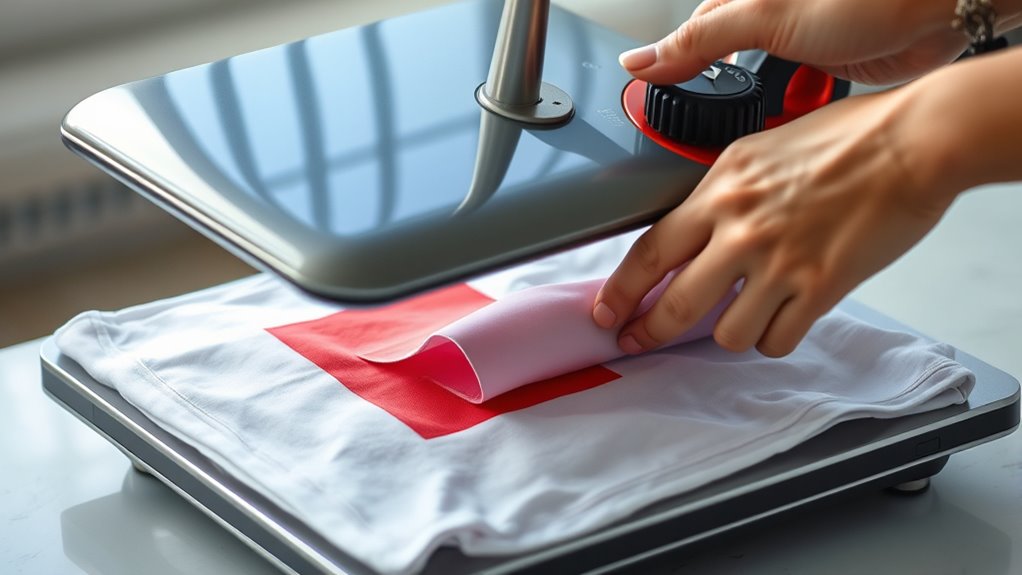
Although you might be familiar with using a regular iron, a heat press applies consistent pressure and precise heat to transfer your design onto fabric. When you place your iron-on transfer on the material and close the heat press, it evenly distributes heat and pressure across the entire surface. This guarantees your design adheres firmly without wrinkles or bubbles.
You set the temperature and time according to the transfer’s instructions, and the machine maintains those settings throughout the process. Once the cycle completes, you open the press and carefully peel off the backing, revealing a clean, vibrant design.
The even heat and pressure make the transfer more durable and professional-looking compared to manual methods, giving you reliable results every time.
Why Choose a Heat Press Over a Traditional Iron

You’ll want a heat press because it delivers consistent heat distribution that a traditional iron can’t match. With adjustable temperature control, you can tailor the settings perfectly for your transfer materials.
Plus, it speeds up the transfer process, saving you time and effort.
Consistent Heat Distribution
When applying iron-on transfers, maintaining consistent heat distribution is essential for a smooth, lasting finish. Unlike a traditional iron, which can create hot and cold spots due to uneven pressure or movement, a heat press delivers even heat across the entire surface. This uniform heat guarantees the transfer material bonds correctly with your fabric, preventing peeling or fading over time.
You won’t have to worry about reapplying heat multiple times or damaging your design with excessive pressing. By using a heat press, you get reliable results every time, making your projects look professional and durable. Consistent heat distribution is one of the main reasons a heat press outperforms a traditional iron for iron-on transfers.
Adjustable Temperature Control
Because different fabrics and transfer materials require specific heat settings, adjustable temperature control is essential for achieving perfect results. When you use a heat press, you can easily set and maintain the exact temperature needed for your project, ensuring the transfer adheres properly without damaging the fabric.
Unlike traditional irons, which often have uneven or imprecise heat settings, heat presses give you precise control over the temperature, which reduces the risk of scorching or incomplete transfers. This control allows you to work confidently with a variety of materials, from delicate synthetics to sturdy cotton, adjusting the heat as needed.
Faster Transfer Process
Although traditional irons can handle transfers, a heat press speeds up the process considerably, letting you complete more projects in less time. When you use a heat press, you benefit from even heat distribution and consistent pressure, which cuts down the time needed to achieve a perfect transfer. Unlike an iron, you won’t have to worry about moving it around or applying uneven pressure, which can slow you down.
This means you can press multiple items quickly and efficiently, making it ideal if you’re working on bulk orders or gifts. Choosing a heat press lets you save time without sacrificing quality, so you can focus on creating more designs and meeting deadlines with ease.
Best Fabrics for Heat Press Iron-On Transfers

Selecting the right fabric plays a crucial role in achieving vibrant, long-lasting iron-on transfers with your heat press. Some fabrics handle heat and adhesives better, guaranteeing your design stays crisp and intact.
Choosing the right fabric ensures vibrant, durable iron-on transfers that keep your design sharp and lasting.
Here are the best fabrics for heat press iron-on transfers:
- Cotton – Absorbs heat well and provides a smooth surface for transfers.
- Polyester – Works great with sublimation and heat transfer vinyl, offering durability.
- Cotton/Polyester Blends – Combine breathability and strength, balancing heat resistance and flexibility.
- Canvas – Thick and sturdy, ideal for bags or heavy-duty projects, holding transfers firmly.
Avoid fabrics with coatings or synthetic blends that might melt or warp under high heat. Choosing the right fabric guarantees your heat press projects look professional and last longer.
How to Use a Heat Press for Iron-On Transfers
Now that you know which fabrics work best for iron-on transfers, it’s time to learn how to use your heat press effectively. First, preheat your heat press according to the transfer’s instructions, usually between 300°F and 350°F. Place your garment on the press’s platen, smoothing out wrinkles.
Position the iron-on transfer with the design facing down onto the fabric. Close the heat press and apply firm pressure for the recommended time, often 10-15 seconds. Once finished, carefully peel off the transfer backing while it’s still warm or cold, depending on your transfer type.
Always follow the specific instructions provided with your transfer paper for best results. By following these steps, you’ll guarantee a clean, durable design on your fabric every time.
Pro Tips for Perfect Heat Press Iron-On Transfers
When you want your iron-on transfers to look professional and last longer, paying attention to small details can make all the difference. Here are some pro tips to help you achieve perfect results every time:
- Preheat Your Garment: Press the fabric for 5-10 seconds before applying the transfer to remove moisture and wrinkles.
- Use Proper Pressure: Adjust your heat press to apply firm, even pressure for a smooth, durable bond.
- Follow Temperature and Time Guidelines: Stick to the recommended heat settings and pressing duration specific to your transfer material.
- Peel Carefully: Peel the transfer sheet as instructed—either hot or cold—to prevent lifting or cracking.
Common Heat Press Mistakes to Avoid
Although heat pressing seems straightforward, many people make avoidable mistakes that can ruin their iron-on transfers. One common error is not setting the correct temperature and pressure—too much heat can scorch your design, while too little won’t properly adhere it. You also want to avoid rushing; giving your transfer enough time to press ensures a strong bond.
Skipping the pre-press step is another mistake; it removes moisture and wrinkles, helping the transfer stick better. Using the wrong type of transfer paper or not aligning your design properly can lead to disappointing results, too. Finally, don’t reuse transfer sheets—they’re designed for a single application.
Heat Press Care and Maintenance Tips
To keep your heat press working smoothly, you’ll need to clean the heat plate regularly and check its calibration. Proper storage also plays a big role in maintaining its performance.
Let’s go over these essential care and maintenance tips.
Cleaning The Heat Plate
Keeping the heat plate clean guarantees your heat press works efficiently and produces crisp, professional transfers. Dirt, adhesive residue, or burnt material can cause uneven heat distribution and damage your transfers.
To maintain your heat plate spotless, follow these steps:
- Unplug and cool down: Always unplug your heat press and let the heat plate cool before cleaning to avoid burns.
- Use a soft cloth: Wipe the plate gently with a microfiber cloth to remove loose debris.
- Apply a heat plate cleaner: Use a non-abrasive cleaner designed for heat presses. Apply with a soft cloth and avoid harsh chemicals that can damage the surface.
- Remove stubborn residue: For tough spots, use a plastic scraper carefully without scratching the plate.
Regular cleaning extends your heat press’s lifespan and ensures top-quality transfers every time.
Regular Calibration Checks
Maintaining a clean heat plate sets the stage for accurate heat distribution, but you also need to routinely check your heat press’s calibration to guarantee consistent pressure and temperature. Start by using a reliable thermometer to verify the heat plate reaches and holds the set temperature. If you notice significant differences, recalibrate following the manufacturer’s instructions.
For pressure, test by placing a piece of carbon paper or thin fabric under the press; uneven marks mean adjustments are necessary. Regular calibration ensures your iron-on transfers adhere properly without scorching or peeling. Skipping this step can lead to inconsistent results and wasted materials.
Make it a habit to check calibration monthly or after heavy use, so you always get professional-quality transfers every time.
Proper Storage Practices
Although your heat press performs best when in use, how you store it afterward plays a crucial role in its longevity and consistent performance. To keep your machine in top shape, you need to adopt proper storage practices. Here are four key steps to follow:
- Clean the heat platen thoroughly to remove any residue before storing.
- Leave the heat press open to avoid pressure on the platen and prevent damage.
- Store it in a dry, dust-free environment to protect electrical components.
- Cover the heat press with a breathable cloth or dust cover to keep dirt and debris away.
Troubleshooting and Enhancing Your Heat Press Results
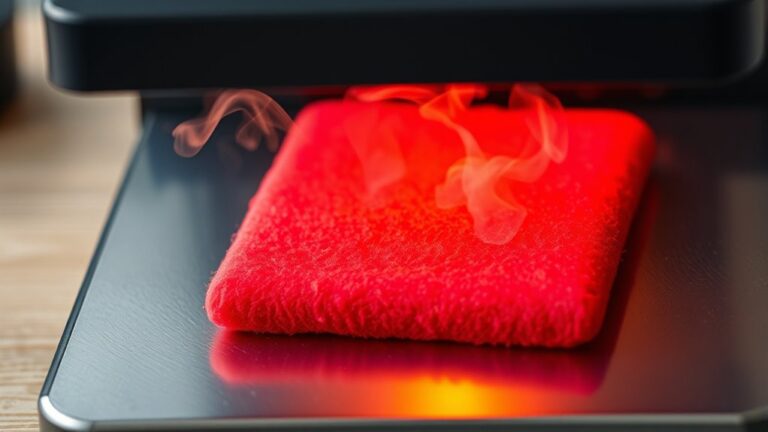
When your heat press results don’t meet expectations, troubleshooting common issues can make all the difference. First, check your temperature and pressure settings; too much heat can scorch transfers, while too little prevents proper adhesion. Confirm your heat press platen is clean and free of debris, which can cause uneven transfers.
If edges peel, try increasing pressure or adding a longer press time. Using a Teflon sheet helps protect your designs and distributes heat evenly. To enhance results, pre-press your fabric to remove moisture and wrinkles before applying the transfer.
Always follow the transfer manufacturer’s instructions closely, as materials vary. By paying attention to these details, you’ll achieve sharper, longer-lasting iron-on transfers every time.
Frequently Asked Questions
Can a Heat Press Be Used for Sublimation Printing?
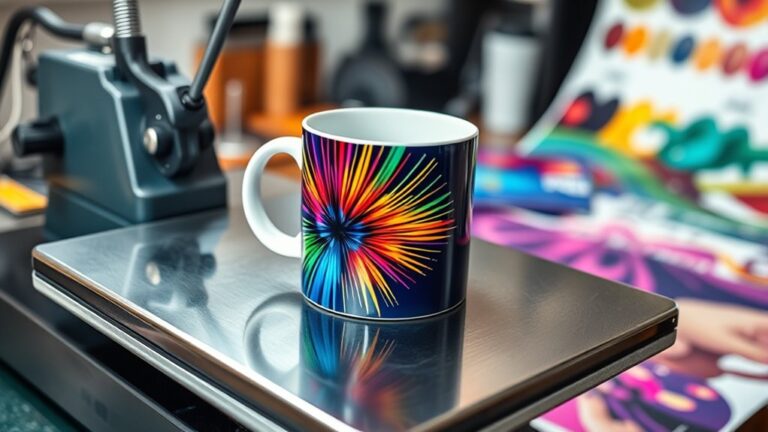
Yes, you can use a heat press for sublimation printing. It applies consistent heat and pressure, which helps transfer the sublimation ink onto your material smoothly and vibrantly, ensuring long-lasting, professional-quality prints every time.
Are Heat Press Transfers Safe for Children’s Clothing?
You can trust heat press transfers on children’s clothing, as long as you use non-toxic, child-safe materials and follow instructions carefully.
Like a gardener tending delicate flowers, you protect kids’ skin with proper care and quality products.
How Long Does a Heat Press Typically Last?
A heat press typically lasts around 5 to 10 years with proper care.
You’ll want to regularly clean it and avoid overheating to keep it working efficiently for all your crafting projects.
Can You Use a Heat Press on Leather Materials?
Imagine customizing a leather jacket with a heat press—you can do it! Just use low temperature and a protective sheet to avoid damage.
This way, you’ll get crisp designs without ruining the leather’s texture.
Is It Possible to Use a Heat Press for Batch Production?
Yes, you can use a heat press for batch production. It speeds up the process, guarantees consistent pressure and temperature, and delivers uniform results.
This makes it ideal for producing multiple items efficiently without sacrificing quality.
Conclusion
You might think a regular iron does the job, but using a heat press for iron-on transfers gives you consistent heat and pressure, making your designs last longer.
Coincidentally, the same precision that protects your fabric also boosts your creativity by letting you try more detailed designs.
So, if you want flawless, professional results every time, a heat press isn’t just an upgrade—it’s the secret weapon your craft has been waiting for.
Using a heat press for iron-on transfers ensures even application and durability, making it the best choice for your projects.