Can You Use a Heat Press for Screen Printing
Yes, you can use a heat press for screen printing to cure your ink quickly and evenly. A heat press is an essential tool that helps set the design with consistent heat and pressure, making your screen prints sharper, more durable, and less likely to crack or fade.
Using a heat press for screen printing ensures professional-quality results and speeds up the curing process compared to traditional methods.
Just be sure to use the right temperature, time, and pressure based on your ink and fabric to avoid damage. To get the best results and avoid common pitfalls, there’s plenty to take into account before you start.
Proper technique with a heat press can elevate your screen printing projects significantly.
Key Takeaways
- A heat press is used to cure and set screen print inks, enhancing print durability and ensuring even drying.
- It works best with plastisol and heat-transfer inks designed for heat curing in screen printing.
- Proper temperature (320°F–350°F), pressure, and time (10–15 seconds) are crucial for optimal ink adhesion and print quality.
- Heat presses require flat surfaces and may not suit complex multi-layer prints or certain fabric types.
- Incorrect settings or skipping pre-pressing can cause fading, cracking, or fabric damage during heat pressing.
What Is Screen Printing and How Does It Work
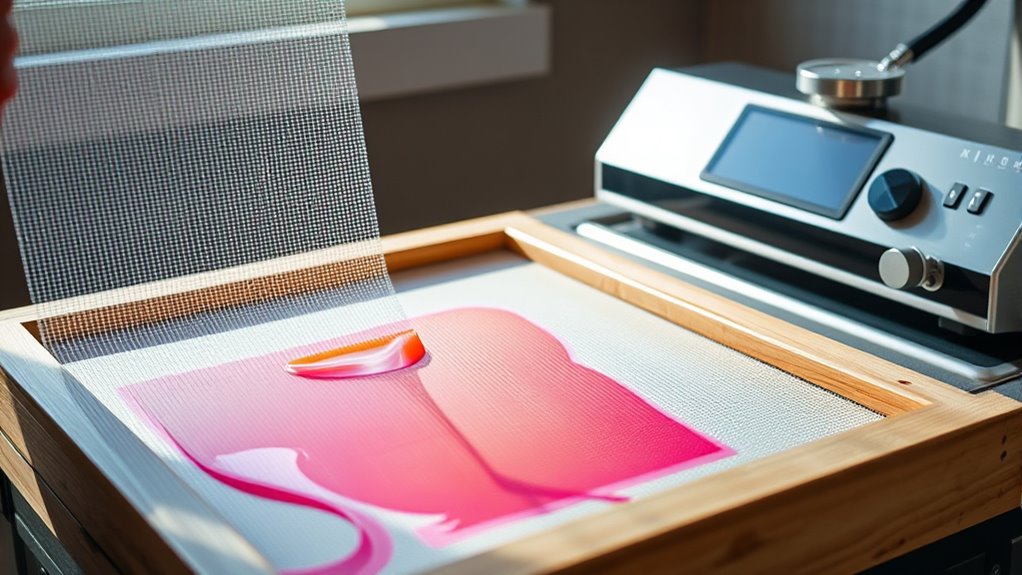
Although it might seem complex at first, screen printing is a straightforward process that lets you transfer designs onto various surfaces, typically fabric. You start by creating a stencil, called a screen, which blocks out areas where you don’t want ink.
Then, you place the screen on your material and spread ink over it using a squeegee. The ink passes through the open areas of the screen and imprints your design onto the fabric. Once done, you lift the screen, revealing your printed image.
This method works well for bold, vibrant designs and allows you to produce multiple copies quickly. You’ll find screen printing effective for t-shirts, posters, and more, thanks to its durability and versatility.
Can You Use a Heat Press in Screen Printing?

You can use a heat press to cure your screen prints, which helps set the ink quickly and evenly. It offers benefits like consistent heat application and faster drying compared to traditional methods.
Understanding how a heat press compares to other drying options will help you decide if it’s right for your process.
Heat Press Role Explained
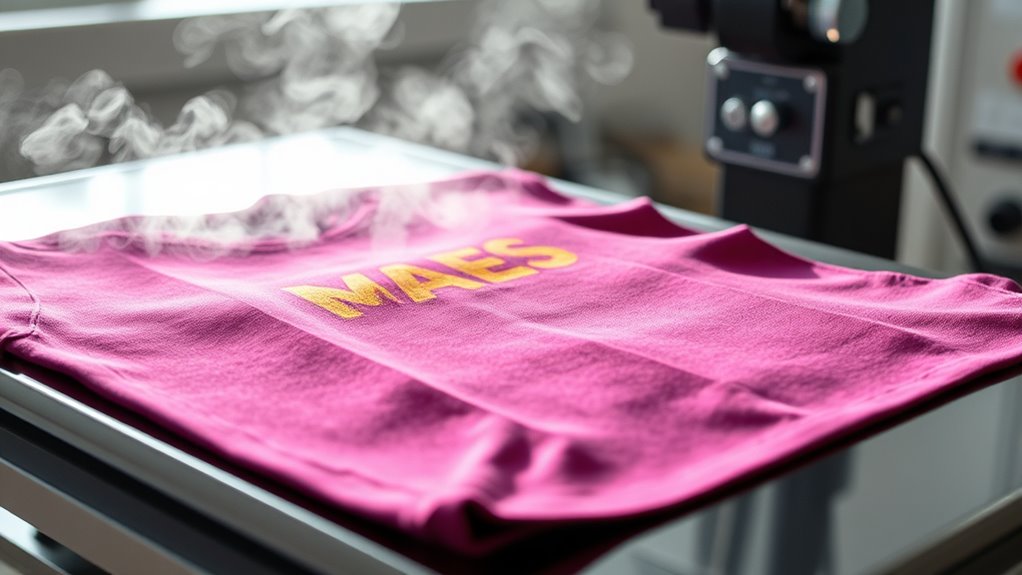
How exactly does a heat press fit into the screen printing process? After applying ink through your screen onto the fabric, you use a heat press to cure the ink. This step guarantees the ink dries quickly and bonds firmly to the material, making your design durable and long-lasting.
The heat press applies consistent temperature and pressure, which you can’t easily achieve with other methods like air drying or heat guns. You place your printed garment on the heat press, set the temperature and time according to the ink type, and let it do its job.
Without this curing step, your print risks smudging or washing out prematurely. So, the heat press acts as the essential finishing tool that locks your screen-printed design in place.
Benefits Of Heat Press
Since a heat press guarantees consistent temperature and pressure, it offers several key benefits for screen printing. You’ll achieve uniform curing of your inks, which means your designs will dry evenly without any patchy spots. This consistency helps prevent issues like cracking or fading over time, ensuring your prints last longer.
Using a heat press also speeds up your workflow by reducing the time it takes to cure each print compared to traditional methods. Plus, it provides better control over the process, allowing you to fine-tune temperature and pressure settings for different fabric types and ink formulations.
Ultimately, a heat press makes your screen printing more efficient, reliable, and professional-looking, giving you great results every time.
Heat Press Versus Drying
Although traditional drying methods have long been the standard in screen printing, many wonder if a heat press can serve as an effective alternative for curing inks. You can use a heat press to cure your prints, but it’s important to understand the difference between heat pressing and drying.
Drying involves removing moisture from the ink, usually with a conveyor dryer or flash dryer, ensuring the ink sets properly. Heat pressing applies high pressure and heat simultaneously, which can cure ink but may also risk burning or distorting your print if not timed correctly.
If you choose a heat press, adjust temperature and time carefully to avoid damage. Ultimately, while a heat press can work, dedicated drying equipment often provides more consistent and reliable results for curing screen-printed inks.
Pros and Cons of Using a Heat Press With Screen Printing

You’ll find that using a heat press can speed up your screen printing process and boost efficiency. However, it has its limitations that might affect certain designs or materials.
Plus, the quality and durability of your prints can vary depending on how you use the press.
Efficiency and Speed Benefits
When you use a heat press for screen printing, you’ll notice a significant boost in efficiency and speed. Heat presses apply consistent pressure and heat quickly, reducing curing time compared to traditional methods. This means you can finish more prints in less time, making your workflow smoother and more productive.
Plus, it decreases manual labor and the chance of errors.
| Benefit | Description | Impact |
|---|---|---|
| Faster Curing | Quick heat application | Increases output |
| Consistent Pressure | Uniform heat distribution | Improves print quality |
| Reduced Labor | Less manual handling | Saves time and effort |
Using a heat press helps you deliver high-quality results faster, perfect for busy production environments.
Heat Press Limitations
While heat presses offer many advantages for screen printing, they also come with certain limitations you should consider before investing. First, heat presses are less versatile than traditional methods; they work best with heat-transfer inks or pre-printed designs rather than direct screen printing on garments. You’ll also need to be cautious about heat settings, as too much heat or pressure can damage delicate fabrics or distort prints.
Additionally, heat presses typically require a flat surface, limiting the types of items you can print on, such as hats or curved objects. Finally, the upfront cost of a quality heat press can be high, which might not be ideal if you’re just starting out or have a tight budget. Consider these factors when deciding if a heat press fits your screen printing needs.
Quality and Durability Impact
Although heat presses can streamline the screen printing process, they affect the quality and durability of your prints in distinct ways. Using a heat press often results in sharper, more consistent prints because the pressure and temperature are evenly applied. This helps your design adhere better, reducing the chance of cracking or peeling over time.
However, if you don’t carefully control the heat and timing, your print might fade or distort, compromising durability. Additionally, heat presses may not handle complex multi-layer prints as well as traditional curing methods, potentially impacting color vibrancy.
Key Differences Between Heat Pressing and Screen Printing
Because heat pressing and screen printing use distinct methods to apply designs, understanding their key differences helps you choose the right technique for your project. Heat pressing uses a machine to apply heat and pressure, transferring pre-printed designs from vinyl or sublimation paper onto fabric. Meanwhile, screen printing pushes ink through a mesh screen directly onto the garment, creating the design layer by layer.
Heat pressing offers quick setup and is ideal for small runs or complex, multi-color prints. Screen printing, however, excels in producing durable, vibrant designs for larger batches. You’ll also find heat pressing requires less cleanup, while screen printing involves preparing and cleaning screens.
Knowing these differences ensures you pick the method that best fits your design complexity, volume, and finishing needs.
When and How to Use a Heat Press for Curing Screen Print Ink
If you want your screen print ink to fully set and last longer, using a heat press for curing is an effective method. You should use the heat press after the ink has been applied and dried to the touch, ensuring it’s ready for curing without smudging. Set the heat press to the recommended temperature, typically between 320°F and 350°F, depending on your ink type.
Place your printed garment under the press and apply firm pressure for about 15 to 30 seconds. Avoid moving the garment during this time to prevent disturbing the print. After curing, let the garment cool before handling.
This process bonds the ink to the fabric, enhancing durability and wash resistance, making your prints look professional and long-lasting.
Best Inks for Heat Press Curing in Screen Printing
When selecting inks for heat press curing in screen printing, you’ll want to choose those formulated to withstand high temperatures without losing vibrancy or adhesion. Plastisol inks are a popular choice because they cure well under heat presses and maintain bright, durable prints.
Water-based inks can also work if they’re specifically designed for heat curing, offering a softer feel but requiring precise temperature control. Discharge inks, which remove dye from the fabric, are another option, though they need careful handling during heat pressing to avoid damage.
Avoid inks not rated for heat press curing, as they may crack or peel. Ultimately, pick inks labeled for heat press compatibility to ensure your prints stay sharp and durable through the curing process.
How to Optimize Heat Press Settings for Screen Print Quality
Choosing the right ink sets the foundation, but fine-tuning your heat press settings makes all the difference in achieving vibrant, long-lasting screen prints. You need to balance temperature, time, and pressure to avoid dull colors or fabric damage.
Start by setting the temperature according to your ink’s specifications, usually between 320°F and 350°F. Adjust pressure to medium; too much pressure can flatten the ink, too little won’t cure properly. Time is critical—typically 10 to 15 seconds.
Use this table as a quick reference to optimize your heat press settings:
| Setting | Recommendation |
|---|---|
| Temperature | 320°F – 350°F |
| Time | 10 – 15 seconds |
| Pressure | Medium |
| Fabric Type | Cotton or blends |
| Ink Type | Plastisol or water-based |
Step-by-Step Guide: Heat Press Curing After Screen Printing
Before you start curing, make sure the printed garment is clean and free of wrinkles.
You’ll need to set your heat press to the right temperature and pressure for the ink you’re using.
Following these steps guarantees your print cures properly and lasts longer.
Preparing The Printed Garment
How do you guarantee your screen-printed design sets properly and lasts? Start by making sure the garment is clean and wrinkle-free. Lay it flat on the heat press platen, smoothing out any folds that could interfere with even heat application.
Position the print area directly under the heat platen, using heat-resistant tape if needed to keep the garment steady. Pre-press the garment for a few seconds to remove moisture and wrinkles, which helps improve adhesion. Once prepped, place a protective sheet, like a Teflon or parchment paper, over the print to shield it from direct heat.
Taking these preparation steps ensures consistent curing, prevents damage, and maximizes the durability of your screen-printed design before you move on to applying heat.
Heat Press Settings
Once your garment is properly prepared, you’ll need to set your heat press to the right temperature, time, and pressure to cure the ink effectively. Typically, screen-printed ink cures best between 320°F and 350°F. Set your press for about 15 to 30 seconds, but always check your ink manufacturer’s recommendations.
Apply medium pressure—enough to ensure good contact without crushing the fabric or ink. Too much pressure can cause distortion, while too little won’t cure the ink properly. Before pressing your final garment, test these settings on a sample to avoid mistakes.
Once you’re confident with the settings, press your garments consistently to achieve durable, vibrant prints that stand up to washing and wear.
Common Heat Press Mistakes to Avoid in Screen Printing
Although using a heat press can streamline your screen printing process, you’ll want to steer clear of common mistakes that can ruin your designs. First, avoid setting the temperature too high or too low; incorrect heat can cause fading, cracking, or incomplete curing. Don’t press for too long—overexposure can scorch your fabric or distort your print.
Make sure to apply even pressure; uneven pressure leads to inconsistent transfers and blotchy results. Skipping the pre-press step is another pitfall; pre-pressing removes moisture and wrinkles, ensuring a smooth surface for printing. Finally, don’t neglect maintenance—dirty or damaged heat plates can damage your prints.
How to Choose the Right Heat Press for Your Screen Printing Setup
Avoiding common heat press mistakes sets the foundation, but selecting the right heat press for your screen printing setup will make all the difference in your results.
To find the perfect match, consider these key factors:
- Type of Heat Press: Choose between clamshell, swing-away, or draw style based on your workspace and ease of use.
- Size of the Heat Plate: Match the platen size to the garments you print most often to ensure even heat distribution.
- Temperature and Pressure Control: Look for accurate, adjustable controls to handle various inks and materials effectively.
- Durability and Build Quality: Procure a sturdy machine with reliable components to withstand frequent use and produce consistent prints.
Troubleshooting Heat Press Issues in Screen Printing Projects
When your heat press doesn’t perform as expected, it can disrupt your entire screen printing project. First, check the temperature settings—if it’s too low, your ink won’t cure properly; too high, and you risk scorching your fabric.
Next, inspect the pressure adjustment; uneven or insufficient pressure often causes incomplete transfers or faded prints. Make sure your heat platen is clean—residue can affect heat distribution. If your prints peel or crack, try increasing the dwell time slightly or adjust the pressure.
Also, verify that your heat press timer functions correctly to avoid under- or over-curing. Finally, review your heat press’s alignment to ensure even contact across the garment. Addressing these common issues keeps your projects smooth and professional every time.
Heat Press for Heat Transfer Vinyl vs. Screen Printing: What You Need to Know
Fixing heat press issues is just one part of using this tool effectively, but understanding how it works with different materials is equally important. When comparing heat transfer vinyl (HTV) and screen printing, the heat press plays distinct roles. Here’s what you need to know:
- HTV requires precise temperature and pressure settings to melt vinyl onto fabric, which a heat press handles perfectly.
- Screen printing uses a heat press mainly for curing ink, not transferring designs, so different settings apply.
- HTV offers more color options and is easier for small runs, while screen printing excels in bulk production with durable results.
- Heat press timing varies: HTV needs shorter press times; screen printing curing takes longer for ink to set properly.
Knowing these differences helps you maximize your heat press’s potential.
Frequently Asked Questions
Can a Heat Press Damage the Screen Mesh During Printing?
Yes, a heat press can damage the screen mesh if you apply too much pressure or heat. You should always adjust settings carefully and avoid direct contact to protect the mesh and guarantee your prints come out perfect.
How Long Does a Heat Press Typically Last in a Screen Printing Shop?
Your heat press will likely stick around for a good stretch—typically 5 to 10 years—if you treat it well and keep up with maintenance.
Just don’t skip regular checkups, and it won’t let you down anytime soon.
Are There Specific Fabrics That Heat Pressing Is Not Suitable For?
You shouldn’t use heat pressing on delicate fabrics like nylon, silk, or leather because they can melt or get damaged. Always check the fabric’s heat tolerance before pressing to avoid ruining your material or design.
Can Heat Pressing Be Used for Multi-Color Screen Print Designs?
Yes, you can use heat pressing for multi-color screen print designs. Just make sure to press each color layer carefully and allow proper curing time between layers to avoid smudging or color blending.
This ensures a vibrant, sharp finish.
What Safety Precautions Should Be Taken When Using a Heat Press?
You should wear heat-resistant gloves, keep your workspace clear, avoid loose clothing, and never leave the heat press unattended.
Always follow the manufacturer’s instructions and guarantee proper ventilation to stay safe while using a heat press.
Conclusion
You can definitely use a heat press in screen printing, especially for curing ink efficiently. Did you know that using a heat press can reduce curing time by up to 50% compared to traditional methods? This means you’ll speed up your workflow and get consistent, vibrant prints every time.
Just remember to avoid common mistakes like incorrect temperature or pressure settings. With the right heat press and technique, your screen printing will look professional and last longer. Incorporating a heat press into your screen printing process is a great way to ensure durability and high-quality results.